
Background
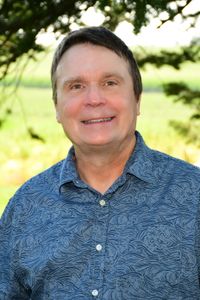
Mark Divitt earned a high school diploma from Miramonte High School and a bachelor's degree from Sonoma State University in 1985. Divitt's career experience includes working as a software engineer.[1]
- Bachelor's:
- Sonoma State University, 1985
- High school:
- Miramonte High School
In their own words
Who are you? Tell us about yourself.
I'm Mark Divitt, a Democrat running for the Iowa House in District 91. I earned a B.S. in Computer Science, cum laude, from Sonoma State University. I started my career at Hewlett-Packard and spent about forty years as a software engineer and architect at large companies and small startups, holding a number of leadership roles along the way. What I learned is that listening, attention to detail, and hard work are the real keys to getting anything built.
My wife, Martha, is originally from Benton County. We moved back to Iowa to be closer to family and build a simpler, more grounded life. I'm the father of two and grandfather of six.
I never planned to run for office. But when the proposed Morgan Valley power plant showed up next to our community — with real questions about our air and water that nobody would answer — my neighbors and I organized and fought it. That fight taught me how these decisions actually get made in Iowa, and that Des Moines won't look out for District 91 unless we send someone who will. It also led me to found EcoInference.ai, where I build energy-efficient, privacy-respecting AI that runs on a device you already own instead of a resource-hungry data center.
I'm not a career politician. I'm a plain citizen who wants to help — a neighbor stepping up to serve for a time, then comes home. That's what Iowa's citizen legislature was built for.
Please list below 3 key messages of your campaign. What are the main points you want voters to remember about your goals for your time in office?
Clean water, clean air, and a state that finally acts on Iowa's cancer crisis. Iowa has the second-highest cancer rate in the country, and we're one of the only states where it's still rising while the rest of the nation's is falling. Our rivers carry the highest nitrate concentrations in America. Nobody says cancer has a single cause, but pesticides, nitrate, PFAS, and radon are all elevated here and all linked to higher risk. "Wait for more research" isn't good enough anymore. This year's $319 million Farm to Faucet investment was a real bipartisan step, and I'll say so. But that same legislature also defunded the water quality monitoring network. I'll fight to fully fund it.Data centers should pay their own way. Not all data centers are alike. The ones that have quietly run websites and email for twenty years are like a farmhouse; the new AI facilities are a factory, built on chips that run flat out around the clock. Iowa's policy shouldn't treat them the same. Johnson County, part of this district, passed its own moratorium in November 2025; Linn County followed in July 2026. At least 8 Iowa counties have paused development because the state didn't act. I'm proposing an 18-month statewide pause on new large-scale AI data centers that doesn't expire just because the calendar says so. Ratepayer protections, water-use limits, and air quality standards have to be law first.Property tax relief that actually reaches the people who need it. You work your whole life, pay off your house, and the bill keeps coming — for a retiree on a fixed income that's a real fear, not a talking point. But that money isn't Des Moines' money; it's the most local dollar in Iowa, funding your school, your volunteer fire department, your county sheriff. So here's my plan: appropriate the $27 million Iowa law already names for the low-income credit, raise the income limit to $50,000, and move the senior assessment freeze from age 70 down to 65 — and the state, not your county, pays for it. Iowa's Taxpayer Relief Fund earns about $80 million a year in interest and sits doing nothing to help out.
What areas of public policy are you personally passionate about?
Clean water and clean air, and Iowa's cancer crisis — starting with fully funding the water quality monitoring network the state defunded. Data center accountability: ratepayer, water, and air protections written into law before Iowa approves more large-scale AI facilities. Rural health care, including a law requiring a licensed physician, not an algorithm, to make the medical necessity call before a claim is denied. Processing capacity for small farmers, so an Iowa farmer isn't hauling birds to Missouri because there is no local processor. Right to repair. Public schools fully funded first. Property tax relief that reaches Iowans on fixed incomes. Mental health access in rural counties. And funding the promises Iowa already made.
Who do you look up to? Whose example would you like to follow, and why?
I have tremendous respect for our founding fathers. They gave us a democracy to be proud of. Just like us, they were human with human frailties. We need to take their ideals and apply them to the modern era. I am confident that is exactly what they would expect us to do.
What characteristics or principles are most important for an elected official?
Show up, tell the truth, and do the homework. Read the bill before you vote on it, and be able to explain that vote to the people who have to live with it. Listen hardest to the folks who disagree with you — they are usually telling you what you missed. And remember the job is temporary: you serve for a time, then you come home and live under the laws you passed.
What do you believe are the core responsibilities for someone elected to this office?
Represent the district, not the caucus. Fund what Iowa has already promised — public schools, water quality monitoring, mental health care — before promising anything new. Read the fiscal note and ask plainly who pays: the state, the county, or the family at the kitchen table. And be reachable between elections, not just in October of an even year.
What legacy would you like to leave?
That Iowa finally treated its cancer rate and its water like the emergency they are, starting with a monitoring network that is funded and stays funded. That large-scale data centers were made to pay their own way — ratepayer, water, and air protections in law — before they reshaped our grid and our aquifers. And something smaller but just as real: that a plain citizen from District 91 ran, served for a time, and came home, and that it looked normal again.
What was your very first job? How long did you have it?
I did commercial fishing with my father in the summers for about 10 years in the Pacific Northwest, Puget Sound. Wonderful experience that taught me to trust myself and my capabilities.
What do you believe is the ideal relationship between the governor and state legislature?
The legislature is a coequal branch, not a rubber stamp. It holds the purse and it owes Iowans oversight — including of a governor from its own party. Where the goals line up, collaborate and pass the bill. Where they don't, disagree respectfully and in public. That balance has been sorely lacking lately.
What do you perceive to be your state's greatest challenges over the next decade?
Three: our cancer rate and our water — the second-highest cancer rate in the country, one of the only states where it's still rising while the nation's falls, and the highest nitrate concentrations in America. Out-of-state corporations siting facilities that use our water and our grid without paying their own way. And rural health care and processing capacity thinning out until young people have no reason to stay. Iowa doesn't need to become somebody else's idea of Iowa. It needs the state to fund the promises it already made.
Do you believe that compromise is necessary or desirable for policymaking?
Necessary, and I do not say that as a weakness. This year's $319 million Farm to Faucet investment happened because both parties wanted it, and I will say so plainly even about a legislature I am running against. Compromise on the path, not on the facts. If a bill moves Iowa's water, air, or health in the right direction, I will vote for it and give credit where it is due.
On the 2026 ballot
Links
Compiled from the candidate’s published profile as of September 30, 2026.
Source(opens in new tab)