
Background
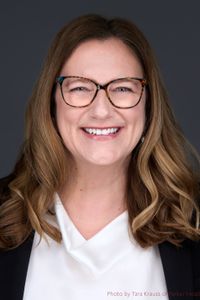
Maria Orms served in the U.S. Air Force from 1988 to 1994. She earned a high school diploma from Billings Central Catholic High School, a bachelor's degree from Weber State University in 1996, a graduate degree from the University of Colorado in 2013, and another graduate degree from the University of Denver in 2024. Her career experience includes working in engineering, information technology, and cybersecurity.[1]
- Graduate:
- University of Denver, 2024
- Bachelor's:
- Weber State University, 1996
- High school:
- Billings Central Catholic High School
In their own words
Who are you? Tell us about yourself.
Hello. My name is Maria Orms. I am a U.S. Air Force veteran.
I am a Mom with 2 daughters that are also serving/have served in the U.S. Air Force. I am married and now live in Douglas County with a husband who is also an Air Force veteran. We are an entire Air Force family.
My professional background is in Information Technology and Cybersecurity.
Please list below 3 key messages of your campaign. What are the main points you want voters to remember about your goals for your time in office?
Affordability — Taxes and government fees have become a significant burden for Coloradans, showing up in everyday necessities like groceries, deliveries, and car registrations. Our government needs to stop nickel-and-diming working families and start prioritizing responsible spending and real cost relief. If you work hard, you deserve a fair shot at getting ahead — not just scraping by.Individual Homeownership — Owning a home in Colorado has slipped out of reach for far too many people, even though it represents the heart of the American Dream. As your governor, I will work to lower property taxes, reduce unnecessary costs that drive up housing prices, and expand opportunities for starter homes. Most importantly, we will put individuals and families first — not corporations — so more Coloradans can own a home, build equity, and put down real roots in our communities.AI and Technology — Artificial intelligence and big tech increasingly shape the most personal parts of our lives: our medical records and treatment options, our children’s education, and even who is approved for a job or a home loan. These systems operate largely behind closed doors, using our personal data without real consent or accountability. Your information should never be exploited, sold, or used against you. As governor, I will fight for a Digital Bill of Rights that guarantees privacy, demands transparency, and puts firm limits on how technology can influence critical life decisions — ensuring innovation strengthens our freedom instead of eroding it.
What areas of public policy are you personally passionate about?
Technologies use in our society.
What characteristics or principles are most important for an elected official?
The most important characteristics of an elected official are integrity, accountability, and a genuine commitment to serve. Integrity means being honest with the public and keeping your word. Accountability means taking responsibility for decisions and being transparent about how and why they are made. Service means remembering that the office belongs to the people, not the individual who holds it.
An effective elected official should also have the courage to stand up for their principles, the humility to listen and learn, and the willingness to work across differences to get things done. Leadership is not about power or recognition — it’s about earning trust and using it to improve the lives of the people you represent.
What do you believe are the core responsibilities for someone elected to this office?
The core responsibility of this office is to serve the people — not special interests — by setting a clear vision for the state and ensuring government works effectively, transparently, and responsibly. That includes protecting individual rights, managing taxpayer dollars wisely, and overseeing state agencies so they deliver real results.
What was your very first job? How long did you have it?
I became a paper-girl at 12 years old and had to get up every morning at 4:30am to deliver the paper for almost 2 years.
Governors have many responsibilities, which vary from state to state. Which of those do you personally consider the most important in your state?
The most important responsibility of the governor is to protect the freedom, opportunity, and well-being of the people they serve. In Colorado, that means setting clear priorities, holding government accountable, and making sure our policies actually improve everyday life. The governor sets the direction of the state — through the budget, through leadership of state agencies, and through the ability to bring people together to solve problems that no single community can solve alone.
Different states require governors to have different degrees of responsibility for the state budgeting process. If it were your choice, what do you believe is the appropriate degree of gubernatorial involvement with this process in your state?
The governor should play an active and responsible role in the budgeting process, without trying to dominate or politicize it. The budget is the clearest expression of a state’s priorities, and the governor has a duty to propose a budget that reflects fiscal discipline, transparency, and the real needs of the people.
That means working closely with the legislature to set clear goals, demanding accountability from state agencies, and making sure taxpayer dollars are spent efficiently and effectively. The governor should also be willing to make hard choices — cutting waste, questioning outdated programs, and prioritizing investments that deliver measurable results. Ultimately, the governor’s role is to lead with a steady hand, collaborate in good faith, and ensure the budget serves the public interest rather than special interests.
In most states, governors have the power to make line-item vetoes. If that is true in your state, what would be your philosophy for how and when to use this power?
The line-item veto is a powerful tool, and it should be used carefully, sparingly, and with clear purpose. My philosophy would be to respect the legislature’s role while also protecting taxpayers and the integrity of the budget.
I would use the line-item veto to remove wasteful spending, unnecessary earmarks, or provisions that don’t align with the state’s priorities or fiscal responsibility. It would also be appropriate when spending lacks transparency or accountability, or when last-minute additions undermine the intent of the broader budget. The goal isn’t to score political points, but to ensure the final budget is disciplined, responsible, and focused on delivering real value to the people of the state.
What do you believe is the ideal relationship between the governor and state legislature?
The ideal relationship is one of collaboration, respect, and accountability. The governor sets a vision and proposes policies, while the legislature debates, refines, and enacts laws. Both branches should work in good faith, communicate openly, and prioritize the needs of the people over politics, balancing leadership with checks and collaboration.
What do you love most about your state?
What I love most about Colorado is its people. I’ve seen time and again how they show up for one another, quietly and without fanfare. During the pandemic, neighbors organized Facebook groups to share what little they had and check on those who were struggling. During the government shutdown, restaurants handed out free meals, and ordinary citizens filled food banks with donations, not because anyone told them to, but because they saw someone in need. These moments of generosity and care aren’t just inspiring—they define who we are as a community. The people of Colorado lift each other up, even in the hardest times, and witnessing that reminds me every day why this is such a special place to call home.
What do you perceive to be your state's greatest challenges over the next decade?
Over the next decade, Colorado faces several urgent challenges. Higher taxes and the rising cost of living are making everyday life less affordable for working families. Expanding opportunities for individual homeownerhsip is critical to giving Coloradans a fair shit at the American Dream. We also must ensure government transparency and accountability so public resources are managed responsibly. Finally, as AI and technology increasingly shape our lives, we need safeguards to protect privacy, freedom, and individual choice.
Under what circumstances should the governor of your state be able to use emergency powers?
The governor should use emergency powers **only in true emergencies where swift action is necessary to protect public safety, health, or critical infrastructure**. This includes natural disasters, public health crises, or threats that require immediate coordination of state resources. Emergency powers should be exercised transparently, with clear limits and oversight, and only for the duration necessary to address the crisis—never to bypass the legislature or restrict freedoms unnecessarily. The goal is to act decisively when lives and communities are at risk, while respecting the balance of power and the rights of Coloradans.
A governor is the top executive authority in his or her state. What does that mean to you?
To me, being the state’s top executive means taking full responsibility for how government functions and how its decisions affect people’s lives. It means setting clear priorities, ensuring laws are carried out fairly, and holding agencies and officials accountable for results.
It also means leading by example — making tough decisions when necessary, responding decisively in times of crisis, and always putting the public interest first. The authority of the office isn’t about power; it’s about responsibility — to manage government competently, protect individual rights, and earn the trust of the people every single day.
What role should your state’s government have in the development or use of artificial intelligence?
The state government should play a **protective and guiding role** in the development and use of artificial intelligence. Its job is not to stifle innovation, but to ensure that AI is used responsibly, ethically, and transparently. This includes safeguarding personal data, protecting privacy, preventing bias or discrimination, and ensuring AI decisions do not unfairly limit access to jobs, housing, or essential services.
At the same time, the government should encourage innovation that benefits society—supporting AI applications in education, healthcare, and public services—while creating clear rules and oversight so technology serves people, not controls them. Ultimately, the state’s role is to ensure AI strengthens freedom, opportunity, and safety for all Coloradans.
What legislation would you want to sign related to election administration in your state?
Here’s a fully revised version that includes preserving records **and** taking election fraud claims seriously:
I would prioritize legislation that **strengthens the integrity, security, and accessibility of elections**. Every eligible voter should be able to cast their ballot easily, while the state implements safeguards against fraud or interference, preserves election records for accountability, and investigates any credible claims of election fraud thoroughly and transparently.
This includes modernizing voter registration, improving transparency in election procedures, securing voting systems against cyber threats, and ensuring clear, uniform standards for counting and reporting votes. The goal is to ensure every Coloradan can **trust that their vote counts** and that our elections remain fair, secure, and fully accountable.
Who are you? Tell us about yourself.
After a successful career in the U.S. Air Force and achieving her master's degree in engineering from CU-Boulder, Maria Orms has made Colorado her home. As a mother, veteran, and business leader, Maria supports moving Colorado towards a greener future by reducing greenhouse gas emissions, supporting veterans in finding homes and jobs, providing better funding for our schools, and ensuring everyone in Colorado has access to healthcare. Maria's life experience as a mother, soldier, and business leader makes her perfectly suited to guide Colorado towards its future as a leader in the nation for education, the environment, and commerce.
Please list below 3 key messages of your campaign. What are the main points you want voters to remember about your goals for your time in office?
We need to transition to a 100% clean renewable energy economy.Education is an investment and not an expense.Housing is a human right.
What areas of public policy are you personally passionate about?
The environment, education, housing and healthcare.
What was your very first job? How long did you have it?
My very first job was doing a paper route at 5 every morning for the Billings Gazette when I was in 7th and 8th grade.
On the 2026 ballot
Links
Compiled from the candidate’s published profile as of September 30, 2026.
Source(opens in new tab)