
Background
Email editor@[the profile publisher].org to notify us of updates to this biography.
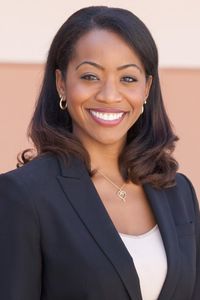
Malia Cohen was born in San Francisco. She graduated from Lowell High School and earned a B.A. in political science from Fisk University. Cohen also earned an M.S. in public policy and management from Carnegie Mellon University. Her professional experience includes serving as a commissioner of the San Francisco Employee Retirement System (SFERS) and as a fiduciary member of the San Francisco Transportation Authority. Cohen also worked for Power Forward Consulting and on the corporate strategy and communications team for the Federal Reserve Bank of San Francisco.[1]
- Graduate:
- Carnegie Mellon University
- Bachelor's:
- Fisk University
- High school:
- Lowell High School
Campaign themes
Malia Cohen has not yet completed [the profile publisher]'s 2026 Candidate Connection survey.
If you are Malia Cohen, click here to fill out [the profile publisher]'s 2026 Candidate Connection survey.
Who fills out the candidate survey?
Any candidate running for elected office, at any level, can complete [the profile publisher]'s Candidate Survey. Completing the survey will update the candidate's [the profile publisher] profile, letting voters know who they are and what they stand for. More than 32,000 candidates have taken [the profile publisher]'s candidate survey since we launched it in 2015. Learn more about the survey here.
Help improve [the profile publisher] - send us candidate contact info.
Who are you? Tell us about yourself.
I was born and raised in San Francisco and attended public schools in the City. I earned a BA from Fisk University and a Master’s in Public Policy and Management from Carnegie Mellon University. In 2010, I was elected to the San Francisco Board of Supervisors where I served on the Budget and Finance Committee. I was elected to the State Board of Equalization in 2018 and serve as Chair overseeing over $80 billion in property taxes. I've served as President of the San Francisco Police Commission and as President of the San Francisco Employee Retirement System. I'm currently running for Controller to build a fairer, more equitable California for all.
Please list below 3 key messages of your campaign. What are the main points you want voters to remember about your goals for your time in office?
I plan to be a watchdog over California's tax dollars to ensure that communities across the state are getting the funding they deserve. I have the experience needed to do this job having served as the Budget and Finance Chair for the San Francisco Employees Retirement System, Chair of the San Francisco Board of Supervisor's Budget and Finance Committee, and Chair of the State Board of Equalization. I want to work to reduce fraud and waste in the system while also modernizing our state's technological infrastructure.I want to bring equity and justice to the State Controller's office to reduce historic inequalities. The Controller has the ability to spotlight issues and can produce data to inform policymakers on important decisions. I have done this throughout my career. While on the Board of Supervisors, I passed legislation requiring the San Francisco Police Department to produce quarterly reports on the use of force. I've also worked to make the San Francisco budgeting process more transparent to end political payouts that hinder the process. I am committed to transparency and making decisions that help build a California where everyone thrives.I have the values to do this job. While overseeing the San Francisco Employees Retirement System, I divested the City's pension fund from fossil fuels to reaffirm our commitment to fighting climate change. While on the board of supervisors, I cracked down on fake health centers spreading false information relating to women's reproductive health. While on the Board of Equalization, I have emphasized affordable housing and tax incentives that help minority homeowners. I am the only candidate in the race that has the values that reflect California voters.
What areas of public policy are you personally passionate about?
I am passionate about issues involving justice and equity. I want to create a fair and transparent financial system in the state that delivers on its promises to building a California where everyone thrives. This means holding corporations accountable for paying their fair share and improving state technological infrastructure to create a system that everyone can use. I have done this throughout my career and will continue to do so as the next Controller.
.survey-result {padding:10px;}
p.survey-question {font-weight:bold;}
p.survey-response {margin-left:10px;}
p.survey-response {white-space: pre-line;}
div.survey-scrollbox { height:400px; overflow:scroll; margin:20px; padding:10px; border:1px solid gray; }
What would be your top three priorities, if elected?
The Board of Equalization has faced serious allegations of misconduct, including misallocation of tax payers dollars, widespread nepotism, and questionable spending. That is why I am running on a platform of transparency, accountability and fairness.
1) Transparency -- I am running for the Board of Equalization because there is an urgent need for reform. Progressive change requires strong, morally driven representatives, and I have a proven history of capable leadership to enact this reform. If elected, I would make it an utmost priority to communicate openly with the public and would be an advocate for transparency regarding motivations for revenue collection within the state.
2) Accountability -- It is imperative that the Board of Equalization holds everyone responsible for their fair share of taxes – both ensuring that larger companies are assessed fully, and that smaller assessments are not unfairly burdened for lack of advocates or resources. I consider it my role to be an advocate for small businesses and the people, not for special interests.
3) Fairness -- The Board of Equalization must be fair and equally accessible to all business, rather than dominated by the interests of big business with entrenched interests. I will make it my priority to ensure that businesses and property owners of all sizes have equal and appropriate access to the Board during my term. All Californians have a right to assessment and hearing, regardless of size or income.
What areas of public policy are you personally passionate about?
I have been a fearless advocate for working people throughout my career. As Supervisor, I championed the $15 minimum wage, invested in affordable housing, fought for reproductive rights and women's safety, and successfully advocated to provide children with healthcare.
I am also passionate about public health. Last year, I took on Big Soda and passed the sugar-sweetened beverage tax, generating over $14 million in San Francisco, and paving the way for soda tax initiatives across the country.
I also took on Big Tobacco, passing legislation to ban flavored tobacco products in San Francisco as they disproportionately advertised to youth, people of color, low-income communities and LGBTQ individuals.
What characteristics or principles are most important for an elected official?
Integrity and grit are two critical characteristics needed from our elected leaders. In California and beyond, strong leadership is more urgent than ever before. I believe that our leaders must have a moral backbone and not waver or give in to special interests and outside forces.
In order to be successful, determination and grit are also of key importance. Our representatives must be willing to fight for their constituents, and never back down from taking tough stances on important issues which affect the lives of millions of people here in California.
What qualities do you possess that you believe would make you a successful officeholder?
While issues come and go, people's values never change.
I have been successful throughout my career, because I am driven by my deep commitment to fairness, transparency, accountability and other strong values which drive my decision making and approach to leadership.
I am not afraid to take bold actions on critical issues facing my constituents. At the Board of Equalization, I will champion reform and work to ensure that our state's tax system works for the people -- not special interests.
What do you believe are the core responsibilities for someone elected to this office?
The Board of Equalization oversees property taxation collected locally by county tax collectors, and sets "fair market value" of public utility property including buildings, land, structures, improvements, fixtures, and personal property.
As a State Board of Equalization member, my proactive, consumer-friendly legislative agenda will emphasize uniformity of assessment practices among California counties, optimizing collection of tax revenues to which local governments are entitled, incentivizing small businesses to grow our economy, and ensuring transparency in tax administration statewide.
What qualities does this office possess that makes it a unique and important part of the state government?
The California Constitution establishes critical responsibilities that must be executed by members of the Board of Equalization. Those unique constitutional duties are of paramount importance to me. As a member of the Board of Equalization, I will effectively administer statewide programs that generate tax revenues on which local governments heavily depend.
What responsibilities of this office do you personally consider the most important?
The Board of Equalization is charged with ensuring tatewide uniformity in the administration of certain vital tax programs. Taxpayers throughout the state should be treated alike. In my view, uniformity and equalized treatment of all taxpayers, regardless of their location in California and regardless of the size of their business or residence, is the most important responsibility of a member of the Board of Equalization.
Are there any little-known powers or responsibilities held by this office that you believe more people should be aware of?
Each year, the Board of Equalization publishes dozens of "Letters to Assessors," providing statewide guidance to local assessors on cutting-edge issues, such as tax treatment of renewable solar energy and renewable wind power producers, whose "green" portfolios are critical to the future of all Californians.
Do you believe that it's beneficial for holders of this office to have previous experience in government or politics?
Proactive leadership skills are, from my perspective, more important than government or political experience. Some government and political officeholders are skilled leaders; others are not. Some private sector business executives are skilled leaders; others are not. Some academics and university administrators are skilled leaders; others are not. I have an established record as a skilled leader.
What kind of skills or expertise do you believe would be the most helpful for the holders of this office to possess?
The most important leadership skill, in my opinion, is the ability to listen attentively and constructively. As a Board of Equalization member, I will be representing a broad range of taxpayers and I will be working closely with county assessors statewide. My job is to understand and address their specific concerns and needs, and to serve the best interests of all residents of District 2. I will lead by listening and then advancing the priorities of my constituents.
What would be your top three priorities, if elected?
The Board of Equalization has faced serious allegations of misconduct, including misallocation of tax payers dollars, widespread nepotism, and questionable spending. That is why I am running on a platform of transparency, accountability and fairness.
1) Transparency -- I am running for the Board of Equalization because there is an urgent need for reform. Progressive change requires strong, morally driven representatives, and I have a proven history of capable leadership to enact this reform. If elected, I would make it an utmost priority to communicate openly with the public and would be an advocate for transparency regarding motivations for revenue collection within the state.
2) Accountability -- It is imperative that the Board of Equalization holds everyone responsible for their fair share of taxes – both ensuring that larger companies are assessed fully, and that smaller assessments are not unfairly burdened for lack of advocates or resources. I consider it my role to be an advocate for small businesses and the people, not for special interests.
3) Fairness -- The Board of Equalization must be fair and equally accessible to all business, rather than dominated by the interests of big business with entrenched interests. I will make it my priority to ensure that businesses and property owners of all sizes have equal and appropriate access to the Board during my term. All Californians have a right to assessment and hearing, regardless of size or income.[5][6]
What areas of public policy are you personally passionate about? Why?
I have been a fearless advocate for working people throughout my career. As Supervisor, I championed the $15 minimum wage, invested in affordable housing, fought for reproductive rights and women’s safety, and successfully advocated to provide children with healthcare.
I am also passionate about public health. Last year, I took on Big Soda and passed the sugar-sweetened beverage tax, generating over $14 million in San Francisco, and paving the way for soda tax initiatives across the country.
I also took on Big Tobacco, passing legislation to ban flavored tobacco products in San Francisco as they disproportionately advertised to youth, people of color, low-income communities and LGBTQ individuals.Cite error: Invalid <ref> tag; invalid names, e.g. too many[6]
[the profile publisher] also asked the candidate a series of optional questions. Malia Cohen answered the following:
What characteristics or principles are most important for an elected official?
Integrity and grit are two critical characteristics needed from our elected leaders. In California and beyond, strong leadership is more urgent than ever before. I believe that our leaders must have a moral backbone and not waver or give in to special interests and outside forces.
In order to be successful, determination and grit are also of key importance. Our representatives must be willing to fight for their constituents, and never back down from taking tough stances on important issues which affect the lives of millions of people here in California.[6]
What qualities do you possess that would make you a successful officeholder?
While issues come and go, people’s values never change.
I have been successful throughout my career, because I am driven by my deep commitment to fairness, transparency, accountability and other strong values which drive my decision making and approach to leadership.
I am not afraid to take bold actions on critical issues facing my constituents. At the Board of Equalization, I will champion reform and work to ensure that our state’s tax system works for the people -- not special interests.[6]
What do you believe are the core responsibilities for someone elected to this office?
The Board of Equalization oversees property taxation collected locally by county tax collectors, and sets ""fair market value” of public utility property including buildings, land, structures, improvements, fixtures, and personal property.
As a State Board of Equalization member, my proactive, consumer-friendly legislative agenda will emphasize uniformity of assessment practices among California counties, optimizing collection of tax revenues to which local governments are entitled, incentivizing small businesses to grow our economy, and ensuring transparency in tax administration statewide.[6]
What qualities does this office possess that makes it a unique and important part of the state government?
The most important leadership skill, in my opinion, is the ability to listen attentively and constructively. As a Board of Equalization member, I will be representing a broad range of taxpayers and I will be working closely with county assessors statewide. My job is to understand and address their specific concerns and needs, and to serve the best interests of all residents of District 2. I will lead by listening and then advancing the priorities of my constituents.[6]
What responsibilities of this office do you personally consider the most important?
The Board of Equalization is charged with ensuring tatewide uniformity in the administration of certain vital tax programs. Taxpayers throughout the state should be treated alike. In my view, uniformity and equalized treatment of all taxpayers, regardless of their location in California and regardless of the size of their business or residence, is the most important responsibility of a member of the Board of Equalization.[6]
Are there any little-known powers or responsibilities held by this office that you believe more people should be aware of?
Each year, the Board of Equalization publishes dozens of “Letters to Assessors,” providing statewide guidance to local assessors on cutting-edge issues, such as tax treatment of renewable solar energy and renewable wind power producers, whose “green” portfolios are critical to the future of all Californians.[6]
Do you believe that it’s beneficial for holders of this office to have previous experience in government or politics?
Proactive leadership skills are, from my perspective, more important than government or political experience. Some government and political officeholders are skilled leaders; others are not. Some private sector business executives are skilled leaders; others are not. Some academics and university administrators are skilled leaders; others are not. I have an established record as a skilled leader.[6]
What kind of skills or expertise do you believe would be the most helpful for the holders of this office to possess?
The most important leadership skill, in my opinion, is the ability to listen attentively and constructively. As a Board of Equalization member, I will be representing a broad range of taxpayers and I will be working closely with county assessors statewide. My job is to understand and address their specific concerns and needs, and to serve the best interests of all residents of District 2. I will lead by listening and then advancing the priorities of my constituents.[6]
On her campaign website, Cohen highlighted the following issues:[7]
Tackling Housing Affordability
Stopping the Violence
Bringing more Jobs to District 10
Improving Neighborhood Services
On the 2026 ballot
Links
Compiled from the candidate’s published profile as of September 30, 2026.
Source(opens in new tab)