
Background
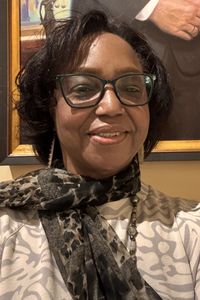
Lorraine Thomas served in the U.S. Army from 1986 to 1995. Thomas earned a high school diploma from Abraham Darby and a bachelor's degree from the Medical College of Georgia in 2005. Thomas' career experience includes working as a registered nurse.[1]
- Bachelor's:
- Medical College of Georgia, 2005
- High school:
- Abraham Darby
In their own words
Who are you? Tell us about yourself.
Lorraine Thomas is a Gulf War Veteran, Registered Nurse, and 20-year resident of Columbia County, committed to service to her country, faith, and community. Born in Birmingham, England, she brings both a global perspective and deep local commitment.
Lorraine has spent two decades serving families across Columbia County and the CSRA, advocating for patients, protecting the vulnerable, and ensuring access to quality healthcare. She earned her Bachelor of Science in Nursing from the Medical College of Georgia in 2005, where she was inducted into the Sigma Theta Tau International Honor Society of Nursing and was among the first recipients of the Nursing Scholars Award for academic excellence. She also graduated as Distinguished Honor Graduate from Licensed Practical Nursing school during her military service in 1992.
A woman of strong Christian faith and a domestic violence survivor, Lorraine believes leadership is rooted in integrity, accountability, and compassion. She is committed to protecting farms and rural communities, strengthening public and school safety, supporting small businesses, improving teacher retention, expanding healthcare access, and enhancing mental health services for veterans, seniors, and working families.
Lorraine stands for fair, equitable policies that ensure opportunity is not limited by zip code, income, or background, continuing Columbia County’s legacy of principled leadership and community protection.
Please list below 3 key messages of your campaign. What are the main points you want voters to remember about your goals for your time in office?
Healthcare
Women’s, children, Veterans, and senior
Services.
Fighting for fair, timely access to
quality care, Medicaid eligibility. Support health and mental health resources for all community members — including those who served.Education &
Opportunity
Strengthening schools safety. Supporting
teacher retention with bonuses & incentives. Ensuring every family in district 24 including rural and underfunded areas have a fair chance to succeed.Responsible Growth
& Infrastructure
Protect farmers with tax relief and
incentives while managing
Columbia County’s growth with
safer roads, improved traffic flow,
and strong community planning.
Mandate that data center
developers pay 100% of the costs
for their own energy and infrastructure
What areas of public policy are you personally passionate about?
Healthcare Access and Mental Health Services
I am passionate about improving access to quality healthcare, expanding mental health services, and ensuring all members of district 24 - in both rural and main areas - including women, children, veterans, and seniors receive timely support. As a registered nurse, I have seen firsthand how delays in care impact families. I am committed to expanding heathcare services and strengthening in-home care options for seniors and those with disabilities.
Who do you look up to? Whose example would you like to follow, and why?
Barbara Jordan’s example resonates with me because she led with both strength and steadiness. She proved that you don’t have to come from a traditional political background to make a meaningful impact; you simply have to bring conviction, preparation, and a deep respect for the responsibilities of public office. Her voice—measured, thoughtful, and rooted in justice—remains a model for how to lead without compromising one’s values. She demonstrated that true service is not about spotlight or status, but about safeguarding the public trust. She showed that you can honor the institutions you serve while still challenging them to be better. Like her, I aim to lead with integrity, to elevate the voices of those who feel unseen, and to stand firm in doing what is right, even in the face of opposition.
What characteristics or principles are most important for an elected official?
Integrity — Doing what is right and always putting constituents above politics.
• Accountability — Being transparent, accessible, and answerable to the people served.
• Compassion — Understanding real-life struggles and leading with empathy.
• Service-Oriented Leadership — Treating public office as a responsibility, not a position of power.
• Common-Sense Problem Solving — Focusing on practical solutions that improve everyday life.
• Listening to Constituents — Engaging directly and valuing diverse perspectives.
• Courage — Standing firm in convictions while addressing tough issues honestly.
• Fairness — Ensuring policies benefit all communities equitably.
• Responsiveness — Acting promptly on constituent concerns and needs.
• Collaboration — Working across differences to achieve meaningful results.
What do you believe are the core responsibilities for someone elected to this office?
Listening to constituents and bringing their concerns into legislative discussions. Advocating for rural communities, farmers, veterans, small businesses, and local schools.
Hosting town halls, attending community events, and maintaining open communication. Helping residents navigate state agencies such as licenses, benefits, permits.
What legacy would you like to leave?
I would like my legacy to reflect compassionate, principled leadership rooted in integrity, service, and accountability. I want to be remembered as someone who listened to the people, treated all with dignity, and worked to bring communities together around practical solutions. Essentially “I came, I saw, I did something about it.”
What was your very first job? How long did you have it?
My first official job was at 15 working as a shampoo assistant/ junior stylist. I also became the boss’s wife’s assistant. UK’s equivalent of high school begins at age 11 through 15 or 16. I kept the job through my first year of college which I attended at 16 years of age.
What is something that has been a struggle in your life?
One struggle for me has been seeing how easily misunderstandings and divisions grow when people fail to listen to one another. Decisions may be made without fully understanding the everyday realities of the people affected. This has strengthened my commitment to listening, learning, and ensuring all voices are considered.
What do you believe is the ideal relationship between the governor and state legislature?
The ideal relationship between a governor and state legislators should be built on mutual respect, open communication, and a shared commitment to serving the people. Collaboration is essential to develop effective policies and address the needs of communities across the state.
What do you perceive to be your state's greatest challenges over the next decade?
Over the next decade, Georgia will face several key challenges, including rapid population growth, pressure on infrastructure, traffic, housing, and public safety resources. Access to affordable healthcare, jobs and transportation especially in rural areas. Teacher and healthcare worker retention. The emergence of data centers effect on the land and residential communities. Rising utility cost, inflation and the rising cost of living impacting families and small businesses.
Addressing these challenges will require balanced budgeting, responsible development, and collaboration across communities. By focusing on practical solutions, as a State Senator I will contribute in protecting our quality of life, expand opportunity, and ensure sustainable growth for future generations.
Do you believe that compromise is necessary or desirable for policymaking?
Yes, I believe compromise is both necessary and desirable in policymaking. Compromise allows policymakers to move forward on issues that matter most to the public, such as healthcare, education, and economic opportunity. It also helps build trust and encourages respectful dialogue, which is essential in a diverse community. I believe the goal should always be thoughtful, balanced solutions that serve the greater good while maintaining integrity and accountability.
What was the first historical event that happened in your lifetime that you remember?
Seeing the first man land on the moon when I was a small child.
On the 2026 ballot
Links
Compiled from the candidate’s published profile as of September 30, 2026.
Source(opens in new tab)