
Background
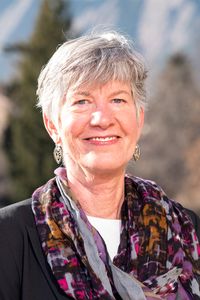
Lesley Smith was born in Los Angeles, California. She earned a bachelor's degree in aquatic biology from the University of California at Santa Barbara in 1980 and a Ph.D. in marine environmental and estuarine sciences from the University of Maryland in 1987. Her career experience includes working as an environmental scientist. She was the first female aquanaut to work in the National Oceanic and Atmospheric Administration’s underwater research habitat, Aquarius. She previously served on the Boulder Valley school board.[1]
- Ph.D:
- University of Maryland, 1987
- Bachelor's:
- University of California at Santa Barbara, 1980
Campaign themes
Lesley Smith has not yet completed [the profile publisher]'s 2026 Candidate Connection survey.
Send a message to Lesley Smith asking her to fill out the survey.
If you are Lesley Smith, click here to fill out [the profile publisher]'s 2026 Candidate Connection survey.
Who fills out the candidate survey?
Any candidate running for elected office, at any level, can complete [the profile publisher]'s Candidate Survey. Completing the survey will update the candidate's [the profile publisher] profile, letting voters know who they are and what they stand for. More than 32,000 candidates have taken [the profile publisher]'s candidate survey since we launched it in 2015. Learn more about the survey here.
You can ask Lesley Smith to fill out this survey by using the button below or emailing lesley@lesleyforco.com.
Video for [the profile publisher]
Video submitted to BallotpediaReleased May 30, 2024
Who are you? Tell us about yourself.
I have nearly 20 years of public service to my community. I served 8 years on the Boulder Valley School District board of education, 5 years on the Water Resources Advisory Board, and I am in my sixth year as CU Regent at-Large. Through my service, I have developed a deep understanding of policy governance, which is the development and oversight of policies, similar to what the legislature does. I have a 40-year career as a scientist, specifically focusing on water and greenhouse emissions from wetland ecosystems. I can lend my expertise in both public education and water issues to the State House. As a scientist, I take a data-based approach to problem solving, gather data from myriad sources and carefully weigh the pros and cons while keeping my constituents’ concerns in mind in my decision-making process. I have spent the past year traveling the four counties that are in HD-49 meeting with public officials and community members to learn what issues are top of mind. These will drive my legislative priorities.
Please list below 3 key messages of your campaign. What are the main points you want voters to remember about your goals for your time in office?
I had intended to run for re-election as CU Regent at-Large, but we are in a climate crisis. I decided to run to bring my expertise as a water scientist focusing on greenhouse gas emissions to the state house. I believe we must transition to a 100% clean energy economy to stop the devastating effects of climate change. We must develop robust plans for this transition. This will be my top priority.Public education is also a top priority for me. We need to pay our teachers and staff the salaries they deserve. We need to provide an equitable education to all our students. A college education is out of reach for too many because of the high cost of tuition and housing. I will fight to better fund both K-12 and higher education.Affordability of housing and healthcare is a universal issue I have been hearing about across the district and the state. I look forward to seeing if the new legislation makes a sizable dent in housing stock and affordability. I believe health care is a basic human right. I was disappointed that HB24-1075, Analysis of Universal Health-Care Payment System, died on the clock. I will fight to ensure everyone has universal healthcare.
What areas of public policy are you personally passionate about?
My platform focuses on climate change, public education, affordability of housing and health insurance, and gun safety. That being said, if elected as the representative of HD-49, I believe it is incumbent on me to listen to my constituents and learn what issues are most critical to them. The district is large and geographically diverse with much of it being mountain rural. I registered my candidacy over a year ago, and I have been traveling my district since then to learn about the issues of concern. Affordable housing and health insurance, forest health, fire mitigation and home insurance, water availability and quality, and dispersed shooting are some of the most common issues I have been hearing about.
Who do you look up to? Whose example would you like to follow, and why?
I looked up to my mom who broke barriers right and left in a time when men dominated everything. I still think of the barriers she broke as I move through my life.
Is there a book, essay, film, or something else you would recommend to someone who wants to understand your political philosophy?
The book I am currently reading is Courage in the People’s House – Nine Trailblazing Representatives Who Shaped America by our Congressman Joe Neguse. I highlight this book because Joe would be my role model of how to govern effectively. He has been an amazing leader, and everybody likes Joe! As Joe states, these represents had the courage to speak truth to power even when it would have been easier to go with the prevailing view. I would seek to do this as well.
What characteristics or principles are most important for an elected official?
I have run for and won two different offices – BVSD school board and CU Regent at-Large. The characteristics that people have told me that they admire are that I am a good listener. I believe in-depth stake holding is required to develop sound policy, and I will always be respectful even if I don’t agree with somebody I am engaged with. This requires good listening skills (I can even do this in Spanish). People value that I use data- and evidence-based processes in my decision making. I am transparent and will always explain why I voted the way I did. I learned very early while on school board that I will not make everyone happy, but they always like to know why I made a particular decision. Of course, honesty and integrity are key.
What qualities do you possess that you believe would make you a successful officeholder?
I am a good listener, respectful, hard working, and willing to reach out to those who I don't necessarily agree with to learn where they are coming from.
What do you believe are the core responsibilities for someone elected to this office?
The primary responsibility of an elected official is to represent their constituents. This means that a Representative must be responsive to constituent emails and phone calls, hear directly from constituents through town halls and have an open-door policy and be respectful even if my views differ from theirs. In these polarized times, I believe a Representative should be respective of their colleagues, try to reach across the aisle when it seems appropriate and agree to disagree agreeably. Of course, the main goal of legislating is to pass bills that will help my constituents and the state.
What legacy would you like to leave?
As an elected official, I have always been known to be even keeled and have left the boards I served on in a better place. If elected, I would like to make HD-49 a better place for all community members.
What is the first historical event that happened in your lifetime that you remember? How old were you at the time?
The Watts Riots because I grew up in Los Angeles. I was in grade school, and I didn't fully understand what was going on but I knew there was a lot of anger among the Black community. Of course, now I understand the historical context of the riots.
What was your very first job? How long did you have it?
I was a budding scientist when I was in high school. My first job was to work in the research surgery lab at Cedar-Sinai Hospital. I was really lucky to have this job because I realized that I didn't want to work in a hospital setting. I loved the outdoors and nature, so I became a field scientist and educator instead.
What is your favorite book? Why?
I love anything by Isabel Allende. I did research for a decade in Brazil and Venezuela in the 80s and early 90s. Brazil was in a dictatorship when I first worked there. I felt a connection to her and the assassination of Salvador Allende, her father's cousin, because I was in South America during the period of the desaparecidos. I understood the underlying fear that her characters felt. Her genre at the time was magical realism, which I found reflected the beliefs that many people carried.
If you could be any fictional character, who would you want to be?
I would be a dolphin. I was the first woman aquanaut to live and work for a week in NOAA's Aquarius habitat in St. Croix. I got to dive with the dolphins while there. They are amazing creatures. The ocean is what brings me the most peace and happiness.
What was the last song that got stuck in your head?
Dua Lipa's Dance the Night always gets me moving.
What is something that has been a struggle in your life?
When I completed my PhD, I didn’t have a clear direction for my next step. This was hard and unsettling for me because I always knew what my next step was going to be – I knew since the 6th grade that I wanted to be some sort of scientist, and I followed that through. After two years of various postdocs, I landed a fellowship at the Cooperative Institute for Research in Environmental Sciences (CIRES) at the University of Colorado (CU) to do research in Venezuela. I met my husband, an atmospheric scientist at NOAA, that year. Thirty-five years later, I am still associated with CU and our son is a graduate of the Leeds School of business. I’d say CU has been good to me and our family!
What do you believe is the ideal relationship between the governor and state legislature?
I believe it is most effective if the governor and state legislature work in partnership realizing that there will not always be agreement between the two. A key example of disagreement is the budget for higher education. Every year the leaders of all institutions of higher develop a budget request for the Joint Budget Committee (JBC) based on the fixed costs, inflation and possible tuition increases. The past two years the governor’s budget for higher ed did not meet the needs of the total fixed costs. Fortunately, the JBC went to bat for higher ed and suggested that the budget be raised, and both years the House and Senate passed a budget with an increased budget for high ed. There are many examples when the governor and the legislator have seen eye to eye on Bills.
What do you perceive to be your state's greatest challenges over the next decade?
Money. We have TABOR, the taxpayers bill of rights, which limits how much taxes can be collected. As a result of this, Colorado is at the bottom of the barrel when it comes to funding K-12 education, higher education, mental health, and the list goes on. The state has fixed costs that it much fund, such as the prison system, Medicaid, employee insurance, etc. As these fixed costs go up, it leaves less money for non-discretionary spending, like higher ed. Our state needs a fix for this.
Do you believe that it’s beneficial for state legislators to have previous experience in government or politics?
I believe it is beneficial to have some sort of experience as an appointed or elected official that has oversight of policy governance. As I have stated previously, having served on two policy governance boards, board of education and board of regents, I have deep experience of developing policies, which is similar to what the state legislature does. See my first response for more on this.
Do you believe it’s beneficial to build relationships with other legislators? Please explain your answer.
Of course, it is beneficial to build relationships with other legislators! How else can one work effectively without having relationships in the State House and Senate. Building relationships takes time, and it helps to build trust.
Is there a particular legislator, past or present, whom you want to model yourself after?
The seat I am running for has a legacy of strong women – Clare Levy, KC Becker and Judy Amabile – all who are good friends and I talk to frequently for advice and ideas. I hope to build upon their legacy, if elected.
Are you interested in running for a different political office (for example, the U.S. Congress or governor) in the future?
No, this is the last office I will run for.
Both sitting legislators and candidates for office hear many personal stories from the residents of their district. Is there a story that you’ve heard that you found particularly touching, memorable, or impactful?
One of the stories I love to tell is when former state Senator Jeanne Nicholson from Gilpin County invited my husband and I to their home for lunch and a tour around the county the summer of 2023. She and her husband were former county commissioners, so they both had a wealth of knowledge. I am an avid notetaker, and I filled many pages of my campaign notebook. As we toured the community center, county jail, pre-school and Blackhawk where gambling is legalized (I had never been there), I heard the same phrase over and over – gambling money is bittersweet, there’s good and bad that has come with the advent of gambling. The afternoon I spent with the Nicholson’s gave me so much insight into the issues facing Gilpin County that is quite unique compared to most of the other counties in the state. I can use my knowledge gleaned that day to help champion issues of this county.
Should the legislature oversee or grant the use of emergency powers?
Emergency powers are granted to the governor and are used in times of extreme emergency. The governor’s office oversees the resources that can be mobilized to respond to extreme emergencies. Plus, the office works year-round and can respond to extreme emergencies even when the legislature is not in session. In response to the COVID pandemic, the governor exercised his right to use emergency powers to respond to the pandemic. A group of legislators tried to overturn his emergency powers because they disagreed with mask mandates and other measures that were taken by the state government, but their bill did not pass. Given how infrequently governors declare the use of emergency powers, I would not support the legislature to oversee or grant the use of emergency powers. How would the legislature do this, if they are not in session?
What is the first bill you would introduce if elected?
I have a list of bill topics I would introduce if elected. One of them would be to control dispersed shooting in sparsely populated areas on US Forest Service Lands. This is an issue that is common across the four counties where HD-49 sits, and it is an issue I have heard from constituents across HD-49. Representative Amabile, whose seat I am running for, has tried to pass such a bill the last two sessions. If she is elected to the Senate seat, I will work with her to see if we can get this past the finish line.
What organizations or individuals have endorsed your campaign?
I have too many to list here.
What committees interest you?
Agriculture, Water and Natural Resources, Energy and Environment, Education, Capital Development
What are your views on financial transparency and government accountability?
These are both key to effective governance. I have served on a school board and am currently a regent of the University of Colorado (CU), and both positions require oversight of large budgets, especially CU which is the third largest employer in the state. All budget discussions and decisions are made in public, and all votes on budget items are made at a public meeting. Stakeholders expect this, and it is mandatory under Colorado state law. Without transparency and accountability, voters would rightly distrust the government.
Do you support or oppose changes to the current state ballot initiative process? If so, what kind of changes would you consider?
I feel that it is too easy to get an initiative onto the ballot. Fortunately, Constitutional ballot initiatives have been tightened up somewhat. Our state is living with the detrimental legacy of TABOR, and it has been nearly impossible to remove this initiative from our Constitution. Ballot initiatives that are not enshrined in our Constitution should be tightened up as well. These initiatives often are funded by outside money, and these groups have no business driving legislation in Colorado. Also, citizens may not know what is best for Colorado. A prime example is the initiative that passed to re-introduce wolves to Colorado last year. I am not a wildlife biology expert, and as a scientist I believe that the Department of Parks and Wildlife, which has the expertise in such a matter, should decide whether or not to re-introduce wolves.
On the 2026 ballot
Links
Compiled from the candidate’s published profile as of September 30, 2026.
Source(opens in new tab)