
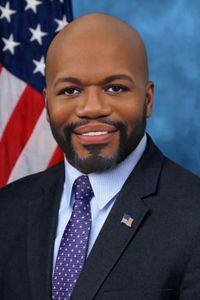
Background
Lent Carr II was born in Greenville, North Carolina. He earned a high school diploma from J.H. Rose High School, a Ph.D. from ECEI University in 1999, and a Ph.D. from the Bible Institute of America Theological Seminary in 2022. Carr's career experience includes working as a professor and university chancellor/president. As of 2025, Carr was affiliated with Emmaus Corp. Embassy International University (ECEI).[1]
- Ph.D:
- ECEI University, 1999
- High school:
- J.H. Rose High School
Campaign money
- Raised
- $0
- From individuals
- $0
- From PACs & party
- $0
- Own money
- —
FEC filings.
View on FEC.gov(opens in new tab)In their own words
Who are you? Tell us about yourself.
My name is Dr. Lent Christopher Carr II, and I am running for Congress not out of ambition, but out of duty—to serve, to uplift, and to restore dignity to the forgotten communities of our district and nation. But I haven’t forgotten where I came from. And I know you haven’t forgotten either. I was raised in Greenville, North Carolina, by hardworking parents who taught me the value of labor, truth, and community. At the age of nine, I was already in the tobacco fields—learning, through sweat and callouses, what too many in Washington have forgotten: the dignity of work and the worth of those who do it. For over a decade, I’ve called Raeford in Hoke County home. I currently serve as National President of the National Congressional Voting Caucus for Human Rights, and I am honored to hold the office of Chancellor and Professor at ECEI University, My academic journey includes a Doctorate in History (focused on American and Middle Eastern studies), a Civil Christian Canon Law J.D., and additional doctoral credentials in Theology, Public Policy, Political Science, and Legal Research. I serve as Senior Pastor of Emmaus Cathedral. I have been awarded the “We The People” Global Humanitarian Award (2023) and the U.S. President’s Lifetime Achievement Award four times—by Presidents Barack Obama, Donald Trump, and Joseph Biden. These honors are not just personal achievements; they are symbols of the tireless advocacy I bring to every community I serve. Visit: www.lentcarrforuscongress.com
Please list below 3 key messages of your campaign. What are the main points you want voters to remember about your goals for your time in office?
I will fight for: Working families, not corporate tax loopholes. Farmers and rural communities, not billionaire land speculators. Veterans and service members, not defense contractors enriching themselves. Teachers and students, not culture wars and political theater. Healthcare as a Human Right and housing justice, not broken promises. Protecting democracy, not enabling authoritarianism. This campaign isn’t a performance—it’s a people’s movement. And I invite you to be a part of it. We are done being ignored. We are done being divided. And we are done being lied to by those who value power more than people. My campaign is built on one core principle: “We’re Putting The Welfare of the People 1st and Politics Last.”Lent ascribe to the moral, and so-called American Dream notion that ownership should mean freedom, not lifelong financial obligation. Reforming property taxation will empower Americans, uphold constitutional values, and strengthen our communities. This is not a giveaway — it is a restoration of what is rightfully yours. For years now, under current federal, state, and local government practices to force hardworking Americans who've secured their properties through grueling backbreaking work to essentially be enslaved under a tax system that paid not one dime towards the purchase of their respective property, is an illegal taxing scheme that has hurt so many Americans for reasons of double tax theft. Lent intends to champion this Bill.Carr’s Economic Inclusion Empowerment Bill proposed agenda, a transformative legislative proposal designed to uplift every American—particularly the middle class and marginalized poor left behind since the conception of this Nation—through direct investment, progressive taxation, and robust safety nets. Rejecting the failed Republican “trickle-down,” "PROJECT 2025" adoptive model and exposing its “Reverse Robin Hood” reality, this Bill demonstrates a practicable, sweeping framework that genuinely empowers 99% of Americans. I call it the 99% "PROJECT 2026" Democracy Initiative. It contrasts sharply with Representative Richard Hudson’s unwavering loyalty to Donald Trump’s “Big Ugly Bill,” which slashes vital programs, and widens inequality.
What areas of public policy are you personally passionate about?
Public Policy Snippets Carr Champions: Protect and Expand the Social Safety Net: Safeguard Medicaid, SNAP, TANF, Social Security, and Medicare; reverse harmful austerity.
Promote Tax Justice: Reinstate progressive rates; expand refundable credits for children and low-income workers.
Empower Workers: Raise the federal minimum wage; strengthen collective bargaining; fund labor protections.
Advance Humane Immigration Reform: Provide a clear path to citizenship; end inhumane detention; protect families.
Reprioritize National Spending: Conduct peace and security audits; shift resources to human development.
Uphold Democratic Principles: Ensure judicial and legislative checks prevent executive overreach in military and domestic deployments.
Who do you look up to? Whose example would you like to follow, and why?
I look up to the incomparable Barbara Jordan—her soaring oratory, razor-sharp intellect, and unshakeable integrity still light the way for me! As the first Black woman from the South elected to Congress, she wielded the Constitution like a beacon of justice, fearlessly confronting abuses of power with eloquence and moral clarity. I aspire to follow her example: to speak truth to authority, uplift marginalized voices, and legislate with both courage and compassion. Like Barbara Jordan, I will let principle—not politics—guide every vote and every word.
Is there a book, essay, film, or something else you would recommend to someone who wants to understand your political philosophy?
I am proud to recommend The Book of Rivals to every constituent seeking deeper insight into the philosophical foundations that guide my service. This work chronicles how history’s greatest leaders—despite fierce ideological, cultural, or personal rivalries—ultimately forged alliances to advance the common good. Their stories remind us that progress demands not the eradication of difference, but it's transcendence: transforming adversaries into collaborators in the urgent work of governance.
My own political philosophy echoes this timeless lesson. In an era when Trump’s administration has inflamed fissures of race, class, and sexuality, The Book of Rivals illuminates a different path: one in which empathy, respect, and mutual accountability become the bedrock of policy. I believe that enduring solutions arise when we interrogate our assumptions, listen earnestly to dissenting voices, and co-create legislation that reflects our shared humanity.
Chapter by chapter, the authors demonstrate how rival camps—whether in peacetime congresses or wartime councils—overcame distrust through evidence-based debate, moral courage, and the conviction that no single faction holds a monopoly on truth. These lessons inform my approach to climate resilience, economic inclusion, and voting-rights reform: I will convene experts across the spectrum, ground every proposal in data and ethics, and remain open to iterative refinement.
Above all, The Book of Rivals affirms my core belief that the office of Congress is not a pulpit for partisan triumph but a workshop for public service. As your Representative, I vow to carry forward its central message: that we are at our strongest when we forge unity from our most profound disagreements, choosing the welfare of the people over the perpetuation of division.
What characteristics or principles are most important for an elected official?
Empathy-Driven Leadership: Born and raised in Greenville, North Carolina, I witnessed systemic injustice firsthand. As your Congressman, I will craft policies grounded in compassion—uplifting working families, supporting veterans’ mental health, and protecting children from partisan neglect. Integrity & Transparency: Trust sustains democracy. I commit to full transparency—publishing my votes, hosting monthly town halls, and providing clear explanations of every decision. Data-Driven Innovation: Facing climate disasters, crumbling infrastructure, and economic inequality demands evidence, not rhetoric. I will convene bipartisan expert panels, commission independent studies, and pilot solutions—from clean-energy initiatives to poverty-eradication programs—rooted in proven science and economics. Balanced Fiscal Responsibility:
My Economic Inclusion Empowerment Bill abolishes regressive property taxes while funding schools, hospitals, and first responders via a progressive financial-transaction fee. This ensures essential services thrive without burdening homeowners. Inclusive Governance:
America’s strength is her diversity. My immigration reform offers humane border policies, pathways to citizenship, and protection for DREAMers, in stark contrast to the cruelty of today’s status quo. Moral Courage: The “Big Beautiful Bill” has worsened inequality and weakened agencies like FEMA. I will confront special-interest influence, champion term limits, enforce campaign-finance reform, and demand rigorous oversight of executive power. Defending Democracy:
In the face of gerrymandering and shadow-docket rulings, I will safeguard voting rights with automatic registration, independent redistricting commissions, and robust protections against disenfranchisement. Bipartisan Collaboration:True progress requires cooperation. I will work across the aisle on shared priorities that don't compromise my, or my constituents core principles. In short, "welfare of the people 1st."
What qualities do you possess that you believe would make you a successful officeholder?
As Professor Lent C. Carr II, I bring a rare fusion of scholarship, spiritual leadership, and unwavering public service:
Intellectual Rigor: Decades as a political-science scholar and chancellor have honed my ability to dissect complex policy, marshal data-driven solutions, and teach future leaders the art of governance.
Moral Authority: My years as a pastor and human-rights advocate instilled deep empathy, ethical conviction, and the courage to confront injustice—even when it meant standing alone.
Resilience & Authenticity: Wrongfully imprisoned and exonerated, I know firsthand the perils of systemic failure and the power of perseverance.
Community Engagement: From tobacco fields at nine to today’s town halls, I listen, learn, and adapt—ensuring every constituent’s voice shapes legislation.
Collaborative Vision: I unite diverse stakeholders—academics, faith leaders, veterans—to forge bipartisan coalitions that deliver tangible results for North Carolina’s 9th District.
These qualities—grounded in faith, scholarship, and lived experience—equip me to serve effectively, transparently, and compassionately in Congress.
What do you believe are the core responsibilities for someone elected to this office?
I uphold justice, equity, and servant leadership. As your Congressman, I will legislate with integrity, transparency, and empathy; defend democracy through voting rights and term limits; strengthen Education Reform; drive data-backed policies on climate, healthcare, and economic inclusion; champion humane immigration and veterans’ support; building legislative solutions to uplifting the middle and marginalized poor classes, while fighting to eradicate poverty in our lifetime, and always put the welfare of the people above politics. As your elected Representative, I commit to an open-door office policy, and regular in-district town halls—meeting face-to-face in our communities, not just on phones or Zoom, to hear your concerns directly and personally.
What legacy would you like to leave?
I aspire to leave a legacy of principled stewardship and intergenerational empowerment. Drawing on my years as a pastor, scholar, and exonerated advocate, I will champion institutions that prioritize moral courage over partisanship, ensuring that every policy—whether on civil rights, environmental justice, or economic inclusion—embodies both rigorous analysis and deep compassion.
I want future leaders to inherit a Congress that lives up to its promise: transparent in its finances, accountable in its oversight, and fearless in defending democracy. I envision robust civic education initiatives so that young Americans enter public life armed with historical insight, ethical grounding, and the confidence to innovate.
Above all, I seek to prove that public office can be a sacred trust: a place where diverse voices unite to elevate the common good, where our children and grandchildren can look back and say, “They built a government of integrity—and entrusted us to carry it forward.”
What is the first historical event that happened in your lifetime that you remember? How old were you at the time?
1993 was the year our lives were forever transformed when our first child, Oldlivia, arrived—a moment of pure wonder that heralded six more joyous births and, over the years, ten beautiful grandchildren. Each new life has been a blessing, filling our home with laughter and love. Yet amid this joy, my wife, Dr. Deltarina V. Carr, and I have known profound grief, having lost one of our beloved daughters-in-law to the devastating fentanyl epidemic. As a result, we have been truly blessed to began parenting all over again, raising our Grandson, Little Isaiah, Jr. from birth till now-age five. Through it all, we remain grateful for every gift of life and driven to protect our families and community.
What was your very first job? How long did you have it?
At just nine years old, I stepped into the southern fields of tobacco, corn, cotton, sweet potatoes, and cucumbers—working long hours under a relentless sun. With my parents’ steadfast encouragement, I learned the transformative power of grit and persistence. That early lesson in hard work and dedication has fueled every milestone in my life and continues to drive my commitment to serve our community with unwavering resolve.
What is your favorite book? Why?
My favorite book is Team of Rivals by Doris Kearns Goodwin, and for good reason. It chronicles President Lincoln’s masterstroke of leadership: surrounding himself with former adversaries—each a rival for the Republican nomination—and forging them into a cohesive cabinet united by a shared purpose.
This work resonates deeply with my own convictions. As an academic and public servant, I’ve seen how partisan purity tests fracture progress, while Lincoln’s willingness to embrace dissenting voices yielded policy breakthroughs and moral clarity amidst our nation’s gravest crisis. His example teaches that true strength lies not in ideological uniformity, but in harnessing diverse perspectives for the common good.
In Team of Rivals, Lincoln models empathy tempered by principle: he listens intently, challenges assumptions with data and moral reasoning, and holds his colleagues to a higher standard even as he earns their loyalty. That blend of intellectual rigor and human compassion underpins my own approach—whether convening bipartisan panels on climate resilience or crafting inclusive economic reforms.
Above all, the book reminds me that leadership demands humility and courage: humility to acknowledge where we’re wrong, and courage to forge alliances with those who challenge us. I carry that lesson into every town hall and legislative negotiation, striving to unite—even in the face of division—so North Carolina’s 9th District can move forward together.
If you could be any fictional character, who would you want to be?
If I could inhabit any fictional life, I’d choose Atticus Finch from To Kill a Mockingbird. He embodies the rare fusion of moral courage, empathy, and unswerving integrity that I strive for in public service. Finch stands up for the innocent against prevailing prejudice, teaches his children the power of compassion, and trusts in the rule of law even when it’s inconvenient. His example inspires me to defend the marginalized, speak truth to power, and legislate with both heart and principle—so that North Carolina’s 9th District can know justice tempered by humanity.
What was the last song that got stuck in your head?
The last song I couldn’t shake was Woody Guthrie’s “This Land Is Your Land.” Those simple chords carry a profound reminder: our democracy is not a distant ideal but a living promise—a promise that every American, no matter their background, has a stake in our shared future.
As Guthrie sang of highways and redwood forests, I’m driven by the same fire: to safeguard the freedoms etched in our Constitution, to ensure that every voice is heard at the ballot box, and to defend our Republic against forces that would divide us. That melody stirs a fight in my soul—not a fight of bullets or bombs, but of ballots and ballots counted fairly, of laws debated passionately, and of citizens engaged daily.
Every time those words loop in my mind, I’m reminded that the work of democracy never ends. It demands our hands, our hearts, and our unwavering resolve. And so I carry that song as my rallying cry: this land is indeed your land—and mine—and together, we will secure it for generations to come
What is something that has been a struggle in your life?
One enduring struggle has been navigating the chasm between lofty talk of empathy and genuine compassion. Having faced discrimination myself and devoted my life to serving others, I’ve witnessed too many who preach understanding yet fall short in action. It’s tempting to grow bitter, but my faith and sense of calling compel me to respond with love, forgiveness, and second chances. Rather than surrender to cynicism, I strive to model authentic compassion—so that my example might inspire true empathy and collective hope.
What qualities does the U.S. House of Representatives possess that makes it unique as an institution?
I believe the U.S. House stands apart for its immediacy, diversity, and democratic vitality. As the chamber “closest to the people,” it renews its membership every two years, ensuring that voices from every community—from small towns in North Carolina’s 9th District to our nation’s metropolitan centers—are heard without delay. The House’s power to originate revenue bills roots fiscal policy in direct representation. Its unique authority to impeach executive and judicial officers embodies the framers’ design for checks and balances. Moreover, its broad committee system—spanning oversight, appropriations, and policy domains—enables granular, data-driven scrutiny of government functions. In concert, these qualities forge an institution both responsive and resilient, reflecting our federal republic’s foundational commitment to popular sovereignty and accountable governance.
Do you believe that it's beneficial for representatives to have previous experience in government or politics?
I don’t believe a résumé of government posts is a prerequisite for effective representation. As a pastor, civil-rights advocate, and exonerated citizen of our community, I offer lived experience and an unjaded perspective—qualities often absent in career politicians whose echo chambers fueled the out-of-touch policy blunders of recent administrations. My commitment is to grassroots listening tours, rigorous research, and direct constituent engagement, ensuring every vote reflects the real needs of North Carolina’s 9th District, not entrenched political routines. Our Framers of this great American Democracy experiment did not utilize such, and we live in the Greatest Nation on Planet earth.
What do you perceive to be the United States' greatest challenges as a nation over the next decade?
I believe the next decade will test America with six interlocking challenges:
Climate Crisis: Translating cutting-edge science into policy to avert ecological tipping points.
Democratic Erosion: Defending institutions and voting rights against polarization and misinformation.
Economic Inequality: Ensuring equitable growth through progressive taxation, workforce training, and innovation.
Aging Infrastructure: Rebuilding roads, bridges, broadband, and clean-energy grids for the 21st century.
Public Health Resilience: Investing in universal access, pandemic preparedness, and mental-health support.
Technological Ethics: Governing AI and biotech to balance progress with privacy, safety, and human dignity.
Only with bipartisan collaboration, data-driven solutions, and robust civic engagement can we secure liberty, prosperity, and sustainability for all Americans.
Do you believe that two years is the right term length for representatives?
I believe the House’s two-year term—when paired with enforceable term limits—strikes the ideal balance between accountability and effectiveness. Philosophers from Madison to Tocqueville warned that extended tenures dull the public spirit; short terms compel Representatives to remain rooted in community needs, to listen regularly, and to deliver tangible results. Two years is neither a rubber-stamp window for party bosses nor an unworkable blur of perpetual campaigning; it’s a deliberate cadence that keeps power responsive, ideas fresh, and democracy alive in North Carolina’s 9th District.
What are your thoughts on term limits?
I advocate a constitutional amendment to impose enforceable term limits, dismantle entrenched interests, and revitalize our republic:
• House: Up to three two-year terms (6 years)
• Senate: Up to two six-year terms (12 years)
• Supreme Court: One non-renewable 18-year staggered term
Grounded in Madison’s warnings in Federalist No. 10 about factionalism and Tocqueville’s insights on civic renewal, these limits curb careerism, reduce special-interest sway, and ensure fresh perspectives. Predictable rotation prevents power consolidation, enhances accountability, and keeps our democracy dynamic, responsive, and resilient.
Is there a particular representative, past or present, whom you want to model yourself after?
I model my service on the late Congressman John Lewis—whose “good trouble” ethos combined moral courage, unshakable integrity, and relentless advocacy for justice. Like Lewis, I believe elected office is not a perch for self-interest but a platform to amplify marginalized voices and protect democracy’s promise. His philosophy of nonviolent perseverance and bridge-building across divides mirrors my conviction that lasting solutions arise when we confront injustice with empathy, rigorous debate, and unwavering principle. By following his example, I will champion voting rights, economic inclusion, and human dignity for North Carolina’s 9th District—always striving to make “good trouble” on behalf of the people I serve.
Both sitting representatives and candidates for office hear many personal stories from the residents of their district. Is there a story that you’ve heard that you found particularly touching, memorable, or impactful?
’ll never forget the story of Amos Turner, whose family had farmed in Sampson County for 126 years. Under the Trump administration’s out-of-touch cuts, his subsidies vanished overnight. He watched crops rot in the fields while premiums on his health insurance doubled. When his little girl, Emily, was diagnosed with leukemia, Amos couldn’t afford her treatment. His 13-year-old daughter slipped away—alone, uninsured, and betrayed by a system that said “we value rural America.”
Now, Amos faces foreclosure on the very farmhouse where generations shared laughter and labor. His fields, once the heartbeat of his community, lie fallow as bank notices arrive. His story haunts me: a father’s love crushed by policy indifference, a legacy erased by broken promises.
When the Voters send me to Washington, I'll carry Amos’s pain—and my promise to restore compassion, fair funding, and true representation for families like his in North Carolina’s 9th District.
Tell us your favorite joke.
Why did the scarecrow run for Congress?
Because he was outstanding in his field—and figured he’d do a better job than most politicians at staying rooted in real issues!
Do you believe that compromise is necessary or desirable for policymaking?
I believe principled compromise is both necessary and noble in policymaking. While steadfast in defending core values—justice, equity, and transparency—I recognize that durable solutions arise only when divergent perspectives converge. Drawing on data and ethical reasoning, I will negotiate where it advances the common good: modernizing infrastructure, enacting climate resilience, and expanding healthcare access. Yet I will not barter away fundamental rights or yield to special-interest demands. True leadership strikes a balance—standing firm on principle while building consensus to deliver real results for North Carolina’s 9th District, and the United States as a whole.
The Constitution says that all bills for raising revenue must originate in the House. What role would this power play in your priorities if elected?
I recognize the Origination Clause not as a mere procedural formality but as a foundational check on executive overreach and an affirmation of the People’s fiscal sovereignty. As a Professor of Political Science, I understand that requiring all revenue bills to originate in the House—“the People’s Chamber”—anchors tax policy directly to the electorate’s voice.
Fiscal Initiative & Accountability
Should I be privileged to serve, I will leverage this prerogative to advance equitable revenue measures: a progressive transaction fee to replace regressive property taxes, incentives for clean-energy investment, and safeguards against revenue schemes that disproportionately burden working families. By introducing these bills myself, I bind my actions to rigorous debate and committee scrutiny, ensuring that every levy reflects the district’s consent and scholarly economic analysis.
Oversight of Tax Expenditures
Originating revenue legislation also empowers the House to condition appropriations on transparent tax expenditures. I will insist on rider provisions that require real-time, machine-readable reporting of tax credits and subsidies—bolstering my platform of government transparency and enabling constituents to trace every dollar from revenue inception through program delivery.
Checks and Balances
By situating revenue origination in the House, the framers intended a barrier against unilateral fiscal policy. I will honor that design by engaging in robust bicameral negotiations only after rigorous in-House committee vetting—preserving the constitutional balance between swift responsiveness and deliberative governance.
In embodying this power, I affirm my commitment to principled revenue policy, scholarly rigor, and the democratic imperative that taxation and representation remain inseparable in North Carolina’s 9th District.
How should the U.S. House use its investigative powers?
I assert that the House’s investigative prerogative is not merely an adjunct to legislation but a constitutional imperative under Article I’s “necessary and proper” mandate and the Origination Clause’s companion accountability function.
1. Constitutional Check on Executive Power
By deploying its subpoena and contempt authorities through empowered committees—Oversight & Reform, Judiciary, and Intelligence—the House must rigorously examine executive actions, enforce compliance with the Federal Records Act, and compel testimony to forestall abuses of discretion or expenditure.
2. Truth-Seeking through Bipartisan Inquiry
Investigations should be structured as nonpartisan fact-finding missions, grounded in empirical data and legal precedent. I will champion chartering special select committees with clear scopes and subpoena authority, staffed by majority and minority counsels, to ensure findings rest on unassailable evidence rather than political theater.
3. Strengthening the Power of the Purse
The House must condition appropriations on agency cooperation—tying funding to timely GAO audits, Inspector General referrals, and machine-readable disclosures of tax expenditures and contracts. This “oversight‐funding nexus” guarantees that taxpayer dollars serve the public interest.
4. Safeguarding Whistleblowers & Public Trust
Robust whistleblower protections are essential. I will advance legislation insulating career civil servants from reprisal and requiring secure channels for disclosures.
By wielding its investigatory arsenal with scholarly rigor and procedural integrity, the House will fulfill its role as the People’s watchdog—exposing corruption, safeguarding separation of powers, and renewing confidence in democratic governance. In North Carolina’s 9th District, I will lead with that same unwavering commitment to accountability and the rule of law.
What organizations or individuals have endorsed your campaign?
National Congressional Voting Caucus for Human Rights, National Education Association (NEA) and the North Carolina Association of Educators (NCAE), North Carolina Taxi Workers Alliance (NCTWA), Inc., (ECE)I Emmaus Corp. Embassy International University, Greater Pentecostal Assembly, Churches of the First Born International Conference, and the North Carolina Criminal Jurisprudence Committee,
What committees interest you?
I plan to serve on committees where I can deliver on my core priorities:
Oversight & Accountability: Driving transparency reforms and rigorous agency audits.
Financial Services: Crafting my Economic Inclusion Empowerment Bill and progressive fiscal policy.
Natural Resources: Advancing climate resilience, clean‐energy infrastructure, and environmental justice.
Veterans’ Affairs: Expanding mental‐health support and benefits for those
On the 2026 ballot
Links
Compiled from the candidate’s published profile as of September 30, 2026 and FEC filings.
Source(opens in new tab)