
Background
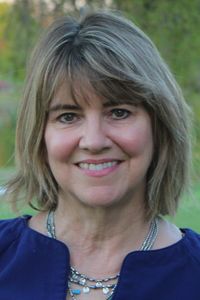
Lauren Kuby was born in Brockton, Massachusetts. She earned a high school diploma from Walt Whitman High School, a bachelor's degree from the University of Chicago in 1980, a graduate degree from Arizona State University in 1992, and additional education from Arizona State University in 1991. Her career experience includes working as a scientist and in local government. She has been affiliated with Climate Power, the Tempe Women’s Club, and Local Progress.[1]
- Graduate:
- Arizona State University, 1992
- Bachelor's:
- The University of Chicago, 1980
- High school:
- Walt Whitman High School
Campaign themes
Lauren Kuby has not yet completed [the profile publisher]'s 2026 Candidate Connection survey.
Send a message to Lauren Kuby asking her to fill out the survey.
If you are Lauren Kuby, click here to fill out [the profile publisher]'s 2026 Candidate Connection survey.
Who fills out the candidate survey?
Any candidate running for elected office, at any level, can complete [the profile publisher]'s Candidate Survey. Completing the survey will update the candidate's [the profile publisher] profile, letting voters know who they are and what they stand for. More than 32,000 candidates have taken [the profile publisher]'s candidate survey since we launched it in 2015. Learn more about the survey here.
You can ask Lauren Kuby to fill out this survey by using the buttons below or emailing Lauren@KubyForSenate.com.
Who are you? Tell us about yourself.
I am a former Tempe vice mayor and councilmember and a long-time advocate for environmental, consumer, and worker protections. Recognized nationally as a champion for climate action and cities as incubators of innovation, I was featured in the book, "Reclaiming Gotham," for challenging legislative interference in local decisionmaking.
As a councilmember, I spearheaded Tempe's climate action plan and drove innovation in water conservation, solar-energy adoption, animal welfare, worker protections, and campaign-finance reform.
As a Senior Global Futures Scientsits at ASU's Global Institute of Sustainability and Innovation, I engaged communities in climate solutions. I also led the University’s Stardust Center for Affordable Homes and the Family, where I worked to craft solutions leading to healthy communities.
I am a graduate of the University of Chicago and received a master's degree in Pubic History from ASU. My husand Mike is a transportation geographer and we raised our two daughters, Nora and Olivia, in Tempe. Nora is an optometrist in the Valley and a new mom; Olivia manages communications for the WNBA team, the Phoenix Mercury.
I'm a tested leader running to represent Legislative District 8 – a progressive district that includes North and Central Tempe, a little sliver of West Mesa, parts of Phoenix and South Scottsdale and the Salt River Pima–Maricopa Indian Community.
Please list below 3 key messages of your campaign. What are the main points you want voters to remember about your goals for your time in office?
I’m a newly minted grandmother who believes that the decisions we make today must not come at the expense of future generations.
I'm an ASU Global Futures Scientist who will bring the expertise of our universities and the wisdom of diverse communities to the State Senate.
It’s time for the Legislature to follow the lead of our cities and universities and embrace clean energy, water conservation, and a just transition from fossil fuels for Indigenous communities.
The time to act is now.I’ll work to protect our reproductive rights and increase access to healthcare for the most vulnerable communities in our state. Our children cannot grow up in a state where their freedoms are restricted and their lives endangered.I am a proud union member and will sponsor worker-friendly legislation, including prevailing wages and Project Labor Agreements, to grow the middle class. Our current Legislature priortizes millionaires and corporate interests over Arizona's workers and working families.
What areas of public policy are you personally passionate about?
With Arizona in the throes of a climate crisis – evidenced by our extreme heat, historic drought, increased frequency and intensity of wildfires, and poor air quality – I’ll focus on win-win climate solutions that protect our most vulnerable residents.
I’m a proven, progressive leader who will:
• Champion Climate Action
• Fight for Abortion Access
• Protect Public Education
• Ensure Protections for Workers
• Advance Affordable Housing
• Strengthen Voting Rights
These are but a few of the urgent issues we need to address in a Legislature that has a clear shot at turning blue for the first time in decades.
Who do you look up to? Whose example would you like to follow, and why?
Barack Obama. It was the honor of my life to volunteer for Obama in five states. His organizing ability, sense of humor, and call to run for local office impacted me greatly. He is a loving and compassionate person and inspired thousands of others to organize and run for office.
Is there a book, essay, film, or something else you would recommend to someone who wants to understand your political philosophy?
Social historian and activist Howard Zinn's "A People's History of the United States."
What characteristics or principles are most important for an elected official?
dedication, compassion, empathy, openmindedness
What qualities do you possess that you believe would make you a successful officeholder?
I am hard-working, energetic, passionate, and dedicated to my work. I consider constituent services to be a sacred duty.
I do not take contributions from corporate special interests, lobbyists, and fossil fuel interests as elected officials should rise above monied interests to represent the people.
What do you believe are the core responsibilities for someone elected to this office?
To balance representation and leadership, which brings a certain tension to the art and science of policymaking.
As a student of history, I recognize that everyone brings their own biases and lived experiences to their work. Elected officials need to listen to other perspectives, but maintain your integrity and not shift with the wind.
You cannot make everyone happy, but you need to represent all your constitutents, not just those who share your perspective. You also need to lead, yet learn from those you are leading.
What legacy would you like to leave?
As I gaze at the innocent, beautiful face of my toddler granddaughter, I muse and worry about what it will be like for her and her generation in 2042 when she casts her first vote. Young people today are faced with unbelievable challenges, and my generation is leaving behind a world where their choices are constrained by the generations that came before them.
I want Rory to know that, in her grandma's "third act," I tried to make a difference, that I fought for her reproductive freedom and for climate solutions.
What is the first historical event that happened in your lifetime that you remember? How old were you at the time?
I was six when John F Kennedy was assassinated, and I remember hearing that news in a school assembly and watching all the big girls crying and I was not really understanding.
Back in 1958, when I was a baby, my parents volunteered in John F Kennedy’s US Senate campaign. One day, alone in the campaign headquarters in our small town, JFK breezed in. No entourage, just the candidate.
My parents were stunned and star struck. My dad, Joe, offered up coffee, but there was no coffee shop to be had in rural New England in those days. He ran home to brew coffee – in a percolator! While he waited the 45 minutes, JFK shared with my mother, Mary, how much he missed his baby Caroline on the campaign trail.
He held me, did the “gitchy-gitchy-goo,” and bounced me on his knee. My mom was spellbound, and I was imprinted. From that day on, my parents foretold that I would be the political one in our large family of 6 kids. And that’s exactly what happened. I’ve been knocking doors since I was 12.
Robert Kennedy's and Dr King's assassinations also had an indelible effect on me, and I remember exactly where i was when I heard the devastating news.
What was your very first job? How long did you have it?
I worked at the town beach in Huntington, Long Island (New York) as a teenager for two summers before heading to college.
But more formative for me, was a volunteer job I had as a teenager. In 1972, I served as Presidential candidate George McGovern's Youth Coordinator for Suffolk County, Long Island. I was 15 and inspired by his grassroots campaign, immortalized in the documentary, "One Bright Shining Moment."
What is your favorite book? Why?
"One Hundred Years of Solitude" by Gabriel García Márquez. I love magical realism and Márquez' s writing style. I get lost in his words, as I escape the modern day.
If you could be any fictional character, who would you want to be?
Elizabeth Bennet from Jane Austen's "Pride and Prejudice"
What was the last song that got stuck in your head?
I babysit for my 18-month old granddaughter Rory, who is Elmo-obsessed. "The Letter of the Day" ("We're moving our body to the ABCs") is ever-present in my head these days.
What is something that has been a struggle in your life?
I grew up with five sisters and brothers, and there are many dysfunctional aspects of growing up with my three brothers.
What do you believe is the ideal relationship between the governor and state legislature?
Ideally, one of collaboraton throughout the legislative session. It's a phenomenal waste of time to push through extremist legisation that the Governor is certain to veto. Why not engage residents, communities, nonprofits, businesses, and universities in the most pressing issues of the day and craft workable solutions? Instead, only Republican bills are "heard in committee," and public engagement is less-than-robust. Arizonans deserve better.
What do you perceive to be your state's greatest challenges over the next decade?
The drought.
"Water is life" and our historic drought is an environmental and economic challenge for the entire state. In rural Arizona, we have wells that are drying up, and our tribal communities lack access to drinking water.
Arizona is on the frontline of the climate crisis. We face not only a Megadrought but the threats of extreme heat, poor air quality, the increased frequency and intensity of wildfires, flooding, and our failure to address the just transition away from fossil fuels.
Instead of addressing these challenges head-on, our Legislature has enacted budget-draining policies -- such as ESA vouchers and the flat tax -- that take away valuable resources that could enhance public safety and save lives.
Arizona should be the solar capital of the country and lead in the clean-energy transition. We are poised to lead, sparked by historic federal investments in clean energy -- Joe Biden's Inflation Reduction Act will continue to spark equitable economic development across the State.
Do you believe that it’s beneficial for state legislators to have previous experience in government or politics?
I do. My experience as a two-term councilmember and vice mayor of Tempe has been invaluable in forming my adaptive approach to governance. It's given me confidence to speak in public and nuanced perspectives on pressing issues.
Do you believe it’s beneficial to build relationships with other legislators? Please explain your answer.
Of course. Some of my most rewarding accomplishments on Tempe City Council were when I collaborated with those initially opposed to my public policy idea. In each case, collaboration improved the policy I was crafting.
Is there a particular legislator, past or present, whom you want to model yourself after?
Former Arizona Legislator Jenny Norton. She was (and is) a warrior for social and environmental justice and served in the Arizona House of Representatives in the 1980s. Ahead of her time, she sponsored legislation on energy policy, clean fuels, groundwater, and Native American rights. More than her legislative and state and national accomplishments, however, she is a woman of compassion, love, and civility. Jenny inspires me every day.
Are you interested in running for a different political office (for example, the U.S. Congress or governor) in the future?
I first ran for office at the ripe age of 56. My focus was then, and is now, on the climate crisis and the best way I can make a difference before it is too late to act. The best advice I ever received came from former Maryland Governor Martin O'Malley: "vote as if you are never running for office ever again."
Both sitting legislators and candidates for office hear many personal stories from the residents of their district. Is there a story that you’ve heard that you found particularly touching, memorable, or impactful?
Nicole, a young woman who rescued a puppy mill survivor, introduced me to her miniature greyhound named June. The poor dog spent the first 7 years of her life trapped in a cage. She was crippled and her jaw was damaged and most of her teeth removed due to mistreament. As a result, she had to be hand fed with soft foods. I worked with Nicole to craft "June's Law," a Tempe city ordinance that prohibited the commercial sale of pets, effectively ending the puppy mill pipeline -- until the State Legislature overturned that humane law. Nicole's expertise and passion inspired the creation of Arizona'd muncipal office of Animal Welfare.
Tell us your favorite joke.
Ooh, my favorite joke is too bawdy for this forum!
Should the legislature oversee or grant the use of emergency powers?
The Legislature should oversee the Governor's emergency powers.
What is the first bill you would introduce if elected?
If Democrats gain a Legislative majority for the first time in decades, I would sponsor a bill to reverse SB1487, wherein any legislator can submit a complaint to the Attorney General if they believe a city ordinance violates state law. Nationally considered the "mother of all preemption bills," SB1487 has had a crippling effect on local democracies -- chilling local decision-making.
Local control is a long-treasured value in Arizona, and the Legislature should not be following orders from corporate special interests, but rather listening to residents, communities, and the cities they were elected to represent.
What organizations or individuals have endorsed your campaign?
Arizona Attorney General Kris Mayes
Congressman Greg Stanton
Phoenix Mayor Kate Gallego
Scottsdale Mayor David Ortega
Corporation Commissioner Anna Tovar
State Senator Mitzi Epstein
Arizona List
Arizona Chapter, National Organization of Women
Arizona Nurses Association
Arizona Technology Council
Communications Workers of America
Jane Climate PAC
Lead Locally
Save Our Schools
Sierra Club, Grand Canyon Chapter
UA Local 469
United Food and Commerical Workers, Local 99
Unite Here! Local 11
Working Families Party
Worker Power
What committees interest you?
Of the current State Senate Committees:
- Natural Resources, Energy & Water
- Government
- Elections
- Municipal Oversight & Elections
- Health and Human Services
- Transportation and Infrastructure
What are your views on financial transparency and government accountability?
We need to open up the legislative process and engage more than lobbyists in crafting legislation.
We need ethics reform -- there are more utility lobbyists than there are legislators in Arizona and they have an undue sway over energy and water policy, for example.
We need to shine the light on the corrosive influence of money on our politics and public policy.
We need stronger reporting for campaign contributions. For example, voting begins on July 3rd, yet candidates do not file their campaign finance reports until July 15th, when large numbers of people have already voted. We need to make it far easier for voters to view the campaign contributions of their elected officials and discover the corporate special interests behind the legislation impacting their lives.
Do you support or oppose changes to the current state ballot initiative process? If so, what kind of changes would you consider?
Through ballot initiatives, Arizona voters have been empowered to raise the minimum wage, ban smoking in public places, and provide sick days for workers, among other reforms.
Extremists in the Legislature have weakened Arizona’s Voter Protection Act, complicated the ballot initiative process to make it prohbitively expensive and difficult, and passed voter-suppressive laws. As a result, Democrats have been forced into a defensive position on voting rights.
I am committed to strengthening the ballot initiative process and maintaining Arizona's status as a leader in voting access.
I will fight for automatic voter registration, the expansion of early voting, and requiring voting centers on college campuses.
Who are you? Tell us about yourself.
Lauren Kuby, a two-term councilmember and former vice mayor of Tempe, has spent her career standing up to special interests and fighting for consumer, environmental, and worker protections in Arizona. She is a recognized national champion for climate action and clean energy. A fighter for what she believes in, Lauren is known for her bold, practical climate activism and determination in the face of powerful special interests.
Lauren is a longtime Tempe changemaker with a track record of putting people first and getting things done. She has led reforms in pursuit of social, economic and environmental justice, spearheaded a Tempe ballot initiative to drive dark money out of politics and created the Tempe Sustainability Commission, which empowers residents to have a say in their city’s climate policy.
Lauren holds a position at the Stardust Center for Affordable Homes and the Family. She served on the board of the nonpartisan Arizona Municipal Water Users Association from 2015 to 2020.
Lauren has a master’s degree in public history from ASU and a BA from the University of Chicago, where she met her husband Mike, an ASU geographer. They ran a small business together and raised six dogs and two daughters in Tempe.
Please list below 3 key messages of your campaign. What are the main points you want voters to remember about your goals for your time in office?
Hold Utility Monopolies AccountableExpand Rooftop SolarJust and Equitable Transition Off of Coal and Fossil Fuels
What areas of public policy are you personally passionate about?
While the utilities talk a big game about investing in renewables and doing what’s right for the customer and the environment, consumers know that talk is cheap. We need the Corporation Commission to hold utility monopolies accountable for their actions and inactions. Are utilities actually investing in the least-cost, environmentally conscious assets, or are they continuing to invest in costly and pollution fossil-fuel generation for short-term profit? We need regulators who will look out for the ratepayers, not utility shareholders. As commissioner, I will be a corporate watchdog and a consumer champion.
Campaign website
Kuby’s campaign website stated the following:
Issues
Lauren Kuby is a pro-solar consumer advocate who is out to stop corruption at the Corporation Commission.
Hold Utility Monopolies Accountable
While the utilities talk a big game about investing in renewables and doing what’s right for the customer and the environment, consumers know that talk is cheap. We need the Corporation Commission to hold utility monopolies accountable for their actions and inactions. Are utilities actually investing in the least-cost, environmentally conscious assets, or are they continuing to invest in costly and pollution fossil-fuel generation for short-term profit? We need regulators who will look out for the ratepayers, not utility shareholders. As commissioner, I will be a corporate watchdog and a consumer champion.
Over 15 years ago, the ACC implemented a visionary energy policy that expanded Arizona's renewable energy goals from 1% to 15%. The policy required APS, TEP, and UNSE to reach 15% by 2025, but each utility surpassed that amount a few years ago.
Today, an ambitious renewable energy policy makes more economic and environmental sense than ever before. Did you know that, when paired with batteries, renewable energy costs beat both coal and gas while providing the same service?
Don’t believe the rhetoric you hear from climate deniers. In Colorado, utilities are required to get competitive bids before building new power plants. Even back in 2016, solar plus storage won a bid for a major new power plant project over a gas proposal at the unheard-of low price of $0.03/kWh!
There’s no time left to lose in our efforts against climate change.
As we battle more intense and more frequent wildfires, longer droughts, and extreme heat due to climate change, renewables plus storage will help us decrease carbon, methane, and other greenhouse gas emissions. Also, renewable technologies use and waste far less water, a critical concern here in the West, where we are experiencing an historic drought. Investing in renewables today will help our children and grandchildren enjoy a habitable planet and a livable future. Unfortunately, the corporate monopoly utilities do not act with this sense of urgency.
Rooftop Solar
Phoenix has over 300 sunny days a year, Yuma has 320 sunny days a year, and Flagstaff has 260 sunny days a year.
Arizona is the sunniest state in the nation. Yet monopoly utility companies are intent on killing rooftop solar and denying our freedom to put solar on our property.
Rooftop and other distributed solar make sense and cents!
Lowers overall costs for utility customers, especially when solar is strategically located
Creates local, living-wage jobs that can’t be outsourced. According to the National Solar Census, distributed and community solar created over 96,000 jobs across the US.
Decreases air pollution and CO2 emissions. More solar means cleaner air.
Saves water. Existing solar already saves Arizona 7,129-acre feet of water each year – enough water to serve almost 44,000 Arizonans.
Sparks investment in Arizona’s economy. The solar industry has invested $11.6 billion in Arizona since 2008, resulting in 1000s of jobs and other economic benefits, especially in rural Arizona. Requiring a certain percentage of renewable energy has saved customers and the public over $1.5 billion (APS) and $469 million (TEP).
Increases resiliency of your home or business. When rooftop solar is coupled with battery storage, you won’t lose power even if the rest of the grid goes down
We can empower all Arizonans to take advantage of one of our state’s most abundant, inexpensive, and reliable resources — the sun!
As your Commissioner, I am committed to expanding solar opportunities for everyone – including those who live in apartments, condo, or townhouse, or in a home with a rooftop unsuitable for solar panels.
Energy Efficiency
Energy efficiency lowers utility bills, cuts pollution, improves health, and saves energy and water. It’s a no-brainier – one of our best resources to fight climate change. Energy efficiency provides even greater benefits to households that are limited income or energy burdened. As Commissioner, I will focus on cutting energy costs, improving health, and fighting climate change with energy efficiency, especially in households and small businesses that are limited income or energy burdened.
Over the last decade, the Corporation Commission’s energy efficiency standard, and the resulting efficiency programs offered by APS and TEP, have saved ratepayers more than $1.4 billion, avoided the need to construct 14 gas combustion turbines, saved more than 15 billion gallons of water, and enabled more than 40,000 jobs.
The ACC recently had an opportunity to update the energy efficiency standard that would have required regulated utilities like APS and TEP achieve 35% savings by 2030 through new programs that include traditional energy efficiency, demand response, and innovative technologies. However, due to partisan politics, the rules failed to pass and Arizonans lost out on enormous opportunities to save energy and billions of dollars.
According to the Southwest Energy Efficiency Project, an updated standard would save ratepayers billions more, avoid additional fossil power plants, improve public health outcomes, and create tens of thousands of more jobs.
Energy efficiency is our “least cost” energy resource, but it’s so much more than that. In addition to the benefits listed above, it provides enormous health and safety impacts by reducing the risk of respiratory illnesses, heart disease, allergies, extreme heat and cold impacts. These benefits are especially true in limited-income and energy-burdened households. Unfortunately, for a variety of reasons, only a small percentage of these households receive energy-efficiency assistance.
Just and Equitable Transition
For our indigenous and rural communities to thrive, the Corporation Commission should have a process that governs utilities when they close coal plants. A just and equitable transition should be part of any plant decommissioning process and we need utility and state investment for those communities suffering from plant closure.
Coal-fired power plants across the country are closing, largely due to economics. It costs more to continue running coal plants than to replace them with new wind or solar plants. Just in the past decade, most coal plants serving AZ have proven uneconomical. The Navajo Generating Station, which brought cheap and plentiful electricity and water to Phoenix, Tucson, and other Arizona cities during the 20th century, closed in 2019. The Cholla Generating Station near Winslow closed 1 of its 3 units in 2020 and will fully retire in 2025. although some argue it is already uneconomical and costs ratepayers millions. The Four Corners Power Plant on the Navajo Nation is downshifting to seasonal operations and will retire in 2031.
Coal plants can be the largest employer in a region, and plant closures can devastate the towns and counties that host them. Over decades, supportive economic, social, and other systems were structured around energy resource production and generation in rural Arizona. When plants close, tax revenues precipitously decline, schools close, and unemployment skyrockets.
A “Just and Equitable Transition” toward a 21st-century, clean-energy system recognizes the value that Arizona’s indigenous and rural communities have provided to our state’s energy system over the last century. Arizona cities grew and thrived using the water, land, and natural resources of these places. We owe them our gratitude and commitment to invest in resident-led transition.
Water Conservation
Water is Life. The Arizona Corporation Commission must incentivize greater water conservation from the 300+ private water companies it regulates.
These non-municipal water utilities across our state are lagging behind municipal utility companies and need to catch up – fast.
Science tells us that we are in the 21st year of a megadrought, the worst in 1200 years. The ACC needs to ensure that the water companies it regulates are responding appropriately to the historic drought, especially those who either operate outside of Active Management Areas or rely upon the Central Arizona Groundwater Replenishment District (CAGRD).
It is the wild west outside of AMAs today, with zero regard for the sustainability of aquifers. Within areas dependent on the CAGRD, costs are spiking on ratepayers in order to fulfill water supply commitments in the face of growing demand and diminished supply. I have serious concerns about the long-term viability of the CAGRD and the resulting impacts on ratepayers of private water companies.
In addition, there are significant water quality issues across Arizona (especially in rural areas) that the ACC should address. Arizona has built our cities by extracting from our coal communities in sovereign nations and rural areas. We have polluted the land, water, and air and have a moral obligation to lead a “just transition” to protect these natural resources, including water. And it is the residents of the impacted communities that should lead this transition.
Greater Transparency and Outreach from the AZ Corporation Commission
"What does the Arizona Corporation Commission do?"
I hear this question repeatedly as I travel the state. And when people have heard of the ACC, it’s usually because of the many scandals from past Commissioners.
We need to restore trust and integrity to the Commission.
All too often, our regulated utilities easily get one-on-one meetings, private phone calls, and emails and text messages with our elected Commissioners while ratepayers have limited opportunities to have their perspectives and concerns heard. The voices corporate utilities are heard loud and clear.
I’m running for a seat on the Corporation Commission to help Commissioners San
On the 2026 ballot
Links
Compiled from the candidate’s published profile as of September 30, 2026.
Source(opens in new tab)