
Background
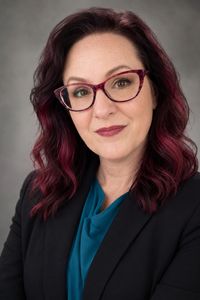
Krystyne Knutson (Democratic Party) is running for election to the Minnesota State Senate to represent District 9. She is on the ballot in the general election on November 3, 2026. The Democratic primary for this office on August 11, 2026, was canceled.
In their own words
Who are you? Tell us about yourself.
I am a small-business owner, community advocate, nonprofit founder/leader, and longtime volunteer who believes effective representation begins with listening. My work is centered on strengthening rural communities, supporting young people and families, protecting individual rights, and making sure people who are often overlooked have a voice in the decisions that affect them. I try to bring a practical, collaborative approach to public service, shaped by lived experience and a belief that good government should work for people; not political parties.
Please list below 3 key messages of your campaign. What are the main points you want voters to remember about your goals for your time in office?
Affordability and Rural Opportunities: My focus is making rural Minnesota a place where people can afford to live, work, raise families, and build a future. As a rural small-business owner, I understands rising costs, workforce shortages, childcare challenges, and the difficulty of maintaining essential services in smaller communities. I bring practical experience and an understanding that policies designed for urban areas do not always meet rural needs.Health and Human Services:I believe Minnesotans deserve affordable, accessible healthcare, including mental healthcare, disability services, reproductive healthcare, and affordable prescriptions. My years of advocacy and community work have given me firsthand experience with people navigating complicated systems. I bring empathy, persistence, and a commitment to listening to patients, families, providers, and rural healthcare facilities when developing solutions.Education and Strong Communities: I believe strong communities begin with investing in children and families. My priorities include early childhood opportunities, strong public schools, supporting educators, youth mental health, and ensuring young people have opportunities to succeed regardless of their ZIP code. My experience working directly with youth and building community resources has reinforced my belief that early investment and prevention can improve lives while reducing larger social and economic costs later.
What areas of public policy are you personally passionate about?
I am especially excited about public policy that strengthens rural communities by keeping young people and families here. We do this by expanding opportunities and improving affordability. We have the ability to fill gaps that exist in rural areas, by offering incentives to stay and grow in our communities. My interests include healthcare and mental healthcare access, public education and early childhood development, affordable housing and childcare, disability access, workforce development, support for small businesses and family farms, and protecting individual and reproductive rights.
What characteristics or principles are most important for an elected official?
I believe elected officials should be curious, honest, accessible, and willing to admit when they do not know something. They should listen to people whose experiences are different from their own, seek reliable information, and be willing to change their position when new information warrants it. Public service should require humility. Being elected does not make someone the smartest person in the room; it gives them the responsibility to make sure the people who need to be heard are in the room.
What do you believe are the core responsibilities for someone elected to this office?
The core responsibility of a state senator is to represent the people of the district....not a political party, special interest, or only the people who voted for them. That means listening, being accessible, understanding how legislation affects communities differently, protecting individual rights, responsibly managing public resources, and making decisions with both today's needs and the long-term consequences in mind.
What legacy would you like to leave?
I would like my legacy to be that more people felt they belonged, mattered, and had a voice because I was willing to listen and act. I don't need hmy name attached to every accomplishment. I would rather leave behind stronger communities, better opportunities for young people, and systems that are easier and more humane for the people who come after me. And to make my children proud.
What is something that has been a struggle in your life?
One of my greatest struggles has been learning that caring deeply about people does not mean I can fix everything for everyone. That lesson has been especially difficult because I have experienced many traumas including the loss of two sons. Grief and healing has taught me, in the hardest possible way, that love and determination cannot always protect the people we love or change an outcome.
My instinct has always been to step in when I see someone struggling, a need going unmet, or a system failing the people it is supposed to serve. Over time, I have learned that helping effectively also means listening, asking for help, bringing the right people together, and accepting that no one person can carry everything.
I am still learning that balance but I will always feel that pull to fill needs. Those experiences have made me more aware of how much people may be carrying that others cannot see, and they have strengthened my commitment to lead with empathy, humility, and compassion.
What do you believe is the ideal relationship between the governor and state legislature?
I believe the governor and legislature should be partners with separate constitutional responsibilities...not teammates who must always agree and not adversaries whose goal is to defeat one another. Healthy disagreement and oversight are important. So are communication, negotiation, and respect for the voters who elected people from different parties and different parts of Minnesota. Divided government should not mean dysfunctional government.
What do you perceive to be your state's greatest challenges over the next decade?
I believe Minnesota's greatest challenge over the next decade will be maintaining the quality of life Minnesotans value while adapting to significant demographic, economic, technological, and environmental changes. Rural communities are already experiencing workforce shortages, healthcare and childcare access problems, housing shortages, school enrollment changes, and an aging population. At the same time, Minnesota must address affordability, infrastructure, climate resilience, emerging technologies, and increasing pressure on families. The challenge is not simply spending more or spending less...it is making smart investments now that prevent larger and more expensive problems later.
Do you believe that compromise is necessary or desirable for policymaking?
I believe compromise is not only desirable but necessary in a representative democracy. Compromise does not mean abandoning core values or individual rights. It means recognizing that no legislator, party, or community has every answer. Good policymaking requires listening, finding areas of agreement, and sometimes accepting a solution that is not exactly what either side envisioned in order to make meaningful progress. I strongly believe disagreement should be an invitation to conversation, not a reason to stop working together.
What organizations or individuals have endorsed your campaign?
Education Minnesota
National Organization for Women
NASW-MN Pace
Planned Parenthood
Pro-Choice MN
Senate D9 DFL
On the 2026 ballot
Links
Compiled from the candidate’s published profile as of September 30, 2026.
Source(opens in new tab)