
Background
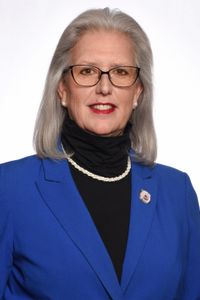
Kimberly Overman was born in New York, New York. She earned a high school diploma from Woodrow Wilson High School, a bachelor's degree from the University of Maryland in 1981, and additional education from the College of Financial Planning in 1988. Overman is a former Hillsborough County Commissioner and longtime Tampa Bay resident for more than 40 years. Her professional experience is in financial planning and civic leadership, having previously held the Certified Financial Planner professional designation, which she retired upon leaving private practice. From 2018 to 2022, Kimberly served as a Hillsborough County Commissioner (District 7, at‑large).[1]
- Bachelor's:
- University of Maryland, 1981
- High school:
- Woodrow Wilson High School
Campaign money
- Raised
- $187K
- From individuals
- $95K
- From PACs & party
- $852
- Own money
- —
FEC filings through July 29, 2026.
View on FEC.gov(opens in new tab)In their own words
U.S. House Florida District 12
Who are you? Tell us about yourself.
I’m Kimberly Overman, a former Hillsborough County Commissioner, small business owner, and retired financial advisor who spent more than 30 years helping families plan for their financial futures. I moved to the Tampa Bay area as a young adult and have spent decades working in and serving our community.
My career has been grounded in results. In public office, I built a record of fiscal responsibility, transparency, and delivering outcomes by balancing budgets, improving services, and making government more accountable. Before serving as County Commissioner, I worked with individuals and small businesses to navigate financial challenges and build long-term stability.
I’m a grandmother raising my grandson after caring for my adult son following a traumatic brain injury until his passing in 2023. That experience shaped my understanding of how government decisions affect families.
I’m running for Congress in Florida’s 12th District because too many families feel overlooked by leaders who have been in office for years without delivering meaningful progress, and by candidates who lack the experience needed to handle Florida's complex challenges. I offer a different approach rooted in practical problem-solving, financial expertise, and a commitment to putting people ahead of politics.
I will focus on lowering costs for families, protecting access to healthcare, defending voting rights, and restoring trust in government through transparency, accountability, and real results.
Please list below 3 key messages of your campaign. What are the main points you want voters to remember about your goals for your time in office?
I’m Kimberly Overman, a former Hillsborough County Commissioner, small business owner, and retired financial advisor with more than 30 years of experience helping families plan for their financial futures. My record reflects fiscal responsibility, transparency, and delivering results by balancing budgets, improving services, and holding government accountable. I’m running for Congress to bring practical problem-solving, financial expertise, and a clear focus on lowering costs for families, protecting access to healthcare, and restoring trust in public service by delivering real results for families.Families in Florida’s 12th District are facing rising healthcare, housing, and insurance costs, yet too many still lack real solutions that make a difference in their daily lives. I bring a different approach grounded in experience, accountability, and results. My priorities are clear: lowering costs for families, protecting access to healthcare, strengthening Social Security and Medicare, and supporting caregivers. I will focus on practical solutions that reflect the realities families face, not partisan politics or empty promises, and ensure government is responsive to the people it serves.Voters deserve a representative who shows up, listens, and delivers results. I’ve earned trust through years of public service by being accessible, transparent, and accountable to the people I serve. Leadership is not about making promises, it is about following through. In Congress, I will defend voting rights, support veterans and seniors, and work to ensure government is responsive to the needs of our communities. I will focus on practical solutions, not partisan politics, and work to restore trust in government through transparency, accountability, and real results.
What areas of public policy are you personally passionate about?
I am most passionate about policies that help families stay financially stable and healthy. That includes lowering the cost of healthcare, prescription drugs, housing, and insurance; protecting access to women’s healthcare; strengthening Social Security and Medicare; and ensuring caregivers have the support they need. I’m also committed to addressing broken immigration policies that are hurting families, straining communities, and failing to uphold the rule of law, while supporting balanced, practical solutions that strengthen our economy and keep communities safe. My focus is on solutions that improve people’s daily lives.
Who do you look up to? Whose example would you like to follow, and why?
I look up to leaders who demonstrate integrity, accountability, and a commitment to serving others with purpose and humility. I’ve always been inspired by individuals who focus on solving real problems, bring people together, and measure success by the impact they have on families and communities, not by political wins.
I also draw inspiration from everyday people—caregivers, small business owners, and community volunteers—who show resilience and dedication in the face of challenges. My own experience caring for my son and raising my grandson has reinforced the importance of compassion, responsibility, and perseverance.
The example I strive to follow is one of steady, responsible leadership: listening first, making informed decisions, and delivering results. I believe public service is about earning trust through transparency, following through on commitments, and putting people ahead of politics. Those are the principles that guide my work and the standard I will bring to Congress.
What characteristics or principles are most important for an elected official?
The most important qualities for an elected official are integrity, accountability, and a commitment to delivering real results. Public service is about putting people first, being transparent in decision-making, and following through on commitments. Voters deserve leaders who show up, listen, and remain accessible to the communities they serve.
An effective elected official must also have the experience and judgment to solve complex problems, make responsible financial decisions, and focus on outcomes rather than politics. That means working collaboratively when possible, standing firm when necessary, and always prioritizing the long-term well-being of families and communities.
Above all, leadership requires honesty and a clear sense of responsibility. Elected officials should be accountable for their actions, willing to explain their decisions, and focused on restoring trust in government by delivering measurable results that improve people’s daily lives.
What do you believe are the core responsibilities for someone elected to this office?
The core responsibility of a member of Congress is to represent the people of their district with integrity, accountability, and a clear focus on results. That means listening to constituents, being accessible, and ensuring their concerns are reflected in the decisions made in Washington.
It also requires making thoughtful, informed decisions on complex issues that affect families, businesses, and communities. This includes managing taxpayer dollars responsibly, supporting policies that strengthen the economy, and ensuring federal programs deliver real value to the people they are intended to serve.
An effective member of Congress must work to address the challenges families face, including the rising cost of healthcare, housing, and insurance, while protecting access to healthcare, strengthening Social Security and Medicare, and supporting veterans and caregivers.
Just as important is the responsibility to uphold the Constitution, defend voting rights, and ensure laws are applied fairly and consistently. Public trust depends on leaders who are transparent, accountable, and focused on delivering measurable results, not political rhetoric or partisan division.
What legacy would you like to leave?
The legacy I want to leave is one of trust, accountability, and real results for the people I serve. Public service should make a measurable difference in people’s lives, and I want to be remembered for lowering costs for families, strengthening access to healthcare, and ensuring that government works more effectively and responsibly.
I also want to be known for restoring confidence in public service by being transparent, accessible, and willing to listen. Too many people feel disconnected from their government, and I believe it is the responsibility of elected leaders to rebuild that trust through consistent follow-through and honest communication.
Just as importantly, I want to leave a better world and a healthier planet for future generations. That means making responsible decisions today that protect our environment, strengthen our communities, and create opportunities for those who come after us.
On a personal level, I want my legacy to reflect the values that have guided my life—perseverance, responsibility, and putting family and community first. My experience as a caregiver and grandmother has shaped my understanding of what is at stake for families, and I want to leave a record of leadership that improved opportunities, strengthened communities, and made a lasting, positive impact for generations to come.
What was your very first job? How long did you have it?
My first job was babysitting for multiple families while I was in high school, which I did for several years. It was an early lesson in responsibility, earning trust, and managing competing priorities. After that, I interned with the National Oceanic and Atmospheric Administration, working with an economist to gather data on the impact of shrimp dumping on international markets. I also spent several summers working as a groom and stable hand for the U.S. Park Police in Washington, D.C., which helped me pay for college.
After graduating with an economics degree, my first professional job was with Merrill Lynch. As a woman entering the field at that time, I was initially hired to operate a Lanier word processor because no one in the office knew how or was willing to learn it. I brought that technology to full capacity, improving productivity across the office, and that experience became my pathway into the financial planning profession.
Each of these experiences shaped my work ethic and reinforced the value of responsibility, adaptability, and creating opportunity through hard work.
What is something that has been a struggle in your life?
One of the greatest struggles in my life was caring for my adult son after he suffered a traumatic brain injury. For years, I navigated the challenges of being a caregiver, managing his care, advocating for his needs, and balancing those responsibilities with work and family life.
I was a single mother throughout this entire journey, running my business and later running for and serving in public office. During my first campaign in 2018, I became the primary caregiver for my grandson, and in 2020, while serving as a County Commissioner and as Vice Chair of the Emergency Policy Committee responding to the COVID-19 pandemic, I became his legal guardian. My son passed away in 2023.
That experience gave me a firsthand understanding of how difficult it can be for families to manage healthcare needs, financial pressures, and long-term caregiving responsibilities all at once, even while continuing to meet professional and public responsibilities.
While it was a difficult time, it strengthened my resilience, deepened my sense of responsibility, and reinforced my commitment to helping other families facing similar challenges. It is one of the reasons I am focused on lowering healthcare costs, supporting caregivers, and strengthening programs families rely on.
What qualities does the U.S. House of Representatives possess that makes it unique as an institution?
The U.S. House of Representatives is unique because it was designed to be the part of the federal government closest to the people. Its structure ensures direct representation, with members elected from districts based on population and standing for election every two years, which keeps them closely connected and accountable to their constituents. Its size and composition also make it responsive. With 435 members representing communities across the country, the House reflects a wide range of perspectives and brings local concerns into the national conversation.
The House also has distinct constitutional responsibilities that reinforce its role, including the authority to initiate all revenue legislation and to impeach federal officials. These powers are critical to ensuring accountability, particularly at a time when concerns about the influence of money in politics and the balance of power between branches of government have grown. In that context, the House plays an essential role in upholding the rule of law and representing the interests of the American people. It is uniquely positioned to provide oversight of the executive branch, ensure that laws are applied fairly, and restore public trust by holding government accountable and delivering results.
Its combination of direct accountability, constitutional authority, and responsibility for oversight makes the House a uniquely representative and essential institution in American democracy.
What do you perceive to be the United States' greatest challenges as a nation over the next decade?
One of the greatest challenges facing the United States over the next decade is restoring trust—both among the American people and with our allies around the world. In recent years, division and instability have weakened confidence in our institutions and in our ability to work together to solve problems.
Rebuilding that trust starts with leadership that is transparent, accountable, and focused on results. Americans need to know that their government is working for them by addressing real challenges like rising costs, access to healthcare, and economic opportunity.
In Florida, these challenges are especially visible. Families are struggling with rising insurance, housing, and healthcare costs, and many feel that the systems meant to protect them are not keeping up. Restoring trust means delivering solutions that people can see and feel in their daily lives, from stabilizing insurance markets to strengthening disaster preparedness and protecting access to care.
At the same time, the United States must reestablish its role as a reliable partner on the global stage by honoring commitments and working cooperatively to address shared challenges.
Restoring trust will take time, but it is essential to strengthening our democracy, supporting our economy, and ensuring a more stable and secure future for the next generation.
Do you believe that compromise is necessary or desirable for policymaking?
Compromise is necessary in policymaking because we live in a diverse country with different perspectives, priorities, and needs. Our system of government was designed to require negotiation and cooperation, which means real progress depends on the ability to find common ground.
At the same time, compromise must be guided by clear principles. It should be focused on solving problems and delivering results for the people we serve, not simply splitting differences for the sake of agreement. Good compromise means listening, understanding different viewpoints, and working toward solutions that improve people’s daily lives while maintaining core values.
When done well, compromise leads to more durable and effective policies, with broader support and greater trust from the public. But it also requires judgment, because not every issue should be compromised if it undermines fundamental responsibilities or harms the people we represent.
I believe in a practical approach: work collaboratively whenever possible, stand firm when necessary, and always focus on delivering results that put people ahead of politics.
What organizations or individuals have endorsed your campaign?
Kimberly Overman has earned endorsements from Moms Demand Action in the early stage of her current campaign for Congress. In prior campaigns for Hillsborough County Commission, she received endorsements from organizations including the Sierra Club, Ruth’s List, Equality Florida, Florida Rising, Florida For All, 1199 SEIU, IBEW Local 824, ATU Local 1464, the West Central Florida Labor Council, and the Hillsborough County Firefighters, as well as support from Democratic caucuses and community groups across Tampa Bay. These endorsements reflect a broad base of support from labor, environmental, and community advocates.
What was the first historical event that happened in your lifetime that you remember?
One of the earliest historical events I remember is the Apollo moon landing. It captured the imagination of the country and showed what was possible when people come together with determination and a shared purpose.
That moment was shaped by leadership that challenged the nation to aim higher, including President John F. Kennedy’s call to reach the moon. At the same time, I grew up in an era influenced by leaders like Dr. Martin Luther King Jr., who inspired the country to strive for justice and equality, and later Ronald Reagan, who emphasized optimism and belief in American potential. Each of these moments and leaders demonstrated that progress comes when we work toward something greater than ourselves.
What stayed with me was not just the achievement of landing on the moon, but the example it set. It showed that with focus, perseverance, and a commitment to making the world a better place, we can overcome challenges and accomplish extraordinary things. That belief continues to shape how I approach public service and the responsibility to deliver results that improve people’s lives.
U.S. House Florida District 15
Who are you? Tell us about yourself.
Kimberly D. Overman is a Democratic candidate for U.S. Congress in Florida's 15th District, emphasizing bold and compassionate leadership focused on working families, sustainable growth, and equitable opportunities. Her campaign highlights her extensive experience in public service, community advocacy, and economic insight, along with a deep personal commitment to issues that affect her constituents.
Experienced public servant: Kimberly served as a Hillsborough County Commissioner, championing affordable housing, transportation equity, and public health, combining financial planning expertise with grassroots engagement.
Core values driving leadership: She is motivated by passion for community improvement, commitment during crises, willingness to learn and collaborate, and resilience through challenges.
Congressional priorities: Her focus areas include affordable housing and economic justice, climate action, healthcare access with mental health services, reproductive rights, and education and workforce development.
Personal background and motivation: Raised in a working-class family facing housing insecurity, Kimberly's life experiences shaped her dedication to economic equity, healthcare access, and inclusive communities, fueling her commitment to proactive and accountable leadership.
“I’m running for Congress because our communities deserve bold, compassionate leadership that listens, learns, and leads with integrity. I
Please list below 3 key messages of your campaign. What are the main points you want voters to remember about your goals for your time in office?
Kimberly Overman is a seasoned public servant, small business owner, and community advocate with a proven track record of progressive leadership. She served as a Hillsborough County Commissioner (District 7 At-Large) from 2018 to 2022, where she championed affordable housing, transportation equity, and public health initiatives.
With decades of experience in financial planning and civic engagement, Kimberly brings a unique blend of economic insight and grassroots passion to the table. Her leadership is grounded in listening to the people she serves and building coalitions to solve real problems.Core Values
Passion: Kimberly is deeply committed to improving lives in Central Florida—from affordable healthcare to climate resilience.
Motivation: Her drive comes from decades of service and a belief that government should work for everyone, not just the wealthy few.
Commitment: Whether leading during hurricanes or a pandemic, Kimberly has shown up for her community with courage and consistency.
Willingness to Learn: She believes in evidence-based policy and listening to diverse voices to shape better outcomes. Kimberly knows that change is a team effort. She builds strong partnerships across sectors and communities.
Thick Skin: She’s faced tough elections and public scrutiny—and emerged more determined to serve.Priorities for Congress:
Economy & Inflation
Affordable Housing & Economic Justice
Climate Action & Resilient Infrastructure
Healthcare Access & Mental Health Services -
Reproductive Rights & Gender Equity
Public Education & Workforce Development
Veterans & Military Support
What areas of public policy are you personally passionate about?
My decision to run for Congress is rooted in the issues that have shaped my life and the lives of the people I’ve served. I care deeply about affordable housing, access to healthcare, economic justice, and environmental sustainability—not because they’re talking points, but because they’re personal.
I’ve seen what it’s like to live without health insurance and to worry about whether a medical bill will mean skipping rent. That’s why I’ve made economic equity a cornerstone of my public service.
I’ve also seen how the government can fall short—whether in the wake of a hurricane, a housing crisis, or a public health emergency. I believe we deserve leaders who roll up their sleeves and get to work for the people they represent.
What characteristics or principles are most important for an elected official?
Honesty, courage, and compassion are necessary values to embrace in order to avoid the powerful seduction of power.
What do you believe are the core responsibilities for someone elected to this office?
To represent and advocate on behalf of the people that live within the district regardless of their political affiliation.
What is the first historical event that happened in your lifetime that you remember? How old were you at the time?
The day John F. Kennedy was shot.
If you could be any fictional character, who would you want to be?
Athena
Do you believe that it's beneficial for representatives to have previous experience in government or politics?
Absolutely. I have served in government positions, both as an employee and as an elected official, and have seen success when policy makers understand the political and financial budgeting processes of government action. I have alsonseen disastrous outcomes to communities, families, children, and businesses, as well as the economies of our local, state, and nation when politics supersedes good governance and fairness. The lack of understanding of Constitutional law, our history of governance, and the importance of the balance of powers has allowed the absolute chaos of our nation faces currently.
What do you perceive to be the United States' greatest challenges as a nation over the next decade?
Authoritarian rule and loss of credibility on the world diplomatic stage.
Do you believe that two years is the right term length for representatives?
No, even a seasoned person that has worked closely with the landscape of Washington DC will spend the first year navigating the process of policy and law making. That being said, four years would be sufficient time to find policy making success without have to run for re-election the whole time in office.
What are your thoughts on term limits?
With the level of gerrymandering permitted by the courts and legislators, term limits are necessary.
Do you believe that compromise is necessary or desirable for policymaking?
Yes. Frequently compromise finds a reasonable solution that serves the policymakers goals for the nation. The lack of compromise can also be critical when legislative powers forget who they serve and why they are there to serve.
Kimberly Overman did not complete [the profile publisher]'s 2022 Candidate Connection survey.
On the 2026 ballot
Links
Compiled from the candidate’s published profile as of September 30, 2026 and FEC filings.
Source(opens in new tab)