
Background
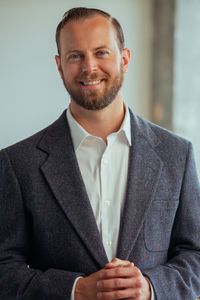
Kevin Ryan was born in Evergreen Park, Illinois. He has served in the U.S. Marine Corps Reserve since 2014. He earned a bachelor's degree from the University of Illinois, Urbana-Champaign in 2014, a graduate degree from the University of Oxford in 2021, and a graduate degree from Georgetown University in 2024. His career experience includes working as a teacher. He has been affilaited with The American Legion Post 1052, Veterans of Foreign Wars Post 5079, and The Army and Navy Club of Washington, DC.[1]
- Graduate:
- University of Oxford, 2021
- Bachelor's:
- University of Illinois, Urbana-Champaign, 2014
- High school:
- Marist High School
Campaign money
- Raised
- —
- From individuals
- $0
- From PACs & party
- $0
- Own money
- —
FEC filings.
View on FEC.gov(opens in new tab)In their own words
Who are you? Tell us about yourself.
I grew up in Orland Park, IL and attended Marist High School in Chicago. My early years were marked by difficult times with my brother, Pat, who battled intense addiction and mental illness. He made life at home incredibly difficult. Thankfully, I had some really great teachers who helped me through those difficult years. They inspired me to lead a life of service, and I became a teacher myself.
Pat went in and out of rehab and then found himself in the Cook County Jail for several months. Shortly after his release, he overdosed and died at the age of 22. I carried guilt for years, believing I had failed him as a brother. Becoming a teacher showed me I could be there for others in ways I couldn’t be there for Pat.
While studying to become a teacher at the University of Illinois in Urbana-Champaign, people my age were being sent to Afghanistan. And I felt compelled to do my part. So, I joined the Marine Corps Reserve as an infantry officer and balanced deployments while teaching on the South and West Sides of Chicago.
In 2020, I used my GI Bill to attend the University of Oxford. I earned a graduate degree in diplomacy that took me to assignments across Europe, the Pentagon, and the U.S. Treasury. While in Washington, I obtained a graduate degree from Georgetown University.
Outraged by the ultra-wealthy individuals and corporations who control our government through the legal corruption that is unlimited political spending, I returned home, and I am now running to end it.
Please list below 3 key messages of your campaign. What are the main points you want voters to remember about your goals for your time in office?
We must amend the Constitution to establish campaign spending limits. Unlimited political spending is the great crack in the foundation of our democracy. Until we remove the corrupting influence of money from our politics, we, the people, will remain incapable of meaningfully addressing any of the issues challenging our common good today.Anyone who works full-time ought to earn enough to live, save, and enjoy life. It is a moral failure of our government to allow 38 million working Americans to continue to live in poverty while corporate profits continue to soar.Healthcare, housing, and education are basic human rights. And the wealthiest country on the planet should prioritize providing its people these basic necessities.
What areas of public policy are you personally passionate about?
Campaign Finance Reform
Anti-Poverty
Education
Prison Reform
Abolishing the death penalty
Is there a book, essay, film, or something else you would recommend to someone who wants to understand your political philosophy?
Robert E. Mutch's "Buying the Vote: A History of Campaign Finance Reform" provides an excellent examination of how we have arrived to where we are today with the legal form of corruption that is our current campaign finance system. This summative history provides a foundation to my approach to reforming this system today. To complement this book, I also recommend listening to "Master Plan" by the podcast, The Lever.
Matthew Desmond's "Evicted" and "Poverty, by America" are great books for the general reader that illustrate the destructive nature of American poverty, the forces that perpetuate it, and why I commit myself to the cause of ending poverty in America.
Kurt Vonnegut's autobiography, "A Man Without a Country" offers a very raw perspective of the United States, its history, and its government that equally offers messages of despair and hope that stir me to action. Vonnegut was once asked what he thought the purpose of life is, and he responded: "We are here to help each other get through this thing, whatever it is." I agree that this is both the purpose of life and of our government. I am running to restore the purpose of our government.
John Stuart Mill's "On Liberty" and Adam Smith's "Wealth of Nations" serve as foundational texts for the base of my political philosophy. The Father of Capitalism would be appalled by the state of American corporate capitalism today. And I think we, as a society, need to collectively re-read (or, for some of us, read for the first time) "The Wealth of Nations" and reprioritize Smith's principals of making society collectively thrive. Too often, I have found, the people who like to cite Smith and his "invisible hand" often choose not read the portions of his books dedicated to labor. Equally important, Mill provides an antidote to our highly divisive political discourse today by grounding the reader on the fundamental aspect of political discourse: ascertaining, as closely as possible, the best ways to improve society.
What characteristics or principles are most important for an elected official?
The unofficial motto of the Marine Corps Infantry Officer Course is "It's not about me." The instructors drilled that principle into me, and I believe that is the most important principle for every elected official to live by. Hunter S. Thompson, who was known equally for his Gonzo-style journalism as well as for his prolific drug use, once remarked that there is no drug as powerful, addictive, or destructive as that of political power. Anyone who enters politics takes this drug. But unless one remains vigilant of its dangers, they risk falling prey to its destructive qualities and losing sight of the reason they entered politics in the first place. In my office I have a print of Caravaggio's "Narcissus" and a framed photo given to me by Marines I used to work with that reads "It's not about me." Those items serve as my daily reminders of the dangers of politics. They help me remain grounded and committed to the principle that this race is not about me. It is about all of us and our shared future.
What do you believe are the core responsibilities for someone elected to this office?
With the degree of independence, influence, and power afforded to individual U.S. Senators, the people who hold those offices have the responsibility to see our society as it ought to be, not as it is; and they must possess the creativity and temerity to make those visions reality. The United States Senate is not a place for the tepid or timid.
What was your very first job? How long did you have it?
My first job was with the Park District of Orland Park, Illinois maintaining little league baseball fields. I started when I was 16 and spent my summers through high school and college working there. It taught me how to operate heavy machinery, including bobcats, tractors, dump trucks, and utility vehicles, (as well as every dimension of a baseball diamond). It also taught me how to drive extended trailers, which, oddly enough, prepared me to drive my campaign bus today (an old school bus that I converted into our mobile campaign HQ). While seasonal employees were not allowed to join the union, the full-time employees were represented by the American Federation of State, County, and Municipal Employees (AFSCME) Local 368. So, this job gave me my first exposure to union workers. I stopped working for the Park District when I left for Marine Corps Officer Candidate School in 2014.
What do you perceive to be the United States' greatest challenges as a nation over the next decade?
The outsized role of money in politics is the greatest challenge facing the United States today. Until we remove money from politics, we will not be able to meaningfully address climate change, poverty, the national security and economic threats posed by China and Russia, or any other issue facing us today. So long as politicians may be bought, our policies will be purchased by the highest bidders at the expense of the common good.
What are your thoughts on term limits?
If we reformed our elections by establishing spending limits, independent redistricting commissions, and non-partisan preliminary elections with ranked-choice voting, we would see more competitive elections, and term limits would not be necessary. But short of this robust, long-term solution that we need, I support both term limits and age limits in Congress to prevent the incumbency advantage from keeping out-of-touch and ineffective incumbents in office.
What qualities does the U.S. Senate possess that makes it unique as an institution?
The U.S. Senate, as opposed to the U.S. House, is a unique institution as the filibuster creates a "defensive-oriented" body while the majority rule in the house creates an "offensive-oriented" body. The minority rules in the Senate, and individual Senators hold incredible influence as compared to their peers in the House.
Is there a particular senator, past or present, whom you want to model yourself after?
Senator Joseph Bristow, a Progressive from Kansas, in his bid for the U.S. Senate, campaigned to amend the Constitution to establish the direct election of senators. He won and served only a single term. And in that single term, he introduced into the Senate a proposed amendment to the Constitution establishing the direct election of senators. He pushed it through two-thirds majorities of both houses and saw the 17th Amendment ratified into the Constitution. Because of him, I am able to run for the U.S. Senate today by appealing directly to the people of Illinois and not the party establishment. And I intend to use that right, follow his example, and drive into ratification an amendment to the Constitution clearly asserting the Congress' right to establish spending limits in political contests..
What kind of relationships would you build with other senators?
As a Democrat, I built relationships with conservative voters in deep red pockets of Illinois. I believe relationships can be built with any individual as long as we remain authentic to ourselves and to them. And that is how I will build relationships with my fellow senators.
What criteria would you apply when deciding whether to confirm presidential appointees to their Cabinet?
How is the nominee qualified? Will the nominee execute the duties of the office in a non-partisan way that supports the mission of the department/agency and the American people? I will not confirm patronage positions. Donating millions of dollars to a presidential campaign does not solely qualify one to be a cabinet official or ambassador.
What are your views on financial transparency and government accountability?
I believe we need to amend the Constitution to assert the Congress' right to establish campaign spending limits and eliminate independent expenditures. Additionally, I believe we need a federal ban on elected officials at all levels from owning and trading individual stocks (with exceptions made for mutual funds and retirement plans managed independently by a fiduciary of the elected official).
On the 2026 ballot
Links
Compiled from the candidate’s published profile as of September 30, 2026 and FEC filings.
Source(opens in new tab)