
Background
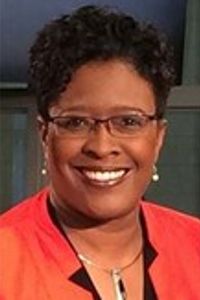
Keisha Sean Waites was born in Atlanta, Georgia. Her professional experience includes working in the legislative and external affairs division of FEMA in numerous leadership positions within operations, legislative, governmental, and external affairs. She has been associated with the following organizations:
National Council of State Legislators (NCSL)
Council of State Government (CSG)
Governing Institute, Henry Toll Fellowship Fellow,
Harvard University Leadership Institute
National Foundation of Women Legislators
Women in Government (WIG)
Young Elected Officials (YEO)
Victory Institute
Human Rights Campaign
David Bohnett Fellowship Foundation, Fellow
Harvard Kennedy School of Government-Executive Education[1]
Campaign themes
Keisha Sean Waites has not yet completed [the profile publisher]'s 2026 Candidate Connection survey.
Send a message to Keisha Sean Waites asking her to fill out the survey.
If you are Keisha Sean Waites, click here to fill out [the profile publisher]'s 2026 Candidate Connection survey.
Who fills out the candidate survey?
Any candidate running for elected office, at any level, can complete [the profile publisher]'s Candidate Survey. Completing the survey will update the candidate's [the profile publisher] profile, letting voters know who they are and what they stand for. More than 32,000 candidates have taken [the profile publisher]'s candidate survey since we launched it in 2015. Learn more about the survey here.
You can ask Keisha Sean Waites to fill out this survey by using the button below or emailing seanwaites@hotmail.com.
Who are you? Tell us about yourself.
I’m Keisha Waites—a lifelong public servant, former State Representative, and Atlanta City Council member running for the Georgia Public Service Commission. I’ve built my career advocating for working families, seniors, and communities who are too often left behind in politics and policymaking. I’ve also worked at the federal level with FEMA to help families rebuild after disaster, and I know firsthand how critical infrastructure and access are to daily life. I’m a proud Georgian and I’m running to bring transparency, fairness, and accountability back to the PSC and ensure it works for everyone, not just the powerful few.
Please list below 3 key messages of your campaign. What are the main points you want voters to remember about your goals for your time in office?
Experienced, Proven Leadership
As the only candidate in the race with legislative and city government experience, I know how to navigate policy and deliver results. I’ve been elected before, and I’ve fought and won for everyday Georgians.Putting People Before Profits
I will stand up to monopoly utility companies like Georgia Power and stop the pattern of unchecked rate hikes that burden working families. It’s time the Public Service Commission truly served the public.Accountability and Transparency
I will push for reforms that make PSC decisions more open and accessible to the public. That means more community input, better communication, and a Commission that answers to you, not to corporations.
What areas of public policy are you personally passionate about?
I’m deeply passionate about energy equity, consumer protection, and infrastructure transparency. Every Georgian deserves access to affordable, reliable, and clean energy regardless of their zip code or income level. I care deeply about policies that protect working families from the financial strain of rising utility rates and unchecked corporate influence. I’m also committed to environmental justice, especially addressing the disproportionate health and economic impacts of pollution and energy decisions on low-income and marginalized communities. At every level, I believe public policy should serve people, not profit, and I’ve spent my career fighting to make that a reality.
What qualities does this office possess that makes it a unique and important part of the state government and legal system?
The Public Service Commission is one of the most powerful but least understood bodies in Georgia’s government. It regulates monopoly utility providers, including Georgia Power, and makes decisions that directly impact the everyday lives and monthly bills of millions of Georgians. From setting electric rates to approving billion-dollar energy projects, the PSC plays a vital role in our economy, environment, and public health. What makes it unique is that, despite having no lawmaking power, its rulings carry the force of law and affect every household and business in the state. It’s an agency that touches nearly every aspect of life and yet, few voters know who represents them. That’s why transparency, accountability, and public service are so critical in this office.
What qualities do you possess that you believe would make you a successful officeholder?
I bring a proven track record of service, strong policy experience, and an unwavering commitment to working people. My time in the Georgia State Legislature and on the Atlanta City Council has equipped me with the skills to navigate government, advocate for accountability, and stand firm against powerful interests. I listen, I lead with integrity, and I understand the challenges that everyday Georgians face because I’ve lived them. I also bring a results-driven mindset shaped by years of public service, including my work with FEMA helping families recover after disasters. I believe in transparency, fairness, and collaboration, and I have the experience and values to deliver on all three.
Do you believe that it's beneficial for holders of this office to have previous experience in government or politics?
Yes—experience matters. This role requires a deep understanding of how government works, how to navigate complex regulatory systems, and how to advocate effectively on behalf of constituents. As a former State Representative and Atlanta City Council member, I bring that experience. I’ve written policy, worked across the aisle, and delivered real results for communities. That kind of hands-on knowledge is essential for serving on the PSC, where decisions often involve multi-billion-dollar utility plans, environmental oversight, and legal frameworks that impact every Georgian. Experience isn’t just helpful it’s a responsibility when the stakes are this high.
What organizations or individuals have endorsed your campaign?
Leadership you can trust. Service you Deserve. Putting People over Profits.
Campaign website
Waites' campaign website stated the following:
As a former 3-term GA State Representative, and a member of the Atlanta City Council, I have had the opportunity to work on legislation that protected seniors, youth, and working families. I was singularly focused on constituent services because I was elected to level the playing field and help the people in this state live safe, productive and thriving lives. After elected office, I went to work for FEMA helping individuals and families recover from events outside of their control.
[17]
—Keisha Sean Waites' campaign website (2025)[18]
Keisha Sean Waites did not complete [the profile publisher]'s 2024 Candidate Connection survey.
Who are you? Tell us about yourself.
Small Business Owner- 20 years, Emergency Management-15 years, Served 3-terms-Georgia House of Representatives.
Small business owner in Atlanta for over two-decades providing affordable housing to veterans and working families. I have dedicated my entire professional career to helping people and trying to improve our city. I served in government for 19 years working at the local, state, regional and federal levels. I had the privilege of serving on the Public Safety, Transportation, and Juvenile Justice committees, and was responsible for vetting legislation and policy. I have existing relationships and intimately understand how to move important policy issues though all levels of government. I believe that my diverse qualifications and experience, which includes decades of community involvement throughout the city, my service in the state legislature, and my proven background in crisis management and problem solving combine uniquely qualify me to serve.
Harvard University’s Kennedy School of Government: Senior Executives in State and Local Government Leadership Program. Georgia Southern University, Georgia Perimeter College majored, Criminal Justice and Political Science. University of Georgia - Carl Vincent Institute: Biennial Institute for Georgia Legislators and Georgia Legislative Leadership, Georgia State University - Andrew Young School of Policy Studies: Legislative Health Policy Certification Program.
Please list below 3 key messages of your campaign. What are the main points you want voters to remember about your goals for your time in office?
Public Safety/Violence Prevention: Data proves that violent crime is an issue nationwide and statewide. However, I think in the City of Atlanta we also have additional mitigating factors that contribute to the increase. a. Lack of patrol officers-The presence of law enforcement is a deterrent to crime. b. Citizen/officer ratio- We simply do not have enough officers to address the growing population c. Lack of mental health funding - Given the federal and state cuts to mental health funding d. Unemployment e. Lack of access to affordable housing f. Low morale of among APD-Low wages, high turnover and under-staffing makes the job more dangerous.Restoring Public Trust: Transparency and Ethics One of the biggest challenges our city faces is the need to eradicate the current “Pay to Play” culture that has permeated for many decades. Until we put an end to nepotism and cronyism city hall will remain toxic and plagued with scandal. Public trust and integrity are essential for our city to thrive, attract new industry, new commerce and new residents. As a city-wide City Council representative, I will propose and support legislation that all City of Atlanta employees abide by a much-needed, updated and revised Employee Code of Ethics along with strict, actionable penalties for violating the code.Affordable Housing: We must protect Seniors and legacy residents from gentrification. By far, one of our biggest untapped potentials for economic development and growth is the south side of Atlanta. We need to finally make an honest, robust and concerted effort to drive development south of I-20. The returns for the rest of the city will be huge. This is another avenue we can explore to create more affordable housing, either directly or by working with private developers. In partnership with HUD and the state of Georgia, the city can re-invest in bank owned and foreclosed multi-family housing units that have been abandoned or condemned due to high water bills.Community Question Featured local question
How important is it to involve residents in the government’s decision-making process? What plans do you have regarding resident involvement in this process?
In the City of Atlanta we have an NPU process where the community can weigh in on policy and issues that directly impact their perspective neighborhood. Over the years the NPU process has been diluted and weakened. Currently, NPU’s are empowered to make recommendations regarding any matter of public policy to the City of Atlanta, per Code, Part III, Part 6, Sec. 6-3013(c). However, the Department of Planning only routinely communicates recommendations regarding only certain zoning matters and other specific categories of policy matters, to the City Council and the Mayor. This means it is up to each NPU to communicate their recommendations to the Atlanta City Council and Mayor. For this reason, I support amending the Code to allow NPU's to submit an impact statement to the Atlanta City Council on matters not otherwise included on the Full Council Meeting Agenda; and that this impact statement shall be included in any Full Council Meeting Agendas as an attachment for any meetings that fall within that month.
Currently, the Code allows NPUs to utilize representative voting whereby individual residents and businesses lose their individual voting rights to vote on matters at NPU meetings; and whereby, in certain NPU’s, only neighborhood association delegates and business community delegates vote on what recommendations to make to the City Council. (Code, Part III, Part 6, Sec. 6-3012(3). I fully support repealing the language allowing “representative voting” in NPUs, restoring the principle of one person-one vote.
Community Question Featured local question
How would you address crime and public safety? Do you have a different stance than current city council policy?
Public Safety/Violence Prevention The Atlanta Bureau of Police Services must be fully staffed at all levels as quickly as possible, and the internal structure of the department should be reviewed to make sure it is meeting the demands of our residents and the needs of our officers as effectively as possible. There should be a wider and more efficient use of technology to prevent crime and to identify and arrest perpetrators. I support the expansion of security cameras and automated license plate recognition systems where needed, and the use of other technologies such as the ShotSpotter system (currently in testing by APD) which allows officers to identify the location of gunshots in real time. Attrition and Compensation We must hire more officers and address our attrition rate. We are losing top talent to neighboring cities and counties. For this reason, we must take a hard look at compensation! In order to retain top talent and recruit high quality officers we must pay them at a competitive rate. Officers should not be forced to live in neighboring cities and counties because they cant afford to reside in the city. Finally, officers are currently working multiple jobs in order manage on lower wages and earnings. I fully support restructuring the benefits and compensation plan for APD.
Having served on both the Juvenile Justice and Public Safety committees during my tenure in the General Assembly, I quickly realized the Policing and Alternatives & Diversion Initiative (PAD) is an essential tool to addressing the underlying factors that impact crime and violence.
Arresting and jailing people who are causing disturbances or harm as a result of substance use, mental health challenges, or survival activities doesn’t serve our communities. Instead, it pushes people even further to the margins, away from the connections and resources that support recovery and wellness.
The cycle of arrest and incarceration does not address the actual issues people are struggling with. In the meantime, our communities continue to suffer from a lack of housing options and access to income, mental health services, medical care, and substance use recovery services. There is widespread agreement: we need a different approach if we want safer and healthier communities for all.
PAD fosters a new approach to community safety and wellness by engaging in creative problem-solving to respond to community concerns, and addressing people’s human needs with dignity, patience and care. Community Question Featured local question
What do you think about the transit options currently available in Atlanta? Would you make any changes?
Access to high quality reliable public transportation exponentially improves quality of life by creating affordable housing and job opportunities to low income families and residents who do not have access to vehicles. Secondly, the metro Atlanta region has lost numerous convention opportunities due to traffic congestion and it hurts our ability to attract new businesses and corporations. Metro Atlanta had the seventh worst commute in the nation in 2011, according to a new study by the Texas A&M Transportation Institute. This latest data shows traffic congestion in metro Atlanta causes drivers to spend an additional 51 hours a year behind the wheel. Getting drivers off the road immediately provides a cost saving of 51 hours per year to spend with family and be more productive.
The Beltline rail will benefit the entire Metro Atlanta region by helping solve transportation, environmental challenges, affordable housing and employment issues. The investment could create short and long term jobs, develop an efficient way for residents to travel, and remove thousands of vehicles from the state’s busiest roadways.
The Beltline rail is also a partial solution to pollution, transportation, and unemployment and would have positive impacts all along the line. This would potentially take thousands of vehicles off the interstate, and spur billions in economic development and job creation for the region.
Impacted neighborhoods would all have the opportunity to benefit from the vast economic development along the prospective rail line. The project has the potential to create thousands of short and long term jobs due to the acquisition and construction on the right-of-way, building new tracks and stations.
In an effort to decrease the number of vehicles on our roads, I been a vocal champion and advocate of policies that encourage families to walk, Uber, carpool and use public transportation. As a society we must become less reliant on vehicles. To accomplish this goal, I fully support the expansion of Marta, walking trails, biking trails and sidewalks to ensure safe, well-lit and clean environments are available to all.
COVID changed the way people live, work and play. For this reason, I support expanding MARTA’s rail network, and ensuring Atlanta is a safe city for pedestrians and cyclists. I also support relaunching the City bike share program to provide affordable first- and last-mile access to transit, especially in communities with low rates of car ownership.
Additionally, we must provide pedestrian and bicycle friendly amenities that make people want to walk and ride within city limits. This includes sidewalks, bicycle lanes, parks and greenspace, public transportation, city beautification projects, culture and the arts, and revising zoning and other policies to create mixed use spaces that people want to be in and around.Community Question Featured local question
What plans do you have regarding infrastructure?
Infrastructure is paramount. Atlanta is on track to be the 6th largest metro area in the country within 20 years and infrastructure is the foundation that all other city and business functions rely on. One of the first things I’d look at is to see if contractors are using the latest construction techniques and materials. Newer construction processes are faster, create sturdier roads more resistant to ruts and potholes and would save the city money which can be put towards more infrastructure projects. I would also check to see what percentage of work is being performed by local companies and workers.
An audit from last September found that the city had significantly overspent on administrative costs related to Renew Atlanta bonds, and lacked a detailed up-to-date procedural manual that reflects current business practices. This is unacceptable. I would push for a full review of our current practices and backlog in order to cut out the waste and focus resources into the field.
Infrastructure will only be a priority if we make it a priority. Our resources must be focused on the most effective and efficient processes, so that we can deliver noticeable improvements as quickly as possible. We must also ensure our water and sewer system is ready for the increased demand that comes with population expansion. This is a regional issue, as growth will extend to the entire metro region. We must upgrade our water and sewer system to meet increasing demand while providing clean, potable water at affordable rates.
It’s the job of city leaders to properly plan for the city’s future needs. When you look at our most vibrant cities across the country, they all tend to be dense, walkable and diverse with a good balance of housing, commerce and recreation along with robust public transportation options.
I support increasing and incentivizing the supply of duplexes, triplexes and quadplexes, especially in areas close to public transportation or in walkable neighborhoods. Cities need a variety of housing styles and options to develop the vibrant, diverse neighborhoods that older cities like Boston and New Orleans are known for.
There’s definitely an opportunity to rezone over 2,000 properties near MARTA stations to include more accessory dwelling units, multi-unit housing and overall higher density properties. I would also like to see more mixed use developments south of I-20 where land is still relatively available for redevelopment.
The Department of City Planning has developed a map showing parts of the city where high percentages of residents own a car. These tend to be in places suffering from a shortage of affordable housing in the northern part of the city, and places without walkable communities in the southern part. Changing zoning to allow multi-unit housing provides “invisible density” that increases affordable housing supply but is relatively indistinguishable from single-family houses, reducing neighborhood opposition. This would allow lower income residents to live closer to work instead of being pushed to the outskirts. It also encourages development of denser neighborhoods and walkable communities where cars aren’t strictly needed.
Sustainability is extremely important to Atlanta’s continued growth and vitality. The water shortages a few years ago really drove home the realization that without water we don’t have a city. Fulton County is expected to need more than 300 million gallons of water per day by 2035 (only 14 years from now!) and we’re almost entirely dependent on surface water. No rain, no water. The weather is also getting hotter which means more and more days of high electricity usage for air conditioning. We can’t risk the same types of grid failures Texas just experienced.
Sustainability is good for business, good for residents, and good for growth. There are new and exciting building construction technologies such as engineered wood beams as strong as steel, on-site water treatment systems, solar integrations and other building design techniques that create interesting and sustainable architecture. I would love to see Atlanta regularly featured as a leader in innovative green building design and the high paying architecture, construction, engineering, education, manufacturing and maintenance jobs that come with that.
What areas of public policy are you personally passionate about?
During my tenure in the legislature, I served as a state-wide advocate and champion of anti-bullying legislation. Serving 15 years in emergency management, I take tremendous pride in working on behalf of those who sacrifice and put their lives at risk to protect and serve. For this reason, I authored HB 54, the Fallen Hero Bill, to support families by providing tuition assistance to the children of law enforcement killed in the line of duty. HB 54 passed both the House and the Senate unanimously in March 2016. I consulted and worked closely with the families of fallen hero’s to ensure they had the opportunity to provide input. HB 54 was signed into law in May of 2016 by Governor Nathan Deal. This work lead to my being named the 2015 Legislator of legislator of the year by the Georgia State Firefighters’ Association and the Georgia Association of Fire Chiefs. A tireless champion of underserved communities, my most monumental action as a legislator is authoring and sponsoring HB 18, legislation that ensures accessibility for the disabled and visually impaired. HB 18 was the catalyst which prompted the Georgia Building Authority to adopt and implement HB 18 as internal agency policy, requiring that the State Capitol and legislative office buildings now be equipped with tactile and braille placards and be fully wheel chair accessible and ADA compliant.
Who do you look up to? Whose example would you like to follow, and why?
I look up to my great-grandmother, Fanie Mae Banks. My great-grandmother was a maid with a third grade education. Although she was not literate, next to my mom she remains the wisest person I know. My great-grandmother served as a source of inspiration and motivation to serve in public life. I am grateful for the many sacrifices she made in raising my mother and her two siblings. Although she passed away before I finished college, I will never forget how proud she was at my high school graduation.
For this reason, adult literacy is very important to me and ensuring that Seniors and legacy residents are protected and able to age in their homes with dignity.
Is there a book, essay, film, or something else you would recommend to someone who wants to understand your political philosophy?
Quote:
“Not one single piece of legislation will change people’s hearts and minds. However, we can elect competent leaders that have the heart to change policy to benefit and serve people."
What characteristics or principles are most important for an elected official?
One of the most important tasks for the Mayor and Council is to assure residents that their tax dollars are being spent wisely, with a focus on providing quality services. These services include public safety: fully staffing our police department, infrastructure planning and maintenance. We are elected to deliver results. If trust is faltering, that means residents aren’t receiving the services they expect. Public trust and integrity are essential for our city to thrive, attract new industry, new commerce and new residents. As a citywide representative, I will make it my priority to be an effective conduit between residents and city government. We have an opportunity to set the city on a new path with the Nov 2 election to select a new Mayor and council.
What do you believe are the core responsibilities for someone elected to this office?
Our city is at a crossroad. Having existing relationships and legislative experience will be critical to tackling many of the issues we are facing such as: Corruption creating a lack of public trust, increasing violent crime and traffic congestion. I’m running for a citywide post because as a native Atlanta, I am outraged with the spiking crime and violence permeating our city. I am the only candidate in the race that has successfully served 3-terms in a legislative capacity. It is my belief given the challenges we are facing are facing citywide, we must have a representative that has the experience and relationship to navigate the current volatile political current. Secondly, given the adversarial role between the state of Georgia and the City of Atlanta, I have the capacity to serve as an olive branch and conduit to improving relations. As a citywide representative, I will make it my priority to be an effective conduit between residents and city government. We have an opportunity to set the city on a new path with the Nov 2 election to select a new Mayor and council.
What legacy would you like to leave?
Affordable Housing will be one of the greatest challenges faces working families and seniors. When nurses, teachers, police, EMTs, hairdressers, young professionals, restaurant and retail workers can’t afford to live in the areas they serve, we have a housing affordability problem. What’s “affordable” is going to change from area to area throughout the city depending on what the people who need to work in that area make, or how far they have to travel from work to a home with a mortgage or rent they can afford. I want to be the champion that actually tackles the issue of affordable housing. By updating zoning codes and increasing/incentivizing the supply of duplexes, triplexes, quadplexes and attached apartments, especially in areas close to public transportation or in walkable neighborhoods. Changing zoning to allow multi-unit housing provides “invisible density” that increases affordable housing supply but is relatively indistinguishable from single-family houses. Cities need a variety of housing options and styles to develop the vibrant, diverse neighborhoods that older cities like Boston and New Orleans are known for.
What is the first historical event that happened in your lifetime that you remember? How old were you at the time?
At the age of 18, the summer before my senior year in high-school my family home was struck with an electrical fire. We were displaced for over 6-months while the contractors rebuilt our home. I vividly, recall the sense of loss of stability and security. Our home and contents were deemed a total loss. All of our family mementos and keepsakes were destroyed.
This experience was the catalyst to work on the issue of homelessness. In the City of Atlanta, we have a large homeless population with limited resources. The City of Atlanta is a large land owner. Over the last two decades, the city has closed multiple housing projects with the promise of creating affordable housing. I am committed to being an advocate and champion for affordable housing and addressing the issue of homelessness. I’m running for a citywide post on the Atlanta City Council because I’m tired of, poor quality services being provided, money being wasted, and flat out corruption. There’s a real opportunity to position our city to equitably manage and capitalize on the growth that’s coming. I feel I can help the most people by influencing the policies and legislation governing how the city operates, and making sure services are delivered. I have the experience, legislative kn
On the 2026 ballot
Links
Compiled from the candidate’s published profile as of September 30, 2026.
Source(opens in new tab)