
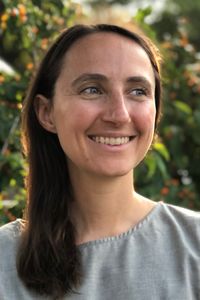
Background
Katie Jones was born in Lebanon, Indiana. Jones graduated from Purdue University in 2010. Her professional experience includes working as a community program & policy manager at the Center for Energy and Environment. [1]
- Bachelor's:
- Purdue University, 2010
Campaign themes
Katie Jones has not yet completed [the profile publisher]'s 2026 Candidate Connection survey.
Send a message to Katie Jones asking her to fill out the survey.
If you are Katie Jones, click here to fill out [the profile publisher]'s 2026 Candidate Connection survey.
Who fills out the candidate survey?
Any candidate running for elected office, at any level, can complete [the profile publisher]'s Candidate Survey. Completing the survey will update the candidate's [the profile publisher] profile, letting voters know who they are and what they stand for. More than 32,000 candidates have taken [the profile publisher]'s candidate survey since we launched it in 2015. Learn more about the survey here.
You can ask Katie Jones to fill out this survey by using the buttons below or emailing info@katiejones.org.
Video for [the profile publisher]
Video submitted to BallotpediaReleased May 15, 2024
Who are you? Tell us about yourself.
My name is Katie Jones and I'm running to build a more just, resilient, and thriving Minnesota. I’m an engineer and clean energy policy expert running to serve in the Minnesota House with the energy of a new generation and the wonkiness of a woman in STEM. Our district has been a leader on climate and transportation, and I’ve had the honor of working closely with Rep. Hornstein to develop and implement nation-leading work to reduce emissions. I hope to carry on his legacy for our city and state.
Originally from rural Indiana, my parents were small business owners who showed me how to turn aspiration into reality through hard work. I earned my degree in Biological and Agricultural Engineering from Purdue and moved to Minnesota to work for Habitat for Humanity in Rochester. My husband and I settled down in Minneapolis where we have lived for over a decade. I love this district because when I first moved here, I found welcoming neighbors who opened doors for me and made me feel like I belong—I believe everyone deserves to have that.
I am someone who shows up for our community. As Chair of the Lowry Hill East Neighborhood Association, I actively increased renter representation on the board. I've been elected to leadership five of the eight years I've served on the Minneapolis Capital Long-Range Improvement Committee that oversees funding for infrastructure projects and upgrades across our city.
Please list below 3 key messages of your campaign. What are the main points you want voters to remember about your goals for your time in office?
I have a vision to build a more just, resilient and thriving Minnesota.
It starts with justice for a reason. Our state should work to end racial disparities, ensure no community is left behind, and make sure the things we need for our lives are within reach.
I want to build a resilient state where our systems work for the people they are built for and can withstand the unknown, from economic downturn to pandemics and climate change.
And I want to build a thriving Minnesota that is livable for our communities today and the future. Where our quality of life is measured by our deep connection to community and our ability to reach our highest potential in our health, our well-being and environment.Our district is facing tough challenges right now. Our public schools have experienced decades of underfunding, and our City has a ~$20 million budget deficit on the horizon. This is a moment when Minneapolis needs a champion at the State Capitol to take care of the urgent needs of today and guarantee its future success. For our schools, a first step I’d take is to close the special education cross subsidy. Then, to address enrollment issues I’d work on state solutions to make Minneapolis an affordable place to live. I aim to work to grow our tax base by investing in livability, access to housing, stabilize property taxes by pursuing an increase to Local Government Aid, and pilot ways to revitalize Downtown and Uptown.I’m lucky to call our retiring Representative, Frank Hornstein, a mentor. We’ve worked closely on nation-leading climate and transportation policies to reduce greenhouse gas emissions. I hope to carry on his legacy of compassionate and collaborative politics, working productively with anyone regardless of their background, identity or politics. Frank brings people together, and that’s what I strive to do through responsive governance and bringing empathy and compassion to the evidence-based policy solutions I hope to champion. We can accomplish more by working collaboratively, as Frank has done.
What areas of public policy are you personally passionate about?
Housing: Our state has a housing shortage that can become a crisis. We need to make it easier to build more housing of all types—including senior housing and missing middle housing on commercial corridors.
Transportation: People should have reliable and efficient transportation options to fit their needs—whether it's driving, public transit, rideshare, or active modes. Transportation is the top source of emissions in the state. I will champion for a quality transit system—improving safety, cleanliness, frequency, and affordability.
Local economy: The City is facing a $20m deficit—forcing the reduction in services and/or property tax increases. I believe the State has a duty to step in for short and long term problem solving.
What characteristics or principles are most important for an elected official?
Integrity: A functioning government depends on trust and therefore officials must operate with integrity. That means knowing one's words have meaning, promises are kept, and there's a demonstrated ability to hold oneself accountable.
Humility: No individual is perfect, can know all, and can be the source of all good ideas. An effective leader recognizes this, surrounded themselves with smart people, acknowledges mistakes, and is open to new ideas that can come from anywhere.
A vision and commitment to a foundation of shared values: I firmly believe this district shares the values of building a more just, resilient, and thriving Minnesota. That is our north star. We may have different preferred strategies to get there, but the aim is always forward to achieve that vision.
Problem solving: Achieving the vision takes hard work of ideation, talking with stakeholders, researching approaches adopted in other places, and working to build consensus.
What qualities do you possess that you believe would make you a successful officeholder?
While there are plenty of lawyers, the Minnesota legislature has very few leaders with science backgrounds and even fewer female engineers. We need diverse perspectives and ways of thinking at the State Capitol to tackle our big challenges. Engineers are trained problem solvers, identifying criteria for success, establishing processes, and collecting information including from stakeholders. For the last five years in my day job, I have facilitated building energy policy development. That work has led to the successful adoption of policies across seven Minnesota cities and successful passage of three policies at the State. I’ve demonstrated my ability to listen, to collaborate with diverse stakeholder groups, build consensus, and think creatively to build durable and nation-leading policy. These are the same qualities that made me an effective Chair of my neighborhood board, leader on the Minneapolis Capital Long-Range Improvement Committee, and on Governor Walz's Sustainable Transportation Advisory Council.
Most importantly, all of this work is driven by my north star of building a just, resilient, and thriving Minnesota. I am steadfast in this vision but flexible in the approach, which means I can work with others to achieve it. Solid relationships and an ability to work in coalitions is how we build successful policy over ideology, and that's been the cornerstone of my proven leadership.
What organizations or individuals have endorsed your campaign?
Minnesota State Attorney General Keith Ellison, Representative Larry Kraft, 314 Action, Moms Demand Action, FairVote, Move Minnesota, Run for Something
Video for [the profile publisher]
Video submitted to BallotpediaReleased September 30, 2021
Who are you? Tell us about yourself.
I’m an engineer, a climate advocate, and a community builder. I’ve served as President of the Lowry Hill East Neighborhood Association Board, a member of the Minneapolis Parks Community Advisory Committee, as part of Minneapolis’ Capital Long Range Improvement Committee, and on the Minnesota Department of Transportation’s Sustainable Transit Board. I like to consider myself a local government nerd.
I worked within City Hall for years and in my current day job, I work with cities around the state developing and implementing policies and programs that help achieve their climate goals. As an engineer, I’m a pragmatist. My job is to take on tough problems on a daily basis and in the City of Minneapolis we are facing many tough problems. From housing to public safety to sustainability and climate change, our community is grappling with how to provide the best possible solutions to these complex problems.
As a member of the City Council, I want to work with you to build a Minneapolis that is more just, connected, and sustainable.
Please list below 3 key messages of your campaign. What are the main points you want voters to remember about your goals for your time in office?
Sustainability - I am committed to expanding organics recycling to all renters, updating the City’s Climate Action Plan, and investing in green entrepreneurship — especially in BIPOC communities.Public Safety - I am committed to implementing a Department of Public Safety which delivers mental health and substance use resources and prioritizes violence intervention.Renter Protection - I am committed to focusing public money on deeply affordable housing, promoting rent stabilization, and building new, family-sized homes.Community Question Featured local question
How would you balance the needs and desires of existing business and housing communities with new development? Would you take gentrification and displacement into consideration when planning neighborhood development?
Communities should never be forced to decide between better transit, more density, and affordable housing. That's why projects which bring new development to neighborhoods must take gentrifications and displacement into consideration.
Policies that help keep people in their homes like rent stabilization and the Tenant Opportunity To Purchase (TOPA) Act, must be implemented alongside policies which make it easier to build new and different types of housing like boarding house rooms, senior living, ADUs, cooperatives, and triplexes. To ensure that current businesses, especially BIPOC and women-owned businesses, aren’t also being priced out of the community, I support the development of commercial community land trusts to keep commercial space perpetually affordable. In Ward 10, there is a current pilot project testing how to best operationalize community land trusts in commercial spaces, and I aim to take lessons learned and scale the program to areas throughout Minneapolis.Community Question Featured local question
Please list the criteria you would use to evaluate which projects are worth maintaining or starting in Minneapolis when it comes to public infrastructure.
As an engineer, I believe in people-centered design and that any new public infrastructure project must make it easier for people to live in our city.
Our roads are currently almost entirely car focused and that needs to change. As a part of the grassroots advocacy group Hennepin for People, I have helped organize direct action events, built a coalition of neighbors, businesses, and elected officials, and pushed City planners to follow the Transportation Action Plan and adopt a design with dedicated bus and protected bike lanes. Hennepin needs to be the example by which future city road projects are measured. Improving our street design to be people centric is good for all users and good for business. Data from cities around the world and in climates similar to ours shows that business improves with increased access by various modes. Solely focusing our roads on cars or any piece of infrastructure on a single group of people does not serve our entire city and should not be accepted. Community Question Featured local question
What do you think about the city's environmental health? Would you make any changes to current policy?
Currently, low-income and BIPOC residents in Minneapolis are being forced to shoulder a disproportionate burden of poor environmental health. Regardless of race or income, we deserve city systems that support the most basic needs of people – clean air, water, and a stable climate.
Over the past decade, I’ve worked extensively on clean energy in cities around the state, including Minneapolis, having developed and implemented multiple energy disclosure, energy audit, and sustainable building policies in the Metro. While working in the Sustainability Office in City Hall, I calculated the City’s greenhouse gas inventory and know that our focus must be on decarbonizing the 100,000 buildings in our city and our transportation system. Leveraging the utility franchise fees, we can incentivize beneficial electrification of buildings, reduce natural gas use, and direct funds to the Green Cost Share, which provides energy efficiency grants to businesses with enhanced incentives for those in Green Zones. None of this can happen without increasing skilled clean energy workers. We must join local educational partners to attract and train new electricians, HVAC technicians, insulators, and solar installers, especially focusing job pipelines and fostering entrepreneurship in BIPOC communities.
The City may not have direct control over all climate solutions, but we hold important influence. For example, we must continue to push with partner cities for stronger State energy codes, and we must withhold municipal consent for any new MNDOT and County projects that do not fit our climate goals.Community Question Featured local question
What role do you feel police should play in Minneapolis? What are your thoughts on the city council’s proposed changes to the Minneapolis Police Department?
From what I’ve heard in my conversations with neighbors around Ward 10, one thing is abundantly clear — our current public safety system is not working, which is why I am voting yes on City Question 2 - Department of Public Safety. Our system has racially unjust outcomes, is not designed to tackle the holistic nature of community safety, and is attempting to use police officers as the sole tool. Creating better safety outcomes and a system which can reduce the need for police but still employ them for dangerous emergency situations requires Minneapolis to expand the toolbox, include the use prevention models, and begin developing unarmed, community-based responses to public safety. Expanding what’s possible is a key promise I am making to the residents of Ward 10, and a core reason I am running for office. Conventional wisdom tells us a lot of things aren’t possible or shouldn’t be tried, even when evidence suggests otherwise. We know from models in other cities that utilizing different yet appropriate professional responders for mental health, substance abuse, property crime, and homelessness can improve outcomes.
Community Question Featured local question
What would you like Minneapolis' public safety system to look like by the end of your term? What would you do to accomplish your vision of public safety?
I envision a public safety system in Minneapolis that is rooted in public health, racial justice, and prevention. A system that not only meets everyone’s basic needs -- housing, clean air, safe streets, employment opportunities -- but renders aid and justice in a way that is restorative to the community. As an engineer, my aim is a system that relies on evidenced-based intervention strategies to address the root causes of violence in our community.
For too long we’ve seen armed police response as the first and only tool to address public safety. As the famous urban journalist, Jane Jacobs, stressed: community safety is supported by having eyes on the street. However, that does not have to come with weapons and should provide resources to proactively meet people’s needs. We need unarmed patrols, which are trained first responders to walk neighborhoods, be a friendly face to business owners and residents, provide resources to those experiencing homelessness, and call in additional responders when needed. Creating such a force that is under the level of police would circumvent the State’s prohibition on residency requirements and allow us to enhance our public safety system with staff from local neighborhoods. Just as Ben Franklin founded the country’s first firefighting brigade and the Freedom House Ambulance Service created the country’s first paramedics in the 1960s, it’s once again time to innovate in the public safety field and create prevention-focused community safety specialists.
Creating the public safety system we want will take inclusive conversations and innovation. We must come together as a city, engage with our neighbors, and elevate the voices of those whose lives are most impacted. Pursuing upstream solutions to crime prevention through investments in housing and economic development will go a long way towards making Minneapolis a safe place to live, work and thrive for every resident.
What areas of public policy are you personally passionate about?
Being passionate about creating a 15-minute city has made me passionate about all areas of local policy from zoning to transportation, affordable housing, and public safety.
A 15-minute city is one where all residents can access their everyday destinations within a 15 minute walk, bike, roll, or transit ride. When I talk with neighbors, they love the walkability, bikeability, and transit options in Ward 10 and want to see that be even better. They’re also worried about speeding vehicles on streets with children and about how to efficiently travel around without harming the planet
The City can pull two levers to make this a reality: zoning authority and public right of way jurisdiction. With the first, the City can encourage complete neighborhoods - ones with grocery stores, pharmacies, and daycare centers among other necessities. And with the second, the City can build complete streets by improving pedestrian access, expanding bike infrastructure, partnering with MetroTransit to build out our bus rapid transit system, and using our lever of municipal consent to encourage MNDOT to add dedicated transit as part of the Re-Thinking I-94 project.
As someone who uses all modes to get around and who is a member MnDOTs Sustainable Transportation Advisory Council, I understand both what it is like on the street and the complex planning system that underpins our current transportation.
Campaign website
Click here to view an archived version of Jones' campaign website.
On the 2026 ballot
Links
Compiled from the candidate’s published profile as of September 30, 2026.
Source(opens in new tab)