
Background
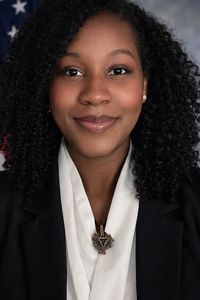
Katherine Juhan-Arnold (Democratic Party) is running for election for Georgia Commissioner of Agriculture. She is on the ballot in the general election on November 3, 2026. She advanced from the Democratic primary on May 19, 2026.
In their own words
Who are you? Tell us about yourself.
My name is Katherine E. Juhan-Arnold, and I am someone who pays attention to how things actually work, and steps in when they don’t.
That mindset has shaped my life. Whether it’s supporting my family, working in my community, or navigating systems that don’t always function the way they should, I have learned how to figure things out, build within them, and make them better.
I started learning about plants, food, and growing because I needed to, and that grew into a deeper commitment to understanding how food systems really serve people and where they fall short.
That foundation became Baby Katie’s Pharm & Kitchen, where I work directly with growers and communities around food, plants, and access. It also grew into Ag Explained, where I help people understand how agriculture actually functions in Georgia, and Pharm School, where I focus on education and support for growers at every level.
Alongside that, I’ve spent over a decade working in infrastructure systems, supporting large-scale, mission-critical operations where consistency, accountability, and precision matter. That experience taught me how to manage complex systems, enforce standards, and make sure things work the way they’re supposed to.
I’m also a mother and a wife, and I understand what it means to provide while navigating systems that do not always work the way they should.
I am running to make sure Georgia’s agricultural systems work for the people they’re meant to serve.
Please list below 3 key messages of your campaign. What are the main points you want voters to remember about your goals for your time in office?
GEORGIA STRONG.
Georgia Strong means the Department of Agriculture does its job, does it well, and does it with integrity.
It means consistent inspections, fair enforcement, clear standards, and accountability to the people of Georgia. This office touches everyday life, from food safety to fuel inspections, and that matters to working families, small businesses, farmers, and communities across the state.
To me, Georgia Strong means a department people can trust because it performs, stays accountable, and serves the public the way it is supposed to.GEORGIA GROWN.
Georgia Grown already exists within the Department of Agriculture, and to me that means it should be more than a slogan. It is a marketing and economic development program built to connect Georgia producers, processors, suppliers, retailers, agritourism, and consumers across the state. To me, Georgia Grown is about making sure that connection actually works. That means stronger market access, better visibility, real business development, and clearer pathways for people to find, choose, and trust what is produced here. Georgia Grown should be a working system that supports producers, connects communities, and reinforces the value of what is built in Georgia.AGRICULTURE is the HEART of GEORGIA.
Agriculture is the heart of Georgia, and it’s not just farms. It’s infrastructure.
It’s how this state feeds itself, supports its economy, and sustains its communities. It includes forestry, livestock, food safety, fuel inspections, and the movement of goods across the state.
It connects rural, coastal, and urban Georgia, linking producers, consumers, and every step in between.
When agriculture is working, people have access to food, businesses can operate, and communities are more stable. When it’s not, people feel it quickly.
That’s why agriculture has to be understood and managed as a system that supports daily life across Georgia.
What areas of public policy are you personally passionate about?
I care about making sure Georgia’s agricultural systems actually work, from the ground level all the way to the people who rely on them.
That means supporting producers, including small and mid-sized growers, so they have real access to the resources, education, and markets they need to succeed.
It also means educating and protecting consumers. People should be able to trust the food they eat, the fuel they buy, and the businesses they rely on. Agriculture stays strong when people understand it and can be part of it.
I care about responsible agricultural practices, protecting land & supporting long-term sustainability.
And I’m focused on making sure these systems work the way they’re supposed to, fairly and consistently, for everyone.
Who do you look up to? Whose example would you like to follow, and why?
I’ve been fortunate to be around people who lived what leadership actually looks like. John Lewis had a lasting impact on me. I met him as a child, and what stayed with me was how intentional he was, even in small moments. He understood that how you show up matters.
I was also influenced by leaders like Dr. C.T. Vivian and Rev. Dr. Joseph Lowery through my community. What stood out to me was their consistency, their ability to carry responsibility with clarity and purpose over time.
What I take from all of them is that leadership isn’t about position, it’s about how you serve, and the consistency of that service.
What characteristics or principles are most important for an elected official?
For me, it starts with responsibility.
An elected official has to understand that the role is not about visibility, it’s about stewardship. In Georgia, that means being entrusted with systems that impact people’s daily lives. From the accuracy of a gas pump to the safety of the food on their table, and handling that responsibility with consistency, accountability, and integrity.
I also believe in being present and accessible. You can’t serve a state as diverse as Georgia if you are disconnected from the people who make it work; our farmers, business owners, and everyday consumers.
And just as important is discernment. You have to be willing to listen, understand what’s actually happening on the ground, and make informed decisions when something isn’t working the way it should.
What do you believe are the core responsibilities for someone elected to this office?
The core responsibility is to ensure the Georgia Department of Agriculture operates effectively, consistently, and in a way people across the state can rely on.
That means enforcing standards, protecting consumers, and supporting producers; from large-scale operations to emerging farms. It also means ensuring that critical systems like food safety inspections, fuel pump accuracy, and licensing are applied fairly and consistently in every part of Georgia.
This office is responsible for maintaining trust in the systems people interact with every day. My focus is making sure those systems are not only in place, but working the way they’re intended to: reliably, transparently, and without gaps.
What legacy would you like to leave?
I want to leave systems that work.
Not just for one group, and not just temporarily, but systems that are consistent, accountable, and continue to serve people long after I’m gone.
If people can say that the Department of Agriculture became more reliable, more transparent, and easier for people to navigate and understand, that’s the legacy I would want to leave.
What was your very first job? How long did you have it?
My earliest work wasn’t defined by a formal title, it was learning how to contribute and be responsible from a young age.
Whether it was contributing at home, helping in community spaces, church, or later stepping into structured roles, I learned early, work is about showing up, being reliable, and following through.
That mindset has stayed with me in everything I’ve done since.
What is something that has been a struggle in your life?
One of the biggest challenges I’ve faced has been navigating systems that don’t always work the way they should, while still having to provide and move forward.
That experience taught me how to adapt, how to build, and how to find solutions when things aren’t clearly laid out.
It’s also what shaped how I approach this work now; with a focus on making systems more consistent, more transparent, and more reliable for others.
What responsibilities of this office do you personally consider the most important?
The most important responsibility is making sure the systems people rely on are functioning properly and consistently across the state.
That includes inspections, enforcement, and consumer protection, as well as ensuring producers have a system that supports their work and applies standards fairly.
At the end of the day, this office is responsible for how agriculture
operates in real life, and that requires consistency, attention to detail, and accountability.
Are there any little-known powers or responsibilities held by this office that you believe more people should be aware of?
A lot of people don’t realize how much this office touches their everyday lives.
From fuel pump inspections to food safety, licensing, and enforcement, the Department of Agriculture plays a direct role in protecting consumers and maintaining trust in the system.
It’s not always visible, but it’s constant. And when it’s done well, people don’t have to think about it. They can trust that it’s working and that someone is paying attention.
What was the first historical event that happened in your lifetime that you remember?
One of my earliest memories connected to history isn’t just an event, it’s an experience.
I remember traveling to Washington, D.C. as a child and meeting John Lewis. At the time, I didn’t fully understand the significance of that moment, but I remember how he spoke about responsibility and showing up.
Looking back, I realize I was witnessing history through people who were actively shaping it, and that stayed with me.
On the 2026 ballot
Links
Compiled from the candidate’s published profile as of September 30, 2026.
Source(opens in new tab)