
Background
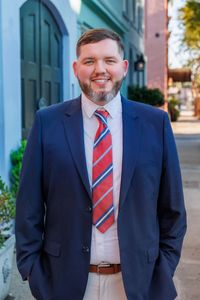
K.J. Atwood earned a high school diploma from Pelion High School, a bachelor's degree from the Wofford College, a graduate degree from the University of South Carolina, and a graduate degree from Rutgers University. His career experience includes working as a business owner.[1]
- Graduate:
- University of South Carolina
- Bachelor's:
- Wofford College
- High school:
- Pelion High School
Campaign money
- Raised
- $19K
- From individuals
- $13K
- From PACs & party
- $0
- Own money
- —
FEC filings through May 20, 2026.
View on FEC.gov(opens in new tab)In their own words
South Carolina House of Representatives District 110
Who are you? Tell us about yourself.
I am a Mount Pleasant small-business owner, husband and father, and 12th generation South Carolinian. I grew up in a working-class family that moved around a lot, spending part of my childhood in the South Carolina Lowcountry, and most of my time in South Carolina. I earned degrees in biology and economics from Wofford College, a Master of International Business from the University of South Carolina, and a Master of Psychological Science from Rutgers University, where my research focused on understanding political polarization. My professional background includes technology consulting at PwC, supporting South Carolina's public-health response during COVID-19, and co-founding the marketing and design agency Half Dreaming with my wife, Caitlyn. I live in Mount Pleasant with Caitlyn and our one year-old daughter.
Please list below 3 key messages of your campaign. What are the main points you want voters to remember about your goals for your time in office?
Make life more affordable for Lowcountry families by addressing the rising costs of housing, healthcare, energy, and everyday expenses.Fight to end corruption and the influence of special interests in state government through greater transparency, accountability.Voters deserve to know who is influencing decisions, how their money is being spent and who benefits.Address infrastructure issues for the people who already live here like traffic, flooding, and drainage while protecting our marshes, waterways and Lowcountry way of life.
What areas of public policy are you personally passionate about?
I am particularly passionate about fighting corruption and the influence of special interests in our political system. I believe a misalignment in incentives is causing our political frustrations, especially when it comes to things like healthcare affordability and access, housing and the rising cost of living, and creating an environment where small businesses can succeed. As AI and robotics continue to grow in importance, we need to make sure our elected leaders are fighting to represent our interests, and not those of the corporations secretly funding their campaigns.
What characteristics or principles are most important for an elected official?
Integrity, humility and courage. An elected official should be able to explain why they made a decision, acknowledge when they get something wrong, and remember that the job is serving the public, not being served. When special interests try to influence decisions, it’s important that elected officials hold firm to the needs of their constituents. We need to move away from elected leaders who answer to donors and lobbyists, and towards a representative who honors their commitments, and is available to the public. That’s one of the key reasons I’ve turned down PAC and corporate money, and I’ve spent so much time at people’s doors, and at events, having conversations and listening to the public.
What do you believe are the core responsibilities for someone elected to this office?
The core purpose of the government is to provide security and structure to individuals. The core responsibility of a representative is to understand and represent where those needs for security and structure primarily lie. That is why being engaged and listening to the needs of people is a prerequisite for good governance. Likewise, most people are not aware of what their state representative is voting on, and so I believe it is a representative's duty to share how they’re representing the people’s interests to ensure alignment. In house district 110, I believe that means holding town halls, office hours, and having open, public forums.
What legacy would you like to leave?
I would like to be remembered as someone who works hard, listens and makes substantive, lasting change. I want my daughter to grow up in South Carolina where families can afford to build a life, where our communities can grow without losing what makes them special, and where people can have confidence that their government is working for them. I do not think a legacy has to be a building with your name on it. Sometimes it is simply solving problems that make people's lives a little better.
What was your very first job? How long did you have it?
My grandfather is a carpenter, and he and my father worked together. In the summers in middle school and high school, I would do woodworking and help install hardwood flooring together with them. It was tough work but it taught me a trade, how to work with my hands, and the importance of setting a firm foundation for people’s day-to-day lives.
What is something that has been a struggle in your life?
Growing up, my family went through periods of financial instability. We moved a lot and I had to change schools often. I know what it’s like to be in a community where people are working incredibly hard, while still falling further and further behind.
Seeing my family work 60-80 hours a week and still not have health insurance, and still be stressed about where we were going to live and what we could afford, is a struggle that has impacted how I view the role of government and public policy. Families can work incredibly hard, and still get wiped out by one accident. We need to work to ensure that people have stability, especially children.
I have been fortunate to experience more security as an adult, but the exploding costs of things like health insurance can still be a significant strain.
What do you believe is the ideal relationship between the governor and state legislature?
The governor and legislature should be partners in governing, but they should also respect the independence and responsibilities of their respective branches.
A governor should be able to set priorities, propose solutions, administer state government, and work with legislators to get things done. The legislature has an equally important responsibility to represent the people of their districts, carefully consider legislation and spending, provide oversight, and hold the executive branch accountable.
The legislature should never simply be a rubber stamp for a governor of either party, and the governor should respect the legislature’s constitutional role. The best relationship is one based on communication, transparency, mutual respect, and a willingness to work together when it benefits the people of South Carolina.
What do you perceive to be your state's greatest challenges over the next decade?
South Carolina’s greatest challenge over the next decade will be handling the growth of technology in a way that preserves our economy. AI, robotics, and quantum computing will drastically change life over the next 10 years. South Carolina needs to be a leader in ensuring our citizens benefit from these technologies, rather than being displaced.
Do you believe that compromise is necessary or desirable for policymaking?
Absolutely. Compromising doesn't mean abandoning your principles, it's working together to make sure that people with different backgrounds and priorities can together make South Carolina an increasingly great place to live.
What was the first historical event that happened in your lifetime that you remember?
I remember a bit of the panic around Y2K. When I was a child, it seemed a bit more real and frightening to me, than it may have been for most adults at the time. I remember the days leading up to the new year, and the chatter in day care, or grocery stores, of people talking about the turn of the millennium.
U.S. House South Carolina District 1
K.J. Atwood did not complete [the profile publisher]'s 2026 Candidate Connection survey.
On the 2026 ballot
Links
Compiled from the candidate’s published profile as of September 30, 2026 and FEC filings.
Source(opens in new tab)