
Background
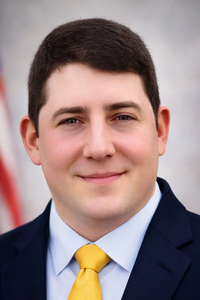
Justin Peroli earned a high school diploma from Cloverleaf High School. He earned a bachelor's degree from Carnegie Mellon University in 2004 and a graduate degree from the University of Akron in 2007. His career experience includes working as a small business owner.[1]
- Graduate:
- The University of Akron, 2007
- Bachelor's:
- Carnegie Mellon University, 2004
- High school:
- Cloverleaf High School
In their own words
Who are you? Tell us about yourself.
Justin Peroli is a Medina County resident, small business owner, and current Lafayette Township Trustee running for the Ohio House of Representatives in District 66 because he believes government should answer to the people, not the other way around.
Elected trustee in 2023, Justin has built a reputation for asking tough questions, demanding transparency, and insisting that public officials follow the law and respect taxpayer dollars. He has worked to strengthen financial controls, improve public access to records, and make sure decisions affecting residents are made openly and honestly. His approach to public service is simple: government exists to serve the public, and the public has a right to know how it operates.
Outside of public office, Justin owns and operates an expedited freight brokerage serving customers across the country. As a small business owner, he sees firsthand how regulations, taxes, and bureaucracy affect working families and entrepreneurs. That experience shaped his belief that government should be limited, accountable, and focused on its core responsibilities.
A member of the Libertarian Party, Justin is running to bring a more independent voice to Columbus and to ensure state government remains accountable to the people it serves.
Government should answer to you!
Please list below 3 key messages of your campaign. What are the main points you want voters to remember about your goals for your time in office?
Government should answer to the people it serves, yet too often it operates behind closed doors, avoids scrutiny, and expects taxpayers to simply trust that decisions are being made in their best interest. During my time as a township trustee, I have seen how difficult it can be for citizens to get clear answers about spending, policies, and decisions that affect their daily lives. Transparency is not a political slogan, it is a requirement for good government. I believe Ohio needs stronger open records protections, greater financial oversight, and a renewed commitment to conducting public business in public so that citizens, not bureaucracies, remain in control.Ohio families are expected to live within their means, and government should be no different. Too many problems in state government come from overspending, unnecessary programs, and regulations that grow year after year without real accountability. As a small business owner, I understand how taxes, mandates, and bureaucracy affect working people and employers. Government should focus on its core responsibilities, spend taxpayer money carefully, and avoid expanding beyond what is truly necessary. I will work to promote responsible budgeting, reduce unnecessary regulation, and protect taxpayers from wasteful spending.I believe that individual freedom and personal responsibility are the foundation of a strong society. People should be able to make their own decisions, run their businesses, raise their families, and live their lives without unnecessary interference from government. Unfortunately, too many decisions in Columbus are driven by politics instead of principle. As a Libertarian, I am not running to represent a political machine, I am running to represent the people of my district. I will approach every issue with the same question: does this protect the rights of citizens, or does it give government more control than it should have?
What areas of public policy are you personally passionate about?
I am especially passionate about government transparency, responsible spending, and fixing Ohio’s broken property tax system. Across the state, homeowners are facing rising tax bills with little say over how those costs grow or how the money is spent. That is not sustainable, and it is one reason so many people feel government no longer answers to them. I believe the property tax system needs a major overhaul, and real reform must include serious discussion about structural change, spending discipline, and whether property taxes should exist in their current form at all. Taxpayers deserve a system that is fair, understandable, and accountable to the people who fund it.
Who do you look up to? Whose example would you like to follow, and why?
I have always respected the example set by Ohio Senator Robert A. Taft and President Calvin Coolidge. Both believed that government should be limited, disciplined, and accountable to the people it serves. Taft was known for his commitment to constitutional principles, and Coolidge for his belief that public officials should exercise restraint and spend taxpayer money carefully. Their approach to government influenced my decision to get involved in public service at the local level, where I have seen how important transparency, responsible budgeting, and respect for the law are to maintaining public trust. I believe elected officials should focus on doing their job honestly, staying accountable to the people, and remembering that government exists to serve the public, not the other way around.
What characteristics or principles are most important for an elected official?
The most important qualities in an elected official are integrity, accountability, and the willingness to put the public interest ahead of politics. Voters should be able to trust that their representatives will follow the law, be honest about decisions, and take responsibility for how taxpayer money is spent. An effective public official must also be willing to ask difficult questions, even when it is unpopular, and to make decisions based on principle rather than pressure from party leaders or special interests. Government works best when those in office remember that their authority comes from the people, and that they are there to serve, not to rule.
What do you believe are the core responsibilities for someone elected to this office?
The core responsibility of a State Representative is to represent the people of the district honestly and faithfully when making laws that affect their daily lives. That includes carefully reviewing legislation, protecting taxpayer dollars during the budget process, and providing oversight to make sure state agencies are operating within the law. An elected official should also remain accessible to constituents and willing to explain the reasons behind their decisions. Just as important, a representative must be willing to think independently and not simply follow party leadership. The job is not to advance a political career, but to serve the public with transparency, accountability, and respect for the Constitution.
What legacy would you like to leave?
If I am fortunate enough to serve, I would like my legacy to be that I helped remind people that government is supposed to answer to them. Too often, citizens feel shut out of decisions, frustrated by rising taxes, and unsure whether anyone in office is truly looking out for their interests. I would like to be remembered as someone who asked hard questions, insisted on transparency, and was willing to challenge the idea that government should always grow bigger and cost more. If my time in office helps make government more accountable, more disciplined, and more respectful of the people it serves, then I will consider that a legacy worth leaving.
What was your very first job? How long did you have it?
My first job was working at my family’s convenience store, which served the Lafayette community. I started working there when I was young and stayed involved throughout my teenage years. Because it was a small family business, I learned early on what it meant to work hard, be responsible, and treat customers with respect. It also gave me a chance to get to know people in the community and understand how much local businesses and local relationships matter. That experience had a lasting impact on how I view work, community, and public service.
What is something that has been a struggle in your life?
One challenge in my life has been learning how to balance the responsibilities of work, family, and public service. Running a business requires long hours and constant attention, and serving in local government adds another level of responsibility because the decisions you make affect your neighbors and your community. There have been times when it would have been easier to stay on the sidelines, but I felt a responsibility to stay involved and try to make things better. That experience has taught me patience, persistence, and the importance of staying focused on doing the job the right way, even when it is not the easiest path.
What do you believe is the ideal relationship between the governor and state legislature?
The ideal relationship between the governor and the legislature should be cooperative but independent, with each branch respecting the role and authority of the other. The governor is responsible for leading the executive branch, while the legislature’s duty is to represent the people by carefully debating, writing, and approving laws. That system only works when both branches are willing to work together when possible, but also willing to disagree when necessary. The legislature should never act as a rubber stamp, and the governor should not rely on executive action when issues should be addressed through the legislative process. A healthy balance between the branches protects the Constitution and ensures that government remains accountable to the people.
What do you perceive to be your state's greatest challenges over the next decade?
Over the next decade, Ohio’s greatest challenges will be controlling the cost of government, reforming a property tax system that many homeowners feel is no longer sustainable, and making sure our state remains a place where people can afford to live, work, and raise a family. Too often, spending continues to grow without enough accountability, and the burden is passed on to taxpayers who feel they have little voice in the process. Ohio must focus on responsible budgeting, a competitive business climate, and greater transparency so citizens can understand how decisions are made and how their money is used. If government becomes more disciplined and more accountable, Ohio will be better positioned for long-term growth.
Do you believe that compromise is necessary or desirable for policymaking?
Compromise is often necessary in policymaking, but it should never mean abandoning core principles or passing laws simply to say something was accomplished. I have always agreed with the idea often associated with President Calvin Coolidge that a legislator is not measured by how many bills he passes, but by exercising judgment and restraint when new laws are not needed. Elected officials should be willing to work with others in good faith, but compromise should lead to better policy, not just more government. The responsibility of a legislator is to protect the public interest, respect the Constitution, and recognize that sometimes the best decision is not to act at all.
What organizations or individuals have endorsed your campaign?
I have not sought formal endorsements. My campaign is focused on representing the people of District 66, and I believe the most important endorsement should come from the voters themselves, not political organizations or special interests.
What was the first historical event that happened in your lifetime that you remember?
One of the first historical events I remember learning about as a kid was the fall of the Berlin Wall in 1989. At the time I did not fully understand all of the politics behind it, but I remember realizing that it was a moment people around the world saw as a victory for freedom. As I got older and learned more about the Cold War, I came to appreciate how much the structure of government can affect everyday life. That event stayed with me because it showed that people will always push back when government becomes too distant or too powerful, and that the desire for liberty and self-government is something that never goes away.
On the 2026 ballot
Links
Compiled from the candidate’s published profile as of September 30, 2026.
Source(opens in new tab)