
Background
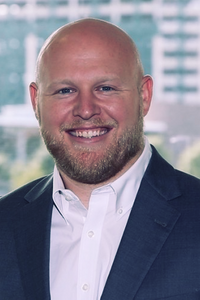
Justin Dues was born in Coldwater, Ohio. He served in the U.S. Marine Corps from 2003 to 2012. His career experience includes working as an educator and business owner.[1]
Campaign money
- Raised
- $0
- From individuals
- $0
- From PACs & party
- $0
- Own money
- —
FEC filings.
View on FEC.gov(opens in new tab)Campaign themes
Justin Dues did not complete [the profile publisher]'s 2026 Candidate Connection survey.
blockquote{border-left:none !important;padding-left:2em;position:relative;color:#444;font-family:"Libre Franklin",Helvetica,Arial,sans-serif;font-size:16px;color:#202122;font-style:normal;}blockquote::before{content:open-quote;font-size:3em;line-height:0.1em;position:absolute;left:-10px;top:40px;color:#ccc}blockquote::after{content:close-quote;font-size:3em;line-height:0.1em;position:absolute;right:0;bottom:0;color:#ccc}
Campaign websiteDues' campaign website stated the following:Healthcare is a Birthright.Written By Justin DuesIt’s time for the United States to join the civilized world and treat healthcare not as a profit engine, but as a sacred right. While you ponder that yourself, consider these interesting facts.We spend near 2X as much per person on healthcare as the next closest country yet rank 49th in life expectancy. Sounds like a raw deal to me.The U.S. ranks #1 in medical debt + #1 in preventable deaths + #1 in maternal mortality among developed nations. Being numero uno here in no beuno.Over 66% of all personal bankruptcies in the U.S. are due to medical bills, something that is literally nonexistent in countries with public healthcare systems.The U.S. spends more than any other country on the planet, yet ranks nearly 50th in global life expectancy. Why are Americans dying younger than citizens in nations with fewer resources, how is this possible? It’s because our healthcare system prioritizes profits over people / margins over outcomes. While other developed countries treat healthcare as a public good, the U.S. treats it as a private commodity that is sold, rationed, and monetized. We’ve traded compassion for quarterly earnings and allowed Wall Street to determine who gets to live with dignity and who dies in debt. Life expectancy data as of 2024, show a 6 to 10 year gap exists between the U.S. and our closest allies and competitors with a universal healthcare system. How can one argue with a better system, savings of taxpayer money, and extended life spans?We’re Paying More, Living LessLeave it to the U.S. healthcare industry to find a way to make it about profits. As a large portion of today’s costs comes from paperwork, billing games, and middlemen and not actual care. Moving to a universal healthcare system could save the U.S. taxpayer money each and every year while covering every single person young and old. Current cost estimates for universal healthcare in the U.S. near $3.5 to $4T. This is a significant amount but when compared to the $4.5T we currently spend, the opportunity to save close to $500B every year arises. To put that in context, the cost to make all colleges and universities tuition free is $450B every year. Think about that for a second, we could essentially fund free universal healthcare and education with taxpayer funds - now that is a country that I would want to live in.With a Medicare-for-All system the federal government would serve as the main payer - setting fair transparent prices and replacing premiums, deductibles, and surprise bills with a predictable way to pay. That shift will especially helps families dealing with chronic or terminal conditions, often hit hardest by out-of-pocket costs. It also helps the economy as employers wouldn’t have to offer health benefits just to hire people. Workers gain newfound freedom and wouldn’t be stuck in jobs for the health insurance. Companies could focus on building long-term products and paying fair wages instead of juggling new benefit plans and price hikes. If we judge a society by how it treats those who need help most, then a health system built around care, not profit incentives, gets us closer to that standard.How The World Passed Us ByMost developed nations built universal healthcare in two big waves. The first after World War II, when governments treated health care as core social infrastructure alongside pensions and education. A second wave arrived from the late 1980s through the 2000s as countries standardized coverage and closed healthcare gaps. The UK launched the NHS in 1948. France expanded Sécurité Sociale from 1945 toward near-universal coverage. Nordics built out tax-funded or social-insurance systems through the 1950s–70s. Japan reached universal coverage by 1961 through nationwide enrollment in employer and community plans. Canada went province by province with nationwide adoption by the early 1970s. Australia established Medibank in 1975, and New Zealand’s universal model traces back to the 1938 Social Security Act.South Korea unified its insurance funds to reach universal coverage by 1989. Taiwan implemented single-payer national health insurance in 1995. Israel’s National Health Insurance Law took effect in 1995. Switzerland in 1996 and the Netherlands in 2006 mandated universal enrollment in tightly regulated, non-profit–like insurance markets. Many systems continued to refine toward near-universal statutory coverage by the 2000s. So most of the developed world moved to universal coverage in the mid-20th century, then modernized and closed remaining gaps by the 2000s. The U.S. by contrast doubled down on private insurance and prescription medicine. Medicare and Medicaid were introduced in the 1960s but were limited patches versus comprehensive reform. In our country the rise of health insurance conglomerates, pharmaceutical monopolies, and hospital chains turned illness into a business model.Countries without Universal Healthcare CoverageThese countries do not provide universal healthcare, meaning not all citizens have guaranteed access to essential health services without financial hardship:AfghanistanBangladeshCambodiaHaitiIndonesiaLaosMyanmarNepalNigeriaPakistan (not fully covered nationwide)Papua New GuineaSomaliaSudanSyriaUnited States (varied coverage, not universal)YemenOnly the United States and New Zealand permit widespread direct-to-consumer (DTC) advertising for prescription drugs, a practice banned in most other countries due to safety concernsWhat Other Countries Got Right & What We Got WrongUnited Kingdom (NHS): Universal care funded by taxes. No bills or insurance companies and life expectancy is 82.6 years. Insurance Gatekeepers. America’s private insurers determine what treatments are ‘medically necessary’ based on profit margins and not patient needs. Denials, delays, and restrictive networks are ways to increase profits. Japan: Public insurance for all with private providers. Regulated low costs and life expectancy is 85.2 years nearly 5 years longer than the U.S. Profits or Death. The average CEO of a top U.S. health insurer earns over $20 million per year while tens of millions of Americans remain uninsured or underinsured. Hospital mergers have created regional monopolies that are allowing systems to charge 10x Medicare rates for routine procedures. France: Hybrid system with universal access and 90% satisfaction rates and life expectancy is 82.5 years. Pharmaceutical Monopolies. Americans pay up to 10 times more for the same medications compared to Canadians or Europeans. Insulin costs $6 to produce but sells for $300 per vial in the U.S. due to patent gaming and middlemen.Germany: Non-profit insurers offer universal coverage and admin costs are half that of the U.S. Administrative Waste. Nearly 30% of U.S. healthcare spending goes to billing and paperwork versus actual care. No other country comes close.How America Can Catch UpMedicare for All (Universal Healthcare or Single-Payer System) Replace private insurance with a public system that covers all Americans from birth to death. Invest in prevention and public health by shifting spending from reactive care to prevention, nutrition, mental health, and chronic disease management. Eliminate co-pays, deductibles, and surprise bills that are funded through progressive taxation. Outlaw medical bankruptcy and guarantee that no American goes broke due to illness. Cap out-of-pocket costs and ensure universal access to treatment. Empower Medicare to negotiate prices and ban anti-competitive practices that inflate drug costs. These moves among others saves money by removing profit margins and administrative waste. America’s obsession with privatized healthcare has produced a system that is morally indefensible and economically unsustainable. No one should have to choose between treatment and bankruptcy, or watch loved ones suffer because a corporation denied coverage. If health is wealth, then universal care is the foundation for a truly prosperous nation. We have the resources and the public support. What we lack is the political courage. Tax The RichWritten By Justin DuesHow the Rich Sidestep Taxes and Undermine DemocracyAmerica has always promised equality, opportunity, and representation. But today, the country faces an undeniable crisis: a growing divide between the billionaire class and the working majority. Instead of contributing their fair share to strengthen the nation and uplift struggling communities, many of the wealthiest Americans have chosen a different path — one that prioritizes power and profit over people, even at the expense of democracy itself. The ProPublica Secret IRS Files showed that in some years the richest men in the country like Bezos, Musk, Bloomberg, Icahn and others, all paid zero in federal income tax, or near zero once you measure taxes against the surge in their wealth. That’s not business genius, it’s a system rigged for the rich. By exploiting tax laws and loopholes they are underpaying what they owe and forcing the working class to foot the bill. These oligarchs didn’t earn a gilded halo, instead they bought politicians and a private tax code that benefits only themselves. They have wealth parked in shell companies and trusts routed through friendly jurisdictions thereby making ownership opaque and taxes optional. Their armies of lawyers surf the gray zone between avoidance and evasion. Academic estimates place the tax gap which is the portion of taxes owed but not paid by the wealthy, at over $160 billion per year driven largely by the top 1%.This is a hoarding of wealth against the common good of humanity in my personal opinion. The inequality is tremendous when you consider that 1 billion would be enough to have $50,000 dollars a year for 20,000 years. A groundbreaking study by economists Akcan Balkir, Emmanuel Saez, Danny Yagan, and Gabriel Zucman reveals that the wealthiest Americans on the Forbes 400 paid an average tax rate of just 24%, far below the commonly cited figure of 34% and even lower than many middle-class workers. Between 2018 and 2020, these billionaires paid a mere 1.3% of their total wealth in federal taxes, down from 2.7% in prior years. Best estimates put around 8 to 10% of the world’s household financial wealth offshore with trillions from U.S. investors alone beyond the easy reach of the IRS. This is jeopardizing the very future of American democracy.Spare the fairy tale that financial hoarding is harmless. In a country with hungry kids and tents under overpasses, you don’t “accidentally” accumulate sums you can’t spend in ten lifetimes, you make a conscious choice to put yourself above everyone else. Trump and his Republican enablers have made a brand out of being the wealthy and elite’s concubine. To this day defending trickle-down economics, blocking wealth and estate tax debates, and treating loopholes like national treasures. That’s plutocracy with a red hat and it coms with other consequences as well.Budget Shortfalls and Shrinking Services. Billions in lost tax revenue starve vital public services like healthcare, education, infrastructure therefore forcing cuts or increased debt.Erosion of Fairness. When billionaires pay lower rates than teachers or nurses, the principle of equal citizenship is hollowed out.Political Corruption. Wealth funnels into political influence, defending loopholes, cutting IRS budgets, and weakening enforcement.A Path Forward: Ways To Demand AccountabilityThe United States has by far the most billionaires in the world at over 900 and counting despite being a quarter the size of China and India with a 1.4B in population each compared to America’s 350M. This means our policy architecture has become a billionaire factory, and the output is corporate capture and social decay. We should measure patriotism by whether the richest among us still pay into the nation that made their fortunes possible. Until we do, we’re subsidizing a class that treats America like an ATM and the rest of us like collateral. Let’s put a stop to this together. Stop preferential treatment of unrealized gains at the top and restore a robust income tax base reminiscent of 1950. Redirect that revenue to the public goods we keep pretending we can’t afford like universal health care, child poverty elimination, housing affordability, climate resilience, and scientific research that lifts everyone. What options do we have?Tax the Rich through reforms targeting capital gains, inheritance, and extreme wealth. Enacting a Wealth Tax like a 2% annual tax on fortunes over $50 million that could raise massive revenue.Strengthen the IRS to audit and enforce.Crack Down on Billionaire Tax Avoidance through tighter rules, global cooperation, and closing loopholes.The billionaire class has a choice to invest in the America that made their wealth possible or undermine democracy to preserve their power. So far, many have chosen the latter. Don’t forget that history shows when ordinary people demand accountability and fairness, systemic change is possible. If America is to honor its promise of government “of the people, by the people, for the people,” we must confront the corrosive influence of extreme wealth and build an economy and a democracy that works for everyone. The stakes are nothing less than the survival of the American dream itself.Wall Street’s ScamWritten By Justin DuesThe Racket: Monopoly, Corruption, Collapse, Reform, RepeatThe definition of insanity is doing the same thing over and over, and expecting different results. Wall Street has been privatizing financial booms and socializing the crashes for 100+ years. America keeps living through the same economic scam on loop that goes like this:Industries consolidate. A few giants choke out competition. Profits surge.The giants rig the rules. Lobbyists flood Washington. Risk piles up in the dark.The bubble pops. Workers lose jobs, savings, homes. The public pays the cleanup bill.Legislative reforms. To “make sure this never happens again.” Time passes. Rules are weakened, gutted, or repealed by Wall Street, Big Tech, Big Banks, Big Oil, Big Whatever as they pressure, sue, and lobby. Go back to step 1. This isn’t an accident, it’s a cycle older than any of us.The Gilded Age and Birth of MonopolyIn the late 1800s and early 1900s, America was run by industrial cartels. Railroads, oil, steel, finance - each sector was dominated by a handful of men who set prices, crushed unions, bribed legislators, and bought judges like they were cufflinks. This was the original corporate-state merger. By the 1920s, the methods were being perfected: holding companies and trusts to skirt competition. Cartels and price-fixing to tax the public in everything but name. Stock pools and insider syndicates to manufacture bull markets. Political capture through donations, friendly regulators, and revolving doors - any of that sound familiar? The playbook was simple, consolidate horizontally to eliminate rivals. Then integrate vertically to strangle suppliers and distributors and use finance to launder monopoly power as efficiency. Long before the Great Depression exposed the rot, these barons had already built a private regime above the law, an American oligarchy in everything but title.The Great DepressionThe roaring twenties were a party for bankers and speculators. No such thing as federal deposit insurance, an arena where banks were gambling customer deposits in markets. Insiders pumping stocks with no disclosure rules. Then the market crashed in 1929, setting off bank panics, mass unemployment, and total economic collapse. Think of the market collapse like a huge Jenga tower built on borrowed blocks. Big investors secretly teamed up “stock pools” to push prices up, and banks lent tons of easy money so regular people could buy stocks on margin - pay a little now, borrow the rest. At the same time, powerful companies faced little real competition and their stock prices soared far beyond what their actual profits could support. When money got tighter and loans were called back, investors had to sell fast to repay debt. Those rushed sales knocked out the tower’s lower blocks, prices tumbled, more margin calls hit, and the whole market came down in a chain reaction.How Congress responded: The New Deal era gave us some of the strongest financial guardrails in U.S. history:Sherman Antitrust Act 1890. Made it illegal to restrain trade or monopolize a market.Clayton Antitrust Act 1914. Closed loopholes, banned certain kinds of anti-competitive mergers.Federal Trade Commission Act 1914. Created to investigate and stop “unfair methods of competition.”Glass–Steagall Act | Banking Act of 1933. Separated normal banking (deposits, savings, checking) from speculative investment banking (securities underwriting and trading). The message: You can be a casino OR you can be a utility. You cannot gamble with grandma’s deposits.FDIC insurance 1933. Guaranteed deposits up to a certain amount, stopping bank runs.Securities Act of 1933 / Securities Exchange Act of 1934. Forced companies to tell the truth about their finances. Created the SEC to police securities markets.These weren’t academic reforms. They were weapons aimed directly at corporate oligarchs like John D. Rockefeller and J.P. Morgan. The government used them to break up Standard Oil and later to smash other combinations. The public message was clear - the economy exists to serve the people, not the other way around. The result? Banking stabilized and ordinary savers weren’t wiped out every time bankers got reckless. The financial system became boring and boring was good. Boring is what allows people to build a life. But if you know America, there’s not only a short-term memory problem but also a long-term inability to learn from the past. Starting in the 1980s and accelerating in the 1990s, regulators and courts chipped holes in Glass–Steagall. In 1999, Congress passed the Gramm–Leach–Bliley Act, which effectively repealed core parts of Glass–Steagall. Commercial banks, investment banks, and insurance companies could now merge into giant financial superpowers. “Too big to fail” stopped being a nightmare scenario and became a business model. As decades passed without economic collapse, Congress allowed these and other protections to be weakened, gutted, or undone. By the end of the 20th century, federal antitrust enforcement had been reinterpreted around one narrow question: “Does it raise consumer prices right now?”Is this all just a game for Wall Street?If a merger didn’t instantly spike the price of a widget at Walmart, courts and regulators often let it go. Bigness itself stopped being considered a threat to democracy, wages, or supply chain resilience. Dominance, vertical lock-in, vendor bullying, labor monopoly all got the thumbs up as “efficiency.” This reinterpretation let wave after wave of mergers sail through in airlines, banking, telecom, media, meatpacking, defense contractors, pharmacy benefit managers, health insurance, agriculture, cloud computing, app stores, logistics, you name it. Fewer players. More leverage. Less bargaining power for workers and suppliers. More systemic fragility. So we are right back where it began: concentration. We were told this would modernize finance. Nine years later, we got 2008.2008 Financial CrisisAfter Glass–Steagall was gutted and derivatives were left largely unregulated (see also the Commodity Futures Modernization Act of 2000, which helped keep credit default swaps in the shadows), Wall Street levered itself to the moon on mortgage-backed securities, junk paper, ratings fraud, and straight-up fantasy balance sheets. When housing cracked, the system almost went with it. Millions of Americans lost homes, pensions, jobs. Trillions in household wealth vanished. Meanwhile, the biggest institutions and the ones whose size, complexity, and political clout created the danger were rescued because “if they go down, everyone goes down.”How Congress responded: Dodd–Frank Wall Street Reform and Consumer Protection Act in 2010.Required big banks to hold more capital as a thicker shock absorber.Created the Consumer Financial Protection Bureau (CFPB) to stop predatory lending.Gave regulators “Orderly Liquidation Authority” to wind down failing giants instead of panicking.Forced some derivatives onto clearinghouses so they couldn’t hide off-books.Dodd–Frank was supposed to put the gun back in the holster. Yet under heavy bank lobbying, parts of Dodd–Frank were watered down during rulemaking. The industry fought higher capital requirements, fought stress tests, fought derivatives transparency. In 2018, Congress rolled back pieces of Dodd–Frank for “smaller” but still very large banks thereby raising the asset threshold at which strict oversight kicks in. Those mid-size regionals got more room to take interest rate and liquidity risk without the same scrutiny. Not long after, several of those “mid-size” banks faceplanted in interest-rate shock, triggering emergency interventions to protect uninsured deposits. Taxpayers were told again this wasn’t a bailout, just “systemic risk management.”Is this a Democracy and an Economics Problem?When a handful of firms control your food, your medicine, your banks, your news, your transportation, your information feeds, your weapons, and your jobs, you don’t live in a competitive market economy. You live in an administered hierarchy where price, wage, and policy are quietly negotiated between corporate boardrooms and political offices and then sold to you as “the free market.”That’s why the founders of this nation, even back then, were suspicious of concentrated economic power welded to political power. That’s why Progressive Era trust-busters tried to smash monopolies. That’s why New Dealers split banks. That’s why we created post-crisis firewalls over and over again. Because concentrated private power becomes public danger and because every time we let it concentrate, we pay for it the same way. Lost jobs | Lost homes | Lost savings | Lost bargaining power | Lost dignity.Notice any patterns?1. Panic of 1873: Over-speculation in the railroad industry, bank failures, and the collapse of a major investment bank.2. Panic of 1893: Overbuilding of railroads, falling agricultural prices, and the failure of major banks and railroads.3. Panic of 1907: Market speculation, particularly in the copper industry, and the failure of a major brokerage firm.4. Crash of 1929 (The Great Depression): Excessive speculation in the stock market during the 1920s, with no regulation. 5. Black Monday (1987): A sudden and dramatic crash on October 19, 1987, dropping by 22.6% in a single day.6. Dot-Com Bubble Burst (2000-2002): Overvaluation of tech companies during the late 1990s as the internet grew rapidly.7. Global Financial Crisis (2007-2008): Collapse of the housing bubble, driven by high-risk practices.How to Finally Break the CycleWe do not have to continue living through “unpredictable downturns.” As I see it, we are living through a maintained schedule of looting. Every time, we are told this version is different. Every time, we are told the grown-ups are in charge now. Every time, we are told we can trust the markets to discipline themselves. But markets don’t discipline monopolies. Monopolies discipline markets and unless Congress stops pretending not to notice, we already know how the next chapter ends. Wall Street gets the profits. Society gets the bill. It is far past time to reset the rules of the game.1. Treat bigness itself as a threat again. Stop pretending monopoly is “efficient.” Restore antitrust to what it used to be: preventing dangerous concentration of power, not just policing whether a price at Walmart went up by 12 cents. That means blocking mega-mergers, unwinding abusive vertical lock-ins, and yes, breaking up firms when they sit on entire markets like feudal lords.2. Reinstate hard financial firewalls. We need modern Glass–Steagall logic: you can be a federally backstopped utility serving the public, or you can be a private casino swinging for the fences but you don’t get both. If you’re too big to fail, you’re too big to gamble. Also: automatic failure resolution. Not bailout theater, actual wipeouts for executives and shareholders when they blow up the bank.3. Make regulation self-executing, not optional. Right now, a lot of our “safeguards” depend on having heroic regulators willing to fight industries that outgun them 100 to 1 in money and lawyers. That’s not a system. That’s a fantasy. You want to stop banks from levering 40:1? Cap it in statute. You want to stop defense contractors from eating each other? Ban further consolidation in critical sectors unless there are at least X viable, independent competitors left. You want to stop tech platforms from self-dealing? Mandate interoperability, data portability, and a structural firewall between running the platform and competing on it. Do not trust “voluntary commitments.” Write the line in law.4. Cut off the revolving door. You should not be allowed to leave Congress on Friday and sign a seven-figure advisory contract helping a merger through DOJ on Monday. You should not regulate an industry you plan to lobby for next year. Everyone in D.C. knows this is legalized bribery with nicer suits.5. Tie corporate rescue to worker rescue. If the public steps in during a crisis, workers should come out better off, not worse. That means strict conditions like no buybacks, no dividends, no executive bonuses, mandatory wage floors, union neutrality, worker seats on the board, and automatic equity upside for the public. If taxpayers are the backstop, taxpayers are also the investor. We actually know how to stop the loop because we’ve done it before. The problem is not brains, it’s political willpower. Housing Crisis 2.0Written By Justin DuesThe largest owners of residential real estate are a mix of massive investment firms with Blackstone often cited as a top single-family home buyer.Homes Are for Humans, Not Corporate LandlordsLet’s be clear, this housing crisis is manmade and fixable. A functional society should not allow the basic human need for shelter to be harvested like a commodity. Especially when families are locked out of ownership and renters are squeezed by rising costs. Then again it does appear we are a few pieces away from a functional society as 2026 kicks off. And though we can’t solve the entire housing crisis with one law, we can stop making it worse by letting corporate owners crowd out buyers and convert neighborhoods into profit machines. Homeownership should be for people, not private equity or corporate America.Along the path to resolving the issue includes better wages, lower interest rates, and updated zoning laws. For this policy perspective we are going to focus on corporate America’s move into residential property and what can be done about it. It’s both a local and national reality, in Charlotte a recent report highlighted that national corporations own about 18% of single-family rental homes. This places Charlotte among the highest of large U.S. cities studied. Other local analysis using Mecklenburg County tax assessment data shows corporate ownership of single-family homes rising sharply over the past decade. This business model has spread and is concentrated in fast-growing metro, meaning regular buyers are forced to bid against Wall Street and not their neighbors. Homeownership is supposed to be the backbone of the American Dream. Stability, roots, and a chance to build wealth over time. That promise is now being eroded by a housing market that increasingly treats single-family homes like financial assets instead of a place where families live.Corporate Overreach in $earch of Profit$How much does private equity actually own? Recent analysis notes that large institutional investors, often defined as owning 100+ homes, own about 3% of single-family rental stock nationwide. However, ownership soars around 12% to 20% in the metros where investors are most concentrated. While the national percentage looks small, the local damage can be significant as in Charlotte’s case. Again, we can recognize the housing crisis has multiple causes, that we must also increase supply and affordability, but corporate consolidation makes the crisis worse in the places it targets. The outgoing Biden administration was already warning about the growth of investor ownership in single-family rentals since the financial crisis and the concerns it raises for affordability. We need more checks on corporate power such as the FTC’s 2024 action requiring Invitation Homes to pay $48 million and stop certain deceptive and unfair practices.What I’ll fight for in Congress1) Co-sponsor H.R. 1745 — the HOPE for Homeownership Act Humans Over Private Equity. This bill targets hedge funds that hold “excess” single-family homes by imposing an excise tax when they fail to dispose of excess holdings—creating real pressure to return homes to the market for people to buy.2) Support H.R. 3214 — the HOME Act of 2025 Housing Oversight and Mitigating Exploitation. This would empower HUD to investigate housing and rental price gouging during an affordable housing crisis and strengthen oversight of abusive market practices especially when large investors dominate p
On the 2026 ballot
Links
Compiled from the candidate’s published profile as of September 30, 2026 and FEC filings.
Source(opens in new tab)