
Background
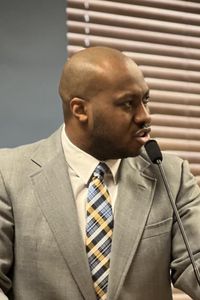
Julian Beaudion was born in Alexandria, Louisiana. Beaudion career experience includes working as an advocate, state trooper, nonprofit leader, and small business owner.[1]
- High school:
- Pineville High School
Campaign money
- Raised
- $228K
- From individuals
- $151K
- From PACs & party
- $3K
- Own money
- —
FEC filings through June 30, 2026.
View on FEC.gov(opens in new tab)In their own words
Who are you? Tell us about yourself.
Julian is a public servant, law enforcement veteran, and small business owner running for the US Senate to bring principled, practical leadership to Washington. With over 13 years of experience as a South Dakota State Trooper and a proven record of service, Julian has built a career focused on accountability, safety, and strengthening the communities he calls home.
In 2022, Julian was a Presidential nominee to serve as the U.S. Marshal for South Dakota, a reflection of his integrity, professionalism, and dedication to public safety. He has worked closely with local, state, and federal partners to uphold the rule of law while fostering trust between law enforcement and the public.
Julian serves as ED of The HUB SD, an organization dedicated to advancing engagement, leadership development, and community-centered communication strategies across the state. In addition to his work in the public sector, he is also the owner of Swamp Daddy’s Cajun Kitchen, a successful restaurant in Sioux Falls that has become a hub for community connection and local entrepreneurship.
Julian has advised on high-impact campaigns at every level, from local to presidential, and was selected as a 2024–2025 Obama Foundation Leader for his forward thinking approach to policy, strategy, and coalition-building.
His campaign for U.S. Senate centers on people first. Julian is focused on quality healthcare, infrastructure, small businesses, federal workers, and education.
Please list below 3 key messages of your campaign. What are the main points you want voters to remember about your goals for your time in office?
I bring a law enforcement background with a community centered approach. With over 13 years as a South Dakota State Trooper and a nomination to serve as U.S. Marshal, I understand the importance of public safety, accountability, and trust in government. I’m committed to strengthening law enforcement while ensuring constitutional protections and individual liberties are upheld.I’m a small business owner who knows what it takes to meet a payroll, balance a budget, and grow in uncertain times. I will fight for pro-growth policies that support South Dakota’s entrepreneurs, farmers, and working families to cut red tape, lower costs, and expand opportunities across rural and urban communities alike.I believe in people over politics. My work leading a statewide nonprofit has taught me how to build coalitions, solve real problems, and listen more than I speak. In the U.S. Senate, I’ll be a voice for practical solutions, not political extremes, and I’ll put South Dakotans ahead of party lines every single time.
What areas of public policy are you personally passionate about?
I am passionate about improving veteran care and ensuring our VA system is fully funded and protected from privatization. I support strong labor protections, including the right to organize and collectively bargain, and will work to ensure federal workers are treated with respect and fairness. I care deeply about public safety, infrastructure, and expanding access to affordable healthcare, especially in rural areas. I also support securing all of the benefits offered by the Department of Education, including preventing the dismantling of the department. Future generations depend on our commitment to them. I believe South Dakotans deserve a senator who puts real issues ahead of political theater.
Is there a book, essay, film, or something else you would recommend to someone who wants to understand your political philosophy?
I would recommend The Audacity of Hope by Barack Obama. It offers a clear vision of how we can approach politics with both conviction and compassion. The book emphasizes the importance of common ground, civic responsibility, and the belief that politics can be a force for good.
What characteristics or principles are most important for an elected official?
Integrity, accountability, and courage. An elected official should lead with principle, not convenience. They should be standing firm in service to the people they represent, not political gain. The ability to listen, admit when you're wrong, and stand up when it matters most is what sets real leaders apart.
What do you believe are the core responsibilities for someone elected to this office?
To represent their state with clarity, consistency, high morals, dedication to people and conviction. A U.S. Senator must make informed decisions, uphold the Constitution, oversee federal legislation and appropriations, and ensure that federal agencies are working in the public’s best interest. Listening to constituents and being accessible is not optional, it’s required!
What legacy would you like to leave?
I want to leave a legacy of principled leadership and real results. I would like to be remembered as someone who stepped into public service not for status, but to solve problems, build trust, and improve lives. I want to be remembered as a leader who listened more than he spoke, brought people together during divided times, and never wavered from doing what was right, even when it wasn’t easy. My time in office should help restore faith in government, opens doors for the next generation of leaders, and delivers lasting progress for South Dakotans.
What do you perceive to be the United States' greatest challenges as a nation over the next decade?
Rebuilding trust in institutions, addressing economic inequality, and defending democracy from erosion, both externally and internally. We must also confront climate resilience, modernize our infrastructure, and ensure the U.S. remains competitive in global innovation and security.
What are your thoughts on term limits?
I support term limits for Congress. Public service should be about purpose, not permanence. Term limits can reduce career politicians and encourage fresh perspectives while preserving knowledge through staggered terms.
What qualities does the U.S. Senate possess that makes it unique as an institution?
The Senate is designed to be a body that tempers the urgency of the House with reflection, debate, and continuity. Its longer terms and smaller size allow senators to take a broader view of national issues and, ideally, rise above partisanship to govern.
Do you believe that it’s beneficial for senators to have previous experience in government or politics?
Experience can be helpful, but it’s not a requirement for wisdom or leadership. What matters more is whether a person understands service, can navigate complexity, and leads with principle. My background in law enforcement, business, and nonprofit leadership gives me a strong foundation to govern effectively.
What do you think of the filibuster?
The filibuster is often used as a tool of obstruction, not deliberation. If it prevents the Senate from addressing urgent national issues, like voting rights or public safety reform, it must be reformed.
Is there a particular senator, past or present, whom you want to model yourself after?
I deeply admire the leadership of Barack Obama during his time in the U.S. Senate. He brought a thoughtful, principled, and unifying approach to the role—someone who could work across the aisle without compromising his core values. He was a listener, a coalition-builder, and someone who always kept people at the center of his policymaking. That’s the kind of leadership I believe the Senate and the country needs more of.
I also respect the energy and moral clarity of Senator Cory Booker. He leads with both heart and discipline, isn’t afraid to speak truth to power, and consistently reminds us that empathy and justice belong in public service. Like him, I believe in the power of hope-driven leadership that brings people together to take on tough challenges with honesty, courage, and compassion.
How would you evaluate a judicial nominee?
I would evaluate a judicial nominee based on their legal qualifications, judicial temperament, respect for precedent, and demonstrated commitment to impartiality and the Constitution. A judge’s role is not to serve a political agenda but to interpret the law fairly and consistently, regardless of personal or partisan belief.
What kind of relationships would you build with other senators?
Professional, respectful, and focused on results. I’ll work with anyone, Republican or Democrat, who wants to solve problems. I believe in coalition building, especially around issues like veterans’ care, rural infrastructure, education and small business support.
Do you believe that compromise is necessary or desirable for policymaking?
Yes, I believe compromise is both necessary and desirable in a functioning democracy. It’s not about giving in, it’s about moving forward. The Senate was designed to bring together differing viewpoints, and progress often requires finding common ground without sacrificing core principles.
How should the U.S. Senate use its investigative powers?
The U.S. Senate should use its investigative powers responsibly, strategically, and in service of the public interest, not political theater. Oversight is a core constitutional duty, and it should be exercised to uncover facts, ensure accountability, and protect the integrity of our institutions.
What criteria would you apply when deciding whether to confirm presidential appointees to their Cabinet?
I would look for qualifications, ethical standards, and a clear commitment to upholding the law and public trust. I would also evaluate whether the nominee has the temperament to serve the whole country, not just a party or interest group.
What committees interest you?
I’m particularly interested in serving on the Judiciary, Homeland Security & Governmental Affairs, and Small Business & Entrepreneurship Committees. These areas align directly with my experience in law enforcement, public safety, nonprofit leadership, and small business ownership.
What are your views on financial transparency and government accountability?
Transparency builds trust. Elected officials must disclose how taxpayer money is spent, how decisions are made, and who influences those decisions. I believe in regular audits, public reporting, and open meetings as a baseline.
On the 2026 ballot
Links
- Campaign X(opens in new tab)
- Campaign tiktok(opens in new tab)
- Campaign website(opens in new tab)
- Campaign youtube(opens in new tab)
- Personal youtube(opens in new tab)
- Campaign facebook(opens in new tab)
- Personal facebook(opens in new tab)
- Personal linkedin(opens in new tab)
- Campaign instagram(opens in new tab)
- Personal instagram(opens in new tab)
Compiled from the candidate’s published profile as of September 30, 2026 and FEC filings.
Source(opens in new tab)