
Background
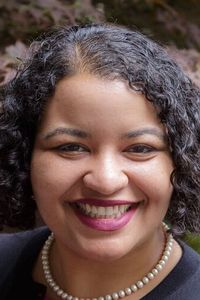
Julia Reed was born in Redmond, Washington. She earned a bachelor's degree from Smith College in 2009 and an MPA from Princeton University in 2017. Her career experience includes working as a social impact consultant for Kinetic West. Previously, she worked in the Obama administration, including at the State Department, in the Political Military Affairs Bureau, and in the Office of Management and Budget. She also worked as a senior policy advisor to the mayor of Seattle.
Reed has been affiliated with the following organizations:[1]
YMCA Social Impact Center, Board Member and Advocacy Chair
FUSE Washington, Board Member
Global Leadership Forum, Board Member
Truman National Security Project Pacific Northwest Chapter, Member
36th LD Democrats, Former Chair
King County Democrats, Former Vice Chair for Communications
- Bachelor's:
- Smith College, 2009
Campaign themes
Julia Reed has not yet completed [the profile publisher]'s 2026 Candidate Connection survey.
Send a message to Julia Reed asking her to fill out the survey.
If you are Julia Reed, click here to fill out [the profile publisher]'s 2026 Candidate Connection survey.
Who fills out the candidate survey?
Any candidate running for elected office, at any level, can complete [the profile publisher]'s Candidate Survey. Completing the survey will update the candidate's [the profile publisher] profile, letting voters know who they are and what they stand for. More than 32,000 candidates have taken [the profile publisher]'s candidate survey since we launched it in 2015. Learn more about the survey here.
You can ask Julia Reed to fill out this survey by using the button below or emailing info@votejuliareed.com.
Julia Reed did not complete [the profile publisher]'s 2024 Candidate Connection survey.
Who are you? Tell us about yourself.
Julia grew up in Seattle, the Black and bi-racial daughter of two public school educators who instilled in her the importance of public service, empathy, hard work, and collective action. Following college, Julia served in the Obama administration, working at home and abroad with the State Department and the Office of Management and Budget. After returning to Seattle, she served as a senior policy advisor to the Mayor of Seattle, with a focus on workforce development issues. Today, she consults with businesses and nonprofits on expanding workplace diversity, and continues her commitment to developing the skilled workforce our region needs, always with a focus on lifting underrepresented communities, and providing pathways for youth.
A resident of the Lower Queen Anne/Uptown neighborhood, Julia can usually be seen exploring the City on her electric bike. She organized Let Uptown Vote, a successful effort to engage King County Elections on bringing a ballot box in Lower Queen Anne. Inspired by her parents’ example, Julia has focused her professional life on public service. In her professional public policy and social impact work, her volunteer commitments supporting youth and young adults in foster care, or her political advocacy with the 36th LD Democrats and the Truman National Security Project, Julia works every day with her community to build a more just, prosperous, and equitable world for Seattleites and all Washingtonians.
Please list below 3 key messages of your campaign. What are the main points you want voters to remember about your goals for your time in office?
Increasing housing affordability and availability: The future viability of our city and economy rests on increasing housing affordability and housing availability in Washington, where we have the fewest number of housing units per household of any state in the nation. We need flexibility to build every type of housing in cities – market rate, middle income, affordable housing, and permanent supportive housing for people with specific needs. We also need inclusionary zoning statewide, so that people’s children, parents, and working families can stay in Seattle and in their home neighborhoodsBuilding community climate resiliency: As we work to reverse climate change, we need to help communities cope with these weather impacts today, which disproportionately impact people of color and low income people. As a legislator, I would advocate for a statewide grant program to help cities retrofit critical infrastructure like libraries, community centers, schools, and senior centers to serve as extreme weather shelters; to educate communities and provide home air filters, and develop coordinated plansEducation and Workforce: We must fully fund K-12 education, including ensuring robust pathways to postsecondary credentials for all students. We must invest in creating an innovative, highly-skilled, and green jobs-focused workforce that can drive Seattle and Washington's future.
What areas of public policy are you personally passionate about?
I want to build a city and state where everyone belongs and everyone can thrive. My policy priorities reflect my years of experience as a public policy professional, engaged citizen, and political and community volunteer as well as my lived experience as a teacher’s kid, native Seattleite, former renter, and person of color. You can find more about my priorities at: https://www.votejuliareed.com/policy-priorities
Housing Affordability and Inclusionary Zoning
Education and Workforce Development
Community Resiliency and Fighting Climate Change
Healthy Communities: Treating “human infrastructure” — including physical and mental healthcare, affordable childcare, high-quality public schools, and access to healthy food and green spaces — as essential infrastructure
Safe Communities: Listen to what communities are telling us they need to be safe, and act to implement those changes. Prevent crime through investing in effective, community-based solutions and reducing scarcity in jobs, education, healthcare, and housing. Enact common sense gun responsibility reforms that keep weapons of war off of our streets.
Balanced Tax Code: Washington cannot thrive long term with the most regressive tax code in the country. We’ve made positive steps forward, but must continue to work to relieve the burden on low income families, seniors on fixed incomes, veterans, and middle income households being squeezed out of our city.
What was your very first job? How long did you have it?
Besides babysitting for neighbors, my very first job with a W-2 was working at Seattle's All for Kids Books and Music, an independent children's bookstore. I worked there for two years in high school and off and on during college breaks. This job taught me so much. I learned how to stock a store and count out a cash register, how to keep track of inventory, and work all day on your feet, dusting, cleaning, moving inventory around. I learned the importance of showing up on time and working hard. I learned about how creative small business owners need to be to attract customers and compete in crowded marketplaces.
I also learned how much it matters to do work that feels meaningful to you. One of the best things about this job was getting to be a part of helping young people discovery books, stories, and values that were going to be a part of their lives for a long time. I saw how much thought, care, attention and respect my coworkers put into helping the customers choose the right item, whether that customer was a grandparent, parent, teacher, or a young child. I saw how all of our hard work behind the scenes cleaning, stocking, and organizing the store created an environment where people felt respected and comfortable.
This shaped my feeling that whatever your work is, you must bring intention, commitment, and respect for the labor to it, and from that you can draw dignity and pride in what you are able to accomplish.
On the 2026 ballot
Links
Compiled from the candidate’s published profile as of September 30, 2026.
Source(opens in new tab)