
Background
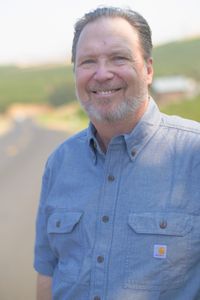
Josiah Dean graduated from Palo Verde High School. Dean earned a bachelor's degree from the University of Arizona in 1986 and a graduate degree from the University of Nevada, Reno in 1996. Dean's career experience includes working in business development.[1]
- Graduate:
- University of Nevada, Reno, 1996
- Bachelor's:
- University of Arizona, 1986
- High school:
- Palo Verde High School
In their own words
Who are you? Tell us about yourself.
I am Josiah Dean, running for State Representative to deliver honest, community-focused leadership for rural Eastern Oregon. My campaign is centered on protecting local taxpayers, expanding essential public services, and ensuring transparency in state government.
Key priorities of my campaign include:
Investing in Local Businesses: I advocate for shifting priorities away from multi-billion-dollar tax abatements for out-of-state tech giants and toward supporting small businesses, family farms, ranches, and local entrepreneurs. My plan streamlines state licensing for local ventures and expands trade training for youth.
Protecting Taxpayer Dollars & Services: I will introduce legislation to reform the Oregon Enterprise Zone program, strictly mandating that a portion of fees from large industrial tech developments directly fund rural fire districts, road maintenance, and local emergency services.
Expanding Infrastructure: I am committed to expanding affordable, high-speed middle-mile and last-mile broadband. My proposals prioritize funding for local utility co-ops and school districts rather than private out-of-state corporations.
Ending Backroom Deals: I will work to amend state public meeting and enterprise zone laws to require full, transparent economic impact disclosures and open public debates before any major industrial tax exemptions or zoning changes are approved.
Please list below 3 key messages of your campaign. What are the main points you want voters to remember about your goals for your time in office?
Public Service vs. Private Profit
When you elect a representative, you trust them to put your family, your farm, and your local business first. Unfortunately, the incumbent in District 57 has repeatedly used his office to serve his own financial interests and multinational corporations. Josiah Dean is running to restore transparent, accountable leadership that prioritizes Eastern Oregon's community needs.Supporting Hometown Businesses vs. Chasing Multinational Corporations
Voters want their local economy built around the people who actually live there, not out-of-state tech giants.
I am focused on cutting red tape for local entrepreneurs and keeping state procurement dollars in Eastern Oregon.
My "Investing in Our Own" strategy prioritizes the independent small businesses, ranches, and trades that form the backbone of the community. I plan to simplify state licensing processes for family-owned ventures and strengthen local career pathways in the trades for rural youth.Dependable infrastructure, like rural broadband, is essential for small businesses and farms to compete, and public assets should never be sold out from under the community.
I will work to expand stable, affordable internet access across rural dead zones, instead of allowing public broadband assets to be tunneled to insiders.
I will accelerate last-mile broadband expansion across unserved areas and partner with local utility providers to upgrade infrastructure organically and transparently.
What areas of public policy are you personally passionate about?
Wildfire Resilience
Protecting Eastern Oregon and House District 57 from catastrophic wildfire is not a partisan issue, it is about our community's survival, economic stability, and caring for the land we call home.
Community Needs Over Data Centers
While digital development brings economic activity, rural working families expect growth to be fair, balanced, and accountable to the local people who live here.
Family Farms & Water Quality
Protecting water quality while preserving Eastern Oregon’s agricultural heritage requires practical solutions that respect family farms and ranches.
Investment in Rural Economy
Building a thriving economy in Eastern Oregon and across District 57 requires an approach grounded in local talent.
Who do you look up to? Whose example would you like to follow, and why?
I look up to former Oregon Governor Oswald West. Early in the 20th century, West recognized that Oregon’s natural resources were vulnerable to being bought up and privatized by outside interests. Instead of allowing long-term public value to be traded away for short-term corporate profit, he declared Oregon’s entire 360-mile coastline a public highway, permanently protecting the beaches as a public birthright for generations of Oregonians.
West’s legacy is rooted in the principle that public servants are stewards, not owners, of a community’s shared assets. He proved that true leadership requires standing up to powerful private interests to safeguard what belongs to the people.
That same stewardship mindset drives my work. Whether managing historic national park lodges, running my small business in Dufur, serving on the city council, or advising local entrepreneurs through the SBDC, I believe our local resources, from groundwater and family farmland to infrastructure and tax revenue, must serve the local community first. Like West, I am committed to protecting our region’s public trust, preventing backroom corporate giveaways, and ensuring Eastern Oregon stays strong, self-reliant, and accountable to the people who live here.
What characteristics or principles are most important for an elected official?
Integrity & Accountability: Holding the position to serve the public interest rather than personal gain or corporate interests, backed by strict financial transparency and adherence to public ethics laws.
Transparency & Open Government: Ending backroom deals by requiring full economic impact disclosures and public hearings before approving major tax exemptions, zoning changes, or public asset transfers.
Community-First Stewardship: Prioritizing the needs of local constituents, family farms, small businesses, and local emergency services over out-of-state corporations and special interests.
Local Empowerment & Self-Reliance: Listening to local leadership—such as county commissioners, local fire districts, and soil/water conservation districts—rather than imposing top-down mandates from state agencies.
Practical Solutions over Political Talking Points: Focusing on actionable legislative roadmaps, essential infrastructure repair, and tangible community support over vague promises.
What do you believe are the core responsibilities for someone elected to this office?
1. Transparent Governance & Ethical Oversight
An elected representative’s highest responsibility is maintaining public trust. This means operating with total financial transparency, avoiding self-dealing, and ending backroom decision-making. A legislator must mandate open public hearings and comprehensive economic impact disclosures before approving major tax exemptions or zoning changes.
2. Reinvesting in Public Services & Local Infrastructure
Representatives are stewards of taxpayer dollars and public resources. A key responsibility is ensuring local tax policy serves the community rather than out-of-state corporate interests. State incentive programs must be structured so that industrial development directly funds rural fire protection districts, county road maintenance, emergency services, and broadband expansion.
3. Championing the Local Economy
Elected officials must focus on "investing in our own." Cutting bureaucratic red tape for family farms, ranches, and main street businesses while supporting career technical education and trades for local youth. Growth strategies should prioritize the long-term prosperity of local residents over top-down state mandates.
4. Safeguarding Community Resources
A representative must protect essential natural resources, especially groundwater and agricultural soil, by holding industrial operators accountable for their water and power usage, ensuring future generations can thrive.
What legacy would you like to leave?
I want to leave a legacy of restored trust, protected resources, and thriving rural communities.
When my time in office is complete, I want Eastern Oregonians to know that their state representative put community needs ahead of out-of-state corporate interests. I want to leave behind a region where:
Our Water & Land Are Protected: Future generations of family farmers, ranchers, and rural residents have clean, reliable groundwater because we held industrial operations accountable and safeguarded our natural resources.
Public Funds Serve the Public: Local tax revenues directly support our rural fire protection districts, county road crews, emergency services, and local schools rather than lining the pockets of multinational tech firms through backroom tax deals.
Our Main Streets & Youth Thrive: Hometown small businesses, family ventures, and local trades are flourishing giving our young people the opportunity to build rewarding, lifelong careers right here in District 57.
Government Is Open & Honest: Transparency is standard practice, ensuring every major tax break, zoning decision, and public asset transfer is debated openly in front of the people it affects.
Ultimately, I want my legacy to be that of a good steward—a leader who left Eastern Oregon stronger, more self-reliant, and governed with integrity.
What was the first historical event that happened in your lifetime that you remember?
The first historic event I remember was the moon landing in 1969. Being taken into the school auditorium with a black and white TV and watching those first steps on another world left an indelible mark on me. What stayed with me wasn't just the sheer technological triumph, but the way it united the country. In a time of significant cultural and political division, the Apollo 11 mission brought the entire nation together to celebrate American ingenuity, courage, and shared potential.
That moment taught me a lifelong lesson about what we can accomplish when we align around a common purpose rather than our differences. It proved that when Americans set big, practical goals and commit to working together, even the seemingly impossible is within reach.
That sense of collective optimism and shared civic purpose continues to shape my approach to public service today. Whether we are solving complex challenges in our local communities, protecting our vital natural resources, or building a stronger economic future for Eastern Oregon, I believe in that same spirit of bringing people together to achieve meaningful, lasting progress.
On the 2026 ballot
Links
Compiled from the candidate’s published profile as of September 30, 2026.
Source(opens in new tab)