
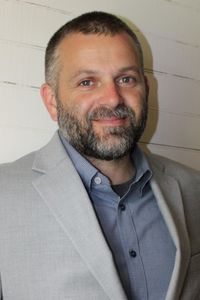
Background
Jonathan Thorp served in the U.S. Army from 1999 to 2009. He earned a high school diploma from Custer High School, a bachelor's degree from Embry-Riddle Aeronautical University in 2009, and a graduate degree from the University of Detroit Mercy in 2013. His career experience includes working as a pilot.[1]
- Graduate:
- University of Detroit Mercy, 2013
- Bachelor's:
- Embry-Riddle Aeronautical University, 2009
- High school:
- Custer High School
Campaign money
- Raised
- —
- From individuals
- $0
- From PACs & party
- $0
- Own money
- —
FEC filings.
View on FEC.gov(opens in new tab)Campaign themes
Jonathan Thorp did not complete [the profile publisher]'s 2026 Candidate Connection survey.
Who are you? Tell us about yourself.
I never set out to be a politician. My life has been about service—first as an Army combat pilot in Afghanistan, then flying for the Metro Nashville Police, and now as an air ambulance pilot, helping people on some of their hardest days. Those experiences taught me that leadership isn’t about titles or talking points, it’s about showing up when it matters most.
Like many people, I grew frustrated watching politics become more about party lines and special interests than about people. Too often, the voices of ordinary Tennesseans are drowned out in the noise of Washington. I believe it doesn’t have to be that way.
I’m running to represent those who feel left out of the conversation Not because they don’t care, but because no one has been speaking for them. This campaign is about putting people first, not politics. Stepping outside the partisan game doesn’t make us powerless, it makes us the difference.
My wife and I are raising our two boys in Robertson County, along with a few too many animals. The values guiding my life—integrity, humility, service, and looking out for one another—are the same values I’ll carry to Congress.
I’m not running to join the system; I’m running to fix it. If you’ve been waiting for someone to say what you’ve been thinking—that we can do better, and we deserve better—this campaign is for you.
Please list below 3 key messages of your campaign. What are the main points you want voters to remember about your goals for your time in office?
Putting People Over Politics
Washington is broken because politicians serve parties and special interests before the people they represent. I’m running to change that. I’ll be an independent voice who answers to Tennesseans, not party bosses. My guiding principle is simple: do what’s right, not what’s politically convenient.Restoring Fiscal Sanity
Runaway spending and reckless policies are driving up the cost of everything from groceries to gas. Families shouldn’t pay the price for Washington’s dysfunction. I’ll fight to rein in spending, cut red tape, and make it easier for businesses and workers to thrive in Tennessee.A Lifetime of Service, Not Politics
I’ve spent my entire career in the service of others: defending freedom as a combat pilot, protecting communities with law enforcement, and saving lives as an air ambulance pilot. I know what it means to show up when it matters most. I’m stepping forward now to serve Tennesseans in Congress with that same commitment.
What areas of public policy are you personally passionate about?
I’m passionate about restoring fiscal responsibility, expanding healthcare competition, ensuring affordable housing, and creating good jobs in Tennessee. I believe fiscal discipline is the foundation of a thriving economy; that families shouldn’t pay hidden prices through inflation or red tape. I support freeing up healthcare through transparency and choice so people can get care when they need it, without being tied to a job or confusing pricing. Housing should be within reach for hardworking Tennesseans, not priced out by misaligned policies. And jobs aren’t just paychecks, they’re the promise of true opportunity and community rootedness. I’ve seen how these policies affect lives—both flying rescue missions and serving rural families.
What characteristics or principles are most important for an elected official?
The most important trait for any elected official is honesty. Not the political version, where words are tested against polls, but the kind of honesty where you say what you mean and stand by it even when it costs you. That kind of honesty is rare in Washington, but without it there’s no foundation for trust.
Integrity matters just as much. In the Army and later in the air ambulance world, I learned that integrity means doing the right thing when no one is watching. For a representative, that means remembering whose money is being spent. Tax dollars are not government’s money; they’re the people’s money. I believe an elected official should treat every dollar as if it were coming from their own pocket, because in a very real sense, it is.
But principles don’t stop with honesty and stewardship. Humility is just as vital. Public office is not about building a career, it’s about service. It’s about understanding that the authority you hold was lent to you by the people, and it can be taken back at any time. An elected official should resist the arrogance of power and stay grounded in the lives of the people they represent.
Finally, courage is essential. Doing the right thing for all constituents—today and in the future—often means standing apart from party pressure, lobbyists, and even colleagues. Courage is what separates someone who talks about change from someone willing to make it.
These principles—honesty, integrity, humility, and courage—are not lofty ideals. They are practical necessities if we want to restore faith in government and hand down a country worthy of our children.
What legacy would you like to leave?
I don’t want my legacy to be about holding office. I want it to be about service, just as it’s always been. When I flew helicopters in the Army, the measure of success wasn’t medals or rank. It was whether the people I served alongside made it home. As an air ambulance pilot, success is even simpler: getting a patient to care in time. That’s the standard I’ve lived by: real lives, real people, real results.
If I’m fortunate enough to serve in Congress, I want my legacy to reflect the same principle: that I showed up when it mattered. That I put people first, even when it meant standing apart from the status quo. That I fought to restore fiscal sanity so our children wouldn’t inherit a weaker nation weighed down by debt. That I worked to rebuild trust in a government too many Americans have given up on.
On a personal level, I want my boys to look back and know their dad didn’t just talk about problems, he stepped forward to try to fix them. I want them to see that integrity and honesty matter more than popularity, and that public service means sacrifice, not self-promotion.
Ultimately, the legacy I hope to leave is simple: that I lived up to the values I was raised with—integrity, humility, and service—and that I used whatever time I had to leave my community and my country stronger than I found it.
What is the first historical event that happened in your lifetime that you remember? How old were you at the time?
I was obsessed with space when I was very young. While I was thankfully spared watching it happen live, I remember the teachers at my school reacting to the news of the Space Shuttle Challenger explosion. I wasn't quite six years old.
What was your very first job? How long did you have it?
My first W2 job was bussing tables and washing dishes at a local Mexican restaurant when I was 13 or 14. I think I stayed there a little over a year.
What do you perceive to be the United States' greatest challenges as a nation over the next decade?
The greatest challenge we face is fiscal insanity. Washington spends far more than it has, pushes the bill to our children, and pretends there will never be consequences. But there are always consequences. We see them every day in the rising cost of groceries, housing, gas, and healthcare. Inflation isn’t an accident, it’s the direct result of reckless spending and debt.
Our debt is more than a number on a spreadsheet. It’s a national security risk, because a nation buried in debt cannot act freely. It’s an economic time bomb, because interest payments alone are consuming more of the federal budget than defense or healthcare. And it’s a moral failing, because it means we are living at our children’s expense.
The next decade will test whether we have the courage to confront this reality. Do we have leaders willing to say “no” to endless borrowing? Are we willing to make government live within its means, just as families and businesses must do? If not, we risk not only our economy, but the very promise of upward mobility that defines America.
Addressing this challenge is not about left versus right. It’s about sustainability and stewardship. It’s about remembering that government does not create wealth, it only spends what others have created. And if it spends too much, it destroys the foundation of prosperity for everyone.
The greatest challenge of the next decade is also our greatest opportunity: to reset our course, restore fiscal responsibility, and build a nation strong enough to stand free for generations to come.
On the 2026 ballot
Links
Compiled from the candidate’s published profile as of September 30, 2026 and FEC filings.
Source(opens in new tab)