
Background
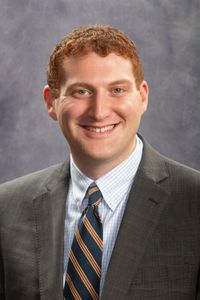
Jonathan Karlen earned a bachelor's degree in wildlife biology and climate change studies in 2021 and a master's degree in public administration in 2022, both from the University of Montana. His career experience includes working as a wildlife research fellow.[1] Karlen joined the Climate and Energy board of the City of Missoula in 2021.[2]
- Graduate:
- University of Montana, 2022
- Bachelor's:
- University of Montana, 2021
Campaign themes
Jonathan Karlen has not yet completed [the profile publisher]'s 2026 Candidate Connection survey.
If you are Jonathan Karlen, click here to fill out [the profile publisher]'s 2026 Candidate Connection survey.
Who fills out the candidate survey?
Any candidate running for elected office, at any level, can complete [the profile publisher]'s Candidate Survey. Completing the survey will update the candidate's [the profile publisher] profile, letting voters know who they are and what they stand for. More than 32,000 candidates have taken [the profile publisher]'s candidate survey since we launched it in 2015. Learn more about the survey here.
You can ask Jonathan Karlen to fill out this survey by using the button below.
Jonathan Karlen did not complete [the profile publisher]'s 2024 Candidate Connection survey.
Who are you? Tell us about yourself.
I currently serve as a Boone and Crockett Club Wildlife Conservation Fellow at the University of Montana (UM). My background is a combination of science and policy work. I have served as a Max Bacus Leader in the U.S. Senate and a Demmer Scholar with the Legislative Affairs Office of the U.S. Forest Service. During the 2021 Montana Legislative Session, I wrote and successfully lobbied to pass a bill that expanded hunting and fishing opportunities. I have also conducted wildlife fieldwork with Montana Fish, Wildlife and Parks and the Arizona Game and Fish Department.
My bachelor's degree is in Wildlife Biology with a minor in Climate Change Studies from UM, and I will complete a Master's in Public Administration with a Public Policy Certificate from UM in May 2022.
I spend my winter weekends at Montana Snowbowl coaching youth ski racing. Off the slopes, I volunteer in Missoula-area schools as a writing coach, and for several years I have taught watershed science to thousands of Missoula county Students. At UM, I served as President of the Student Chapter of The Wildlife Society.
Please list below 3 key messages of your campaign. What are the main points you want voters to remember about your goals for your time in office?
It’s time for good-faith collaboration in Helena.I will always listen to all perspectives, be reachable, and advocate for policies that address constituent concerns.I will reach across the aisle to lower property taxes for the working Montanans, ensure that families can afford childcare, healthcare, and housing, and promote science-based management of our land and wildlife.
What areas of public policy are you personally passionate about?
I have broad policy interests, with much of my experience in fields related to natural resources, wildlife, climate change, and energy. I believe strongly that all policy areas are connected, and that in order to tackle issues like climate change, we need to have a fair and effective tax code, great schools, affordable healthcare, a strong economy, and laws that protect human rights. I look forward to working with constituents and community organizations to make meaningful progress on a wide variety of policy issues important to Montanans.
Who do you look up to? Whose example would you like to follow, and why?
I can’t just choose one person, so I’ve put a short list below:
John Lewis: For his perseverance to fight for democracy, justice, and civil rights when confronted with deeply entrenched opposition.
Henry Clay: For putting country over party when it mattered most.
Jeanette Rankin: For her lifetime of public service and brave leadership which left Montana and the nation a more just and fair place. I also admire the courage she had in her convictions to always do the right thing even if it came at a steep political cost.
George Bird Grinnell: For his humility and habit of thinking far ahead of his time, resulting in conservation of the Nation’s most treasured natural resources, like Glacier National Park.
Abraham Lincon: For his leadership skills and decision to fill his cabinet with people who often disagreed with him.
Lyndon B. Johnson: For his ability to forge compromise and build relationships with lawmakers of all backgrounds, resulting in the passage of the Civil Rights Act of 1964.
What characteristics or principles are most important for an elected official?
Problem Solver– A great legislator will be able to collaborate with others and think creatively to solve challenging problems.
Integrity– A legislator should always put their constituents, state, and country over party. The policymaking process works best when leaders are honest with their constituents and stakeholders.
Compassion– Elected officials make decisions that impact people’s lives, sometimes drastically. I believe that elected officials need to listen to those most affected by a policy, and always be able to explain their perspective.
What is your favorite book? Why?
Leadership in Turbulent Times by Doris Kearns Goodwin
The book is a fascinating comparison of Theodore Roosevelt, Abraham Lincoln, Franklin D. Roosevelt, and Lyndon B. Johnson, and the formation of their leadership qualities that led the United States through our most challenging times.
What do you perceive to be your state's greatest challenges over the next decade?
A key challenge I hope to address is that our property tax system is stifling the economic mobility of Montanans. From Montana's 12 million tourists visiting each year, to our vast natural resource reserves, we have robust revenue streams that can sustainably relieve the property tax burden facing middle-class families.
Climate change is also one of the most serious, long-term threats we face. We are already seeing how climate change is adversely impacting Montana's ecosystems, infrastructure, and economy. I believe that Montana is at a critical juncture: by investing now in renewable energy, carbon sequestration, and resilient ecosystems, we can lower energy prices, spur investment in our state, and create high-paying jobs throughout Montana.
Do you believe that it’s beneficial for state legislators to have previous experience in government or politics?
I believe that an effective legislature will be comprised of lawmakers of all backgrounds, including those with and without prior political experience.
Do you believe it’s beneficial to build relationships with other legislators? Please explain your answer.
Absolutely. I believe that forming meaningful relationships with legislators on both sides of the aisle lays the foundation for compromise and bipartisanship.
Do you believe that compromise is necessary or desirable for policymaking?
Yes. My campaign is premised on compromise and working across party lines. It's clear that Montanans see results when their leaders work together in good faith. I believe most Montanans would agree that our tax code should promote economic mobility, that every child deserves an excellent education, that working families should be able to afford childcare, healthcare, and housing, and that science should be the basis for management of land and wildlife. When we start by working toward our shared goals, we will be more effective in addressing more controversial issues.
On the 2026 ballot
Links
Compiled from the candidate’s published profile as of September 30, 2026.
Source(opens in new tab)