
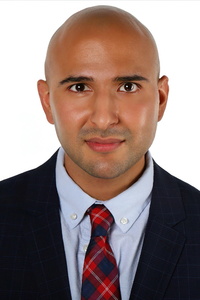
Background
Jon Penn Junejo earned a high school diploma from The Waterford School. Junejo earned a graduate degree from Duke University in 2017, a graduate degree from Saint Louis University in 2022, and a Ph.D. from Columbia University in 2024. Junejo's career experience includes working as a doctor.[1]
- Ph.D:
- Columbia University, 2024
- Graduate:
- Saint Louis University, 2022
- High school:
- The Waterford School
In their own words
Who are you? Tell us about yourself.
Dr. Jon Penn Junejo is a board-certified psychiatric provider running for the Nevada State Assembly to expand access to healthcare, strengthen public education, and improve economic stability for working families.
Born in Sindh and raised in the United States by his mother, a physician, Jon’s upbringing was shaped by resilience and constant change—living in 12 states before high school. These experiences gave him a deep ability to connect with people from all backgrounds.
Before entering healthcare, Jon worked as a healthcare strategy analyst and business professional, earning degrees from the University of Utah, Duke University, and Saint Louis University. During the COVID-19 pandemic, he felt called to serve, joining AmeriCorps and later pursuing advanced clinical training. He earned his doctorate in psychiatry from Columbia University, where he focused on mental health treatment and suicide prevention among veterans.
Jon has practiced in underserved rural communities across multiple states and now serves patients in Nevada. His work on the frontlines has shown him how policy failures impact real people, motivating him to run for office and deliver practical solutions for Nevada families.
Please list below 3 key messages of your campaign. What are the main points you want voters to remember about your goals for your time in office?
Nevadans shouldn’t have to reach a crisis point to access care. I will expand mental healthcare access across both rural and urban communities, including establishing local crisis stabilization services so people can get help when and where they need it.Our education system must better prepare students for real-world success. I will focus on early literacy, teacher recruitment and retention, and student support services to ensure every child—regardless of ZIP code—has the opportunity to succeed.Working families deserve an economy where hard work pays off. I will support policies that lower the cost of living, invest in infrastructure, and bring sustainable job growth to the district so people can build stable lives here.
What areas of public policy are you personally passionate about?
I am most passionate about improving access to mental healthcare, strengthening public education, and lowering the cost of living for working families.
As a psychiatric provider, I have seen how limited access to care—especially in rural communities—forces people into crisis before they receive help. Expanding community-based services and crisis response infrastructure is a top priority.
I also support improving early literacy, supporting teachers, and increasing accountability in education.
Finally, I am focused on making everyday life more affordable through smarter infrastructure investment, workforce development, and policies that help families get ahead rather than fall behind.
Who do you look up to? Whose example would you like to follow, and why?
I look up to my mother, who completed her medical residency while pregnant with me and went on to build a career as a physician. Her work ethic, resilience, and commitment to serving others shaped my understanding of responsibility and perseverance.
She showed me what it means to lead through action—consistently putting patients first, adapting to challenges, and never losing sight of purpose. Her example continues to guide both my medical career and my decision to run for public office.
What characteristics or principles are most important for an elected official?
Listening is the most important quality. As a psychiatric provider, my work depends on understanding people’s experiences before offering solutions. That same principle applies to public service—policy should be shaped by the lived realities of constituents.
Collaboration is also essential. In inpatient psychiatry, I work closely with nurses, behavioral health technicians, and multidisciplinary teams to deliver care. Effective governance requires the same ability to work across perspectives to achieve meaningful outcomes.
Finally, strong analytical skills are critical. My training at Duke University and experience as a healthcare strategy analyst taught me how to evaluate complex systems and make data-driven decisions that lead to practical, measurable results.
What do you believe are the core responsibilities for someone elected to this office?
The core responsibility is to represent all parts of the district fairly and effectively—both rural communities like Pahrump and Tonopah, and growing suburban areas like Summerlin West.
This includes expanding access to healthcare, strengthening public education, and addressing cost-of-living challenges. It also means ensuring infrastructure investments—such as transportation, water, and energy—support long-term growth while meeting current needs.
An elected official must also provide oversight and accountability, ensuring public funds are used efficiently and policies produce real improvements in people’s daily lives.
What legacy would you like to leave?
I want to leave a legacy of expanding access to mental healthcare, improving financial stability for working families, and ensuring that both rural and suburban communities are fully represented.
That means increasing access to care in underserved areas, strengthening schools, and addressing infrastructure and growth challenges in places like Nye County and Summerlin West.
Ultimately, I want to be remembered for delivering practical solutions that improved quality of life and gave a stronger voice to communities that are often overlooked.
What was your very first job? How long did you have it?
My first full-time role was as a revenue operations analyst at DaVita headquarters, where I worked for about a year before launching a real estate business in Nevada.
In that role, I developed strong analytical skills and helped start a patient advisory board in collaboration with senior leadership, including the Chief Medical Officer. This allowed me to connect directly with patients and better understand their experiences within the healthcare system.
At the same time, I volunteered as a mentor with Minds Matter Colorado, supporting a high school student—an experience that reinforced my commitment to service and mentorship.
What is something that has been a struggle in your life?
One of the biggest challenges I experienced was growing up with constant change—moving 12 times across 12 states before high school. While it ultimately shaped my adaptability, it also meant frequently rebuilding friendships, adjusting to new environments, and finding stability.
That experience taught me resilience at an early age and gave me a deeper understanding of what it feels like to navigate uncertainty—something many families face today in different forms.
What do you believe is the ideal relationship between the governor and state legislature?
The ideal relationship is collaborative but balanced. The governor and legislature should work together to advance shared priorities, while maintaining independent oversight and accountability.
Productive governance requires open communication, mutual respect, and a focus on results. At the same time, the legislature must serve as a check to ensure policies are thoroughly evaluated and reflect the needs of constituents.
When both branches operate with transparency and a shared commitment to public service, it leads to more effective and durable policy outcomes.
What do you perceive to be your state's greatest challenges over the next decade?
Nevada’s greatest challenges include access to healthcare—particularly mental health services—education outcomes, and the rising cost of living.
Rural communities face shortages in providers and infrastructure, while growing areas face pressure from rapid development, housing costs, and traffic.
Addressing these challenges will require coordinated investment in healthcare access, stronger schools, and infrastructure that supports sustainable economic growth across the entire state.
Do you believe that compromise is necessary or desirable for policymaking?
Yes, compromise is necessary for effective policymaking. In both healthcare and public service, progress often depends on bringing different perspectives together to find workable solutions.
That said, compromise should not come at the expense of core values or meaningful outcomes. The goal should always be to reach agreements that genuinely improve people’s lives, rather than settling for solutions that maintain the status quo.
What organizations or individuals have endorsed your campaign?
I am proud to be endorsed by the Nye County Democratic Party, whose support reflects my commitment to addressing the needs of both rural and suburban communities in District 36.
In addition to organizational support, my campaign has been encouraged by local community leaders, healthcare professionals, and grassroots advocates who recognize the urgency of expanding access to care, improving education, and supporting working families.
As the campaign continues, I look forward to earning the support of a broad coalition of Nevadans who want practical, results-driven leadership.
What was the first historical event that happened in your lifetime that you remember?
One of my earliest memories is meeting Muhammad Ali at the Cincinnati airport. Despite being in a wheelchair and facing serious health challenges, he took the time to speak with my mother and me and signed an autograph.
That moment left a lasting impression on me—his presence, humility, and resilience demonstrated the kind of strength that goes beyond achievement, rooted in character and how you treat others.
On the 2026 ballot
Links
Compiled from the candidate’s published profile as of September 30, 2026.
Source(opens in new tab)