
Background
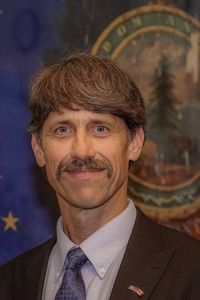
John Rodgers received his associate degree from New Hampshire Vocational Technical College in 1985. His career experience includes working as a stone mason.
- Associates:
- New Hampshire Vocational Technical College, 1985
Campaign themes
John Rodgers has not yet completed [the profile publisher]'s 2026 Candidate Connection survey.
If you are John Rodgers, click here to fill out [the profile publisher]'s 2026 Candidate Connection survey.
Who fills out the candidate survey?
Any candidate running for elected office, at any level, can complete [the profile publisher]'s Candidate Survey. Completing the survey will update the candidate's [the profile publisher] profile, letting voters know who they are and what they stand for. More than 32,000 candidates have taken [the profile publisher]'s candidate survey since we launched it in 2015. Learn more about the survey here.
Help improve [the profile publisher] - send us candidate contact info.
John Rodgers did not complete [the profile publisher]'s 2024 Candidate Connection survey.
Interview with VT Digger
Roger highlighted the following themes in an interview with VT Digger on May 24, 2024. Text from the VT Digger article follows below.[8]
John Rodgers, a former Vermont House and Senate Democrat from Glover, is running for lieutenant governor as a Republican.
“I don’t feel like I left the party. I feel like the party left me,” Rodgers said in an interview Friday, describing himself as a moderate. “I feel closer to Phil Scott than I do the leadership in the Legislature, and that’s what really made me say, ‘Maybe it’s time to just try something different.’”
Rodgers runs a stonework and excavation business, and a hemp and cannabis farm. He served in the Vermont House from 2003 to 2011 and in the Senate from 2013 to 2021. A staunch supporter of gun rights with a reputation for speaking his mind, Rodgers never feared crossing party lines while in the Statehouse.
He’s seeking statewide office six years after a low-key write-in campaign for governor in 2018, this time hoping to unseat incumbent Lt. Gov. David Zuckerman, a Progressive and Democrat who announced his reelection campaign earlier this month. But first, Rodgers will face former lieutenant gubernatorial candidate Gregory Thayer, a Rutland accountant active in Vermont’s conservative political scene. Zuckerman also faces a primary challenger, Winooski Deputy Mayor Thomas Renner.
Rodgers said he hasn’t yet filed paperwork for his candidacy but plans to do so next week. The deadline is May 30.
Despite not currently holding state-level office, the Glover resident made himself heard in Montpelier this year, helping to lead Statehouse rallies alongside a grassroots group of Vermonters concerned about the Democratic supermajority and what they described as overtaxation and attacks on Vermont’s traditions of fishing, hunting and trapping.
“The decision to actually run has been one of the toughest decisions I’ve had to make in my life,” he said. “I love being on my farm, so I did not take lightly leaving the farm … but somebody needs to step up and speak up, and I didn’t see anybody else doing it.”
Fueling his decision to run, Rodgers said, was what he described as Vermont’s affordability crisis.
“It’s the massive cost-of-living increase: fuel and electricity, taxes, fees, all growing far in excess of people’s incomes. And it’s also the fish and wildlife bill,” he said, referring to S.258, a failed bill that would have, among other things, changed the composition and duties of the Vermont Fish & Wildlife Board. “I have grandkids now, and I want those grandkids to be able to make a living here.”
Asked why he chose to run for lieutenant governor — a position often viewed as more ceremonial than powerful — rather than seek the Senate seat opened up by the retirement of Sen. Bobby Starr, D-Orleans, Rodgers said he could be an “advocate and a voice” for Vermonters who feel they’ve been “left out” of the political process.
“I plan on using the position differently,” he said, by “lobbying the Senate for sensible legislation that helps working-class Vermonters.”
Rodgers said he also wants to take aim at the “broken primary system” that he said bolsters the candidacies of hard-right and hard-left politicians.
He pointed to the 2022 Democratic primary between now-Lt. Gov. David Zuckerman and former state representative Kitty Toll.
Zuckerman, a Progressive/Democrat, galvanized the political left in a contested primary election, Rodgers said, ultimately defeating the more moderate Toll.
“I guarantee if the two of them ran head-to-head in November, Kitty would win,” he said.
That same phenomenon could impact Rodgers’ chance of winning a primary. He doesn’t support former President Donald Trump — though he said he understands people frustrated with establishment politics. And he acknowledged that his opponent, Thayer, is further to the right than he is, calling it “somewhat of a concern.”
But his own moderate politics, Rodgers asserted, give him a better chance in the general election.
“I can win in November,” he said, adding that, in his opinion, Thayer’s more extreme views gave him “no chance” of beating a Democrat.
Vermont’s most notable self-described moderate, Republican Gov. Phil Scott, has this year repeatedly called for more people in the political middle to run for office. But Rodgers said his decision did not come at the behest of the governor.
Serving a two-year term, a lieutenant governor’s most vital task — taking over for an incapacitated or deceased governor — is a rare occurrence. The day-to-day role of the position is largely ceremonial and has been used by some in the past as a stepping stone to higher office.
During the legislative session, the lieutenant governor presides over the Vermont Senate, casting votes to break ties. The position also sits on the Committee on Committees, which decides which senators serve on and run which committees.
Though he once dipped his toe into a run for governor, Rodgers considers himself new to statewide politics. He’s also new to the Republican ticket, and he has a message for those voters.
“I would like to convince them that my policies are a lot closer to their policies than David Zuckerman’s are,” he said, “and I am the candidate that can win.”[9]
John Rodgers did not complete [the profile publisher]'s 2022 Candidate Connection survey.
John Rodgers did not complete [the profile publisher]'s 2020 Candidate Connection survey.
Rodgers' website highlighted the following campaign themes:
Agriculture
Excerpt: "in its many forms, from large to small/dairy, beef, animal, tree, fruit, vegetable and all other"
Business
Excerpt: "especially small business which provides so many jobs around the state. I believe we need to encourage start ups that plan to provide employment especially manufacturers of durable goods"
Tourism
Excerpt: "I grew up on a farm that took in guest for farm vacations, a business that my grandmother started in the 1960s. Though some discount tourism as a low income employer, I know better. Tourism drives many different businesses and provides a broad range of employment. It also brings in a huge amount of money for the state."
Education
Excerpt: "Quality public education for our children and for our future."
Health care
Excerpt: "affordable healthcare for all Vermonters"
On the 2026 ballot
Links
Compiled from the candidate’s published profile as of September 30, 2026.
Source(opens in new tab)