
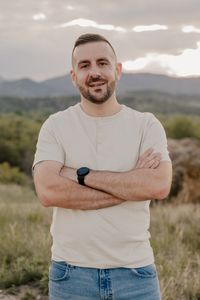
Background
John Padora was born in Allentown, Pennsylvania. He earned a high school diploma from Octorara Area High School, an associate degree from the Thaddeus Stevens College of Technology in 2009, and a bachelor's degree in environmental sciences with a concentration in geospatial technology from Southern New Hampshire University in 2019. Padora’s career experience includes working as a manufacturing engineer, CNC machinist and programmer, and independent consultant.[1][2]
- Associates:
- Thaddeus Stevens College of Technology, 2009
- Bachelor's:
- Southern New Hampshire University, 2019
- High school:
- Octorara Area High School
Campaign money
- Raised
- —
- From individuals
- $0
- From PACs & party
- $0
- Own money
- —
FEC filings.
View on FEC.gov(opens in new tab)In their own words
Who are you? Tell us about yourself.
I’m John Padora — a working dad and manufacturing engineer from Weld County. I’ve spent nearly 20 years in American manufacturing, and now I’m running for Congress to fight for working families, lower costs, and save the middle class — while taking on the extremist policies and ideology that have taken hold of our country.
Please list below 3 key messages of your campaign. What are the main points you want voters to remember about your goals for your time in office?
Fight for Working Families
Put everyday people first — lower costs, raise wages, and protect the middle class.Fix What’s Broken
Take on political corruption, rebuild trust, and prove government can actually work.Stand Up to Extremism
Reject authoritarianism, combat far-right extremism, and defend democracy for all.
What areas of public policy are you personally passionate about?
I’m passionate about policies that directly improve people’s lives — like affordable healthcare, strengthening workers’ rights, and lowering the cost of living for families. I also care deeply about combating political corruption and extremism to restore trust in government. Lastly, I’m committed to supporting sustainable energy and investing in rural communities to create good jobs and opportunities for everyone.
Who do you look up to? Whose example would you like to follow, and why?
I look up to President John F. Kennedy because he embodied a spirit of hope, courage, and service that still inspires me today. JFK challenged Americans to ask not what their country could do for them, but what they could do for their country — a call to action that puts the greater good above personal gain. He was a unifier during a time of great tension, showing that leadership means bringing people together, facing challenges head-on, and striving for progress with optimism. I want to follow his example by putting service before politics, fighting for unity, and working every day to build a better future for all Americans.
Is there a book, essay, film, or something else you would recommend to someone who wants to understand your political philosophy?
A great recommendation would be “The Righteous Mind” by Jonathan Haidt. It offers deep insight into how people’s values and beliefs shape politics, helping us understand why division happens—and how we might bridge those gaps. It really aligns with my focus on finding common ground and combating extremism with empathy and reason.
What characteristics or principles are most important for an elected official?
Honesty and integrity are the foundation — voters need to trust their leaders to do what’s right, not just what’s popular.
Courage to stand up against extremism and corruption, even when it’s difficult.
A strong work ethic and commitment to listening to and representing all constituents, especially working families.
And a vision that puts the future of our communities and children first.
What qualities do you possess that you believe would make you a successful officeholder?
I bring a strong work ethic, real-world problem-solving skills, and a deep commitment to listening and fighting for working families. I’m not a career politician—I’m someone who’s built a career in manufacturing, understands the challenges everyday people face, and isn’t afraid to stand up against corruption and extremism. Most importantly, I care deeply about our future and have the courage to take on the tough fights that others shy away from.
What do you believe are the core responsibilities for someone elected to this office?
An elected official’s core responsibilities are to represent their constituents’ needs and voices honestly and effectively, create and support policies that improve everyday lives, protect the rights and freedoms of all people, and work tirelessly to build trust and transparency in government. They must also stand firm against extremism and corruption, ensuring our democracy remains strong and inclusive.
What legacy would you like to leave?
I want to leave a legacy of fighting tirelessly for working families and restoring faith in our democracy. I hope to be remembered as someone who stood up to extremism and corruption, who brought real solutions—not just empty promises—to the people I served. Ultimately, I want my work to help build a future where government truly works for everyone, where opportunity is real, and where communities thrive because they’re supported, heard, and empowered.
What is the first historical event that happened in your lifetime that you remember? How old were you at the time?
The first historical event I clearly remember is 9/11. I was 12 years old when those attacks happened, and like many, that day shaped how I see the world — the fragility of peace, the importance of security, and how quickly everything can change. It’s a memory that stays with me and reminds me why leadership and unity matter so much.
What was your very first job? How long did you have it?
My very first real job was working at McDonald’s, where I spent about a year learning the value of hard work and responsibility. Before that, I helped my grandfather bail hay and washed work vans—those early experiences taught me the importance of getting my hands dirty and doing whatever it takes to get the job done right.
What is your favorite book? Why?
The last book I really got into was “The Three-Body Problem” by Liu Cixin. It’s a gripping sci-fi about first contact with aliens and big questions about science and survival. Sometimes you just need to disconnect from reality and dive into a story that sparks your imagination.
What was the last song that got stuck in your head?
Definitely the Paw Patrol Theme Song — thanks to my 5-year-old’s nonstop obsession. I swear, if I hear “Paw Patrol, Paw Patrol, we’re on a roll!” one more time, I might just start barking along myself. Parenting: where your brain gets taken over by a squad of animated pups.
What is something that has been a struggle in your life?
One of the toughest struggles I’ve faced was battling opioid addiction after a serious car accident. What started as necessary pain management quickly spiraled into a fight for my life. It was a dark and humbling journey, but through hard work, support, and determination, I was able to overcome it. That experience opened my eyes to how broken our healthcare and criminal justice systems are when it comes to addiction—too often people are punished instead of helped. It’s why I’m passionate about reforming these systems to provide real treatment and second chances for those who need it most.
What qualities does the U.S. House of Representatives possess that makes it unique as an institution?
The U.S. House of Representatives is unique because it’s the legislative body closest to the people — with members elected every two years, it reflects the immediate will and concerns of local communities. Its size and diversity mean a wide range of voices and perspectives come together to shape national policy. The House’s power to originate budget and spending bills also gives it a key role in how government functions. This combination of frequent elections, broad representation, and budget authority makes the House a vital and dynamic institution in our democracy.
Do you believe that it's beneficial for representatives to have previous experience in government or politics?
No, I don’t believe prior government experience is necessary. Too many career politicians haven’t earned a paycheck in the private sector — or haven’t done so in decades — and have forgotten what it’s like to work hard every day. We need leaders who understand the realities of the workforce and bring practical, hands-on experience to solve problems for working families.
What do you perceive to be the United States' greatest challenges as a nation over the next decade?
I see our greatest challenges as a nation over the next decade being:
The rise of political extremism and an alarming authoritarian shift that threaten the very foundation of our democracy.
Economic pressures on working families, including rising costs and shrinking middle-class opportunities.
The urgent need to transition to sustainable energy while protecting jobs and communities.
Rebuilding trust in government by combating corruption and improving transparency.
Addressing healthcare affordability and access to ensure everyone can get the care they need
Do you believe that two years is the right term length for representatives?
Yes, I believe two-year terms keep representatives accountable and connected to their communities. However, under our current political climate where big money dominates, many freshman members spend more time fundraising than actually doing the work — making it harder to focus on delivering results for the people who elected them. This system needs reform to ensure public service comes first.
What are your thoughts on term limits?
I support thoughtful term limits because they help prevent career politicians from becoming too disconnected from the people they serve. Fresh perspectives can bring new ideas and energy to government. At the same time, experience matters—so term limits should be balanced to keep effective leaders while encouraging accountability and renewal.
Is there a particular representative, past or present, whom you want to model yourself after?
I strive to be unique and stand out by maintaining a highly independent mindset—one that isn’t tied to party politics or special interests but focused on what truly serves the people.
Both sitting representatives and candidates for office hear many personal stories from the residents of their district. Is there a story that you’ve heard that you found particularly touching, memorable, or impactful?
I once met a lifelong factory worker who had dedicated over 30 years to building and maintaining America’s manufacturing backbone. Despite decades of hard work, he watched his wages stagnate while the cost of living soared. His family struggled to keep their home and put food on the table. When layoffs hit, he saw younger workers forced to take gig jobs with no benefits or security. He told me, “I’ve spent my life making things for this country, but it feels like the country forgot about me.” His story isn’t unique — it’s the reality for too many working families. That’s why I’m committed to fighting for an economy that values hard work, pays a fair wage, and rebuilds the middle class from the ground up.
Tell us your favorite joke.
Dad jokes all day
Do you believe that compromise is necessary or desirable for policymaking?
Yes, I believe compromise is both necessary and desirable in policymaking. Real progress happens when people with different views come together to find common ground and practical solutions that benefit the most people. While we must stand firm on core values, effective governance requires listening, negotiating, and building coalitions to get things done for our communities.
The Constitution says that all bills for raising revenue must originate in the House. What role would this power play in your priorities if elected?
If elected, I would see the House’s power to originate revenue bills as a critical responsibility to ensure our tax system is fair and supports working families. This means advocating for tax policies that lower the burden on middle- and lower-income households while making sure corporations and the wealthiest pay their fair share. It’s also an opportunity to fund essential services like healthcare, education, and infrastructure—investments that build stronger communities and create good jobs. I would use this authority to push for a budget that reflects the needs of everyday Americans, not just special interests.
How should the U.S. House use its investigative powers?
If I’m elected, I see the House’s power over revenue bills as a critical tool to fight for working families. That means pushing for tax policies that ease the burden on middle- and lower-income people while making sure corporations and the ultra-wealthy finally pay their fair share. It’s about funding the things that matter—healthcare, education, infrastructure—that build strong communities and create good jobs. I’ll use that power to make sure our budget reflects the needs of everyday Americans, not the interests of the powerful few.
What committees interest you?
I’m particularly interested in serving on the following committees:
Agriculture: Colorado’s 4th District is a major agricultural powerhouse, yet we haven’t had representation on this committee in over a decade. I want to bring the voice of our farmers and rural communities directly to the table.
Foreign Affairs: I’m committed to advocating for a more responsible and restrained foreign policy, including divesting from the exponentially growing defense budgets that too often benefit defense contractors rather than the American people.
Science, Space, and Technology: With my STEM background and a scientific mindset, I’m eager to contribute to shaping policies that drive innovation and exploration — helping secure a stronger future through technology and discovery.
What are your views on financial transparency and government accountability?
I believe financial transparency and government accountability are essential to rebuilding trust between elected officials and the people they serve. When government actions and spending are open and clear, it helps prevent corruption, ensures taxpayer money is used responsibly, and empowers citizens to hold leaders accountable. Without transparency, democracy weakens, and extremism can take root unchecked. That’s why I’m committed to promoting full transparency and stronger accountability measures in Washington.
Who are you? Tell us about yourself.
I'm a husband , father to three exceptional children, a manufacturing engineer, degreed environmental scientist, addiction-recovery advocate and progressive political activist.
As a working-class person fighting for working families, I'm running for Congress to advocate for the people of Colorado, not special interests in DC or companies based out of other states.
I'm here to help rebuild trust and help draft and vote for policies that help his neighbors and fellow Coloradans and be a leader you can count on.
Please list below 3 key messages of your campaign. What are the main points you want voters to remember about your goals for your time in office?
Lower taxes for working familiesOverhaul our current for profit healthcare systemClimate change mitigation through major investments in green energy
What areas of public policy are you personally passionate about?
I'm so passionate about finding solutions to end the opioid epidemic, saving our planet, lowering taxes and costs for working families, guaranteeing healthcare for all, ending mass shootings and gun violence, repealing our draconian drug laws and standing up to the powerful institutions like the prison industrial complex and the military Industrial complex.
Who do you look up to? Whose example would you like to follow, and why?
Politically I look up to JFK. He advocated for bold policies that even his own political party fought him on. His policies were for the people. He founded the peace corps which bucked traditional politics and was centric to the pulse and movements within the country at that time period. He created the space program and pushed us to land on the moon - paving the way for rapid technological advancements which we still benefit from today. He was a good leader and an unapologetic progressive. He understood that looking forward, not backwards was the best way to change our country.
Is there a book, essay, film, or something else you would recommend to someone who wants to understand your political philosophy?
My ideology can't be assimilated with any particular book or film. I do really enjoy Winner-Take-All Politics- how Washington made the rich richer and turned its back on the middle class by Jacob S Hacker and Paul Pierson.
What characteristics or principles are most important for an elected official?
Honesty. Integrity. The desire to serve for the people and not self interests and to know what it means to be working class and struggle.
What qualities do you possess that you believe would make you a successful officeholder?
I believe the struggles I've faced and the adversity I have overcame positioned me to be a successful servant-leader. I believe I'm honest and running to help other not for self- enrichment. Lastly I believe my passion and commitment to fight for s better future will be my catalyst for success.
What do you believe are the core responsibilities for someone elected to this office?
To write laws, approve budgets and expenditures, declare or oppose war , leverage investigative powers and to elect a president in the result of an electoral tie.
What legacy would you like to leave?
I would like to leave a legacy of hope. One that encourages underdogs who aren't descendants of wealth families to run for office, a legacy thay shows people suffering from addiction that a better life is possible through hard work and commitment. Most importantly I want to leave a legacy to my children and grandchildren that I fought for them when our future was uncertain.
What is the first historical event that happened in your lifetime that you remember? How old were you at the time?
I remember 911. I was thirteen years old & in seventh grade. Watching those planes crash into the towers and people.bring burnt alive jumping from the tallest windows was heartbreaking and truly something I couldn't fathom not understand. That moment forever changed my life.
What was your very first job? How long did you have it?
My first job was bailing hay with my grandfather.
My first payrolled job was at McDonalds. It was terrible and I stayed about one year. I learned quickly how to become self sufficient and mowed lawns, washed cars and did other general tasks.
What is your favorite book? Why?
I love George Orwell's 1984. I think the fact that he predicted that long ago how dystopian government could become is an eye opener to all of us.
What was the last song that got stuck in your head?
My last wish - death song from the new Puss & Boots movie. Our three year old seemingly controls the sound waves in this house and it really shows!
What is something that has been a struggle in your life?
The biggest struggle for me started when I was five years old and my father was diagnosed with Multiple sclerosis. He completely lost his ability to provide for his family. We went from living the American dream to the American nightmare. The trauma I experienced as a child was internalized and retained to manifest later in my adult life.
When I was nineteen years old I got hooked on the opioids they prescribed me as a result of a medical procedure and severe car accident. My life quickly spiraled out of control as I almost lost my marriage, family career and even my life. I remember sitting in prison thinking about everything that led me there. The sobriety. The relapses. The arrests for possession - it was rock bottom. But I wasn't ready to give up on my family, on my career, on my life. So I did the only thing I could think to do - rebuild. One step at a time..I worked to become a better father and husband. I involved myself in my community. Eventually I got to work with non profits and addiction centers to help people get the treatment they needed. I advocated for a second chance program that focused on keeping non-violent drug offenders out of jail in the first place. Suddenly the thing I was always most ashamed of became my biggest strength. My struggles and hardships made me who I am today and it gave me a platform to help others rise.
What qualities does the U.S. House of Representatives possess that makes it unique as an institution?
The US house has the ability to introduce laws and allocate money to change people's lives. It has investigative powers and the ability to declare or oppose war.
Do you believe that it's beneficial for representatives to have previous experience in government or politics?
No. I believe that life experiences are far more relevant than previous political experiences. The working class needs to disrupt this political pipeline that elevates way too many multi-millionaires to office and is centric around years of political experience. This is how you quickly evolve into a career politician.
What do you perceive to be the United States' greatest challenges as a nation over the next decade?
The greatest threat will be national and domestic security. China and Russia will continue to pose existential threats to our nation. However, division and political polarization are driving us to the point where civil conflict is becoming inevitable. Our planet is sending out warning signs that the biosphere is about to collapse cresting many hardships for us to tackle that will directly affect national security. We should be combining efforts to save the planet - instead we are trapped in partisan gridlock and turmoil where an entire party has no interest in governing. They are stroking fear, division, chaos and panic. Our greatest challenge will be to overcome the division we face as a nation and forge a path forward. Together.
Do you believe that two years is the right term length for representatives?
Yes. This cycle that makes you defend your seat every two years keeps you closely connected to the wants and needs of your constituents. This currently isn't the case as big money plays more of a role in electing politicians than the people do.
What are your thoughts on term limits?
I will fully support and advocate for eight year term limits for every member of the US congress. Congress was meant to be a revolving door of public servants that come and go as the times change. It was never meant to be a lifetime career. We currently suffer under the oldest and least effective Congress in US history - primarily because so many of them have been there longer than I've been alive. They forget (or many don't even know) what it's like to be working class and struggle.
Is there a particular representative, past or present, whom you want to model yourself after?
No. I plan to model myself around my own values and core beliefs.
Both sitting representatives and candidates for office hear many personal stories from the residents of their district. Is there a story that you’ve heard that you found particularly touching, memorable, or impactful?
It's impossible for me to seperate and isolate the stories I have heard. I have heard and witnessed one of cumulative struggles than transcends age, race, religion etc. I have met elderly people in their seventies or eighties who are forced to work untill they die because they can't afford to live, I have witnessed young families in their twenties and thirties struggle to afford housing, burdened by excessive student loans, fighting to have enough money in their pockets to fill the gas tank and put food on the table..I have met children suffering with medical ailments while their parents are forced into a cycle of extreme poverty while becoming full time caregivers. The moral of the story is always the same - government has failed to protect and provide for the American people during their time of need.
Tell us your favorite joke.
According to unofficial sources, a new simplified tax form contains only four lines.
3. How much do you have left?
4. Send it in.
Do you believe that compromise is necessary or desirable for policymaking?
Yes. I don't believe in bipartisanship for the sake of bipartisanship but I always will agree that people of opposing political ideology sitting down and compromising on policy that would benefit the American people is how our representative government was designed to operate.
The Constitution says that all bills for raising revenue must originate in the House. What role would this power play in your priorities if elected?
I would leverage this origin clause to introduce my own legislation frequently and provide important bills with the nessecary conversation and converse they deserve.
How should the U.S. House use its investigative powers?
However it sees fit. If a corporation, a president, member of Congress or any other powerful individual is suspected of breaking the law or seeking to harm or subvert the American people - the US house should leverage it's power fully to bring these issues to light.
Who are you? Tell us about yourself.
Padora is resident of Clay Township in Northern Lancaster County. He is a husband , father & blue collar manufacturing engineer. Padora attended Thaddeus Stevens College of Technology in Lancaster , PA - where he studied Computer-Aided Manufacturing. Padora earned his bachelor's degree in Environmental Science & Geo-spatial Technology from Southern New Hampshire University.
Please list below 3 key messages of your campaign. What are the main points you want voters to remember about your goals for your time in office?
Challenging the culture of greed and corruption in HarrisburgBuilding an economy that works for everyone- young and old.Taking on the stigma surrounding addiction and recovery.
What areas of public policy are you personally passionate about?
I am passionate about environmental policy reform - I
feel strongly that climate change needs immediate attention. In order to secure a better future for our children to inherit, I will challenge the corporate interests impeding our constitutional right to clean air and water.
I am also very passionate about addressing the opioid epidemic and prioritizing criminal justice reform. I know firsthand the power of second chances. I will work to make sure that families touched by opioid addiction have the resources they need to overcome the challenges they face. I will also work to bring sweeping change to an outdated, and often unjust, system.
What do you believe are the core responsibilities for someone elected to this office?
The core responsibilities of elected officials is to advocate for the working class and the less fortunate. It is legislators job to stand up to corporate interests and ensure that working class families aren't victimized in the never ending pursuit of profit . It is an essential responsibility to set a good example everyone to follow and use your platform as a force of good - not self interests.
What legacy would you like to leave?
The legacy I would like to leave is simple- inspire others to be the best they can be. Inspire the youth to fight for what they believe in & always reach towards a better future. I want to reassure the working class that when we unify and fight for what we believe in anything is possible. Last but not least that party affiliation doesn't dictate anyone's moral character & at the end of the day we are all people united by common struggles.
What is the first historical event that happened in your lifetime that you remember? How old were you at the time?
I vividly remember the attacks on 9-11. I was 13 years old and in 7th grade. We were terrified. This was the first time I really remember even processing war or terrorism. At lunch time our group of friends tossed around conspiracy theories before we were allowed to watch the news and thought without a doubt it was the Russians !
Do you believe that it’s beneficial for state legislators to have previous experience in government or politics?
No . I believe we need more working class representation. I think when we require precious experience in government and politics we end up with status quo insiders that are inherently resistant to positive changes.
What do you perceive to be your state’s gr
On the 2026 ballot
Links
Compiled from the candidate’s published profile as of September 30, 2026 and FEC filings.
Source(opens in new tab)