
Background
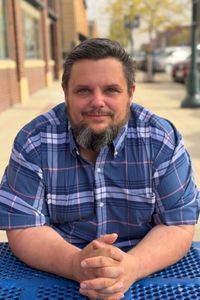
Joe Staloch was born in Mankato, Minnesota. He earned a high school diploma from United South Central High School and a bachelor's degree from Winona State University in 2006. His career experience includes working in environmental services and telecommunications.[1][2]
- Bachelor's:
- Winona State University, 2006
- High school:
- United South Central High School
In their own words
Who are you? Tell us about yourself.
I grew up outside Wells on a family hog farm and attended St. Casimir’s and United South Central. After earning a geology degree from Winona State, I moved to the Twin Cities and worked in environmental and industrial services, responding to hazardous spills, protecting public water supplies, and helping businesses safely manage environmental challenges.
Like many people from rural Minnesota, I left for school and work. I later returned for a mix of personal, family, and practical reasons, including affordability. Coming home gave me a clearer understanding of both the strengths of our communities and the challenges people face when trying to build a life here.
I am not a professional politician. I am someone who grew up here, gained experience elsewhere, and chose to come home. I am running because leaving should be a choice, not the only option. I want southern Minnesota to be a place where people can find good healthcare, strong schools, affordable homes, and opportunity close to home.
Please list below 3 key messages of your campaign. What are the main points you want voters to remember about your goals for your time in office?
Education Funding:
Every student deserves access to a strong education, regardless of where the live. to make that possible, Minnesota needs a fair and dependable approach to school funding. When the state or federal government requires schools to provide a program or service, that level of government should provide a significant majority of the funding. This gives local districts greater stability, reduce pressure on property taxpayer, and allow communities to focus more of their resources on local needs. Voters can help make that work easier by voting YES this November to increase funding for every school district through Minnesota's Permanent School Fund without Raising individual income or property taxes.Where you live should not determine whether you can get the care you need. Emergency services should be organized around response times so help can reach people quickly. Routine care must remain close to home so people do not delay treatment until their condition becomes more serious and more expensive for both the patient and taxpayers. For procedures and overnight stays, southern Minnesota needs enough hospital beds so patients are not sent hours away from home, separated from family, friends, and neighbors when they need their support most. Protecting rural healthcare means planning for every level of care, not simply expecting people to travel farther.Homes and small-town growth
Not all housing and economic development needs to happen in large cities. Many people would choose small-town life when jobs, healthcare, shopping, and other amenities are available nearby. Land is often more affordable, creating opportunities to build homes and welcome new families. That growth will require smaller communities to plan proactively for housing, infrastructure, and services. Rebalancing how Local Government Aid is distributed could give them more capacity to prepare for growth. Supporting development across a network of small towns and regional centers can strengthen local economies and help more people find opportunity close to home.
What areas of public policy are you personally passionate about?
I care deeply about education, healthcare, and housing, but as a 3.14 Action-endorsed candidate, I am especially passionate about science and technology. We can modernize state systems to improve services and detect fraud, invest in technologies that remove PFAS and other contaminants from our water, and expand renewable energy while protecting productive farmland. That includes making better use of rooftops, brownfields, buffer areas, and agrivoltaics so land can serve more than one purpose. Science should help us solve practical problems, protect our resources, and create new opportunities in rural Minnesota.
What do you perceive to be your state's greatest challenges over the next decade?
I believe climate change and rising energy costs will be among Minnesota’s greatest challenges over the next decade. More extreme weather will affect agriculture, infrastructure, water resources, insurance costs, and public health. At the same time, families and businesses need energy that is reliable and affordable. Minnesota must expand clean energy while strengthening the electrical grid, improving efficiency, and avoiding unnecessary costs for consumers.
What organizations or individuals have endorsed your campaign?
I am the DFL-endorsed candidate in my primary race. My campaign has also been endorsed by MAPE, AFSCME, 3.14 Action, and the DFL Rural Caucus. I continue to seek support from organizations that share my commitment to growing opportunity close to home, but the most important endorsement I am seeking is that of the voters of House District 23A.
Who are you? Tell us about yourself.
My name is Joe Staloch and I am running for Minnesota house seat 23A. I’m running because I want the people of the district and all of Minnesota to live better lives and I want to help grow our communities in rural Minnesota.
I grew up on a family farm outside of Wells with my three younger siblings. I graduated from Winona State university with a degree in geology and worked ten years for an environmental services company in St Paul on projects concerning public health and safety, our natural resources, and national security.
I moved back to the area in 2018. I currently live in Albert Lea with my long term girlfriend Danielle and 5 cat's, 3 of them are rescues.
In addition to running this campaign I work full time for a small local Internet service provider.
Please list below 3 key messages of your campaign. What are the main points you want voters to remember about your goals for your time in office?
Find freedom in Healthcare and preserve Healthcare Access:
When I moved back to the area and i needed to find a healthcare provider I struggled to find one that could see me on a schedule that worked for me the nearest option for the care I was seeking was over an hour away. Since then our community has lost a hospital, clinics are closing in small towns, and I've personally heard first hand from someone who ended up in Red Wing for an simple procedure requiring an inpatient hospital stay.
We should be proud of our world-class healthcare our state is known for but we should also ensure and guarantee that these resources remain accessible throughout Minnesota and that providers are being responsive to the needs of the community.Find freedom in Childcare
I'm not a father but i am an uncle. Some families, like my own, have family members that have helped with childcare needs, usually parents or grandparents, but others are not so lucky.
If there's one thing that we could do as a state to help our families, our workers, and our small businesses it would be to improve the availability and affordability of childcare. Let's make the investments to help establish more facilities in our communities and help expand the workforce by helping out those families that might be making hard career decisions and financial sacrifice because of cost barriers.Defend the freedoms we enjoy today and resist those that would work to restrict those freedoms.
I am concerned about actions being taken by legislatures and courts across our country to restrict the rights of every day Americans. Some of the actions being taken look to interfere with some of most personal decisions an individual will ever make in their life. Others still will have the effect of allowing powerful interests even more influence in our politics and hamper efforts to protect public health and safety.
What areas of public policy are you personally passionate about?
Healthcare policy
Local and county government aid
Economic development
What characteristics or principles are most important for an elected official?
The most important characteristics for an elected official are effective listening, humility in acknowledging what they might not know, and strong critical thinking skills.
Listening: Elected officials must actively listen to the concerns, ideas, and perspectives of their constituents. This involves not just hearing, but truly understanding and considering the input from the community. Regular communication through meetings, events, and accessible channels is crucial.
Understanding What They Might Not Know: Humility is key for any leader. Elected officials should recognize the limits of their knowledge and be open to learning from others. This openness allows them to seek out expert advice, gather diverse perspectives, and make more informed decisions.
Critical Thinking: Officials need to analyze information carefully, considering long-term impacts and avoiding the pitfalls of past solutions. Critical thinking enables them to evaluate the validity of different viewpoints, weigh potential outcomes, and make decisions that are in the best interest of the community.
By prioritizing these principles, elected officials can foster trust, make sound decisions, and effectively serve their constituents.
What do you believe are the core responsibilities for someone elected to this office?
The core responsibilities for someone elected to a state office include representing the interests of their community, creating and voting on laws that help families and local economies grow, and managing the state budget responsibly. They need to provide basic services to residents, helping them navigate state programs and solve problems. Elected officials must ensure the government runs efficiently and transparently, work well with others, and keep the public informed. By acting with integrity and ethical conduct, they can effectively support families and strengthen local economies.
What is the first historical event that happened in your lifetime that you remember? How old were you at the time?
I have vague memories of fall of the Berlin wall but I would have been 5 at the time so it's possible I'm remembering an anniversary event.
What was your very first job? How long did you have it?
Other than walking beans and cleaning hog buildings on the farm my first job was server/dishwasher/cook for Jakes Pizza in Wells
Do you believe that it’s beneficial for state legislators to have previous experience in government or politics?
I don't think it's necessary. I believe that it's good to have a mix of experienced legislators and new members to keep things on track and things moving and operating like the public expects but also to bring in new ideas and perspectives on how to address challenges confronting our state.
Do you believe it’s beneficial to build relationships with other legislators? Please explain your answer.
Building relationships with other legislators is crucial for fostering collaboration, bipartisanship, and effective legislative governance, ultimately leading to better policy outcomes and enhanced representation for constituents.
Are you interested in running for a different political office (for example, the U.S. Congress or governor) in the future?
I'm not thinking about anything past this race right now.
Both sitting legislators and candidates for office hear many personal stories from the residents of their district. Is there a story that you’ve heard that you found particularly touching, memorable, or impactful?
I work for a small ISP and I will never forget the day an elderly man came to our office to get some assistance with an internet connection after some strong storms this past spring. After he explained what help he required he added that he would have reached out earlier because his wife, who suffers from dementia, relies on the internet for TV and that not having it had caused her some confusion and stress over the weekend but there wasn't anything he could do about it because he had spent the weekend in the hospital. Not in Austin, fifteen miles or so from his house like residents were told would be their new destination for inpatient care, but in Red Wing over an hour and a half away.
The reason why this will stick in my mind is because a nearly identical story was in the news just a week or two before and I was shocked that the closest resources were that far away and I more or less assumed it was an outlier but I'm afraid it's not.
Should the legislature oversee or grant the use of emergency powers?
I believe that the current Statutes regarding emergency powers are appropriate.
What is the first bill you would introduce if elected?
My father recently passed due to a heart attack at the age of 65 and my grandfather years ago died of a heart attack at the age of 64. Both were hardworking farmers in otherwise good health with healthy bodyweights and habits. Research has shown that farmers, specifically male farmers over 40, are at increased risk of heart disease and heart attack and experience worse health outcomes following them. To that end, I would propose a bill providing for subsidies to farmers and businesses operating in remote areas or healthcare deserts to assist in the purchase of AEDs. Having such a device on hand and knowing how to use them can save lives and improve quality of life after cardiac events. There's no guarantee that an AED would have saved either of these men in my life but with access to services seemingly getting further and further away I feel this something to be considered.
What organizations or individuals have endorsed your campaign?
AFL-CIO
AFSME council 5
314 Action
DFL Rural Caucus
What committees interest you?
State and local Government finance and Policy
Health finance and Policy
Climate and Energy Finance and policy
Environment and natural resources finance and policy
Ag finance and policy
On the 2026 ballot
Links
Compiled from the candidate’s published profile as of September 30, 2026.
Source(opens in new tab)