
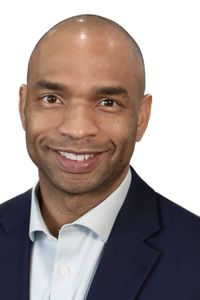
Background
Jewel Kelly was born in Chicago, Illinois. He served in the U.S. Air Force from 2001 to 2011. Kelly earned a bachelor’s degree from the University of Illinois Urbana-Champaign in 1997 and a graduate degree from Olivet Nazarene University in 2002. In 2018, he earned a second graduate degree from Washington University in St. Louis School of Law.
Kelly’s career experience includes working as a licensed real estate agent and small business owner. Previously, he was a program and operations manager for an American multinational conglomerate. Kelly founded A Fighting Chance Foundation, a mental health and suicide awareness nonprofit.[1][2]
- Graduate:
- Washington University, St. Louis School of Law, 2018
- Bachelor's:
- University of Illinois, Urbana-Champaign, 1997
In their own words
Who are you? Tell us about yourself.
I was raised as the oldest of 18 children by the same mother and father in a low-income household, where I learned responsibility and persistence early. I became the first in my family to graduate college, eventually earning an MBA , and a Master's in Legal Studies from Washington University in Saint Louis, School of Law .
Two months after 9/11, I answered the call to serve and joined the U.S. Air Force. I served as a captain and deployed twice to the Middle East, learning the importance of teamwork and the motto "leave no one behind."
After returning home, I spent over a decade in operations and project management at a global healthcare company, then co-founded a small real estate business. In 2023 I became a licensed mortgage lender, helping families buy their first homes and seeing firsthand how rising costs impact their lives.
In 2018, my family experienced tragedy when we lost my teenage bonus daughter to suicide. We turned our grief into action by founding a nonprofit, A Fighting Chance Foundation, to fight mental health stigma and connect people to care.
Through these experiences, I've learned the value of perseverance, compassion, and public service. I believe in community-centered leadership that listens to people and leaves no one behind. I'm running to continue serving my neighbors and to make sure every family has the support they need to thrive.
Please list below 3 key messages of your campaign. What are the main points you want voters to remember about your goals for your time in office?
Lowering costs for working families: Missouri families are struggling with rising costs, and lowering everyday expenses is my top priority. I will work to make housing more affordable by increasing the supply of homes people can actually afford (for example, legalizing accessory dwelling units and speeding up permits). I'll fight to curb hidden fees and ensure transparency in billing — from utility bills to event tickets — by passing "Truth-in-Pricing" laws so families see the real price up front. And I'll push for tax relief for working people, including expanding Missouri's Working Family Tax Credit and Child Tax Credit, so paychecks stretch further and families keep more of what they earn.Healthcare that includes mental health: Mental health is health, and we need a system that treats it that way. I'll work to fully fund and improve Missouri's 988 suicide & crisis lifeline and expand mobile crisis response teams, so people in crisis get help fast and we relieve pressure on police and ERs. I'll push to cut unnecessary red tape by reforming prior-authorization rules (for example, a "gold card" to exempt providers with high approval rates), so patients get timely care without needless delays. And I'll fight for plain-language medical billing, requiring hospitals and insurers to make bills simple and clear to prevent surprise charges and reduce confusion for patients.Public safety that works: Real public safety means safer neighborhoods and trust between the community and law enforcement. I'll support investing in fair, effective policing — hiring and retaining the best officers and ensuring they have the training and accountability to treat everyone equally under the law. We also need 911 mental health co-responder programs, pairing police with mental health professionals on certain emergency calls so people get the right help and officers can focus on violent crime. Finally, I'll push for bipartisan infrastructure upgrades — from fixing roads and bridges to improving street lighting and emergency communications — because better infrastructure prevents accidents and helps first responders keep us safe.
What areas of public policy are you personally passionate about?
I'm passionate about policies that lower costs and expand opportunity for working families. That means advancing tax fairness measures like expanding Missouri's Working Family Tax Credit and passing "Truth-in-Pricing" laws to curb hidden fees. Housing affordability is also critical: I support legalizing accessory dwelling units (ADUs) and streamlining permits to increase affordable housing. We must also improve healthcare access — including mental health. I back bipartisan steps like prior authorization reform to cut red tape and fully funding the 988 mental health crisis hotline with mobile response teams. These practical measures will make life more affordable, healthier, and safer for all Missourians.
Who do you look up to? Whose example would you like to follow, and why?
Abraham Lincoln—for his resolve to save the Union and the moral courage to end slavery. His humility, steadiness under pressure, and devotion to the rule of law are the model: lead with principle, tell the truth, and bind the nation’s wounds.
What characteristics or principles are most important for an elected official?
Integrity, humility, and a service mindset. Listen first, tell the truth, follow the law, and spend public dollars like they’re your own. Make decisions with evidence, not ideology, and treat every neighbor with dignity—no fear, no favor. Be transparent about goals, timelines, and tradeoffs; admit mistakes and fix them. My standard is simple for every policy: Is it legal, is it safe, is it fair—for all?
What do you believe are the core responsibilities for someone elected to this office?
Represent the district, not a party label. Write and amend laws that lower costs and improve daily life; pass a balanced budget; oversee agencies; and deliver responsive constituent services. Build coalitions to move practical solutions, communicate clearly with the public, and measure results so taxpayers know what they’re getting.
What legacy would you like to leave?
That we made government work for working families: lower costs and fair prices, health care with mental health built in, safer streets built on trust, and more homes people can afford. I want neighbors to say we kept a simple standard—Legal. Safe. Fair.—and left no one behind.
What is the first historical event that happened in your lifetime that you remember? How old were you at the time?
The first vivid event I remember is personal, not political: watching my mother leave for the hospital to deliver my fourth brother. I was three years old. As the oldest of 18, that moment foreshadowed a life of responsibility and looking out for my siblings.
What was your very first job? How long did you have it?
My first job was on the factory floor at Rantoul Products—a Teamsters Local 26 shop—making dashboards for Chrysler. I worked there two summers to help pay for college. That union job taught me the value of hard work, safety, and a fair paycheck.
What is your favorite book? Why?
The Three Musketeers—for its lesson in teamwork and loyalty. “All for one and one for all” captures how I try to lead: shared mission, shared sacrifice, shared success.
If you could be any fictional character, who would you want to be?
D’Artagnan from The Three Musketeers—courageous, imperfect, and relentlessly loyal to his team and his country.
What is something that has been a struggle in your life?
Impatience. I like to move fast. The Air Force taught me discipline and leadership; lending taught me to listen and explain. I channel impatience into urgency—while slowing down enough to bring people with me.
What do you believe is the ideal relationship between the governor and state legislature?
Co‑equal branches with healthy oversight and regular, good‑faith collaboration. The governor should brief lawmakers early on priorities; legislators should invite the administration to help refine bills. Disagreements are debated in public, with data, and resolved through compromise that serves the people—not political score‑keeping.
What do you perceive to be your state's greatest challenges over the next decade?
Making life affordable (housing, utilities, childcare), strengthening healthcare—including mental health access—keeping communities safe while building trust, educating and training a modern workforce, and maintaining infrastructure (I‑70 and key regional corridors) to support growth. We must also protect fair maps and citizen‑led democracy so voters keep the final say.
Do you believe that it’s beneficial for state legislators to have previous experience in government or politics?
Helpful, but not required. What matters most is character, work ethic, the ability to learn complex issues quickly, and skill at bringing people together. My experience as a veteran, project manager, nonprofit founder, and mortgage lender taught me budgeting, accountability, and problem‑solving that translate directly to this job.
Do you believe it’s beneficial to build relationships with other legislators? Please explain your answer.
Absolutely. One member rarely passes a bill alone. Trust across the aisle—and across regions—turns good ideas into law. I will organize around shared goals (lowering costs, safer streets, better schools), invite co‑sponsors early, and keep my word so colleagues know deals made are deals kept.
Is there a particular legislator, past or present, whom you want to model yourself after?
I admire Harry Truman’s plain‑spoken accountability (“the buck stops here”), John Danforth’s bridge‑building, and Claire McCaskill’s consumer‑protection focus. I aim to combine those traits with my own standard—Legal. Safe. Fair.
Are you interested in running for a different political office (for example, the U.S. Congress or governor) in the future?
My focus is Missouri House District 106. This work deserves full attention. If I earn the privilege to serve, my energy will be here—solving problems for St. Charles families.
During the recent federal shutdown, a 100% disabled military veteran in our district called me in a panic—his SNAP benefits were suddenly interrupted, and he asked, “What am I supposed to do to feed my family this week?”
Although I was able to connect him to resources that day to address his immediate emergency, that call put a face on policy: no veteran or child should go hungry because Washington stops. In Jefferson City, I’ll push a SNAP “bridge” during federal lapses, automatic recertification for disabled veterans, and rapid coordination between DSS, the VA, and food banks—because leaving no one behind starts with dinner on the table. Legal. Safe. Fair.
Should the legislature oversee or grant the use of emergency powers?
Yes—with clear guardrails. Emergency powers should be narrowly tailored, data‑driven, and time‑limited (e.g., automatic legislative review after 30 days), with transparent reporting, bipartisan oversight, and judicial review available. Swift executive action is sometimes necessary; democratic accountability must always follow.
What is the first bill you would introduce if elected?
Missouri Truth‑in‑Pricing Act. Require the all‑in, out‑the‑door price to be shown up front (tickets, lodging, utilities and local service fees), ban junk fees that hide the real cost, and enforce plain‑language billing. Families should be able to compare real prices and keep more of every paycheck.
Do you support or oppose changes to the current state ballot initiative process? If so, what kind of changes would you consider?
I oppose changes that make it harder for citizens to place measures on the ballot or raise passage thresholds. I support improvements that increase honesty and clarity: neutral, plain‑English ballot summaries; single‑subject enforcement; transparent fiscal notes; donor disclosure; and fair, consistent signature verification with a simple cure process for minor errors.
What is an accomplishment that you are proud of?
Turning grief into service: after losing my bonus daughter to suicide, my wife and I founded A Fighting Chance Foundation to reduce stigma, connect neighbors to care, and expand Mental Health First Aid. It’s the work I’m most proud of because it saves lives close to home.
What legislation would you enact related to election administration in your state?
A Voter Access & Integrity Act that sets statewide minimums for early voting days and hours, provides secure drop boxes, creates ballot‑tracking and a cure process for mail ballots, funds risk‑limiting audits, standardizes poll‑worker training and pay, ensures ADA‑accessible polling places, and modernizes cybersecurity support for local election authorities. Secure, convenient, and trusted—every vote counted.
Who are you? Tell us about yourself.
As a military veteran, small business owner and moderate, I’m running for the U. S. Senate because too many Americans are suffering. America is only as strong as our weakest link.
Our top priorities include the following: Lower the cost of healthcare including mental health. Stimulate the economy to create more jobs. Reduce the cost of education and student debt. Protect the environment and address climate change. Provide equal protection under the law.
As the eldest of 18 siblings, I thank God my mother had the choice, and made the choice to bring me and all of my siblings into the world.
My wife (Caren) and I live in rural Jefferson County, 30 miles south of St Louis, Missouri. Together, we became real estate agents, and grew our small business to help others live the American Dream. We are blessed with three daughters; Kacie, Camryn, and Courtney. Tragically, Camryn died by suicide in 2018. In 2019, seven compassionate souls joined Caren and I and started a non-profit organization called “A Fighting Chance Foundation”. Our foundation connects communities to local mental health resources and promotes Mental Health First Aid Classes.
Please list below 3 key messages of your campaign. What are the main points you want voters to remember about your goals for your time in office?
We need policies based on non-partisan standards. Is it legal? Is it safe? Is it fair? We believe the wealthiest country on earth can provide healthcare in a legal, safe, and fair way. How fair is universal healthcare? How safe is a Single Payer Healthcare system? How legal Is Medicare For All? This Is Us. We care about saving lives. We deserve our best. Why should we accept anything less?Change Comes When Budgets Change. Investing in our education is investing in our country. Investing in our country is Patriotism. Is it legal, is it safe, is it fair for us to bring down the cost of education? By reducing student debt, we can stimulate the economy, reduce the wealth gap, and create more jobs. We especially need more jobs now more than ever because 180,000 people still remain unemployed in our state. Isn't a smarter nation a stronger nation?We can no longer suffer in silence because of unfair and unsafe budget and tax cuts. America is only as strong as our weakest link. Is now the safe, or fair time to cut services which prevent homelessness and suicides? 488 veterans right here in MO experienced homelessness in Jan 2021. 192 Missouri veterans died by suicide in 2018. Imagine if we made Mental Health First Aid Classes available to everyone? We must make mental health a national priority.
What areas of public policy are you personally passionate about?
Is it fair that CEO's reap millions of dollars in bonuses from defense contracts funded by tax payers? Isn't America safer if we modernize our military with better equipment at more fair costs? The U.S Defense Budget is over half of our Discretionary Spending. We spent $1.3 Trillion dollars in Discretionary Spending in 2019. $676 Billion went to Defense. Incredibly, our Defense spending is more than the next 10 countries combined! The War with Iraq cost 4,431 American lives; and nearly $2 Trillion Dollars. This equates to $5,700 for every American.
In comparison, the Dept of Education's budget is less than 1/9 of Defense Spending. In 2019, Dept of Education Budget was cut 12% compared to 2018 budget. Health Resources and Services Administration (HRSA) budget was cut $953 Million in 2019. HRSA is the primary federal agency for improving health care to people who are geographically isolated, economically or medically vulnerable.
Training and Employment Budget is 1% of Defense Spending. (Dept of Labor). In 2019, Training and Employment Budget was cut over 7% compared to 2018 Budget.
On one hand, we must never forget our brothers and sisters in arms who repeatedly rescued the world from some of the deepest darkness in human history. On the other hand, we must address a tragic fact. Up to 22 military veterans die every day by suicide. Fairness is not anti-military. Fairness is anti-greed. Safety is not anti-security. True safety saves lives.
Who do you look up to? Whose example would you like to follow, and why?
I look up to Dr. Martin Luther King Jr, and President Abraham Lincoln. I'm inspired by the courage, conviction and sacrifice of Dr King, and the wisdom and patience of President Lincoln. Tragically, both men gave their lives in pursuit of justice, safety, and fairness for our country.
What characteristics or principles are most important for an elected official?
I believe kindness is the single greatest characteristic needed for an elected official. Kindness is defined as the quality of being friendly, generous, and considerate. Kindness is love in action. Think about our most beloved elected leaders. George Washington, Abraham Lincoln, President Roosevelt, John F. Kennedy, and Barack Obama. I especially want to highlight the word "considerate". Being considerate requires honestly assessing a situation to not hurt others, being considerate means being reasonable and answering the questions, Is it legal? Is it safe? Is it fair?
What qualities do you possess that you believe would make you a successful officeholder?
I aim to bring the following 12 qualities or elements of leadership to public office (Each function starts with the letter "P")
Protection: Take care of people so people can take care of protecting America.
Purpose: Simplify objectives, be responsible and accountable for people working together.
Prioritization: Go on offense to ensure the main effort gets the priorities of resources and time.
Predictability: Provide stability by living healthy, lawfully and fairly. Respect people always.
Presence: Stay engaged: Listen, learn, lift and lead.
Passion: Stand up for America. Be professional, positive and playful.
Preparation: Study before takeoff.
Policies and Procedure: Cut through the red tape.
Praise and Punishment: Give credit to others; criticize with humility.
Poise: Be the eye of the storm –calm, contained, and centered.
Perseverance: Combine the flexible application of resources with imagination and courage.
Prayer: Prayer changes things at the decisive place and time. Pressures go down when prayers go up.
What is the first historical event that happened in your lifetime that you remember? How old were you at the time?
My first recollection of a historical event was the re- election of President Ronald Reagan in 1984. I was ten years old when President Reagan was re- elected. I vividly remember listening to the presidential debates between Walter Mondale and President Reagan.
What was your very first job? How long did you have it?
My very first job was working in a manufacturing plant that made dashboards for Chrysler called Rantoul Products. My specific job position was an Injection Molding Press Operator. I worked at Rantoul Products for two summers to help pay for college.
What is your favorite book? Why?
The Three Musketeers by Alexandre Dumas. I loved reading this novel as a kid because it combines, bravery, adventure, and chivalry with the fight for justice and love of country.
If you are not a current senator, are there certain committees that you would want to be a part of?
If I'm elected to the U.S. Senate I'd like to serve on the Appropriations Committee, the Health, Education, Labor and Pensions (HELP) Committee, and the Veteran Affairs Committees. I believe serving on these committees is an opportunity to help make our country stronger. Some of the top priorities we need to address include the following. Lower the cost of healthcare and mental health services. Stimulate the economy to create more jobs. Reduce the cost of education. Protect the environment. Provide equal protection under the law.
Is there a particular senator, past or present, whom you want to model yourself after?
Without a doubt, I very much admire the audacity, intelligence, temperament and communication skills of (former senator ) President Barack Obama. President Obama inspired hundreds of millions of people throughout the world that yes we can make change. He was and still is an excellent example regarding ethics in politics. He legitimately tried to find bi-partisan support whenever possible. To this day, he continues to make me so proud he was our President for eight years.
How would you evaluate a judicial nominee?
As a U.S Senator, I would evaluate judicial nominees consistent with criteria used by the American Bar Association namely integrity, professional competence and judicial temperament. I also believe it is important to provide a fair and impartial evaluation to all judicial nominees. Likewise, I believe it is just as important to determine the nominee’s ability to put personal views aside and decide cases based on the law and the facts, free from bias. The strength of our government depends on an independent judicial branch, which means we need judges which do not let their philosophy, political affiliation, or ideology interfere or influence the administration of justice.
On the 2026 ballot
Links
Compiled from the candidate’s published profile as of September 30, 2026.
Source(opens in new tab)