
Background
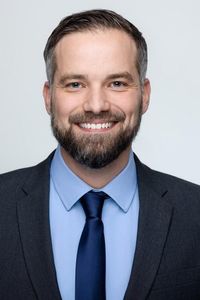
Jerrad Christian was born in Ohio. He served in the U.S. Navy from 2002 to 2007. His career experience includes working as a software engineer and as a meteorologist and oceanographer with the Navy.[1]
Campaign money
- Raised
- $84K
- From individuals
- $28K
- From PACs & party
- $250
- Own money
- —
FEC filings through June 30, 2026.
View on FEC.gov(opens in new tab)Campaign themes
Jerrad Christian has not yet completed [the profile publisher]'s 2026 Candidate Connection survey.
Send a message to Jerrad Christian asking him to fill out the survey.
If you are Jerrad Christian, click here to fill out [the profile publisher]'s 2026 Candidate Connection survey.
Who fills out the candidate survey?
Any candidate running for elected office, at any level, can complete [the profile publisher]'s Candidate Survey. Completing the survey will update the candidate's [the profile publisher] profile, letting voters know who they are and what they stand for. More than 32,000 candidates have taken [the profile publisher]'s candidate survey since we launched it in 2015. Learn more about the survey here.
You can ask Jerrad Christian to fill out this survey by using the buttons below or emailing info@christianforohio.com.
Campaign websiteChristian's campaign website stated the following:Get money out of politicsMoney has distorted our politics so badly that people barely recognize the system anymore. When the Supreme Court handed down Citizens United, it opened the floodgates for unlimited corporate spending and told the richest voices in the country they could drown out everyone else. Billionaires should not have a louder voice than a teacher, a mechanic, a nurse or a janitor. If we are serious about self-government, we have to end Citizens United, cap campaign spending, and make it clear that elections are not auctions.Lobbying as it exists today is legalized bribery with paperwork. Corporate interests and well-funded groups swarm Washington to extract policy that benefits them, not the people. Dark money flows through shell organizations so voters cannot even see who is pulling the strings. And yes, foreign interest groups should not be shaping our laws. That includes banning foreign-linked organizations, including groups like AIPAC, from influencing elected officials through campaign cash or political pressure. If you represent Americans, your loyalty and your funding should come from Americans. Clean up the money, expose every dollar, and watch how quickly policy starts reflecting working families instead of donor-class wishlists.Protect Voting Rights & democracyThe government is not some distant machine. It is us. And in a healthy republic, the people hold the power. That means protecting the right to vote with the seriousness it deserves. We should pass the Voting Rights Act and fully restore the protections that were stripped away after Shelby County v. Holder. When federal oversight was weakened, states were free to pass laws that made it harder for certain communities to vote.An updated framework like the John Lewis Voting Rights Advancement Act would reestablish clear guardrails against discrimination and ensure that changes to voting laws are reviewed before harm is done. Protecting democracy means making sure every eligible citizen can cast a ballot without unnecessary barriers and know it will count. The government should answer to the people. And if those in power ever forget that, the ballot box is how we remind them.Defend Civil Rights & Equality for allFor the past century, we have improved our country by expanding liberty to people of every demographic. Voting rights, marriage rights, housing rights – all were won in showdowns against think tanks, white supremacists, and religious institutions that sought to limit access to freedom, equity, and equality.Today, those freedoms are being erased. The groups that sought to prevent civil rights hold the reins of power. Instead of discussing policies to improve our conditions, corrupt politicians direct our attention to boogeymen like The 1619 Project, CRT, DEIA, and transgender athletes. They manufacture fear around racial, sexual, and gender minorities to keep Americans divided and stop us from uniting against them.Minorities do not oppress us. Bad policies do. Politicians and corporate greed keep us living paycheck to paycheck, unable to pay our bills or find jobs, and watching helplessly as our communities fail.Abolish & Prosecute IceICE was created in the panic and fear of the post-9/11 era, folded into the Department of Homeland Security and handed orders that have steadily expanded with little oversight. What we have now is an agency that conducts raids in communities, separates families, and operates detention facilities where abuse and neglect are documented again and again.When an institution repeatedly violates rights and erodes trust, the answer is not cosmetic reform. It is structural change. Abolishing ICE as it exists and replacing it with a narrowly tailored, accountable system focused on real public safety is a serious conversation this country needs to have.And accountability cannot be optional. If agents break the law, falsify records, abuse detainees, or violate constitutional protections, they should be investigated and prosecuted like anyone else. A badge is not immunity. Law enforcement in a democracy derives its legitimacy from the rule of law, not from fear. If we expect immigrants to respect our laws, the government must respect laws first. That standard should not bend for any agency, including ICE.Pass Universal HealthcareThis is not an abstract concept or a handout. Universal healthcare is a non-partisan policy in nearly every other modern country. It is proven to lower costs while removing the middle men who tell us which doctors we can see and which medications we can buy. It provides the freedom to start a business without the fear that you or your child will get sick, the freedom to leave a job you hate and find one you love, and the freedom to take a chance on something without your health being chained to an employer’s HR department.Right now we tie our lives to jobs in a way that keeps us stuck. Coverage disappears when employment does. A layoff becomes a medical crisis. An entrepreneur has to “price in” private premiums before they even open the doors on a new business. That is not a market that encourages innovation and growth. It is a system that punishes risk and rewards consolidation. Universal healthcare breaks that chain.Raise the minimum wageIf you work full time in the United States, you should not be poor. That is a baseline standard of dignity. The minimum wage has been allowed to erode for years while productivity and corporate profits soared. People working forty hours a week are still choosing between rent and groceries. In the wealthiest country on Earth, that is a policy failure.Raising the minimum wage is not radical. It is an adjustment to reality. Housing, child care, food, health care - everything costs more. Wages at the bottom have not kept pace. When people earn more, they spend more in their own communities. Small businesses benefit. Local economies strengthen. The alternative is what we have now: profits concentrating at the top while taxpayers subsidize corporations whose employees still qualify for public assistance.We can debate the exact number and how to phase it in. What should not be up for debate is whether someone who works deserves to live above the poverty line.End the housing crisisThe housing crisis did not happen by accident. We have treated housing like a speculative asset instead of a basic foundation of stability. Corporations and private equity firms buy up single family homes in bulk. Zoning laws lock entire neighborhoods into artificial scarcity. Wages lag while rent climbs. And working families are told to just “budget better” or "earn more" while half their income disappears into a landlord’s account.Ending the housing crisis starts with building more homes. Reform exclusionary zoning so duplexes and small multifamily units can exist in places that outlaw them. Incentivize first time homeownership instead of luxury developments only investors can afford. Crack down on large institutional buyers distorting local markets. And make it easier for first time buyers to compete without getting steamrolled by cash offers.Housing is stability. It is where kids do homework. It is where families build wealth. It is where small businesses are rooted. If we want strong communities and a functioning middle class, people need a place to live that does not feel like the Sword of Damocles.Reform Public School FundingYour child's future success should not depend on your ZIP code. A child in a rural district in Ohio should not get fewer opportunities than a child in a wealthy suburb simply because property values are different. We built a system that ties school funding to local wealth, and then we act surprised when the outcomes mirror inequality. It is not accidental. It is structural.Education is infrastructure. We do not tell some towns they get paved roads and others they get gravel because their houses cost less. We should not do that with classrooms either.We have to fund schools based on students’ needs, not neighborhood tax bases. That means fully funding special education, investing in early childhood programs, paying teachers like the professionals they are, and making sure rural and working class districts are not forced to run perpetual levies just to keep the lights on. Public schools are where most kids learn, eat, build friendships, and figure out who they are. Treating them like a line item to be trimmed weakens the entire country.Strengthen & Protect UnionsUnions built the American middle class. The weekend, overtime pay, workplace safety standards, child labor laws - none of that was handed down out of corporate generosity. Organized workers forced the country to recognize that labor is not disposable and that safety and dignity on the job matters.Over the last few decades, union power has been chipped away while executive compensation exploded. When workers cannot negotiate, wages stagnate, benefits erode, and jobs become more precarious. Strengthening and protecting unions means defending the right to organize without retaliation, passing real penalties for companies that break labor laws, and repealing policies that weaken collective bargaining.A strong labor movement does not hurt the economy. It stabilizes it. When workers have a voice, they earn more, spend more, and build communities that last.Defend & Restore Social SecuritySocial Security is not a handout. It is an earned benefit that working people pay into every single paycheck. My grandmother lived on Social Security for the last decade of her life, and even then it was tight. That check was stability, groceries, rent. It was dignity. When politicians talk about cutting it, they are talking about cutting into the lives of people who built this country.If we want to defend and restore Social Security, the math is straightforward: uncap it. Right now, income above a certain dollar threshold is not taxed for Social Security. A nurse pays on every dollar she earns. A billionaire stops contributing once they clear the cap. You and I pay the same dollar amount as Elon Musk and Jeff Bezos. That makes no sense. Lifting or eliminating the cap would extend the program’s solvency and strengthen benefits without cutting a dime from retirees.Social Security works. It has dramatically reduced senior poverty for generations. The problem is not the program. The problem is political cowardice to the donor class.Reduce energy costsReducing energy costs means increasing supply while modernizing the grid and investing in efficiency. That includes domestic production, but it also includes scaling renewables that have no fuel cost once built. Wind and solar drive prices down over time because the input is free. Nuclear keeps baseload stable. Storage and grid upgrades prevent outages and price spikes. The goal is reliability and affordability while keeping our air and water clean.We should also make it cheaper for families to lower their own bills. Home weatherization, efficient appliances, rooftop solar where it makes sense. Every kilowatt saved is money back in someone’s pocket. Energy policy should be about keeping the lights on at a price people can afford.Expand rural internet accessBroadband is infrastructure. It is as essential as roads, electricity, and clean water. Expanding rural internet access means investing in fiber where it makes sense, supporting wireless and satellite where terrain demands it, and making sure federal dollars actually reach unserved communities instead of padding balance sheets. It also means accountability. Companies should not take public funds and then leave whole counties behind.Rural communities are not asking for special treatment. They are asking for a fair shot. Reliable high-speed internet lets a kid apply for college, lets a farmer access markets, lets a small-town entrepreneur compete with anyone. If we say we believe in opportunity, we have to wire the places that have been overlooked.Support American farmersAmerican farmers work harder than almost anyone in this country, and too many of them are getting squeezed from both sides. Input costs rise and commodity prices fluctuate. Meanwhile, a handful of massive corporations dominate seed, fertilizer, meatpacking, and distribution. When four companies control most of the market, that is not a free market.Supporting American farmers means enforcing antitrust law and breaking up monopolies that choke competition. It means strengthening the Packers and Stockyards Act, increasing transparency in pricing, and making sure independent producers can actually get fair contracts. We should also invest in local processing capacity, conservation programs that actually reward stewardship, and rural infrastructure that keeps farms viable for the next generation.Protect Our environmentProtecting our environment is about heritage as much as health. In Ohio, hunting season and fishing trips are not side hobbies, they are traditions. They are mornings before sunrise in a tree stand. They are kids learning patience on the bank of a creek. If the water is polluted and the wildlife disappears, that way of life goes with it.Clean water and healthy habitats mean strong deer populations, thriving turkey, walleye runs that actually return year after year. Conservation is not partisan.Protecting the environment means investing in conservation programs, protecting public lands, restoring habitat, and managing resources responsibly so the next generation has the same opportunities we did. Stewardship is part of the culture in rural communities. We pass down rifles and tackle boxes. We should pass down healthy land and water too.Cap Ohio's Gas wellsOhio has thousands of old oil and gas wells scattered across farmland, forests, and backyards. Many are orphaned. Some leak methane. Some contaminate groundwater. And too often, taxpayers end up footing the bill after companies walk away. That is not responsible energy development. That is privatized profit and socialized cleanup.Capping Ohio’s abandoned and orphaned wells should be a priority. It protects drinking water, reduces methane emissions, and creates real jobs for skilled workers who can do the remediation work safely. We should require bonding levels that actually cover cleanup costs so companies cannot underfund their obligations and disappear. If you drill, you are responsible for the full lifecycle of that well. Period.End corporate welfareCorporate welfare is one of the quietest scams in American politics. Politicians talk about free markets and personal responsibility, then turn around and hand out tax breaks, subsidies, and special carve-outs to corporations that are already profitable. Small businesses compete on their own. Working families pay their taxes. Meanwhile, massive companies negotiate incentives behind closed doors and threaten to move if they don't get them.If a business model only works with public money propping it up, it is not a strong business. It is leverage. We should end targeted giveaways, close loopholes that let corporations pay less than teachers and firefighters, and require strict clawbacks when companies fail to deliver the jobs they promised. Public dollars should build public goods: infrastructure, schools, research, and communities that benefit everyone.Make the rich pay their fair shareWorking people pay taxes out of every paycheck. There is no army of accountants smoothing it out. It comes out before they even see it. Meanwhile, some of the wealthiest individuals and corporations in this country use loopholes, offshore structures, and preferential treatment to lower their effective rates below what a school teacher pays each year in taxes. That is not a system built on fairness; it is a system built on access.Making the rich pay their fair share does not mean punishing success. It means applying the same rules consistently. Capital gains should not be taxed at a lower rate than wages. Billionaires should not be able to borrow against their assets indefinitely and avoid taxation while their wealth compounds. Large corporations should not report record profits to shareholders while reporting near-zero tax liability to the IRS.END Israel's Genocide in GazaWe need to end U.S. funding for what is happening in the Gaza Strip. Tens of thousands of civilians are dead. Entire neighborhoods are gone. Children are buried under rubble while our tax dollars continue to fund the weapons. I do not accept the idea that we are powerless observers. I’m not interested in partisan excuses or geopolitical gymnastics. The government of Israel has the right to security. That does not include collective punishment or the destruction of civilian life. If we claim to stand for human rights, that standard applies even when it is uncomfortable.We should immediately halt offensive military aid, demand a permanent ceasefire, and condition any future assistance on compliance with international law. American leadership should mean saving lives, not underwriting their destruction.END Russia's war in ukraineRussia invaded Ukraine. A larger nuclear power crossed a sovereign border because Vladimir Putin believed he could seize territory and outlast the world’s attention. That is the root of this war, and pretending otherwise does not make anyone thoughtful; it just makes them unserious.Ukraine has the right to defend its sovereignty. That is not negotiable. We should support them. The goal has to be a durable end that preserves Ukraine’s independence while reducing the risk of this spiraling into a broader conflict. That requires leverage, diplomacy, and clear-eyed limits about what we are trying to achieve and what we are not.Transition soldiers back homeWe ask young men and women to serve in uniform, to move across the country or across the world on orders, to miss birthdays and funerals, to carry responsibility most civilians will never experience. Then too often we hand them a checklist on the way out and wish them luck. That is not a serious transition plan.Coming home is not just about a DD-214. It is about translating skills into civilian jobs, making sure mental health care is accessible without stigma, helping families adjust, and preventing veterans from falling into homelessness or isolation. A logistics chief, a medic, a weather forecaster, an aviation tech - those skills have real value in the private sector, but the pathway needs to be clear and supported. We should expand apprenticeship pipelines, partner with employers who understand military experience, and fully fund the VA so care is timely and competent.Regulate A.I. & Data CentersAI systems are being used to make hiring decisions, approve loans, generate news, write code, and influence public opinion. If those systems are biased, opaque, or weaponized, the damage scales quickly. We should require transparency in AI systems, clear accountability when harm is caused, and guardrails around how government and corporations deploy these tools. There should never be profiles built on American citizens.Data centers are important in this economy, and they come with real costs. They draw enormous amounts of electricity and water. In some regions, they strain grids and raise local rates. If communities are hosting these facilities, they deserve strong environmental standards, fair taxation, and infrastructure investments that offset the load. Growth is welcome. Exploitation is not.Defend Data Privacy & Online FreedomYour search history, your location data, your private messages, your biometric information — that is personal. The Constitution was written to protect people from unreasonable intrusion. That principle does not expire because technology changed.Our digital lives are still our lives. The fact that they move through servers instead of filing cabinets does not make them public property. Right now, data is harvested, bought, sold, and analyzed at a scale most people barely understand. Companies track behavior across platforms. Brokers build profiles most citizens have never seen. Governments, including ours, purchase access to datasets they would otherwise need a warrant to obtain. That is a loophole around basic liberty. We should require meaningful consent, limit data collection to what is actually necessary, ban the sale of sensitive personal information, and close backdoor data purchases by law enforcement.Audit the Pentagon for fraud & WasteThe Pentagon should be audited like every other part of government, and it should not be controversial to say that. The Department of Defense handles an enormous share of federal spending, and for years it has failed to produce clean audits. That should set off alarms for anyone who cares about waste, fraud, or basic competence. Patriotism is not writing blank checks. Patriotism is demanding accountability for how our money is used.Fraud and waste show up as inflated contracts, cost overruns, and procurement systems that reward the biggest contractors even when performance is poor. Meanwhile, military families deal with housing issues, child care shortages, and under-resourced health care systems. We should strengthen inspectors general, enforce real consequences for contractors who defraud taxpayers, and stop treating “national security” as a magic phrase that ends oversight.— Jerrad Christian's campaign website (April 23, 2026)Note: This text is quoted verbatim from the original source. Any inconsistencies are attributable to the original source.
Who are you? Tell us about yourself.
I'm Jerrad Christian, and I've spent most of my life in what is now District 12. I'm more than just a candidate; I'm a father to an 8-year-old boy and a Navy veteran. I fueled planes on the deck of an aircraft carrier and later became a meteorologist and oceanographer, stationed in Naples, Italy. Today, I work as a software engineer, but my time in the US Navy as a meteorologist gave me profound insights into climate science and made me a passionate advocate for reducing our nation's dependence on oil and increasing green initiatives. My experience in technology has fueled my passion for ensuring rural areas have access to information through broadband internet and education. The safety and security of our nation depend on technology, and our nation has to do better.
Growing up in rural Ohio, I witnessed the struggles many Americans endure, from the battle for access to healthcare to the pursuit of a quality education and a stable job. These struggles have touched the lives of countless individuals and families, including my own. My experiences with poverty taught me valuable lessons in budgeting and making every dollar count. My roots here instilled in me the belief that when good people come together, there's no challenge we can't overcome.
I'm committed to representing District 12 and working towards a brighter future for our community.
Please list below 3 key messages of your campaign. What are the main points you want voters to remember about your goals for your time in office?
Economy: Rural Ohio's economic challenges require investment in infrastructure, diversification of agriculture, vocational training, support for strong unions, transitioning to renewable energy, expanding rural internet access, and leveraging natural beauty for tourism to create well-paying jobs and community prosperity.Climate: Transitioning to clean and renewable energy sources is not just an environmental choice; it's an urgent necessity to safeguard our planet for future generations, reduce our carbon footprint, and combat the escalating climate crisis, while creating new, sustainable job opportunities for our communities.Bipartisanship and Collaboration: I believe in working across the aisle, putting progress before partisanship, and finding common-ground solutions that benefit our communities.
What areas of public policy are you personally passionate about?
1. Veterans affairs and support for healthcare access, education and employment, mental health and suicide prevention, along with issues with housing and homelessness.
2. Technology and innovation training with broadband access, education and STEM programs and small business and entrepreneurship.
3. Climate change and environmental sustainability through renewable energy, sustainable agriculture, green jobs creation.
4. Increased access to social services including mental health assistance, senior care programs so we can retire with dignity, and increased care for children in the foster system.
I also need to highlight the importance of equity and justice in my policymaking to ensure that healthcare, technology, and environmental policies benefit all citizens, regardless of their background, socioeconomic status, or geographic location.
Who do you look up to? Whose example would you like to follow, and why?
Fred Rogers has got to be one of the kindest humans that has ever been recorded in history. I wish to follow his example provided by the quote, “We live in a world in which we need to share responsibility. It’s easy to say ‘It’s not my child, not my community, not my world, not my problem.’ Then there are those who see the need and respond. I consider those people my heroes.”
I want to be a hero to a person like him.
What characteristics or principles are most important for an elected official?
Kindness, empathy and transparency are the foundations of trust. As the deep need to restore trust in our systems is of paramount importance, those are the best candidates for important principles for an elected official.
Just as important is intelligence and understanding, lending to the ability to make important decisions.
What qualities do you possess that you believe would make you a successful officeholder?
I am a dedicated individual, driven by a deep sense of commitment to the well-being of my communities and the people of this nation. I value open and honest communication, and I am a good listener, which allows me to understand the concerns and needs of the people I represent. I am also a collaborative problem solver who believes in working with others to find practical and effective solutions to the complex challenges our society faces. Additionally, my integrity, accountability, and ability to make informed decisions are qualities I bring to the table, ensuring that I will make choices that prioritize the best interests of the public.
What do you believe are the core responsibilities for someone elected to this office?
Someone elected to public office, whether in the U.S. House of Representatives or any other position, carries a profound responsibility to represent the best interests of their constituents and the broader public. The core responsibilities are the creation and evaluation of laws that addresses the needs of the people they serve. This includes conducting thorough oversight of government agencies, ensuring transparency and accountability, and working to maintain the integrity of the government and its institutions. Elected officials are also responsible for listening to and engaging with their constituents, advocating for their rights, and striving to improve their well-being. Ultimately, those in office are entrusted with safeguarding and advancing the principles of democracy and the foundations of our nation, ensuring that the government remains responsive, proactive and just.
What legacy would you like to leave?
I often reflect on the kind of world my child will inherit and as a parent, I am profoundly driven by the future, particularly climate change and its effects for my child and all the children of our world. I want to leave a legacy of a nation where opportunities are boundless, where freedom is cherished, where informed choices and a clean healthy environment are the norm.
What is something that has been a struggle in your life?
I was raised by a single mother in an extremely poor area. I understand what it is to worry about your next meal and if you will be able to afford a utility bill. I understand the importance of peace of mind that comes from having a parent not worried about making rent or buying food. Struggles are things I wish no one knew, but children are especially vulnerable in that regard. They should be able to grow in a safe and healthy world and know what it means to simply be a child.
What qualities does the U.S. House of Representatives possess that makes it unique as an institution?
The U.S. House of Representatives stands out as a distinct institution through its direct representation of the population, shorter two-year terms for members, more frequent elections, its constitutional role as the originator of revenue bills, and its ability to foster closer connections with local communities.
On the 2026 ballot
Links
- Campaign X(opens in new tab)
- Campaign tiktok(opens in new tab)
- Campaign website(opens in new tab)
- Campaign youtube(opens in new tab)
- Campaign facebook(opens in new tab)
- Personal facebook(opens in new tab)
- Personal linkedin(opens in new tab)
- Campaign instagram(opens in new tab)
- Personal instagram(opens in new tab)
Compiled from the candidate’s published profile as of September 30, 2026 and FEC filings.
Source(opens in new tab)