
Background
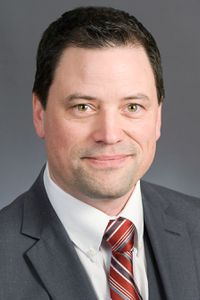
Jeremy Munson (Republican Party) is running for election to the Minnesota State Senate to represent District 22. He is on the ballot in the general election on November 3, 2026. The Republican primary for this office on August 11, 2026, was canceled.
Munson (Republican Party) was a member of the Minnesota House of Representatives, representing District 23B. He assumed office on February 20, 2018. He left office on January 3, 2023. Munson did not run for re-election to Minnesota House of Representatives District 23B in 2022.
Campaign themes
Jeremy Munson has not yet completed [the profile publisher]'s 2026 Candidate Connection survey.
Send a message to Jeremy Munson asking him to fill out the survey.
If you are Jeremy Munson, click here to fill out [the profile publisher]'s 2026 Candidate Connection survey.
Who fills out the candidate survey?
Any candidate running for elected office, at any level, can complete [the profile publisher]'s Candidate Survey. Completing the survey will update the candidate's [the profile publisher] profile, letting voters know who they are and what they stand for. More than 32,000 candidates have taken [the profile publisher]'s candidate survey since we launched it in 2015. Learn more about the survey here.
You can ask Jeremy Munson to fill out this survey by using the buttons below or emailing jeremy@jeremymunson.com.
Regular election
Jeremy Munson did not complete [the profile publisher]'s 2022 Candidate Connection survey.
Special election
Jeremy Munson did not complete [the profile publisher]'s 2022 Candidate Connection survey.
Jeremy Munson did not complete [the profile publisher]'s 2020 Candidate Connection survey.
What would be your top three priorities, if elected?
Affordable Health Care that preserves patient choice
Grow jobs and wages by lowering burdensome regulations and taxes
Be an agent of change to bring accountability and transparency in government - eliminate multi-subject legislation[7][8]
What areas of public policy are you personally passionate about? Why?
My desire to lower healthcare costs was a major influence in my decision to run for office in Minnesota. During my special election, I promised to fight special interest groups and work to bring price transparency to healthcare. As soon as I was elected, I went to work keeping my promise, and I was proud to announce my price transparency legislation was signed into law this year.
In the legislature, I am a member of the Health & Human Services Reform Committee. I authored legislation to require prices be displayed at hospitals and clinics. I stood up against big pharma and lobbyists to bring this legislation through committee and to the house floor where it passed with bi-partisan support. Since I oppose multi-subject omnibus bills, I demanded this bill travel on its own and, as a result, it was one of the few bills Gov. Dayton signed into law this year. Because of my legislation, starting in 2019, doctors and hospitals will be required to publicly post prices for their most common procedures and insurance companies will no longer be able to prohibit doctors from charging a cheaper cash rate if you have a deductible. This is a huge step forward, but I want to do more!
High premiums, medical costs and deductibles are troubling many families in our district. Last year, the cheapest insurance plan purchased through MNSure for a young family of four in Blue Earth County was over 24k dollars, plus a 13k dollar deductible. This must change. Like many self-employed business owners and farmers, my family lost its health insurance due to Obamacare. MNsure has been a complete disaster and has proven that new approaches are desperately needed. Single payer systems result in higher taxes, fewer provider choices and less access to care. This is not what we want or need.
We need to focus not only on the health insurance problem, but the cost of healthcare problem. Minnesota needs new solutions to our healthcare crisis that involve free-markets and price transparency at the doctor’s office. We should be allowed to shop for our health care and negotiate prices with our healthcare providers. Every healthcare provider should be able to set its own price based on its own business model. We need more health insurance options in rural Minnesota. We should be allowed to buy and sell insurance across state lines and determine our own coverage level, thereby increasing competition and lowering prices.
We need to return the power over healthcare to patients. Imagine what price transparency and patient choice would do to the healthcare market. Consider Lasik Eye Surgery – a medical procedure which is not typically covered by insurance. This procedure used to cost thousands of dollars. Since insurance companies were not involved, Doctors and Clinics were forced to compete for your business. They improved technology, lowered costs and advertised to attract patients. Now, Lasik Eye Surgery is advertised as costing only $249. This drastic reduction in cost could be applied to all medical services and pharmaceuticals if we allow free markets driven by price transparency and strong consumer choice.Cite error: Invalid <ref> tag; invalid names, e.g. too many[8]
[the profile publisher] also asked the candidate a series of optional questions. Jeremy Munson answered the following:
What qualities do you possess that would make you a successful officeholder?
I am running to represent our district, because I am tired of wasteful government spending, high taxes and overreaching regulations. My first-hand experience in agriculture, combined with owning small businesses, has shown me how overreaching regulations, high taxes, poor roads, limited daycare and health insurance problems burden farmers, small businesses and hard working people in our community. As someone whose family was out priced by Obamacare, I know our healthcare system needs to be fixed. Furthermore, as a father of two young girls, and as one whose family includes a long list of teachers, I appreciate the need for a strong education system and know our rural schools deserve equal funding. It is time, government worked for everyone. I want to advocate for us. This is why I want to use my diverse business experience and management style to provide new ideas and get things done.
Having worked and helped many companies across numerous industries, I understand not only the need to attract new companies and high paying jobs to our region, but also the importance of retaining existing companies and jobs in our district. In parts of our district, businesses are closing their doors and moving to neighboring states due to Minnesota’s poor business climate. Recently, Minnesota was named the 3rd worst state for doing business. This must change. As your State Representative, I will fight to change our state’s economic direction, so that our businesses, hardworking citizens, and retirees remain in this state.
As your representative, I will draw on my diverse business background to understand and anticipate the problems facing our district. I graduated with a business degree from the University of Minnesota, and am a self-employed owner of a small business consulting company. I have experience in farming row crops and working in hog barns. I also spent 23 years investing, developing, selling and managing real estate. The core of my career, however, has been spent helping businesses of all sizes eliminate waste and become more efficient, effective and profitable.
I was born and raised in rural Minnesota. I live on a farm outside Lake Crystal with my wife, Kallie Eberhart Munson, and two daughters, Stella and Gretta. Fifteen years ago, my wife and I bought our farm, so we could be close to my wife’s family and hometown of Madelia. We wanted to raise our children to appreciate the hard work ethic and value structure that make our district great. Our children attend school in Lake Crystal and my family attends church and Sunday school in Madelia.
It is an honor to represent you in St. Paul. If elected again, I will continue to fight for what is best for our district.[8]
What do you believe are the core responsibilities for someone elected to this office?
It is important to represent the needs and values of everyone in the district. In my first session in St Paul, I witnessed the large gap of Rural vs. Metro legislators. Rural votes are in the minority and we cannot risk a 'metro' vote being cast by a representative of rural Minnesota. It takes a strong spine to stand up against the metro majority and I have a record of doing so.[8]
What legacy would you like to leave?
I want to return power to the people of Minnesota. To do that I need to support single-subject bills, support a balanced budget, and fight for local control and allow the citizens of Minnesota to make more decisions for themselves. 'When government is allowed to pick what you buy and sell, the first thing to be bought is government.'[8]
On the 2026 ballot
Links
Compiled from the candidate’s published profile as of September 30, 2026.
Source(opens in new tab)