
Background
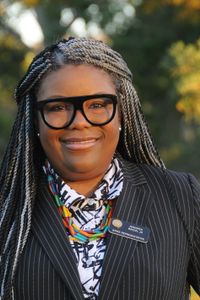
Jennifer Bacon was born in Miami, Florida. She earned a bachelor's degree from Tulane University in 2004. She earned a graduate degree from Florida International University in 2006. She earned a J.D. from College of William & Mary Marshall Wythe School of Law in 2009. Bacon's career experience includes working as an educator.[1][2]
- Law:
- College of William & Mary Marshall-Wythe Law School, 2009
- Graduate:
- Florida International University, 2006
- Bachelor's:
- Tulane University, 2004
Campaign themes
Jennifer Bacon has not yet completed [the profile publisher]'s 2026 Candidate Connection survey.
If you are Jennifer Bacon, click here to fill out [the profile publisher]'s 2026 Candidate Connection survey.
Who fills out the candidate survey?
Any candidate running for elected office, at any level, can complete [the profile publisher]'s Candidate Survey. Completing the survey will update the candidate's [the profile publisher] profile, letting voters know who they are and what they stand for. More than 32,000 candidates have taken [the profile publisher]'s candidate survey since we launched it in 2015. Learn more about the survey here.
You can ask Jennifer Bacon to fill out this survey by using the button below.
Jennifer Bacon did not complete [the profile publisher]'s 2024 Candidate Connection survey.
Who are you? Tell us about yourself.
As an African American woman, I recognized from an early age my duty to fight for the success of young people despite their zip code, skin color, or aspirations in life.
Because of this, I sought to educate in the classroom, build power with students and families as a community organizer, and partner with neighbors as a school board member. Now I am running to serve as your next State Representative.
Please list below 3 key messages of your campaign. What are the main points you want voters to remember about your goals for your time in office?
Educational ImpactSocial and Environmental JusticeLiving wages, affordable housing, and affordable healthcare
What areas of public policy are you personally passionate about?
Public education
Dismantling systems and practices that have lead to disparate outcomes for marginalized people in the criminal justice, housing, and financial systems.
Environmental justice
Wealth building for disenfranchised communities
Who do you look up to? Whose example would you like to follow, and why?
Fannie Lou Hamer
Thurgood Marshall
What is the first historical event that happened in your lifetime that you remember? How old were you at the time?
Rodney King 11
Hurricane Andrew 11
OJ Simpson Verdict 13
Elian Gonzales 17
What was your very first job? How long did you have it?
Church daycare center 3 months
Eckerd Drugstore 3 years
Jennifer Bacon did not complete [the profile publisher]'s 2020 Candidate Connection survey.
Candidate website
Bacon highlighted the following issues on her campaign website:
Dear neighbors,
The last conversation I had with my grandfather was over black eyed peas and collards in his hometown of Lexington, Mississippi. I asked him how he ended up leaving the South. He said that his father got into a fight with a white man who was doing him wrong, and the next day he and his family were on the train north.
This story reminds me of the sacrifices made by those who came before me, and of my responsibility to pay it forward. It’s why I became an educator, a lawyer, and a community organizer. From diversifying Denver’s teacher workforce, to limiting the number of children arrested in schools, I have a track record of improving the education of Denver’s students at every turn. I’m running for school board because Denver students and families need that experienced advocate now.
Every day I talk to my neighbors, former students, and DPS teachers. Parents in Stapleton and Green Valley Ranch ask “Will there be enough seats in a good neighborhood school for my daughter?” While leading student workshops, students in Montbello say “I’ve been to four different schools that closed down - how can I succeed without stability?” Teachers and principals across the district ask me what to do about the turnover in staff that keeps them from reaching their school’s potential.
These are tough questions, but we can answer them together in this campaign. If we put people and processes first, have real conversations about transparency and equity, and work to stabilize our schools, we can find a new way forward for Denver schools.
This November, I ask for your vote. This campaign is about not just our students, but us as a community. I vow to knock on the most doors to collect stories and be your best advocate. I will solve problems by building bridges. I will lead with values: people and community first.
Humbly,
Jennifer[8]
—Jennifer Bacon (2017)[9]
Chalkbeat Colorado survey
Bacon participated in the following survey conducted by Chalkbeat Colorado. The survey questions appear bolded, and Bacon's responses follow below.
Tell us a bit about yourself. How long have you lived in the school district? What do you do for a living?
I started my career as a public elementary school teacher in New Orleans. Two days into the school year in 2005, Hurricane Katrina hit and I was displaced to Miami. Seeing the devastation set upon my neighbors - both natural and man made - led me to law school so I could become an advocate for those who need protection. I’ve now been a teacher, school administrator, and a lawyer defending civil rights of the elderly and students with special needs. After moving to Denver in 2010, I bought a home in Montbello and started working with local community groups, including Padres y Jovenes Unidos where I serve as the board chair.
I currently work for Leadership for Educational Equity, where I train teachers on how to make change civically - with the core belief that the best decisions are those made by those most impacted. It is this belief that drives the way I am running my campaign and how I will lead on the Denver School Board.[8]
—Jennifer Bacon (2017)[10]
Tell us about your connection to the school district.
I’m running for Denver School Board because I’m deeply connected with our students, parents, teachers, and community leaders. I worked as a Dean of Students at DSST Green Valley Ranch. As the board chair of Padres y Jovenes Unidos, I’ve supported Denver parents as they advocate for the needs of their families. I’ve worked both professionally and civically to improve the recruitment and retention of teachers of color within DPS. I find myself consistently visiting schools, helping parents get the services they need for their special needs student, or connecting great teachers with resources or a job opening at a school that fits their style. My passion is creating opportunities for kids and families through a great education.[8]
—Jennifer Bacon (2017)[10]
The school board adopted a policy that calls for closing or replacing low-performing schools. Do you agree with it? Is there anything you’d change?
No one wants our students in academically under-performing or unsafe schools. I believe DPS is currently underutilizing the community as a resource to support schools showing signs of distress. DPS must innovatively engage with a community before a school is put up for closure. DPS has the capacity to do this - we’ve seen them give power to a community committee to choose the model for a restart at John Amesse. We have data like enrollment projections and academics to identify the schools where something must change. We have community resources that we could be leveraging to help the school succeed. The Board needs to lead in connecting these assets so we can minimize the trauma of our current school closure process.[8]
—Jennifer Bacon (2017)[10]
There are over 200 public schools in Denver. More than half are charter and innovation schools, which operate with increased autonomy. What are your thoughts about the district’s “portfolio” approach?
When I speak with families in Denver, they want to be able to find schools that meets their students’ multifaceted needs and they welcome the ability to choose magnets or charters with specialized programming (e.g., dual-language program, a school that specializes in special education push-in models, the performing arts, etc.). That said, too many families in District 4 face a false choice: attend a struggling neighborhood school or drive across town for a seat. For choice to really work, all schools must be great options and families must be able to access them. That’s why I want DPS to invest in stabilizing its neighborhood schools.
Another potential benefit of this system could be ensuring better integrated schools within enrollment zones. Theoretically, enrollment zones are strong tools to combat segregation in schools, but in practice DPS hasn’t done enough to ensure that our schools are inclusive and representative of the great diversity of our city.[8]
—Jennifer Bacon (2017)[10]
How should DPS rate schools? What factors should be taken into account and how much weight should they be given? Do you agree with adding an “equity indicator” that bases ratings partly on how well schools are educating traditionally underserved students?
Our current definition of quality is based primarily on tests. This is an important piece; we always need to know if students are at grade level or if there are gaps in performance among different student groups. However, test data is only one measure of success. DPS can become a leader in broadening a definition of quality with innovative thinking like measuring community engagement with metrics like completed home visits or strengthening our survey data of parents and students on the culture of a school.
I believe equity within a school is a critical metric of a school’s success. Our current equity metric within DPS is a start in its measurement of gaps in the performance of different student populations. However, DPS could be much more innovative here and rework the indicator to reward the closing of gaps within a school, or rethink how to measure equity for schools that have more homogenous student populations. Finally, measuring how all kids are doing is just the start. As we seek to create inclusive schools where all students thrive, we need to do more to support teachers with the resources that will allow them to create a culturally responsive environment.[8]
—Jennifer Bacon (2017)[10]
Denver is gentrifying, and the district has formed a committee to investigate how those changes are impacting schools. What policies would you consider to combat the segregation and decreasing enrollment occurring in some schools?
Segregation is a problem across our country and down to the school level. Our country has a long history of segregation that has systematically led us to where we are today. This is an issue worth addressing; all students benefit from attending a racially and socioeconomically diverse school.
In a rapidly changing city like Denver, DPS should be working with the City to intentionally map out housing plans to naturally diversify our schools. As we draw attendance zones, we can consider the diversity of neighborhoods zoned to the same school. Denver has great programs within its magnet schools, like Denver School of the Arts; DPS could do more to ensure that those who want to pursue that program come from every part of the city. DPS must also recognize its role in the strength of communities. At the core of every strong neighborhood is a strong school, one that families want to live by and might be a good option for the needs of their students. To achieve that, the district needs to do more to support neighborhood schools which will draw in families and encourage fewer families to opt out of neighborhood schools.[8]
—Jennifer Bacon (2017)[10]
What is DPS doing particularly well right now?
As a teacher, I’m heartened by the investment in the Teacher Leadership and Collaboration program in the District. Teachers are at the heart of the success of our district and should be treated as such. A program like this, which invests in the professionalization of our teachers and includes them in decisions and processes across the district, has a lot of promise. We still have ways to continue improving, both in how we reward and compensate teachers and how they are engaged in decision-making processes.
Additionally, the board has recently approved the recommendations of the African American Equity Task force, which focus on implementation of culturally responsive practices in schools and investment in proven interventions like the Opportunity Centers. I’m running because while I deeply believe in these policies, Denver needs an advocate on the board to ensure they are implemented with fidelity and high quality.[8]
—Jennifer Bacon (2017)[10]
What is the most pressing thing the board should change?
Transparency and inclusion of the community in decision-making. The board makes a number of critical decisions that impact the lives of kids and communities, and yet those communities are rarely engaged in the process to share how those decisions will impact them. This disconnect between policymakers and the people who are most impacted needs to close. Not only is it a fundamental value of mine that the public should have a voice in public education, the district is losing out on the resources our communities could bring to bear to support our schools. I promise to be a leader who will not just talk, but listen to the community to ensure all voices are at the table.[8]
—Jennifer Bacon (2017)[10]
What are the most pressing issues in the geographic area you’re seeking to represent and what policy changes would you suggest to address them?
District 4 has been the epicenter of so much change in Denver and education over the past decade: the challenges of schools facing increasing and declining enrollment, the opening and closing of schools. In order for our schools and our students to realize their full potential, the District needs to work to provide a stable foundation - in its expectations of schools, in the resources it provides, and in its forward looking vision for schools.
DPS policies approved by the Board do not do enough to help district-run schools turn around their academic performance in the face of these changes. For example, schools that are seeing enrollment declines end up with smaller budgets in our per-pupil budgeting system, but are often charged the same amount for supports or curriculum for central office. In order to balance budgets, schools are faced with choices like cutting library positions or even closing the library. Instead of providing enough resources and flexibility to the school to improve the performance of the school, district policies are allowing the school to continue on a path towards closure.[8]
—Jennifer Bacon (2017)[10]
On the 2026 ballot
Links
- Campaign X(opens in new tab)
- Campaign website(opens in new tab)
- Official website(opens in new tab)
- Official youtube(opens in new tab)
- Campaign facebook(opens in new tab)
- Personal facebook(opens in new tab)
- Personal linkedin(opens in new tab)
- Campaign instagram(opens in new tab)
- Personal instagram(opens in new tab)
Compiled from the candidate’s published profile as of September 30, 2026.
Source(opens in new tab)