
Background
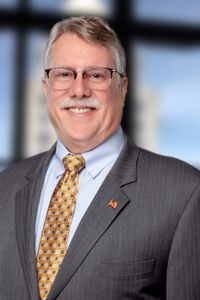
Jeffrey Walter was born in Toledo, Ohio. Walter's career experience includes working as a consultant, plant manager, general manager, and senior manager. He served in the U.S. Navy from 1978 to 2000. Walter was elected as mayor of Elburn, Illinois in 2025. He earned a bachelor's degree from the University of South Florida in 1991, a graduate degree from the University of Toledo in 1997, and a graduate degree from New York Institute of Technology in 2004.[1]
Walter has been affiliated with the following organizations:[1]
Elburn Lions Club
American Legion Post 630
Naval Cryptologic Veterans Association
Naval Enlisted Reserve Association
The Data Warehouse Institute
University of Toledo Alumni Association
University of South Florida Alumni Association
Aurora Area Convention and Visitors Bureau
Northwest Water Planning Alliance
Metropolitan West Council of Governments
Metropolitan West Council of Governments Legislative Committee
- Graduate:
- University of Toledo, 1997
- Bachelor's:
- University of South Florida, 1991
Campaign money
- Raised
- $311K
- From individuals
- $85K
- From PACs & party
- $2K
- Own money
- —
FEC filings through June 30, 2026.
View on FEC.gov(opens in new tab)In their own words
Who are you? Tell us about yourself.
Jeff Walter is a retired U.S. Navy Master Chief Petty Officer (E9), former Senior Manager at Accenture, and the current Mayor of Elburn, Illinois. With over three decades of experience in leadership, public service, and technology consulting, Jeff brings a unique blend of military discipline, private-sector innovation, and municipal governance expertise. At Accenture, he led over $36 million in complex IT programs, including 13 Generative AI proof-of-concepts, enterprise data strategies, and large-scale cloud and data migrations—especially within healthcare and telecommunications. As Mayor, he has championed smart growth, regional collaboration, infrastructure investment, and public safety—earning Elburn recognition as one of Illinois’ safest communities. He has also modernized village governance through long-term strategic planning and administrative reform. Known for his bipartisan approach, data-driven decision-making, and commitment to service, Jeff is now a candidate for Congress in Illinois’ 11th District. He aims to bring responsible, transparent, and innovative leadership to Washington, with a focus on national security, healthcare modernization, fiscal discipline, and restoring public trust in government.
Please list below 3 key messages of your campaign. What are the main points you want voters to remember about your goals for your time in office?
I bring Proven, Results‑Driven Leadership -
As a retired U.S. Navy Master Chief (E-9) and longtime Mayor of Elburn, I have delivered real outcomes through disciplined leadership. At Accenture, I led multi-million-dollar IT and AI modernization efforts across healthcare and telecom. As mayor, I modernized infrastructure, balanced budgets, strengthened public safety, and streamlined governance—showing he can get things done.I stand for and believe in Common‑Sense Governance for Our District - I bring practical, centrist leadership to Illinois’ diverse 11th District, blending suburban prosperity, farmland, and tech innovation. I am committed to fiscal responsibility, low taxes, and strategic growth—focusing on what works, not politics.I bring a Service‑First Vision for Illinois Families
Rooted in my own service—from the Navy to local governance—I understand the value of opportunities and giving back. I also stand for accountability, protecting freedoms, and defending your tax dollars. Loyal to community first, not ideology.
What areas of public policy are you personally passionate about?
I'm passionate about public policies that strengthen our local communities, support veterans, and restore trust in government. My focus areas include promoting fiscal responsibility, improving healthcare access—especially for veterans—, driving smart infrastructure investment, ensuring public safety, and advancing responsible technology policy. I believe in commonsense governance, local empowerment, and policies that prioritize people over partisanship.
Who do you look up to? Whose example would you like to follow, and why?
I'll go with my father for this answer. During WW2 he was sent out of the city he grew up in to a farm on what would become the Soviet side of Germany. When the soviets put up the barricades to shut in the east he and three former German soldiers had to make their way back to the west which they did. From there my father lived in a bombed out city where he and his brother and other friends went through the rubble of bombed out building to salvage bricks that they sold to builders to make money for food. He went on to learn the tool and die maker trade and in the mid-50's he came to the US for a bette life. He worked hard, putting in long hours at his job and was eventually able to by the company he worked at and retired fairly well off. The true American immigrant story. Also, during the Vietnam war when he was working at the company that made tank tracks, he designed a way to offset the bolts that held the tracks together. Before the bolts were countersunk per my father's design, snipers would shoot the heads off the bolts and eventually they would work their way out of the track, disabling the tank and risking the crews life. This was a great contribution to the US efforts.
Is there a book, essay, film, or something else you would recommend to someone who wants to understand your political philosophy?
Essay: "The Law" by Frédéric Bastiat - This is a classic defense of limited government, property rights, and personal responsibility. This 19th-century essay mirrors my thoughts on freedom, fiscal restraint, and protecting individual liberties.
Film: "Mr. Smith Goes to Washington" (1939) - This is for sure an idealistic but grounded view of a principled public servant challenging a broken system. It captures my mission of bringing service-minded, transparent leadership to Congress.
Speech: Dwight D. Eisenhower’s Farewell Address (1961) - This speech is a thoughtful reflection from a military veteran and president on balancing strength, industry, and democratic responsibility. It echoes my multifaceted leadership lens and my desire, and I quote from Ike, "that peoples of all faiths, all races, all nations, may have their great human needs satisfied; that those now denied opportunity shall come to enjoy it to the full; that all who yearn for freedom may experience its spiritual blessings; that those who have freedom will understand, also, its heavy responsibilities; that all who are insensitive to the needs of others will learn charity; that the scourges of poverty, disease and ignorance will be made to disappear from the earth, and that, in the goodness of time, all peoples will come to live together in a peace guaranteed by the binding force of mutual respect and love." I am especially fond of the line about those who have freedom understanding the heavy responsibilities that come with it. I think we have lost that.
What characteristics or principles are most important for an elected official?
The most important characteristics and principles for an elected official include:
Integrity – Honesty and accountability must guide every decision and action.
Transparency – Open communication builds public trust and fosters civic engagement.
Service Mindset – Public office is a responsibility, not a privilege—serving the people must come first.
Fiscal Responsibility – Stewardship of taxpayer dollars is essential to good governance.
Pragmatism – Solutions should be grounded in reality, not ideology.
Courage – Standing firm for what’s right, even when it’s unpopular, is the mark of a true leader.
Respect for the Constitution and Rule of Law – Upholding the democratic process and individual rights is non-negotiable.
Vision – Leaders must see beyond short-term wins and act for the long-term good of the community.
What qualities do you possess that you believe would make you a successful officeholder?
I am a disciplined, principled, and mission-driven leader who brings the same focus to public service that I honed over 22 years in the U.S. Navy as a Master Chief Petty Officer. My military service instilled in me integrity, accountability, and the ability to make sound decisions under pressure—qualities that define how I lead today.
I approach challenges with transparency, fiscal discipline, and a service-first mindset. I am committed to listening carefully, building consensus, and acting decisively to deliver results that matter. My years as Mayor of Elburn have sharpened my ability to solve problems, manage resources responsibly, and work collaboratively across political lines to achieve community goals.
I also bring an analytical, solutions-oriented perspective to every issue, informed by my professional background in technology, data governance, and AI innovation. I believe in being accessible, responsive, and relentless in the pursuit of what best serves the people I represent. Above all, I measure success not by political wins, but by the tangible improvements in the lives of those I serve.
What do you believe are the core responsibilities for someone elected to this office?
I believe and my research leads me to 4 core responsibilities of a Congressman:
1. Representation & Constituent Service - A Congressman serves as the voice of their district—bringing constituents' concerns to Washington, helping navigate federal agencies, and advocating for local needs.
2. Legislation & Lawmaking - Congress members propose, review, amend, and vote on legislation. They also guide policy ideas from concept to law while balancing constituent interests with national priorities.
3. Oversight & Investigation - Part of the job involves overseeing the executive branch—conducting hearings, investigating issues, and ensuring government accountability to uphold the rule of law.
4. Fiscal Authority - The House holds exclusive power to initiate revenue and spending legislation and has a central role in shaping the federal budget.
What legacy would you like to leave?
The legacy I want to leave, both as a Congressman and as an individual, is one grounded in service, integrity, and the belief that leadership is about lifting others higher. As a Congressman, my hope is to be remembered not simply for the votes I cast, but for the way I listened, learned, and worked across divides to deliver real results for the people I represented. I want to leave a record of common-sense policies that strengthened our economy, ensured fiscal responsibility, and protected the freedoms that define our nation. I aspire to show that government can work for people—not as a distant institution, but as a partner in building opportunity, ensuring safety, and preserving community values. My legacy in office should demonstrate that respectful debate, practical problem-solving, and unwavering accountability can still guide American politics.
As an individual, my legacy must be broader than any title I’ve held. I want to be remembered as someone who valued family, faith, and community above self-interest. As a father, husband, and neighbor, I want to have modeled kindness, empathy, and responsibility. As a veteran, I want to leave an example of duty and sacrifice for a cause greater than oneself. As a mayor and local leader, I want people to say I left my community stronger, more connected, and better prepared for the future.
Ultimately, my legacy is not about monuments or headlines—it is about people. I want those I’ve served to say they felt heard, respected, and represented. I want my children and grandchildren to look back and see a life lived with purpose, courage, and humility. And I want the communities I touched to continue thriving because I did my small part to set them on a better path. My goal is to leave behind a legacy of service and principle, one that proves leadership can still be honorable, decent, and profoundly human.
What is the first historical event that happened in your lifetime that you remember? How old were you at the time?
I very distinctly remember the Vietnam war growing up in the late 60's and early 70's. I remember the body counts on the news every night and seeing the stories of how poorly our troops were welcomed home. I remember the hippie movement and how they were pushing for peace. The peace sign was everywhere in those days. I was in my grade school and middle school years.
What was your very first job? How long did you have it?
My first job was picking up golf balls (using a cart) at a driving range, washing them and filling the buckets the customers would buy so they could practice. I had this job for 2 summers and also did some work on the par 3 course that was next to the driving range.
What is your favorite book? Why?
Any book by Tom Clancy but especially the exploits of Jack Ryan from analyst to President. The common sense approach to government that Mr. Clancy lays out in Jack Ryan's life could teach us all something.
If you could be any fictional character, who would you want to be?
Jack Ryan Sr.
What was the last song that got stuck in your head?
With the recent death of Ozzy Osbourne, Momma I'm Coming Home has been on repeat in my head.
What is something that has been a struggle in your life?
Living with ADHD has been one of the greatest challenges of my life. It has shaped the way I think, work, and interact with the world. ADHD can often feel like a constant storm—thoughts racing, focus slipping, and energy surging in unpredictable directions. For years, I struggled with restlessness, difficulty concentrating, and the frustration of knowing I had the drive and ability to accomplish much, but often felt as though my mind was pulling me in a dozen directions at once. It created challenges in school, in work, and even in personal relationships, as I fought to balance intention with attention.
What has made the difference for me has been discovering the power of acupuncture and Traditional Chinese Medicine. Where traditional methods sometimes fell short, these therapies offered me a holistic path to balance. Through acupuncture, I found calm and clarity in moments that previously felt overwhelming. Sessions helped settle the internal noise, allowing me to approach tasks and decisions with a steadier mind. Traditional Chinese Medicine, with its emphasis on treating the body and mind as a unified whole, gave me new tools to address ADHD not as a flaw to suppress but as an imbalance to be guided back into harmony.
Over time, these therapies helped me regain control of my focus, sharpen my energy, and quiet the restlessness that once defined my days. They didn’t erase ADHD—it is still part of who I am—but they transformed it from an obstacle into something I could manage with dignity and strength.
My journey has taught me that challenges can become teachers, and that healing often requires looking beyond conventional approaches. Today, I view my experience with ADHD not as a limitation, but as a source of resilience and empathy. The combination of determination, support, and the wisdom of acupuncture and Traditional Chinese Medicine has allowed me not just to cope, but to thrive.
What qualities does the U.S. House of Representatives possess that makes it unique as an institution?
The U.S. House of Representatives is unique among American institutions because it is the chamber most directly tied to the will of the people. With all 435 members elected every two years, the House is designed to remain closely aligned with public sentiment and responsive to the changing priorities of its constituents. This frequent election cycle ensures that representatives must stay engaged with their districts, listening to the concerns of citizens and remaining accountable for their decisions. The House reflects a broad and diverse cross-section of America—urban, suburban, and rural communities from every state and territory except in States where gerrymandering has taken away the voice of some communities. Where it does still exists, the diversity fosters a wide range of perspectives and solutions, making it the legislative body most representative of the nation’s complexity.
The House also holds specific constitutional powers that distinguish it from other branches and chambers. It has the exclusive authority to initiate revenue and appropriations bills, placing it at the heart of the nation’s fiscal policy. This role gives the House direct responsibility for determining how taxpayer dollars are raised and spent, reinforcing its accountability to the people who provide those resources.
Additionally, the House plays a key role in the system of checks and balances, with the power to impeach federal officials and conduct rigorous oversight of the executive branch. This oversight function is essential for maintaining government transparency, ensuring accountability, and protecting the integrity of our democratic institutions.
In short, the House of Representatives is, where not gerrymandered away, the people’s chamber—fast-moving, diverse, and deeply connected to the communities it serves, uniquely positioned to translate the voices of Americans into meaningful national policy.
Do you believe that it's beneficial for representatives to have previous experience in government or politics?
Having previous experience in government or politics provides representatives with the knowledge, skills, and perspective needed to navigate the complexities of the legislative process and deliver results for their constituents. Lawmaking is not simply about having good ideas—it requires understanding how to turn those ideas into workable legislation, build coalitions, and move proposals through committees, floor votes, and eventual implementation. Experienced representatives know the procedural rules, negotiation strategies, and timing needed to advance priorities effectively.
Prior service in government or politics also fosters strong relationships with key stakeholders—other lawmakers, staff, agencies, and community leaders—which can be essential for getting things done. These connections make it easier to find allies, build bipartisan support, and secure resources for district needs. In many cases, representatives with prior experience are better positioned to advocate for their constituents from day one, without the steep learning curve that often slows new members.
Experience also helps representatives anticipate and address unintended consequences of legislation. Having previously worked within regulatory, budgetary, or policy frameworks allows them to foresee potential challenges and craft more practical, durable solutions. Additionally, seasoned officials often have a proven track record of accountability, fiscal responsibility, and responsiveness, giving voters confidence in their ability to represent them effectively.
While fresh perspectives are valuable, combining new ideas with the practical know-how gained from prior public service often produces the best outcomes. Representatives who understand both the mechanics of governance and the needs of their constituents can bridge the gap between vision and execution, ensuring policies are not only well-intentioned but also achievable, sustainable, and beneficial for the communities they serve.
What do you perceive to be the United States' greatest challenges as a nation over the next decade?
Here are my top 5:
1. National Debt and Fiscal Stability - With rising interest costs and unfunded liabilities, the U.S. must confront long-term fiscal sustainability. Balancing budgets, reforming entitlements, and ensuring responsible spending are critical to prevent economic instability.
2. Global Competition and National Security - Rising threats from adversaries like China and Russia, along with cybersecurity and energy security concerns, will require strong defense policy, modernized armed forces, and strategic alliances to protect American interests.
3. Preserving Free-Market Principles Amid Expanding Government Control -
A growing push for left-wing socialist policies—such as government-run healthcare, universal basic income, and expanded federal control over industries—poses a challenge to the American free-market system. These policies risk stifling innovation, discouraging personal responsibility, and increasing dependency on government. The U.S. must defend economic freedom, personal liberty, and limited government to ensure continued growth, opportunity, and self-determination for future generations.
4. Technological Change and AI Governance - Rapid advancements in AI, automation, and biotech will reshape industries and the workforce. The U.S. must lead with ethical innovation, data privacy protections, and education to remain competitive and secure.
5. Restoring Trust in Government and Institutions -
Deepening political polarization, misinformation, and declining civic engagement threaten democracy. Transparent leadership, bipartisan cooperation, and electoral reforms are essential to rebuild trust.
Do you believe that two years is the right term length for representatives?
No, I do not. I support 4 year terms with a limit of 2 terms per member. A four-year term for members of the House could strengthen governance by allowing lawmakers to focus more on policymaking and less on constant campaigning. Under the current two-year cycle, representatives are effectively in perpetual campaign mode—raising funds, attending political events, and planning re-election strategies almost from the day they take office. This can divert attention and energy from the complex, long-term legislative work their constituents expect. With four-year terms, representatives would have a greater window to research issues, draft legislation, and build bipartisan coalitions without the looming pressure of the next election. This could encourage more thoughtful policymaking, as members could take on projects with timelines beyond two years, such as infrastructure planning, education reform, or long-term budget solutions.
Longer terms could also provide greater stability in the House’s composition, giving committees and legislative teams more continuity. That stability helps foster deeper institutional knowledge and expertise, enabling Congress to address complex issues more effectively.
Additionally, a four-year term could reduce the outsized influence of special interests. Because fundraising needs would be less constant, members could spend more time engaging directly with constituents and working on substantive policy rather than courting donors.
Critics might argue that longer terms reduce accountability, but regular elections for all members every four years would still give voters the power to hold representatives responsible. And with staggered elections—similar to the Senate—voters could still influence the makeup of the House at regular intervals.
Moving to four-year terms, with a 2 term limit, could strike a better balance between accountability and effective governance, empowering representatives to serve their districts with a longer-term vision.
What are your thoughts on term limits?
100% in favor and have signed the term limit pledge.
Is there a particular representative, past or present, whom you want to model yourself after?
Like Mike Coffman, Steve Womack, Jeff Denham, Brian Mast, and Derrick Van Orden, I began my service to this country in uniform—as an enlisted member of the U.S. Navy. Over 22 years, I rose to the rank of Master Chief Petty Officer, working as a cryptolinguist with a Top Secret clearance, supporting critical national security missions around the world.
These leaders—and I—share a common thread: we learned leadership from the ground up. Military service taught us discipline, accountability, and the importance of working as a team toward a mission. But our service didn’t end when we took off the uniform. Like Coffman and Womack, I took those lessons into local government, serving as Mayor of Elburn, Illinois. There, I oversaw smart growth, strengthened public safety, modernized governance, and invested in infrastructure—proving that principled, results-oriented leadership works at any level.
This blend of enlisted military experience, local executive leadership, and real-world problem-solving is rare in Congress—but it’s exactly what our nation needs. We know the value of service before self. We understand both the needs of our communities and the realities of global threats. And we have the practical, tested leadership skills to cut through political gridlock and deliver results.
In Congress, I’ll bring the same focus and dedication I’ve shown in the Navy and as Mayor—fighting for fiscal responsibility, strong national defense, and accountable, transparent government that works for the people, not political insiders.
Both sitting representatives and candidates for office hear many personal stories from the residents of their district. Is there a story that you’ve heard that you found particularly touching, memorable, or impactful?
I have heard far too many troubling accounts from veterans about how they have been treated by the federal government and the Veterans Administration. One recent story stands out—a veteran whose military retirement pay was reduced by the amount of his VA disability compensation. I questioned why these two benefits are even connected, and why this individual essentially lost income simply because he was disabled and fell below the 50% threshold required to receive both the pension he earned and the disability benefits he deserves.
In addition, my service on the Patient Family Advisory Council at one of the two VA hospitals in the Chicago area has given me firsthand insight into systemic challenges—long wait times, dropped calls, and what appeared to be an inefficient care delivery system.
Although I have only recently begun my campaign, I expect to hear many more stories like these—stories that underscore the urgent need for reform. As a representative, I will work to ensure that not only our veterans receive the respect, efficiency, and benefits they have earned through their service but that all of my constituents are heard and fairly treated by the government.
Tell us your favorite joke.
I was sitting at Church recently attending a wedding with my family. My young daughter asked my why the bride was wearing white. I didn't want to get into a long story that she might not understand so I said she was wearing white because it is the happiest day of her life. She thought about that for a moment then asked me why the groom was wearing black.
Do you believe that compromise is necessary or desirable for policymaking?
I believe compromise is not a sign of weakness in policymaking—it is a sign of maturity, respect for the democratic process, and a genuine commitment to solving problems. Our system of government was designed to represent a broad spectrum of voices and interests. With 435 members in the House, 100 Senators, and the President, no single individual or faction can—or should—dictate outcomes. Effective policy requires listening, understanding, and finding common ground where principles are preserved but solutions are shaped to serve the greater good.
My career has reinforced this belief. As Mayor of Elburn, I worked with trustees of different political perspectives, neighboring municipalities, county officials, and community stakeholders. We didn’t always agree on every detail, but we built consensus to pass budgets, approve infrastructure projects, and enhance public safety. This collaboration resulted in tangible successes—investments in roads and sidewalks, a safer community, and responsible fiscal management—because we focused on the problem, not the politics.
In the military, compromise took the form of mission-oriented cooperation. Diverse teams with different specialties, experiences, and viewpoints came together to execute complex operations. Success depended on mutual trust, clear communication, and a shared commitment to the mission, even when individuals had different approaches.
In Congress, compromise is essential for breaking gridlock, restoring public trust, and delivering results that improve lives. It doesn’t mean abandoning core principles—it means advancing them in a way that can earn the support needed to enact lasting change. My goal is to find that balance: holding firm on values like fiscal responsibility, transparency, and national security, while working across the aisle to craft policies that address real challenges facing our district and nation.
The Constitution says that all bills for raising revenue must originate in the House. What role would this power play in your priorities if elected?
The U.S. Constitution, in Article I, Section 7, clearly states: “All Bills for raising Revenue shall originate in the House of Representatives; but the Senate may propose or concur with Amendments as on other Bills.” This provision—often called the Origination Clause—was designed by the Founders to ensure that the power to tax and raise revenue rests with the legislative body closest to the people. Because members of the House are elected every two years and represent smaller districts, they are more directly accountable to their constituents than Senators, making them better positioned to reflect the public’s will in matters of taxation and spending.
If elected, I would treat this constitutional responsibility as both a privilege and a duty. Control over revenue bills means the House has the first say in determining how taxpayer dollars are raised and, by extension, how they will be spent. I would use this authority to advance my core priorities: fiscal responsibility, transparency in government spending, and ensuring that every dollar serves a legitimate public purpose. That means opposing unnecessary tax increases, scrutinizing federal programs for waste, and redirecting resources toward areas that directly benefit the American people—such as infrastructure, veterans’ care, and national defense.
This power also provides a critical check on executive overreach and unsustainable fiscal policy. By insisting on detailed justifications for revenue measures and by tying taxation directly to measurable outcomes, the House can set a standard for accountability that reverberates throughout the federal government. For me, the Origination Clause is not just a procedural rule—it’s a vital safeguard for taxpayer interests and
On the 2026 ballot
Links
Compiled from the candidate’s published profile as of September 30, 2026 and FEC filings.
Source(opens in new tab)