
Background
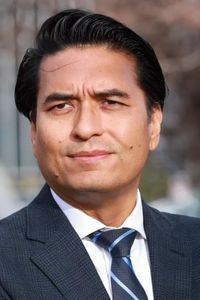
Jay Maharjan earned a high school diploma from St. Xavier's High School, a bachelor's degree from Pittsburg State University in 1997, and a Ph.D. from the University of Southern California in 2020. His career experience includes working as an educator.[1]
- Ph.D:
- University of Southern California, 2020
- Bachelor's:
- Pittsburg State University, 1997
- High school:
- St. Xavier's High School
In their own words
Who are you? Tell us about yourself.
I am Dr. Jay Maharjan, a special education teacher at a Title I public high school in East Las Vegas, a public finance researcher, and a Democratic candidate for Nevada State Treasurer.
I have spent my career at the intersection of education, entrepreneurship, public service, and financial stewardship. I helped lead Nevada’s participation in the White House Startup America initiative, served on the board of a public school, and earned a doctorate from the University of Southern California, where my research focused on how governments manage large public funds for long-term public benefit.
As a special education teacher, I see every day how economic decisions affect students, working families, and communities. As a finance researcher, I understand that public money must be managed with discipline, transparency, and accountability.
I am running for State Treasurer to protect taxpayer dollars, invest wisely, and work toward better economic outcomes for all Nevadans.
Please list below 3 key messages of your campaign. What are the main points you want voters to remember about your goals for your time in office?
Protect taxpayer dollars and manage Nevada’s money responsibly: The State Treasurer’s office is a fiduciary responsibility, not a place for political theater. Nevada needs steady leadership focused on protecting public dollars, maintaining trust, and making responsible financial decisions. I will bring discipline, transparency, accountability, and long-term stewardship to the management of state funds.Invest wisely for Nevada’s future: Nevada must think beyond the next budget cycle. Responsible investment decisions can support long-term stability, education, infrastructure, and economic opportunity. I believe public funds should be managed carefully and strategically to strengthen outcomes for working families and future generations.Bring real-world experience and public-service leadership: My background combines classroom service, entrepreneurship, public finance research, and economic development. As a special education teacher, I see how economic decisions affect students and families every day. As a public finance researcher, I understand governance, accountability, and disciplined fund management.
What areas of public policy are you personally passionate about?
I am personally passionate about public policy that connects financial stewardship to real-life outcomes: education, workforce development, economic opportunity, and responsible management of public funds.
As a special education teacher, I see how policy decisions affect students, families, and future workers. As a public finance researcher, I understand that good intentions are not enough. Public money must be managed with discipline, transparency, and accountability.
I care about policies that help Nevada prepare students for the workforce, strengthen long-term economic stability, support responsible growth, and ensure taxpayer dollars are protected and invested wisely.
Who do you look up to? Whose example would you like to follow, and why?
I look up to the late Peter Drucker and the late Robert Denhardt, both of whom were my professors and deeply shaped how I think about leadership, institutions, and public service.
Peter Drucker, an immigrant and a defining figure in modern management and executive leadership, emphasized responsibility, discipline, long-term thinking, and the role of institutions in serving society. I was fortunate to study his work through the Drucker School of Management as part of my broader academic journey between engineering, multiple advanced degrees, and my doctorate.
I was also influenced by Robert Denhardt at the USC Sol Price School of Public Policy. His work on public administration and New Public Service emphasized that public institutions should not merely direct or steer from above, but should serve people with purpose, accountability, democratic values, and a commitment to the public good.
What characteristics or principles are most important for an elected official?
Integrity, judgment, discipline, transparency, and humility are the most important principles for an elected official. Public office is a public trust, not a platform for personal ambition.
What do you believe are the core responsibilities for someone elected to this office?
The core responsibilities of the Nevada State Treasurer are to protect taxpayer dollars, manage public funds responsibly, maintain liquidity, oversee investments and debt with discipline, and strengthen public trust through transparency.
What legacy would you like to leave?
I would like to leave Nevada stronger financially, more sustainable, and more livable, with better stewardship, greater public trust, and long-term thinking that helps families and future generations.
What was your very first job? How long did you have it?
My first job was teaching English at a local school while I was still a student at a Jesuit school. I was very young, and in some cases taught students close to my own age. I did that for about a year, and it taught me responsibility, preparation, humility, and the power of education early in life.
What is something that has been a struggle in your life?
My life has required discipline, resilience, and constant preparation. As an immigrant, I had to learn new systems quickly, but I also built a record of leadership — from serving young people and helping pay my way through school, to leading organizations, advising businesses and entrepreneurs, and serving in public-service roles. Those experiences made me a resourceful, tested, and accountable leader with the judgment and care needed to manage complex responsibilities.
What responsibilities of this office do you personally consider the most important?
I consider protecting principal, maintaining liquidity, managing investments responsibly, and ensuring long-term financial stability to be among the most important responsibilities of the Treasurer’s office. The office should also communicate clearly with the public about how Nevada manages money, debt, college savings, scholarships, and long-term obligations. Financial literacy matters not only for households, but also for state government — especially when families need to understand which programs are guaranteed and which depend on trust-based funding structures. My experience helping lead public-private recovery work in Nevada after the 2008 recession shaped my belief that the Treasurer should think beyond the next budget cycle and help build long-term education funds that make Nevada stronger for future generations.
Are there any little-known powers or responsibilities held by this office that you believe more people should be aware of?
Many voters do not realize that the Treasurer’s office affects state investments, debt management, cash management, college savings, scholarships, and Nevada’s long-term borrowing strength. I also believe the office can help Nevada think bigger about long-term public wealth-building, including a stronger permanent education fund that supports future generations while protecting taxpayer dollars through disciplined stewardship.
What organizations or individuals have endorsed your campaign?
I am honored to have earned endorsements from respected civic, professional, and public-service leaders, including Mark Feierstein, former senior official in three presidential administrations; Jason Blazakis, former Director of Counterterrorism Finance at the U.S. Department of State; Keith J.D. Hightower, former Legislative Director to Governors Brian Sandoval and Steve Sisolak; and Dr. Thurston Smith, member of a federal advisory committee to the U.S. Department of the Treasury.
I have also been recognized as a Moms Demand Action Gun Sense Candidate.
What was the first historical event that happened in your lifetime that you remember?
One of the first major historical events I remember clearly was the Gulf War, when Iraq invaded Kuwait and the United States helped lead an international coalition to defend a smaller country from aggression. That moment shaped my early understanding of American leadership, strength, and the responsibility to stand up to bullying.
On the 2026 ballot
Links
Compiled from the candidate’s published profile as of September 30, 2026.
Source(opens in new tab)