
Background
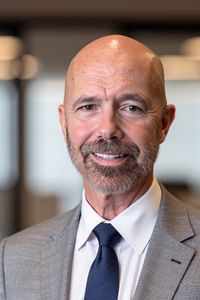
J. Gordon Mitchell was born in Pontiac, Michigan. He served in the U.S. Air Force from 1983 to 2022. He graduated from Walled Lake Western High School. He earned an associate degree from the Community College of the Air Force in 2016 and 2017, a bachelor's degree from Southern New Hampshire University in 2021, and a graduate degree from Johns Hopkins University in 2024. His career experience includes serving in the military, in public service, and as a guest educator. He has been trained and certified in Sexual Assault Prevention and Awareness, Suicide Prevention, and Bystander Intervention. He has been certified in epidemiology and as a medical assistant.[1][2]
- Associates:
- Community College of the Air Force, 2017
- Bachelor's:
- Southern New Hampshire University, 2021
Campaign money
- Raised
- $19K
- From individuals
- $6K
- From PACs & party
- $0
- Own money
- —
FEC filings through March 31, 2026.
View on FEC.gov(opens in new tab)In their own words
Who are you? Tell us about yourself.
I’m J. Gordon Mitchell—a 27-year Air Force veteran, public servant, author, and lifelong advocate for equity, public health, women’s reproductive rights, education, and marginalized communities. My life’s work has been showing up in crisis and leading from the front—not just when it’s convenient, but when it’s hard. I’ve fought wildfires, stood in the wreckage of natural disasters, helped lead Texas’s COVID response, and served as a school board trustee for one of the fastest-growing districts in the state.
As a Senior Enlisted Advisor and Senior Planner, I’ve advised commanders on the health and welfare of over 1,000 troops, coordinated the distribution of 68 million pounds of food, and helped vaccinate more than a million Texans. I’ve served on numerous local committees focused on housing, public safety, education, and human rights.
I hold multiple degrees, including a master’s from Johns Hopkins University in Government, Education, and Cultural Awareness, and I’m completing a second in Public Health from Johns Hopkins Bloomberg School of Public Health.
I’m not a career politician. I’m a responder. A father. A neighbor. I believe no one should have to fight alone for dignity or representation.
I’m running because the people of TX-17 deserve a leader who doesn’t just talk about showing up—they deserve one who already has. Because leadership matters.
Please list below 3 key messages of your campaign. What are the main points you want voters to remember about your goals for your time in office?
Leadership Means Showing Up.
I’ve led in some of the toughest situations imaginable fighting wildfires, responding to hurricanes, serving during the pandemic, and standing firm on the school board when extremism threatened our kids’ safety. I don’t just believe in leadership when it’s convenient—I show up when it’s hard. Especially when it's hard. When emotions run high, and when the stakes are real. True leadership isn’t about titles or talking points. It’s about presence, service, and doing the right thing even when no one’s watching. That’s how I’ve led my entire life, and it’s exactly how I’ll represent TX-17 in Washington.People Over Politics.
This campaign isn’t powered by PACs, corporations, or political gatekeepers—it’s powered by people. I’m running to represent the families, workers, and everyday Texans who’ve been left behind by a system that too often rewards the loudest donors, not the strongest public servants. I’ve never played politics for personal gain—I’ve answered the call to serve, in uniform and in the community. It's what responders do. It is what I do - whenever and wherever needed. That won’t change in Congress. I’ll show up, listen with purpose, and fight for reproductive freedom, healthcare access, safe schools, and the right of every Texan to live with dignity and opportunity.Every Voice Matters.
TX-17 is diverse, resilient, and ready to be heard—from rural communities to small towns and cities. Whether you’re raising a family, running a business, farming your land, or finding your way—you deserve a representative who sees and hears you. That includes those often pushed to the margins—working families, seniors, veterans, young people, and underrepresented communities whose needs are too often overlooked. I’ll fight for reproductive rights, fully funded public schools, strong public health systems, access to healthcare, and the protection of our democratic institutions. I’ll also confront food and housing insecurity head-on. Every Texan deserves dignity, safety, and opportunity—every single time.
What areas of public policy are you personally passionate about?
I’m a first-generation college graduate and 27-year Air Force veteran with decades of public service rooted in urgency, compassion, and responsibility. I know how hunger can shake your hope for the future—I’ll fight for the resources Texas needs to ensure our children are fed, especially our K-12 students. I’ll fight to restore funding to our classrooms and keep political ideology out of the classroom so educators can focus on teaching. Families need access to quality healthcare, and we must protect and expand the safety nets that keep people from falling through the cracks. That’s how we build strong, stable communities. I’m passionate about public health, reproductive freedom, education, and the dignity of every Texan.
Who do you look up to? Whose example would you like to follow, and why?
I’ve always looked up to people who speak truth to power—especially on behalf of those whose voices are too often silenced, ignored, or overlooked. I admire those who carry the burden of advocacy without the promise of recognition. The ones who do the hard, quiet work when no cameras are rolling.
I don’t know that I have any singular “heroes” anymore. Over time, I’ve come to realize that the people I most respect aren’t usually in headlines or history books. They’re in classrooms, hospitals, shelters, and emergency rooms. They’re teachers shaping futures one student at a time. Nurses and hospice workers offering dignity when it’s needed most. Scientists solving problems we don’t yet fully understand. First responders running toward chaos when others are running away. Caregivers holding hands through fear and pain. These are the people I look up to.
I’m drawn to those who lead with compassion, who seek to understand rather than dominate, who see the beauty in the world even when it's buried beneath hardship. People who listen. People who stay. People who do the work.
They may not have titles or power or massive followings, but they show up. Every day. And they make things better for the people around them.
If I could follow any example, it would be theirs: to lead with humility, to speak with purpose, and to put in the real work to make tomorrow better, not just for some, but for everyone.
Is there a book, essay, film, or something else you would recommend to someone who wants to understand your political philosophy?
If you want to understand how I lead (and see a great movie in the process), I suggest watching President Andrew Shepherd’s final speech in "The American President." That character, played by Michael Douglas, delivers one of the most honest depictions of political courage I’ve ever seen. He doesn’t cave to pressure. He doesn’t take the easy route. He leads with integrity—even when it comes at a personal cost. That’s the kind of leadership I believe in: showing up, telling the truth, and putting people before politics.
Lee Drutman’s Breaking the Two-Party Doom Loop is another cornerstone of my political philosophy. We are long overdue for structural reforms, such as ranked-choice voting (RCV) and proportional representation. The way our system currently functions rewards division and entrenches power. That’s not democracy—that’s dysfunction. And frankly, the Democratic Party stands to gain the most with RCV. I’m passionate about restoring trust in government, and that begins by reshaping how it serves the people.
Books like Killers of the Flower Moon by David Grann are also critical, as are the countless works that tell the unvarnished truth of our country’s past: the Tulsa Race Massacre, the Trail of Tears, the legacy of redlining, and mass incarceration. These aren’t stories to bury or rewrite. They’re hard truths we must reckon with if we’re ever going to heal and move forward.
My political philosophy is grounded in the principles of truth, transparency, accountability, and proximity to the people. I believe in showing up—that’s what the people expect, and that’s what this role demands. We must listen to scientists on public health, trust educators on schools, and center the voices of people who’ve too long been ignored. Leadership isn’t about self-preservation—it’s about responsibility. That’s the standard I live by, and that’s the standard I’ll bring to Washington.
What characteristics or principles are most important for an elected official?
The most important characteristic of an elected official is the ability to lead, not just when it's easy or politically convenient, but when it’s hard. Especially when it's hard. I will be there when the stakes are high and people are looking for someone to take charge of the situation, mitigate the loss, and secure the necessary resources for recovery and rebuilding. That means being honest, accountable, empathetic, and grounded in the needs of the people you represent.
An elected official must listen first, not to reply, but to understand. In the military, I served as a Senior Enlisted Advisor, responsible for more than 1,000 troops. My first job was to truly hear them—really listen to them—and carry their concerns up the chain of command with clarity, accuracy, and urgency. That taught me the value of trust and what happens when leadership fails to show up. As a former drill sergeant, not showing up was never an option.
Leaders must possess a sense of urgency and absolute moral clarity. I’ve responded to natural disasters, led emergency response teams, and stood in the ashes of destroyed communities. I didn’t wait for instructions—I acted. That’s what leadership looks like: standing in the gap for others, not watching from safety and looking for photo ops.
Courage matters. Telling hard truths, resisting harmful legislation, and defending marginalized communities requires spine. But real courage also means vulnerability—admitting when you don’t have all the answers, surrounding yourself with people who challenge you to grow, and staying teachable. Always.
Above all, an elected official must remember who they work for. Not lobbyists. Not corporate donors. But the single parent working two jobs. The teacher fighting for her students. The kid in rural Texas wondering if anyone in Washington knows they even exist. They deserve more than lip service. They deserve someone who shows up—every single time.
Because leadership isn’t a title. It’s a responsibility.
What qualities do you possess that you believe would make you a successful officeholder?
I’m not someone who sees public office as a reward or a title. To me, it’s a trust. A responsibility. And if I’m fortunate enough to be given that trust, I intend to spend every day working to be worthy of it.
I don’t pretend to have all the answers, but I know how to show up. I know how to listen—especially to people who’ve been ignored. I’ve led in crisis, stood up in uncomfortable rooms, and made hard decisions when it wasn’t popular or easy. And I’ve never confused silence for neutrality.
My leadership style is shaped by decades of military service, frontline disaster response, and time on the school board serving one of the fastest-growing districts in Texas. I’ve managed complex systems, navigated competing priorities, and stayed focused on people, not politics.
But more than anything, I carry a relentless sense of duty: to show up early, stay late, and do the work, not for praise, but because it matters. Because people are counting on it.
I believe in service over self. I believe in leaving every space better than I found it. I believe in holding myself accountable first, before I ever ask it of anyone else.
If there’s one thing I can promise, it’s this: I will never take this responsibility lightly. I will treat every vote, every policy, every conversation as a chance to earn the trust I was given—and to lift up those whose voices too often go unheard.
What do you believe are the core responsibilities for someone elected to this office?
Like I said earlier, leadership is about showing up and having your constituents' backs. That’s especially true in Congress. The core responsibility of any elected official is to be there for the people: to listen to your neighbors’ needs and concerns, and then fight like hell (yes, I said it) for them in Washington. That means actually representing your communities, not lobbyists, not special interests. You focus on service, not headlines.
You must know what matters: affordable housing, clean water, quality public education, healthcare access, and keeping rural hospitals open. You should know your district so well that no one ever has to wonder where you stand. They should see you first—when it matters most—leading from the front.
A member of Congress must be both a bridge to committee chairs, agencies, and federal programs and a blocker, standing in the way of legislation that threatens civil rights, reproductive freedom, or the safety of our communities. And we need leaders who don’t dismiss expertise for political convenience. I believe in trusting scientists on climate, doctors on public health, teachers on education, and researchers and academics on the data that drives better policy. If the people doing the work are telling us what they need, our job is to act on it.
Let’s be honest—people are tired of performative politics. I’ve led in crisis, not with press releases, but with logistics, strategy, and action. I know what it means to be held accountable when lives are on the line. That’s the standard I’ll bring to Washington.
And yes, sometimes, that means kicking in doors to get the job done. I’ll fight for the resources our communities need, because I’ll already have been there-in the mud, sleeves rolled, gloves on-before, during, and after the storm. If you’re just showing up for the headlines, you don’t deserve the people’s trust—or their vote.
What legacy would you like to leave?
I hope my legacy is simple and clear: that I was authentic in my ethics and unwavering in my advocacy. That I stood for what was right, even when it wasn’t easy, even when it wasn’t popular. That because of my service, people began to renew their expectations of what servant leadership is supposed to look like.
As a drill sergeant, I understood that leadership isn’t about rank—it’s about responsibility. I made it my mission to lead with consistency, clarity, and care. I didn’t just teach values like integrity and service—I lived them, every day. I’ve received many letters from former recruits over the years thanking me, not for being the loudest or the toughest, but for being fair, honest, and human. They remember that I listened. That I showed respect. That I led by example.
Those moments—those words—are my measure of success. They remind me that leadership is personal. It’s not about power—it’s about impact. And if my time in public service inspires others to lead with compassion, hold themselves accountable, and demand more from those in charge, then I’ll consider that a legacy worth leaving.
What is the first historical event that happened in your lifetime that you remember? How old were you at the time?
I was four years old, living in Detroit, when the 1967 race riots broke out—right on our street, in front of our home. I remember the flames. I remember the fear. I remember watching people hurt one another—neighbors, community members—driven by rage and racial tension I couldn’t begin to understand. Twelve square blocks of the city burned, including the company where my father worked. That was the first time I saw what hate looked like. And it seared itself into my memory.
Soon after, we became part of the so-called “white flight” to the suburbs. The move meant I could no longer play with my best friend, Raymond, who was Black. And to be clear—Raymond and I didn’t care about each other’s race. We cared that I had two bikes and he had a kiddie pool. We were thick as thieves. All I knew was that my best friend was gone, and no one could explain to me why it had to be that way.
That moment shaped the rest of my life. It planted a deep, visceral need to confront bigotry, to stand up to racism, and to ensure that no child—no neighbor—ever has to witness or endure that kind of hatred again. That memory is part of my DNA now. It’s not something I read in a book—it’s something I lived through with open eyes and a confused, broken heart, and now teach as a warning about the devastation hate brings us all.
Today, I see that same hatred rear its head again—through immigration crackdowns that criminalize families of color, through attacks on LGBTQIA+ youth, through policies that silence or punish Black, Brown, Indigenous, and marginalized communities. And I am just as angry now as I was confused then.
Some people say, “I don’t see color.” That saddens me. Because I do see color. I see every color. And I see beauty in all of them. My commitment—then and now—is to protect, uplift, and fight for those whose voices have been ignored, targeted, or pushed aside. I will never stop showing up for them.
What was your very first job? How long did you have it?
My very first job was as a dishwasher at a family-owned restaurant. I was 15 years old, and I kept that job until I graduated from high school. It wasn’t glamorous. It wasn’t comfortable. But it shaped the core of how I work—and why I lead the way I do.
There’s something clarifying about being the last one out the door, scrubbing pots no one else wanted to touch, doing the job no one thanked you for. But that’s where I learned the value of consistency, humility, and accountability. When you’re part of a team—whether in a kitchen, in the military, or in public office—cutting corners doesn’t just affect you. Someone else picks up the slack.
Years later, when I became a drill sergeant, I passed that lesson on to my recruits. I used to tell them:
“Every single thing you do—every task you perform—you leave your signature. People who know nothing about you will judge your entire character based on what they see from your effort. Your signature defines you, like it or not. What do you want your signature to say about you?”
That mindset started behind a dish pit—where no one was watching—and followed me through deployments, disaster response, boardrooms, and everywhere else I’ve led. It taught me that integrity isn’t about attention. It’s about the standard you set when no one’s looking.
That first job didn’t just teach me to work hard. It taught me to work honorably. And to make sure that whatever I put my name on—whether a clean dish or a piece of legislation—it would be something I’m proud to have representing me.
What is something that has been a struggle in your life?
I’ve carried a lot of weight over the years—not just responsibility, but the burden of witnessing harm and not always being able to stop it.
As a first responder, we know we’re going to see tragic outcomes—moments that stay with us, whether we speak of them or not. But trauma doesn’t just come from disaster scenes. It lives in classrooms, households, and everyday lives touched by violence, poverty, discrimination, and loss. That’s why we must treat mental health as essential infrastructure—comprehensive, robust, and accessible. Healing should never be a privilege—it should be a guarantee.
As a school board member, I listened as students poured out their pain—stories of racism, bigotry, bullying, and assault. They stood at that microphone—trembling, angry, brave, and hurting. And I sat on the dais, wondering: What could I have done to prevent this? What could we have done differently—as a district, as adults, as a society? That helplessness stays with me. I could speak truth, challenge policy, and demand better, but I couldn’t undo what had already been done. And I carry that.
What infuriates me—deeply and persistently—is the grotesque, deliberate transfer of wealth, power, and opportunity from the working class to the ultra-wealthy. The system isn’t broken—it’s working exactly as designed. And it’s crushing people. Families are working multiple jobs and still choosing between rent and food. Teachers are underpaid and overworked. Seniors are rationing medication. Women are being stripped of bodily autonomy. Children are gunned down in classrooms while politicians protect lobbyists. Our neighbors—especially Black, Brown, Indigenous, LGBTQIA+, and immigrant communities—are being targeted, silenced, and criminalized.
That helplessness—that fury—is why I’m running. I refuse to accept a system that pretends this is normal. I refuse to stay quiet while people suffer. I’ve seen what happens when no one stands up—and I won’t let that be the story of this moment.
What qualities does the U.S. House of Representatives possess that makes it unique as an institution?
The U.S. House of Representatives is constitutionally designed to be the most responsive and representative body in federal government. With shorter terms and smaller districts, it was intended by the framers to act as the people’s chamber—closely tethered to the public will and rapidly adaptable to changing social and economic conditions.
At its core, the House embodies the principle of proportional representation—giving voice to a plurality of communities, ideologies, and lived experiences across the nation. That diversity should be its strength. And historically, it has been the chamber where bold, grassroots-aligned legislation is introduced and debated—often well ahead of the Senate’s political will.
However, in recent decades—and especially in the current climate—we’ve seen a troubling shift. Instead of functioning as an engine of representative democracy, the House too often operates as a theater of performative politics. The emphasis on soundbites over substance, partisan brinksmanship over pragmatic policymaking, and corporate influence over constituent need has fundamentally eroded public trust.
The House should be where working-class needs are translated into policy, not where lobbyists write the playbook. It should be a place of fiscal responsibility and social responsibility, where the focus is on sustainable outcomes, not stockholder gains or CEO bonuses.
Restoring the integrity of the House requires elected leaders who respect its unique constitutional role—and who are willing to do the hard, often unglamorous work of governing. That means re-centering the institution on its foundational purpose: delivering for the people.
Do you believe that it's beneficial for representatives to have previous experience in government or politics?
It depends on the type of experience—and what they did with it.
There’s no doubt that understanding how government works can be helpful. But experience alone doesn’t guarantee good leadership. I’ve seen plenty of so-called “seasoned” politicians who’ve spent years mastering how to protect themselves, protect the status quo, protect their donors—and enrich themselves—not the people they were elected to serve.
That’s exactly why I’m running. For too long, the incumbent in this race has focused more on PACs, dark money donors, and political favors than on the single parent working two jobs, still having to choose between childcare and healthcare. That’s not public service. That’s self-preservation at the expense of the people.
The truth is that not all experience is equal. There's a difference between time served and lessons learned. Some spend decades in government without ever learning how to listen, evolve, or act on behalf of the people who entrusted them with power. Others—often from outside traditional political circles—bring a wealth of experience forged in service, crisis, and problem-solving that can be even more valuable than a resume full of titles.
I’ve spent my life serving in high-stakes, high-pressure environments—whether as a senior enlisted leader in the military, a disaster response planner during the COVID crisis, or a school board trustee in one of the fastest-growing districts in Texas. Those experiences weren’t theoretical. They required action, accountability, and results.
What matters most is how experience is gained and for whom it is used. Is it about advancing a political career, or advancing the common good? Is it performative, or is it principled? These are the questions we should be asking—not just how long someone’s been around, but what they’ve done with the time they’ve had.
So yes, experience can be beneficial—but only when it's anchored in service, shaped by real-world leadership, and directed to those who need it most
What do you perceive to be the United States' greatest challenges as a nation over the next decade?
One of the greatest challenges we face as a nation is healing from the damage caused by political extremism and legislation—like H.R.1—that prioritizes control over compassion. But beyond the partisan wounds, I believe our most pressing challenge is rediscovering our shared humanity.
We are in desperate need of national repair—emotionally, economically, socially, and spiritually. We must confront a rising tide of division and dehumanization, where entire groups of people are vilified for simply existing. I want to live in a country that welcomes everyone, not just those who fit a narrow mold.
We must address the foundational crises that impact everyday Americans: the unaffordability of housing, stagnant wages, the erosion of access to quality public education, the lack of universal healthcare, and the unchecked epidemic of gun violence in our schools and communities. Our children should be able to learn in peace, not live in fear. They should be supported for who they are—not shamed, targeted, or legislated out of existence.
As someone who has led in crisis, served on the front lines of disaster response, and helped shape education policy for one of the fastest-growing districts in Texas, I’ve seen how resilient our communities are when they’re empowered with resources and respect. From combat zones to hurricane zones, I’ve learned that dignity, clarity, and compassion must guide our decisions.
Leadership in the next decade must be grounded in service, empathy, and an unwavering commitment to protecting the most vulnerable. That’s not idealism—it’s responsibility. We will rise or fall based on how well we care for one another. That is the challenge—and the opportunity—before us.
Do you believe that two years is the right term length for representatives?
Yes. The two-year term for members of the U.S. House of Representatives is one of the most intentional and important features of our constitutional design.
The framers deliberately structured the House to be the most responsive branch of government, closest to the people, and most frequently held accountable. A shorter term ensures that representatives must remain actively engaged with their constituents, aware of local needs, and constantly earning the trust they were given. It discourages complacency and creates a regular opportunity for voters to evaluate whether their representative is truly representing them, or simply coasting on incumbency.
That said, the two-year cycle is a double-edged sword. While it demands urgency and attentiveness from elected officials, it also places a burden on voters to participate consistently and stay informed. If constituents disengage—or allow partisan inertia, gerrymandering, or special interests to dominate the process—the cycle becomes less about accountability and more about entrenchment. In that sense, the two-year term is not just a structural safeguard; it’s a shared responsibility between the officeholder and the public.
And frankly, if you’re someone who doesn’t like the two-year cycle, that probably says more about your work ethic than it does about the system. I welcome the short timeline because I plan to earn the public’s trust the same way I always have: by showing up, staying late, and delivering results for the people I serve.
What are your thoughts on term limits?
The short answer is that I am in favor of term limits.
I believe elected office is a position of service, not a lifelong entitlement. Term limits can be a useful tool to prevent the entrenchment of power, discourage complacency, and ensure fresh ideas and new perspectives enter public service. That said, term limits alone are not a cure-all. Real reform also requires campaign finance transparency, an end to dark money and corporate influence, an end to partisan gerrymandering, and structural changes like ranked-choice voting that empower voters to choose the best candidate, not just the most well-funded or well-known.
I’ve seen firsthand how some officials hold onto power for power’s sake—more focused on their next re-election than their constituents’ daily realities. That’s not public service. I support reasonable term limits as one part of a broader effort to restore trust in government, reduce corporate influence, and return power to the people.
Ultimately, I believe voters should have the final say. If you're doing the job right—if you're listening, leading, and delivering—your community will keep you there. But the moment public office becomes more about self-preservation than public service, it’s time to step aside.
Is there a particular representative, past or present, whom you want to model yourself after?
I’ve not been one to model myself after a single person, but I do draw inspiration from a few current lawmakers who work tirelessly to center people over politics, even in a system that too often rewards performance over substance.
Rep. Jasmine Crockett brings fire, focus, and fearless advocacy to every committee room—she calls out hypocrisy in real time. Rep. Alexandria Ocasio-Cortez consistently pushes for climate justice, economic reform, and marginalized voices, while navigating relentless political attacks. Rep. Greg Casar brings the soul of an organizer to Congress, always rooted in the needs of working people. Rep. Joaquin Cast
On the 2026 ballot
Links
Compiled from the candidate’s published profile as of September 30, 2026 and FEC filings.
Source(opens in new tab)