
Background
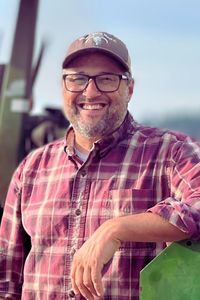
Ivan Maluski earned a bachelor's degree from the Lewis & Clark College. His career experience includes working as a farmer, rancher, and policy director.[1]
- Bachelor's:
- Lewis & Clark College
Campaign themes
Ivan Maluski has not yet completed [the profile publisher]'s 2026 Candidate Connection survey.
If you are Ivan Maluski, click here to fill out [the profile publisher]'s 2026 Candidate Connection survey.
Who fills out the candidate survey?
Any candidate running for elected office, at any level, can complete [the profile publisher]'s Candidate Survey. Completing the survey will update the candidate's [the profile publisher] profile, letting voters know who they are and what they stand for. More than 32,000 candidates have taken [the profile publisher]'s candidate survey since we launched it in 2015. Learn more about the survey here.
Help improve [the profile publisher] - send us candidate contact info.
Who are you? Tell us about yourself.
I am a farmer and rancher raising grass-fed beef, hay and other crops on my family farm near Scio, Oregon. I believe our rural communities deserve a state government that prioritizes the voices of the people over the influence of corporate lobbyists and special interests.
I have previous government experience, serving four years as an elected directer of one of Oregon's many rural fire protection districts, which gave me a strong understanding of how government must be responsive and accountable to the public while providing effective services within tight budgets. It also gave me great respect for our firefighters and other first responders.
I also have a history of passing bipartisan legislation in Salem, working for nearly a decade as the policy director for the non-profit group Friends of Family Farmers. There, I helped craft and pass legislation to establish Oregon's Beginning and Expanding Farmer loan program, to protect the Willamette Valley's valuable seed industry, to invest in local meat processing to support independent ranchers, and protect farmland from development.
Please list below 3 key messages of your campaign. What are the main points you want voters to remember about your goals for your time in office?
As state representative, I will protect our farmland, family scale farms and our rural quality of life. I am dedicated to supporting independent family farmers and ranchers, local businesses, consumer freedom and will reject attempts by big out-of-state corporations to buy up Oregon's farmland, water and forests at the expense of our rural communities.Health care costs are too high for working families. I will work to pass legislation that improves health care affordability and accessibility so that every individual and family in Oregon can receive the health care and medicine they need without worrying about the financial consequences. I believe health care is also a matter of personal freedom and privacy and that the government and politicians have no business standing in between people and their health care decisions.I believe a strong education system is the foundation for improving our communities and preparing children for the future. I support investments in early childhood literacy programs to set up our kids for success, investments in science, technology, engineering and math (STEM) programs throughout K-12, and more robust Career and Technical Education (CTE) programs so students can exit high school with technical skills and a strong work ethic. CTE programs should include agriculture, forestry, and land & water management programs to prepare them for careers in fields that are the backbone of our rural economies.
What areas of public policy are you personally passionate about?
Loss of farmland to non-farm uses like energy development and low density housing; monopolization of food production and land ownership; health care affordability; protecting the economic viability of small and mid-sized family farms and rural communities.
Is there a book, essay, film, or something else you would recommend to someone who wants to understand your political philosophy?
Federalist 10, by James Madison
What characteristics or principles are most important for an elected official?
Honesty, transparency, ethics, a commitment to the rights of all people, and responsiveness to the public are the characteristics and principles most important for any elected official. Elected officials should always put the interests of their constituents over the powerful lobbyists, big donors and special interests that seek to influence them.
What qualities do you possess that you believe would make you a successful officeholder?
I have experience developing and passing bipartisan legislation to help family farmers and promote rural economic development. I also have a proven commitment to effective, open government that serves the people.
What do you believe are the core responsibilities for someone elected to this office?
The most important job of a state representative is to listen to constituents and represent their interests when it comes to voting on legislation. This includes meeting with members of the public individually, as well as holding public meetings, to hear about their issues and concerns. A representative must engage in constructive dialogue with their constituents, especially when hearing conflicting views about issues, in order to come to the decision that best reflects the core issues of those they represent. They must also explain why they voted the way they did, especially for those who disagree with their decision.
What legacy would you like to leave?
Leaving my community and country better than I found it.
What is the first historical event that happened in your lifetime that you remember? How old were you at the time?
I remember the excitement around the US Bicentennial in 1976. I was only 5 years old at the time, but I remember all the flags, parades, and fireworks.
What was your very first job? How long did you have it?
I worked for two summers at the NORPAC vegetable cannery in Brooks, Oregon when I was 17 and 18 years old. That was my first real job with a paycheck.
What do you believe is the ideal relationship between the governor and state legislature?
The governor and state legislature should see themselves as co-equal branches that ideally cooperate in the best interests of the public. In many ways their responsibilities overlap. The governor is responsible for how state agencies prioritize and spend resources, as well as many executive appointments, while the legislature provides budgets for these agencies as well as oversight.
What do you perceive to be your state's greatest challenges over the next decade?
1) Addressing water supply and water quality issues in an era of increasing drought and extreme weather. Beyond just water, there will be a great need for investments in community planning and resilience efforts as wildfires, extreme heat, drought and other natural disasters grow in scale and scope.
2) Increasing the supply of housing and overall housing affordability while also preserving farmland from development. Affordable housing can help reduce income inequality as it creates a pathway for younger people and families to grown equity and wealth, as well as helping alleviate homelessness issues that have intensified in recent years.
3) Bringing down the costs of healthcare.
4) Expanding opportunities for young farmers and ranchers to access land even as land prices continue to rise and older farmers and ranchers age out.
5) Stabilizing state and local budgets caused by Oregon's volatile reliance on income and property taxes even as a greater share of budgets goes towards covering costs associated with the public employee retirement system (PERS).
Do you believe that it’s beneficial for state legislators to have previous experience in government or politics?
Yes. I think it is beneficial. Government works differently than private business. All government employees, elected or otherwise, are in a position of public trust and many swear an oath to the Constitution as part of their service. There is a greater need for transparency and disclosure, and a responsibility to the public when in government service than when operating in the private sector.
My four years as an elected rural fire protection district director gave me important experience with Oregon's open meetings and public records laws, and how to provide effective public services within a limited budget.
Do you believe it’s beneficial to build relationships with other legislators? Please explain your answer.
Yes, government is most effective when legislators work towards compromise to provide solutions for the benefit of the public. Such compromises are enabled through relationships and trust among legislators of different political backgrounds and ideologies. At a minimum, in Oregon it takes 31 members of the House to pass a bill 16 Senators, so even building a basic majority to pass legislation requires effective relationships with colleagues.
Is there a particular legislator, past or present, whom you want to model yourself after?
In Oregon, former state legislator and one-time State Treasurer Ben Westlund. Westlund served in the Oregon legislature from 1996-2006 as a Republican and later became an independent, before becoming a Democrat and serving as State Treasurer. While I did not support every position Westlund ever took, during his time in the legislature, Westlund was known as a leader willing to come up with creative solutions to challenging problems, work across the political aisle, change his views when confronted with new information, and sometimes go against the grain of his own political party. He showed a level of independence and courage that is sorely needed in our hyper-partisan politics today.
Are you interested in running for a different political office (for example, the U.S. Congress or governor) in the future?
Not likely. If after serving in the Oregon House for at least 2-3 terms an opportunity to run for the Oregon State Senate in my district opened up, I would consider that.
Both sitting legislators and candidates for office hear many personal stories from the residents of their district. Is there a story that you’ve heard that you found particularly touching, memorable, or impactful?
Part of the reason I decided to run for office was to protect the community I live in A few years ago, a California-based poultry company owned by an East Coast private equity firm announced plans to bring multiple new industrial-scale poultry facilities to the area surrounding our small town of Scio, Oregon. These massive operations threatened the availability of water we use for irrigation, drinking water, air quality, health and rural quality of life for hundreds of local residents.
We ultimately defeated a number of these proposals by passing legislation at the State Capitol in 2023 to prevent these operations from using a loophole to access groundwater they had no right to.
During this three year ordeal, many personal stories were told. One came from a family whose tap water turned brown soon after the poultry company began digging a deep well to tap groundwater before they'd received any state permits for construction. Others were from parents worried about the health of their kids at a small rural school located a few hundred feet from what would have been eleven 1/4 mile long poultry barns blowing dust laden with chicken manure. The stories and their very real fears were heartbreaking.
But in the end, our community's ability to get organized and stop these proposals through the passage of state legislation was also inspiring. And a reminder of why we need good state representatives looking out for the best interests of our communities and not big money out-of-state interests looking to take advantage of us.
Should the legislature oversee or grant the use of emergency powers?
It depends. Our legislature in Oregon meets for 6 months in odd number years and 1 month in even numbered years. Emergencies do not limit themselves to these time frames and so many emergency powers are delegated to the Governor for that reason. The legislature can and does use 'emergency clauses' on many pieces of legislation to allow them to go into effect immediately upon passage as opposed to January of the following year. Sometimes this is practice is appropriate, other times it is abused.
What is the first bill you would introduce if elected?
I would introduce a bill to limit non-farm uses on farmland in Oregon, with a focus on limiting industrial energy siting.
What organizations or individuals have endorsed your campaign?
To get on the ballot as an unaffiliated candidate, I collected over 500 signatures from community members who support my campaign.
What committees interest you?
Agriculture, Land Use, Natural Resources, Environment, Energy, Ways and Means/Budget
What are your views on financial transparency and government accountability?
I am a strong believer in government accountability and transparency. Despite Oregon's public records and open meetings laws, it can be very challenging for average people to find information on state agency spending and budgets, or hold government agencies accountable when they make bad decisions. It is the job of the State Legislature to provide oversight of state agencies to ensure they are effective with their spending, provide transparency to the public, and are held accountable for bad decision-making.
Do you support or oppose changes to the current state ballot initiative process? If so, what kind of changes would you consider?
I do not support major changes to the current state ballot initiative process. Oregon's ballot measure process is imperfect, but direct democracy is important. Except for Constitutional amendments adopted at the ballot box, the legislature always has the ability to make fixes to ballot measures if such fixes are needed, and can also refer ballot measures to the voters to fix problems if it appears that voters no longer support a ballot measure they might have in the past based on it's actual impact.
On the 2026 ballot
Links
Compiled from the candidate’s published profile as of September 30, 2026.
Source(opens in new tab)