Background
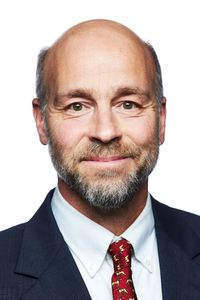
Hugh McTavish earned a bachelor's degree from Carleton College in 1984, a Ph.D. from the University of Minnesota in 1992, and a law degree from the University of Minnesota in 2001.[1] McTavish's career experience includes founding COVID Sanity and working as its executive director, a biochemist and immunologist, a patent attorney, and the CEO of IGF Oncology, LLC, and Squarex, LLC.[2]
- Law:
- University of Minnesota, 2001
- Ph.D:
- University of Minnesota, 1992
- Bachelor's:
- Carleton College, 1984
Campaign money
- Raised
- —
- From individuals
- $0
- From PACs & party
- $0
- Own money
- —
FEC filings.
View on FEC.gov(opens in new tab)Campaign themes
Hugh McTavish did not complete [the profile publisher]'s 2026 Candidate Connection survey.
Video for [the profile publisher]
Video submitted to BallotpediaReleased Jul 17, 2022
Who are you? Tell us about yourself.
I am a Ph.D. biochemist, patent attorney, inventor, entrepreneur, and author. I have started two pharmaceutical companies off my own inventions. I have 21 U.S. patents, 18 scientific journal articles, have authored three books, and have started two pharmaceutical companies off of my own inventions.
Like all of us, I have had adversity in my life, and I try to turn those events for good. When I got cancer, I invented a better cancer drug and started a company around it. When Gov. Walz locked us in our homes for 6 weeks and thereby drove me and 1 in 5 of us into depression, I took that adversity as fuel and started a nonprofit COVID Sanity and wrote a book COVID Lockdown Insanity to document the harms of the lockdown response to COVID, especially the huge increases in depression, drug abuse, and deaths of despair, and how vastly those harms exceeded the benefits.
Easily my greatest invention is what I call “Jury Democracy,” and that is the reason I am running for office. It can transform the way we do government, entirely for the better.
Please list below 3 key messages of your campaign. What are the main points you want voters to remember about your goals for your time in office?
Jury Democracy. Empowering the people. I will call juries of 500+ randomly selected citizens to the capital to listen to the arguments and evidence from both sides on one bill or proposal, break into small groups of 12 to discuss it, and then vote by secret ballot. Every bill to become law and every important decision will require the approval of a citizen jury. Effectively, I will not be Governor, WE ALL WILL BE! Decisions will be made: (1) By reason and evidence instead of money and influence (2) By civil discourse instead of division and screaming at each other (3) By all of us, instead of by politicians and bureaucratsGovern with the goal of happiness, instead of GDP growth. We will measure and track happiness, depression, and loneliness as carefully as we now measure economic statistics. Toward that end I propose (1) Replace the mask mandate with a Name Tag Request. Ask that all of us wear name tag that says “Minnesota Nice” and your first name on it. It will promote connection and be a reminder to be nice. (2) The “Minnesota Siesta.” I will ask all of us to take a 15 minute walk outside once a week at 2 pm on Thursdays. This also will promote connection and happiness and exercise and being outside.Rewild Minnesota and share the planet with wild species. Sharing is a value we should have learned in kindergarten. I propose that over a 50-year period we rewild 50% of the land. We return it to nature and to the primary use of wild species. I want buffalo roaming wild, abundant native prairie, and wolves, cougars, and bears restored to their native range over 50% of the land. This is economically feasible, but it is only possible with Jury Democracy for reasons explained at McTavish4MN.org.
What areas of public policy are you personally passionate about?
I am most passionate about Jury Democracy. It is easily the greatest invention of my life and the most important thing I will ever do. It will totally transform the way we do government. It will give real power to all of us, to ordinary people. It will give perfect proportional representation. The poor and middle class will have real power and representation. Young people, minorities, and women will all have power and representation proportional to their numbers—all without quotas or affirmative action. It will unite us and calm our divisions. When you deliberate with other jurors with different life experiences, you will find that you learn from each other, like each other, and agree far more than we have been told. And it will be making policy based on evidence, reason, and civil discourse, instead of money, influence, and division.
In addition to happiness and the environment, I am passionate in my opposition to the COVID lockdown response. This was one of the worst public policy disasters in history—it destroyed education and childhood for 2 years, threw 1 in 5 of us into major depression, threw 16% of workers out of their jobs, took small businesses from their owners without compensation, massively infringed our liberty, and created a crime wave, all without having any apparent effect on COVID cases or deaths.
Who do you look up to? Whose example would you like to follow, and why?
Martin Luther King, Jr., is my greatest hero. I admire most all those in history who have had the courage to stand up for what they believed to be right and suffer consequences for it, including Martin Luther, Rachel Carson, Medgar Evers, Mahatma Gandhi, and Nelson Mandela. My favorite writer and philosopher is Henry David Thoreau.
What qualities do you possess that you believe would make you a successful officeholder?
I am a problem solver and an independent, outside-the-box creative thinker. I have done that throughout my life. I invented a way to harness the green plant photosynthetic system to harvest renewable energy and invented new drugs for cancer and cold sores by outside-the-box thinking. That quality has served me with my invention of Jury Democracy. It solves the problems of division in our society and government; governmental paralysis; corruption and the problem of influence and campaign finance controlling our government; and strict limits on what is acceptable to debate made by the elites, media, tech giants, and moneyed interests. All sides will have access and the ability to get a hearing for their ideas. Then the ideas will be judged on the merits based on evidence and reasoning. And they will be judged by all of us, talking with each other after being fully informed in a fair hearing.
In addition to being an independent thinker, I am good at fairly evaluating evidence and not believing what I am told just because it comes from those in power. I learned that as a scientist. You evaluate ideas based on data and evidence, not who says them. That served me to realize what a disaster the COVID lockdowns would be and have been. The media and elites told us "we had no choice" and the lockdowns saved many lives. Of course we always have a choice, so that part is nonsense. And the media and government did not apparently consider the possibility that the lockdowns would kill people by driving up suicides and deaths of despair, as well as murders and cancer deaths. But I could see that possibility and wrote that it was certain to happen and likely that the time of life lost from those we effectively decided to kill by driving up deaths of despair and other deaths would exceed the time of life saved in prevented COVID deaths. Data shows I was right.
What legacy would you like to leave?
Jury Democracy. I hope people remember me as the father of Jury Democracy. It is not important whether I am remembered, but I would like to see Jury Democracy be implemented and spread around the world.
What is the first historical event that happened in your lifetime that you remember? How old were you at the time?
I think Apollo 11 and Neil Armstrong landing on the moon. I was 7 at the time.
What was your very first job? How long did you have it?
I worked in a veterinary clinic and literally shoveled poop and loved it. I had it for a year or two.
Under what circumstances should the governor of your state be able to use emergency powers?
Only if we are invaded by Iowa.
Campaign website
McTavish's campaign website stated the following:
Jury Democracy or Government by Informed Consent
“Effectively, I will not be governor—WE ALL WILL BE! I will give the power to you!”
What would be the characteristics of an ideal government? It would produce decisions in this way:
Decisions made by every citizen, not just by a single dictator or president and not just by a small number of representatives or the elites of society.
Decisions made with full information and after careful consideration of all evidence and arguments and with respectful, open-minded discussion about the decision among the decision makers; not made based on snap emotion or limited and biased information.
Decisions made by consensus where possible and not be 51% imposing their will on 49%.
Obviously, our current system falls short of these goals. But that is necessary, right? We do not have time for everyone in society to stop their lives to carefully consider all the evidence on every issue that our government has to decide.
Does it have to be this way? Can we achieve a better government?
Yes, we can. The way is a new idea I call Jury Democracy.
Jury Democracy is a system of government of having large juries (about 500 to 2,000 persons) of randomly selected citizens, where the juries constitute statistically valid samples of the citizenry or voters, make policy decisions for government after seeing full informed debate on the policy, being given full information for and against the policy, and fully deliberating and discussing the decision with equally informed citizens in the same jury.
For bills enacted into law, the jury can replace one house of the elected legislature or be added as an additional house of the legislature or replace the elected legislature entirely, so every law to be enacted must be approved by a citizen jury. The jury would hear full debate from both or all sides on a proposed bill, be given all the facts and information for and against whatever bill is being considered, just like a jury in a civil or criminal trial is given, be given the required time to read the bill in full (which would already make them better informed than most legislators or congresspeople), then break into smaller subgroups of 12 persons and deliberate and argue for and against the bill under consideration within that subgroup of 12, and then each juror would vote in secret for or against the bill, with a vote in favor of 55% required for passage of a bill. A 55% requirement for passage would insure at least majority support had one been able to convene every voting-age citizen or registered voter into the jury for the same deliberations because it would be outside the statistical margin of error, which would be less than ±5% with a group of 500 or more.
Each jury would be called for just one vote or issue and serve for only the time needed to consider that vote or issue, which in most cases would be only one or two days. In this way, each citizen would be invited for this jury service no more often than once per year. Probably we should shoot for about once ever four years to not burden people too much. Participation would be voluntary.
In addition to considering bills to be passed into statutes, as the legislature does, large citizen juries can also consider and decide proposed regulations and regulatory decisions, as the executive branch does, and can supersede or constitute the supreme court to decide judicial decisions and the constitutionality of laws, as the judicial branch does.
Jury Democracy is an improvement on traditional elected representative democracy because:
Decisions are made based on reasoned debate with both or all sides being given the opportunity to make their case regardless of their wealth and power. Thereby, decisions are uninfluenced by campaign finance or the biases of the media.
Jurors will have to read and attend full debate on the bills they vote on, whereas elected legislators often do not have time to even read the bills they vote on and have already made up their minds on most issues so they do not attend or consider debate.
All segments of society are proportionally represented in the decision-makers, including especially the young and the poor and middle class, as well as women and ethnic minorities, without any need for quotas or affirmative action.
Each separate policy enacted has majority support because it is voted on separately. In contrast, with representative democracy a voter votes for a candidate of a party and likely agrees with only some of the policies supported by that candidate or party. Thus, the winning candidate or party enacts many policies that do not have majority support.
Jury Democracy is an improvement on referendum and initiative because:
Decisions are made based on reasoned debate, uninfluenced by campaign finance (in this case finance for and against the issue instead of finance for a candidate) or the biases of the media.
Decisions are made based on full information and due deliberation rather than snap emotion. Everyone voting in a jury has sat through full debate and has been asked to and given time to read the bill, regulation, or decision being proposed, and then discussed it with 11 other equally informed citizens before voting. In a referendum, the voter likely saw just one 30 second commercial by only one side on the issue, in some cases not even that, and then makes a snap judgment based on no more than one paragraph written on the ballot.
The proposal can be whatever length is necessary with full details, even a 100-page bill or longer, whereas a referendum needs to be described in no more than 3 or 4 sentences, which requires that it be dumbed down and that numerous details be left undecided to be determined later by the legislature, governor, or unelected bureaucrats, and influenced by money and back-room dealing.
My other name for Jury Democracy is “Government by Informed Consent” because every decision is made and enacted only if it has the consent of a majority of citizens after the citizens have been given full information and taken the time for full consideration of the decision. In other words, no policy (statute, regulation, regulatory decision, or final judicial decision) can be enacted without the informed consent of a majority of the citizens the policy is being imposed on.
As Governor, before I sign any important or controversial bill into law, I will submit it to a citizen jury of at least 500 people. If the jury approves the bill, I will sign it into law; if it rejects the bill, I will veto it. Effectively, I will not be governor—WE ALL WILL BE! I will give the power to you!
I will also submit my own bills to juries for consideration and invite non-profits and interest groups of all political persuasions to draft bills and submit them to juries for consideration. We should also have every elected legislator, whether in the majority or a minority party, have the right to submit a bill to a jury once during every 2-year period. All types of ideas can be considered, no matter how far outside the box or outside what is deemed acceptable opinion by our elites. Collectively, we have an enormous number of great ideas out there! Let’s give them a hearing!
I will also use a large jury and have its decision be binding for every important regulatory decision. Do we allow a wolf hunt? I believe absolutely not! But I am willing to submit it to a citizen jury and be bound by its decision. Do we allow a copper-nickel mine to be developed and potentially (in reality, certainly) pollute our surface waters and ground waters for centuries, whether the Boundary Waters or Lake Superior, or other waters? Again, I would say no. In fact, I would say “over my dead body.” But I would have a jury hear the issue. I am confident it would reach the right decision.
The Lockdown Response to COVID Was a Mistake.
In addition to destroying education for our children and young people, throwing over 300 people into major clinical depression and 127 people out of their jobs for every 1 COVID death prevented, and being the largest impairment of our freedom since slavery, lockdowns killed more Americans than they saved.
Lockdowns caused more loss of life (lost person-years of life) from the deaths they have caused (mostly ncreased suicides, drug overdose deaths, alcohol deaths, and increased murders from the increased crime) than they have saved in prevented COVID deaths. I estimate 5 times the loss of life. The median person dying of COVID is an 84-year-old in a nursing home with less than one year to live. The median person dying of suicide or drug overdose is a 42-year-old with 38 years of life left. But we decided as a society to increase suicides and drug overdose deaths in order to reduce COVID deaths. I say we decided to increase suicides and drug overdose deaths because that effect was entirely predictable and was in fact predicted by me and others. The CDC now confirms that by a report that in 2020 we lost 1.5 years of life expectancy but only 1.1 years was due to COVID, meaning the lockdowns caused 0.4 years of life expectancy loss. We deliberately decided to inflict on ourselves deaths resulting in 0.4 years of life expectancy loss, which is to say an increase of about 40,000 suicides and drug overdose deaths and murders in 2020 alone, in a (failed) attempt to reduce COVID deaths. We decided to kill young people (including driving some children to suicide) to try to save 84-year-olds in nursing homes. The excess deaths caused by the lockdowns will be more than the number of U.S. deaths in the entire Vietnam War.
You might also be interested to know that we lose more time of life to suicides every year than we did to COVID in 2020 or 2021 and more time of life to drug overdoses than we did to COVID. But we decided to increase deaths from the greater risks to decrease deaths from the smaller risk.
In addition, and worst of all, we threw 1 in 5 Americans into major clinical depression by the lockdowns. The percentage of the U.S. population suffering from major depression (excluding mild depression) went from 8% in 2019 (already the highest of any society in human history) to over 27% during the lockdowns. I consider time spent depressed to be lost time of life. The lost time of life from time spent depressed that we decided to inflict on ourselves is at least 30 times the time of life saved in prevented COVID deaths, even if the lockdowns prevented 200,000 COVID deaths, which they almost certainly did not.
Note that I have not mentioned money or loss of freedom, just deaths and unhappiness. I could also add that by the lockdowns we decided to kill more than a million people worldwide from hunger.
Chapter 11 (from my book COVID Lockdown Insanity)
The Trolley Dilemma: Do We Switch the Train From Track 1 to Track 2?
Philosophers have a thought experiment known as “The Trolley Dilemma” that is illustrated by this diagram.
Imagine there is a trolley or train coming down the track and below it on the track, in this diagram, three people are tied to the track who will be killed by the train. But between the train and where the three people are tied to Track 1, the lower track in this diagram, there is a fork in the tracks and a switch, and you are standing at the switch and you could pull the switch to divert the train to Track 2, the upper track in this diagram, to avoid having the train run over the three people tied to track 1 and save their lives. Unfortunately, however, there is a different person tied to Track 2 who will be killed if you pull the switch and who would not have been killed if you did not intervene. So you would be responsible for that person’s death, whereas you could argue you would not be responsible for the deaths of the three people on Track 1. Do you pull the switch?
This is figuratively what we have done with COVID. The train of COVID was coming down the tracks and it was going to kill some people from COVID if we did nothing. So we decided to intervene with our lockdown response to divert the train to Track 2 to avoid those COVID deaths. But we forgot, or more accurately, refused to acknowledge, that there were people tied to Track 2 who were harmed, and in some cases killed, by that decision.
The tables below show the choices we had, and still had throughout the year+ of lockdowns, between Track 1 and Track 2, as I have calculated them in Chapters 2-9. The numbers between Track 1 and Track 2 are normalized to one person on Track 1 whose COVID death our policies averted from the 200,000 COVID deaths (or zero to a maximum of 400,000 deaths) I estimated in Chapter 3 may be averted by the lockdowns. (So in the table for Track 2 we have fractional people; if you do not like to think of fractional people you could multiply the numbers in both tables by 10 or 100 or 1,000.)
Now that we know what these numbers are, and once we knew these numbers by about the summer of 2020, is it and was it ethical to continue to pull that switch and continue to pursue the lockdown approach and continue to run over the people tied to Track 2?
It is important to emphasize again that none of these bad outcomes on Track 2 were caused by COVID—they were caused by our response to COVID. They were caused by the lockdowns. We did not have to take the approach we took. We could have educated people about their actual risk of death if they become infected with SARS-Cov-2, and then let them make their own decisions about whether they want to isolate themselves to reduce their risk of being infected, wear a mask, etc. That is the approach Sweden took, and they had fewer deaths per capita than us (Chapter 1) and had almost none of the other collateral damage we suffered of increased unemployment, depression, suicides, and general unhappiness.
My moral code says it cannot be justified to cause 19.3% of the population to become clinically depressed in order to extend life by 1 day on average. It should also be noted that the people we have imposed the sacrifices on are not the people at risk of dying from COVID. So we ordered some people to sacrifice to benefit others.
In fact, we decided to kill some people, almost all of them young or middle aged, by driving them to suicide or drug or alcohol deaths, in order to extend the lives of other people, almost all of them old and in poor health and with little life expectancy left. All of the costs listed were entirely predictable and were in fact predicted, so we decided as a society to inflict those harms in order to save the lives of other persons from COVID.
One of the worst parts is that when the people we have killed or harmed who were tied to Track 2 object to the decision to harm them to try to save the lives of some elderly people from death by COVID, we self-righteously scream at them that they are selfish. When people have lost their jobs or their businesses because their restaurants were ordered closed, they are shouted down that they have no right to complain when others are dying of COVID. The same happens when parents or university students complain that schools are closed and they or their children are being denied an education and the right to simply live their lives. The millions we have driven into major depression mostly don’t object or complain because they are too beaten down at this point to object and afraid that if they object people will like them even less than they do now. The people who have killed themselves, of course, are no longer around to object, and those contemplating killing themselves are too beaten down to object.
I am here to say that the people tied to Track 2 that we decided to run over by diverting the train from Track 1 have every right to object. Their lives are every bit as valuable as the elderly who are dying, like all of us will die, from, in this case, pneumonia caused by a natural virus
I would not have pulled that train switch. I think it was immoral to do so. Knowing what we know now, I would not continue to keep that switch pulled. I think even more clearly it is immoral to continue to keep that switch pulled.
Why we might have chosen lockdowns
Looking at this table it seems pretty obvious to me that the outcomes on track 2 are worse than those on track 1. And these harms were predictable. We knew the lockdowns would cause massive unemployment. We knew the social isolation we were mandating and the unemployment would lead to massive increases in depression and suicides. We obviously knew we were impairing education and harming young people by closing their schools and universities. And the experts, although perhaps not the public, knew at the very beginning of this that the infection fatality rate was less than 1% and probably less than 0.5%, so the number of deaths we have had is not much of a surprise, and even if we thought the restrictions would nip COVID in the bud and we would have almost no COVID deaths, the number of deaths prevented would only have been about five times the 200,000 I am estimating here, and therefore the harms of our policy would still have exceeded the benefits. And very soon into the spring lockdowns it was very clear the policies were not going to eliminate COVID deaths, so at that point the most you could hope for is maybe the restrictions would prevent 600,000 COVID deaths or three times the number in Track 1. Again, it should have been obvious at that point that the harms would have vastly exceeded the benefits of preventing those deaths. So why did we persist in our lockdown approach and persist in pulling the switch and running over the people tied to Track 2?
I think the answer is human psychology. We were faced here with two bad choices. People would die from COVID or people would die from suicide and have their lives ruined for a period of time with clinical depression. We were faced with a choice between bad and worse, not bad and good. We are not good at facing that. We have all been raised on movies where the good guy beats astronomical odds to escape and save the day. We hoped against hope that somehow that would happen here, and we have kept hoping even to this day, when the evidence is very clear that it has not happened and will not happen and that our approach has been a disaster and caused vastly more harm than it has prevented.
We need, and needed, to be adults and realize that sometimes bad things happen and the best thing to do then is move on and try not to make things worse.
From the Conclusion
It is not a matter of legitimate disagreement whether the lockdowns were a mistake. It is not a matter of legitimate disagreement whether an approach of no mandatory restrictions at all, but just educating people on their risk from COVID and on what modifications to their behavior would reduce that risk and then letting them decide for themselves whether and how to modify their behavior, would have been a better approach than lockdowns. Lockdowns have no advantage at all. If you think life is better than death, a long life is better than a shorter life, happiness is better than depression, more money is better than less, education is better than ignorance, child abuse and domestic abuse are bad things, and more personal freedom is better than less, then you agree the lockdowns were a mistake.
How this ties into Jury Democracy
With Jury Democracy, I or someone would have been able to make the arguments above to a jury. When a jury had to choose between the harms in Track 1 and Track 2 in the table above, no jury would choose Track 2 and the lockdowns. Ordinary people would not make the collassal mistake that the elites and experts made in choosing lockdowns. One of the things the lockdowns have proven is that experts make terrible, terrible decisions. Ordinary people could not possibly have done worse.
One of the reasons the experts made these terrible decisions is groupthink and peer pressure. It was very clear to everyone in government and academia and the public health community which way the wind was blowing and what was the "right" position you were supposed to take. And it was clear that to oppose lockdowns would be career suicide. A jury would not be prone to that problem. Their votes will be secret and their careers will not depend on how they vote.
Another reason we have continued to inflict lockdowns on the public long after all the evidence showed this was inflicting vastly more harm on society than benefit is the inability of our leaders to admit a mistake. That is human nature. When you have taken a public position, it is hard to admit you were wrong. But that will not be a problem with juries. Even if one jury initially decided to impose lockdowns, a later jury would be open to the evience this was a mistake and would not be afraid to change direction because it was not them who had imposed lockdowns--it was a previous jury. So they would not be wedded to the original answer and unwilling to see it was a mistake.
Governing with the Goal of Happiness
Our real goal in life is happiness. Promoting happiness should be the primary goal of government,
On the 2026 ballot
Links
Compiled from the candidate’s published profile as of September 30, 2026 and FEC filings.
Source(opens in new tab)