
Background
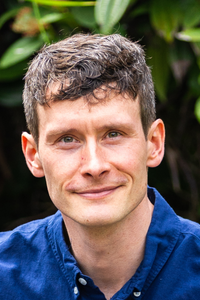
Greg Nance graduated from Bainbridge High School in 2007. Nance earned a bachelor's degree in political science from the University of Chicago in 2011 and a master's degree in management from the University of Cambridge in 2012. His career experience includes working as a nonprofit professional and a youth mental health advocate. Nance co-founded Moneythink and has served as its chairman, on the board of Kitsap Mental Health Services, and on the board of MakerGirl.[2][3]
- Graduate:
- University of Cambridge, 2012
- Bachelor's:
- University of Chicago, 2011
- High school:
- Bainbridge High School
In their own words
Who are you? Tell us about yourself.
I grew up in Kitsap, attended public schools here, and worked as a landscaper, house painter, and firewood splitter to pay my way. After earning degrees at UChicago and Cambridge as a Truman and Gates Scholar — and along the way co-founding Moneythink, an organization recognized by President Obama as a Champion of Change — I came home, because this is where I belong.
My wife and I are raising our daughter in the same community that raised me, and I would not have it any other way. I am a third-generation Washingtonian with deep Kitsap roots.
I serve as State Representative, sit on the House Transportation Committee, and co-chair the Maritime Caucus. Outside the Legislature, I lead a nonprofit focused on youth mental health, work that is deeply personal to me. I overcame teenage struggles with alcohol and have been sober for over 14 years. I ran 3,156 miles from the Atlantic to the Pacific to mobilize champions for youth mental health because I know firsthand that young people deserve better.
I learned the values of hard work and service in a strong union home. My mom was a social worker and my dad helped found the Seattle Public Defenders Union. My grandpa was a Marine who served at Iwo Jima. I am fighting every day for families like the one I grew up in.
Please list below 3 key messages of your campaign. What are the main points you want voters to remember about your goals for your time in office?
I grew up here, went to school here, and have spent every session fighting for this community. Working together, we helped secure nearly $1 billion for ferry construction, maintenance, and workforce because Kitsap can't function without reliable ferries. I have also worked across the aisle when it matters and built a broad coalition rooted in this community, including the Suquamish Tribe, the Port Gamble S'Klallam Tribe, and the Washington State Labor Council which represents 600 unions and half a million workers. This is home. That is why I show up every single day.I believe the government should make it possible for working families to get ahead, not just get by. I fought to secure $42 million to modernize West Sound Tech and our apprenticeship pipelines, starting from zero in state funding. I've invested in Olympic College's healthcare pathways so Kitsap families can access quality care without leaving the peninsula. I have voted to reform Washington's regressive tax structure and want to go further: exempting necessities like diapers and school supplies from sales tax, expanding the Working Families Tax Credit, and building more housing at every price point. I carry a 100% lifetime pro-labor voting record because I believe working people deserve a champion in Olympia.Kitsap is worth protecting — our water, our forests, and our way of life. I sponsored the Bull Kelp Act, now signed into law, to protect the marine forests that endangered salmon and orca depend on. I helped protect 680 acres of Kitsap Forest from clearcutting and passed legislation protecting our communities from wildfire. I've voted to defend immigrant families and vulnerable kids through the Immigrant Workers Protection Act. I passed first-in-the-nation legislation supporting construction workers facing addiction and behavioral health challenges. And I have championed children's health, reproductive rights, and mental health investments every session. I want future generations to feel as proud to call Kitsap home as I do.
What areas of public policy are you personally passionate about?
I care most about making sure working families can afford to live here and that Kitsap kids have real pathways to good careers. Investing $42 million to modernize West Sound Tech was one of the proudest moments of my time in Olympia because it means young people from all backgrounds can access real career training in advanced manufacturing, maritime, and healthcare without leaving home or taking on debt. I also fight hard for our ferries because Kitsap can't function without reliable connections to the rest of the state. Lastly, I fight for Puget Sound because we need clean water and healthy salmon runs. At the end of the day, I want Kitsap to be a place where working families can stay, build something, and be proud to call home.
Who do you look up to? Whose example would you like to follow, and why?
I think about leaders who combined big vision with real results: Lincoln holding a divided nation together, Roosevelt taking on entrenched interests to protect public lands and working people, Obama showing that a kid from outside the establishment could change the course of history.
But honestly, the leader I think about most is my Grandpa Charlie. He stormed the beaches at Iwo Jima, came home, raised a family, and never stopped learning or growing. He was principled without being rigid and tough but also kind. As a father, a grandfather, and a man who showed up for the people he loved, he never sought the spotlight. He just did the work.
That's the example I try to follow every day: in Olympia and at home with my wife and daughter.
What characteristics or principles are most important for an elected official?
Showing up for the people you serve, not just in election season. An elected official has to listen more than they talk, work across the aisle when it matters, and never lose sight of whose lives are actually affected by the decisions being made in Olympia.
I would also add integrity. Do what you say you're going to do. Vote your values even when it's uncomfortable. And when you get it wrong, own it.
Lastly, public service is a trust. The moment you start optimizing for your own career instead of your constituents, you've broken it.
What do you believe are the core responsibilities for someone elected to this office?
The core responsibilities are straightforward: pass a budget that reflects our values, fight for your community, and be genuinely accessible to the people you serve. I have hosted over twenty town halls in my first term because I believe representation means listening, not just legislating. I would also add two things: honesty and results. My constituents deserve to know what I am doing in Olympia, why I voted the way I did, and where I stand. At the same time, showing up is not enough. I measure my work by what actually changes for Kitsap families, whether that is ferries that run on time, forests that stay standing, or children having real pathways to good careers.
If the people you represent are better off because of the work you have done, then you have done your job well.
What legacy would you like to leave?
Ferries that work, forests that are protected, kids who have real pathways to good careers, and, perhaps most importantly, families who can afford to stay in the communities they love.
What was your very first job? How long did you have it?
My first jobs were splitting firewood, landscaping, and roofing around Kitsap. I worked alongside people who showed up every day, did hard physical work, and didn't complain. That experience taught me more about dignity, grit, and what working families actually need better than anything I learned in a classroom.
What is something that has been a struggle in your life?
Growing up, money was tight. I wore hand-me-downs and we filled the gas tank only halfway to save money. I worked through school and watched my parents navigate a system that was not built for working families. Then as a teenager, I struggled with alcohol. Getting sober, over 14 years ago now, was the hardest and most important thing I've ever done. It's why I lead a nonprofit focused on youth mental health and addiction recovery, and why I ran 3,156 miles from the Atlantic to the Pacific to mobilize champions for this cause.
All of these struggles are not separate from my public service; they are the foundation of it. I want the next generation of Kitsap kids to have the support they need to excel, and I'll keep showing up every single day to make that possible.
What do you believe is the ideal relationship between the governor and state legislature?
The governor and legislature work best as partners with distinct roles. The executive sets the vision and implements policy, while the legislature represents communities, deliberates, and passes laws. When both branches communicate honestly and respect each other's responsibilities, the government works better for the people of Washington.
I have seen this firsthand through the bipartisan effort to secure nearly $1 billion for ferry construction and workforce investments, which required close coordination between the legislature, the governor's office, and Washington State Ferries.
So, my view is simple: the people of Washington deserve a government where both branches are pulling in the same direction on the things that matter most. Ego and institutional turf wars are luxuries we can't afford.
What do you perceive to be your state's greatest challenges over the next decade?
The cost of living. Childcare, healthcare, and housing, groceries, and gas.
Do you believe that compromise is necessary or desirable for policymaking?
Yes, and I would go further. Compromise isn't just necessary, it's a sign that democracy is working.
That doesn't mean compromising on core values. But the nearly $1 billion we secured for ferries, the Bull Kelp Act, and first-in-the-nation legislation supporting construction workers facing addiction all required building trust across the aisle. The best outcomes come when people with different perspectives find common ground around shared interests.
Compromise also requires confidence, not weakness. You have to know what you stand for before you can negotiate effectively. I do, and I will keep showing up to do the hard work.
What organizations or individuals have endorsed your campaign?
Washington State Labor Council (representing 600 unions and 500,000 members); Washington Education Association; Kitsap Firefighters (IAFF 437); The Suquamish Tribe; The Children's Campaign Fund; Planned Parenthood Alliance Advocates.
What was the first historical event that happened in your lifetime that you remember?
Bill Clinton's 1992 presidential victory. I was four years old, but I remember the energy in our house that night as CNN showed joyful crowds on TV. My parents were hopeful in a way I hadn't seen before. It was my first understanding that elections can change real things for families.
Greg Nance did not complete [the profile publisher]'s 2024 Candidate Connection survey.
On the 2026 ballot
Links
- Campaign X(opens in new tab)
- Campaign website(opens in new tab)
- Official website(opens in new tab)
- Personal website(opens in new tab)
- Personal youtube(opens in new tab)
- Official facebook(opens in new tab)
- Personal facebook(opens in new tab)
- Personal linkedin(opens in new tab)
- Campaign instagram(opens in new tab)
Compiled from the candidate’s published profile as of September 30, 2026.
Source(opens in new tab)