
Background
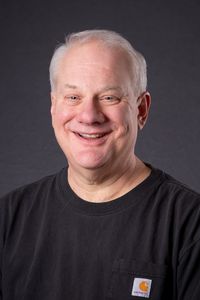
Greg Leman graduated from Peachtree High School. He earned a bachelor's degree from Wake Forest University in 1988. His career experience includes working as a technology consultant.[1]
- Bachelor's:
- Wake Forest University, 1988
- High school:
- Peachtree High School
In their own words
Who are you? Tell us about yourself.
I'm a software engineer, a small business owner, and a Montanan by choice. In 1991 I built the first real-time mapping system for 911 dispatch, and the basic design is still how those systems work today. I went on to spend twenty years in enterprise technology, including as a senior director at Oracle, and I've built and advised startups. I've always believed results matter more than rhetoric.
I moved to Montana in 2014 because I wanted what this state still has: independence, self-reliance, and neighbors who help each other because it's the right thing to do. I live on a gravel road in Gallatin Gateway, where I've served as president of our homeowners' association. Montana is the last best place because we still value the individual, the privacy of our homes, and the freedom to pursue our own prosperity.
I'm running for the State House because there's a gap between how hard Montana families work and how Helena operates. Our property tax system is punishing homeowners, and the state budget is growing faster than the people paying for it. Government should live within its means, and it shouldn't make it this hard to keep what's yours. Those are systems problems, and I've spent my life fixing that kind of problem.
I've never run for office before. I'm a neighbor who stepped up because government should stay a servant of the people, and somebody has to make sure it does.
Please list below 3 key messages of your campaign. What are the main points you want voters to remember about your goals for your time in office?
Government shouldn't make it this hard to keep what's yours. Montana's property tax system is punishing the people it should protect: homeowners, retirees on fixed incomes, and working families who've done nothing but stay put while their bills climbed. I'll work to fix the system, not just shift the burden from one neighbor to another. And I'll insist that Helena live within its means, because a state budget that grows faster than the people paying for it isn't sustainable and isn't fair. You earned it. You should get to keep it.I've spent my career building systems that have to work, starting with the first real-time mapping system for 911 dispatch. I'm bringing that mindset to Helena. Most of what frustrates Montanans about state government isn't ideology, it's bad design: permits that take months, agencies that don't talk to each other, and rules written for downtown Bozeman that make no sense on a gravel road. I'll cut red tape for small businesses and entrepreneurs, judge programs by whether they deliver, and hold the state to the standard I've held every project I've built. Results matter more than rhetoric.Nobody lives in this district by accident. We chose it, for the land, the privacy of our homes, and neighbors who stop with a tow chain in a snowstorm because it's the right thing to do, not because anyone told them to. I'm running to protect what you came here for. That means keeping our public lands open and well cared for, defending the Second Amendment, making sure the state support promised to rural emergency services actually reaches districts like ours, and keeping Helena a servant of the people, not a master of our daily lives. We don't need a bigger government to tell us how to be decent to each other. That's Montana common sense.
What areas of public policy are you personally passionate about?
I'm passionate about one thing above all: letting Montanans keep more of what they earn. That comes down to how the state taxes and how it spends.
On taxes, my focus is structural, not a one-time rebate that fades by the next cycle. I want a property tax system that's predictable and fair, one that doesn't punish a retiree on a fixed income for staying in the home she raised her family in.
I'm just as focused on clearing the bureaucratic barriers that stall our economy. I've spent my career building systems that have to work, and you don't fix a broken one by adding complexity. You fix it by streamlining.
That's the mindset I'll bring to Helena, whether it's speeding up housing permits or keeping spending in check.
Who do you look up to? Whose example would you like to follow, and why?
I look up to Bobby Orr. He's widely regarded as one of the greatest to ever play the game, but it's his character off the ice that left the biggest mark on me.
When I was a kid, I went to his hockey camp, and later ran into him outside an arena in Atlanta. It was a chaotic crowd, but when my friend and I said hello, he remembered our names and took the time to actually talk with us. I still keep the helmet he signed that day in my office.
That helmet is a daily reminder that everyone is important. Bobby Orr showed me that no matter how much you achieve, you never have to lose your humility or your connection to everyday people. If somebody that great could stay down to earth with a couple of kids, none of us has an excuse not to. That's the example I'll follow in office: door open, every voice heard, nobody overlooked.
What characteristics or principles are most important for an elected official?
The most important principles for an elected official are intellectual honesty, transparency, and a spirit of service. An official is a steward of a system that belongs to the people, not a gatekeeper who profits from its complexity.
A representative's mindset should be focused on simplification and outcomes. In my career building systems that have to work, I've learned the best solutions are the ones that remove friction for the user. In government, that means writing laws that make life easier for the citizen, not harder.
Being honest with people means being open about why a law is being proposed and who it actually benefits. We need leaders who go to Helena to solve problems for their neighbors, not to add red tape that requires a specialist to navigate. A service-first approach measures every vote and every bill by one standard: does this make Montana a better place for the people who live here?
What do you believe are the core responsibilities for someone elected to this office?
The core responsibility of a representative is to serve as a guardian of the people's rights and a steward of their resources. My job is to keep government within its constitutional lanes, so you have the freedom to manage your own life and pursue your own prosperity.
First, a representative has to show up and be accountable for every vote. That means being present in the district, listening to the people who actually live here, and being able to explain the reasoning behind each decision, in plain language, to anyone who asks. A vote you can't explain is one you shouldn't have cast.
Second, a representative has to put the district ahead of the noise in Helena. The people are the owners of Montana, and their representative works for them, not for a party, a caucus, or a lobbyist. My responsibility is to keep our state government transparent, efficient, and actually working for the families and businesses who call this place home.
What legacy would you like to leave?
I believe in the simple Boy Scout rule: leave a place better than you found it. I want to leave our state government more transparent, more efficient, and more respectful of the individual than it was when I got there.
I've spent my career building systems that have to work for the people who use them, and I want to bring that same mindset to Helena: a government that stays within its constitutional lanes and out of the way of your hard work and your family's prosperity. Not because government is the enemy, but because the fewer things it does badly, the more room you have to build the life you want.
I'm not looking to build a monument to myself in Helena. The legacy I want is simpler than that. I want the next generation of Montanans to inherit a state where the tax burden is lighter, the government is honest, and a young family can still afford to live, work, and raise their kids in the place their parents did. That's the Montana worth handing down.
What was your very first job? How long did you have it?
My first job was working the dock at my family's tourist business, I was a teenager, and I worked there every summer growing up. Over those years I moved up: dockhand, then cook, then hunting and fishing guide, and eventually a stint in the back office. By the end I'd done just about every job in the place.
Those summers taught me that business isn't a theory. It's service, hard work, and solving one problem after another, usually with a customer standing right in front of you.
They also taught me respect for tourism, which is a huge part of Montana's economy, and the value of an economy with more than one leg to stand on. The places that thrive long-term aren't the ones that depend on a single season or a single industry. I'm running to build an economy that works for the people who live here year-round, not just the folks passing through. We can still do big things in Montana if we're bold enough to reach for them.
What is something that has been a struggle in your life?
Pizza. I struggle with pizza.
But in all seriousness, my real challenge has been making sure my career never pulls me away from the values I learned on the dock as a kid. It's easy, in professional circles, to disappear into a world of logic and data and lose touch with the real concerns of your neighbors. I've had to work at staying rooted.
Here's what I've come to believe. Wanting to be the smartest person in the room is a trap, and it makes for bad leadership. The job isn't having the most sophisticated answer or the most complicated plan. It's the humility to listen, the judgment to tell who a decision really helps, and the willingness to do the unglamorous work that actually solves a neighbor's problem. Guiding hunters or writing software, the lesson was the same, you serve people, you don't impress them.
That's shaped how I see government. I don't want a cold administrative state that treats people like data points. I want one that's human-scale, runs on common sense, and works for the families who live here. Knowing the rules is the easy part, the state pays experts for that. Knowing what's right, and answering for your vote, is the job. That's the part that's actually yours.
What do you believe is the ideal relationship between the governor and state legislature?
The ideal relationship is two co-equal branches that respect each other's distinct jobs. The Legislature writes the laws and holds the purse strings; the Governor administers them and brings the veto to the table. Neither is the other's employee, and the system works best when both remember that.
What I'd push back on is the idea that the Legislature is the junior partner, there to be briefed by year-round departments and sign off on what the administration wants. It's the opposite. The Legislature is the branch closest to the people, and setting the direction of state government and keeping the executive within its constitutional lanes is our job, not the departments'. That's true no matter who's in the Governor's office or which party runs it. Oversight that only happens when you disagree with the other side isn't principle, it's just politics.
When the two branches do share goals, fiscal discipline, respecting the taxpayer, streamlining a bloated administrative state, that's a real chance to do big things together. But the Legislature's first loyalty is always to the people who pay for the government, not to the smooth running of the government itself. The goal isn't just an executive branch that manages itself efficiently. It's one that stays transparent and accountable to the citizens it answers to.
What do you perceive to be your state's greatest challenges over the next decade?
Montana's greatest challenge over the next decade is keeping the Montana dream within reach of the people who actually live and work here. Growth and rapid change are hitting us fast, and if we aren't careful, the cost of living here prices out the very families who built these communities. I don't want a Montana where the kids who grew up here can't afford to stay.
Most of that comes down to affordability, housing you can actually buy, a property tax bill that doesn't force a retiree out of her home, an economy with room for young families to get a foothold. The answer isn't more government programs. It's clearing the obstacles, slow permitting, outdated rules, a tax structure that punishes staying put, that make it harder than it should be for people to build their own prosperity.
We also have to grow without breaking what makes this place worth living in. That means infrastructure that keeps up, a budget that respects the taxpayer, and a government that gets smarter as we grow instead of just bigger. The economy is changing fast, technology is reshaping how we all work, and I've spent my career helping people adapt to exactly that kind of change. I'd rather we meet it early than get run over by it.
I'm an optimist, because I know we can still do big things here. If we're bold enough to reach for it, we can have a Montana where the economy is productive, our way of life is protected, and the next generation can afford to call this place home.
Do you believe that compromise is necessary or desirable for policymaking?
Compromise is essential. Anyone who goes to Helena unwilling to work with the other side is going there to make noise, not to get anything done for their district. I'll sit down with anyone, Republican, Democrat, or independent, to find a practical solution that actually helps the people out here.
In my career, I learned there's almost always more than one way to solve a hard problem. You can be flexible about the path and still be rigorous about the result. That's how I'll legislate: open on the how, focused on whether it genuinely makes life better for the families I represent.
Where I hold firm is on values, and I mean something specific by that, not a slogan. Faith, family, freedom, hard work, taking care of your neighbors, and keeping our public lands public and our environment clean. That's the Montana way of life, and I don't treat it as a bargaining chip. I'll compromise all day on how we fix a road or fund a school. I won't trade away the freedoms or the way of life of the people who sent me, because those were never mine to trade.
What organizations or individuals have endorsed your campaign?
Montanans for Limited Government, Montana Conservative Alliance
What was the first historical event that happened in your lifetime that you remember?
I remember the Apollo moon landing. Watching it as a kid left a permanent mark on me, about what people can do when they set a clear goal and refuse to settle for less than excellence. It was a triumph of the human spirit and a masterclass in problem-solving.
And here's what gets me: it isn't just history. This past spring, Artemis II carried a crew around the Moon and back, the first time astronauts have gone that far from Earth in more than fifty years. The landing comes next. That's proof our best days don't have to be behind us. We can still build, invent, explore, and lead, if we're bold enough to reach for it.
I carry that same optimism into this race. The spirit that put a crew back around the Moon, a clear goal, real work, no excuses, is exactly what I want to bring to Helena. Less talk, more building.
On the 2026 ballot
Links
Compiled from the candidate’s published profile as of September 30, 2026.
Source(opens in new tab)