
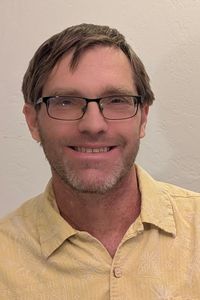
Background
Gary Swing was born in Willingboro, New Jersey. He earned a high school diploma from Friends School, Mullica Hill, a bachelor's degree from the University of Colorado, Boulder, in 1991, and a master's degree from the University of Colorado, Denver, in 1999. Swing's career experience includes working as a caregiver and neighborhood business association promoter. Swing has served as spokesperson for Best Democracy. Swing has been affiliated with the Unity Party of Colorado and the Jefferson County Green Party.[1][2][3][4]
- Graduate:
- University of Colorado, Denver, 1999
- Bachelor's:
- University of Colorado, Boulder, 1991
- High school:
- Friends School Mullica Hill
Campaign money
- Raised
- —
- From individuals
- $0
- From PACs & party
- $0
- Own money
- —
FEC filings.
View on FEC.gov(opens in new tab)In their own words
I'm just this guy, you know?
Freethinker and adventurer. "Triple Crown" backpacker. I thru hiked the Appalachian and Pacific Crest Trails, and I completed the Continental Divide Trail in sections. I also thru hiked the Arizona, Ouachita, Ozark Highlands, Alabama Pinhoti, and Lone Star Trails, completed the Colorado Trail, and spent six months tramping around New Zealand by myself.
I climbed all 637 mountains over 13,000 feet in Colorado, along with more than 500 other summits around the United States.
I'm a lifelong pacifist. I've been a vegetarian since 1986. Childfree by choice.
Perennial alternative party candidate. I was on the ballot seven times as a Green Party candidate between 1996 and 2018 - four times in Colorado, and three times in Arizona. I was also a Unity Party of Colorado candidate three times between 2020 and 2024. In 1998, I petitioned onto Colorado's ballot as a Pacifist Party candidate for US Senate.
I have a BA in Political Science and a Master's Degree in Political Science from the University of Colorado.
My work experience includes being a public policy research assistant at the Graduate School of Public Affairs in Denver, twenty years as a cultural events promoter (until that business was killed by the pandemic), US postal carrier, and produce receiver for a Whole Foods store.
I'm a former co-chair of the Colorado Coalition for Fair and Open Elections, and a fomer spokesperson for Best Democracy.
Please list below 3 key messages of your campaign. What are the main points you want voters to remember about your goals for your time in office?
Human rights first. Uphold the Kellogg-Briand Pact outlawing war. Abolish nuclear weapons. Reduce the military budget by 90%. Close all foreign military bases. Restrict the military to non-offensive defense of US territory. The US has no legal or moral authority for foreign military intervention. End all foreign military aid. Abolish the Selective Service System. Fund humanitarian foreign aid. Make ending world hunger a top priority.
Israel has committed genocide against Gaza. I support war crimes tribunals, reparations to the people of Gaza, and nonviolent conflict resolution.
The US must stop obstructing efforts by the United Nations to resolve international conflicts. End permanent membership and veto power on the UN Security Council.Elect a unicameral Congress by proportional representation to secure fair, inclusive multiparty representation in government. Abolish the US Senate and the Electoral College. End the imperial presidency. Adopt a parliamentary system. A prime minister with strictly limited authority would be selected by Congress, subject to removal by a majority vote of no confidence.
Impeach and convict Trump, Vance, and their entire cabinet.
Each generation should create its own constitution. Support a national initiative and referendum process, public campaign financing, campaign spending limits, and easy ballot access.Abolish ICE. Support “fair trade” policies and freedom of migration. No border wall.
Create a steady state economy based on environmental stability. Use pollution taxes to include environmental impacts in true cost pricing. Transition away from fossil fuels and nuclear energy to renewable energy sources. Protect public lands.
Medicare for all. Enact a universal basic income. Forgive student loan debt and subsidize higher education.
Subsidize family planning programs at all levels. Pass federal legislation to secure abortion rights.
Support the Universal Declaration of Human Rights.
What areas of public policy are you personally passionate about?
I have always considered war to be a crime against humanity. I have advocated for the abolition of war and the development of nonviolent resistance strategies as an alternative to war since 1985. I first became interested in the Green Party when I read that Green Parties in Europe were advocating for transition away from armed military defense to nonviolent "civilian-based defense" or "social defense."
I have been an advocate for proportional representation voting systems for legislative elections to secure fair, inclusive multiparty representation in government since 1993. I support the development of a new, modern constitution to replace the constitution that slaveholders designed to preserve slavery.
Who do you look up to? Whose example would you like to follow, and why?
People I look up to include abolitionist William Lloyd Garrison, civil rights activist Martin Luther King Jr., German Green Party co-founder Petra Kelly, South African President Nelson Mandela, and Palestinian nonviolent activist Mubarak Awad.
What characteristics or principles are most important for an elected official?
Empathy and compassion
What do you perceive to be the United States' greatest challenges as a nation over the next decade?
Ecological overshoot will be the greatest challenge facing the human race. Human over-population and over-consumption has greatly exceeded the sustainable carrying capacity of the Earth.
The greatest impact individuals can have in fighting climate change is choosing not to reproduce.
A carbon-footprint study of people in the wealthier nations of North America, Europe and Japan concluded that having one less child would reduce carbon emissions 20.2 times as much as living car-free, 39.9 times as much as switching to renewable energy and 71.5 times as much as eating a plant-based diet.
We are experiencing the sixth mass extinction of animal species due to human ecological impact. Humanity has killed off about 73% of the global wildlife population of mammals, birds, reptiles, amphibians and fish since 1970. At the same time, world human population has increased from 3.7 billion in 1970 to 8.3 billion today.
About 83% of all wildlife mammals have died off since the dawn of agriculture. Farmed poultry now accounts for 70% of birds worldwide. Mammal life is now 60% livestock, 36% people and 4% wildlife.
Climate change is a consequence of ecological overshoot. Too many people consume and pollute too much.
If the average person on Earth consumed as wastefully as the average resident of the United States does today, the Earth could not sustain a human population of more than 1.5 billion people.
Meanwhile, 815 million people suffer from chronic hunger.
The number of people that is “sustainable” depends upon the average standard of living. More people means more widespread poverty.
Sustaining life on Earth means reducing both human birth rates and per capita ecological footprints.
Transitioning to an environmentally sustainable economy is essential. But it’s also essential to recognize that life on Earth exists within narrow planetary boundaries. I’m concerned about the delusion that there is some technological fix that would enable a modern industrialized society of eight billion people or more to be sustainable in the long term. There isn’t. Today, it would be possible to eliminate world hunger in a world of eight billion people. Fifty years from now, topsoil erosion would probably make it impossible to feed eight billion people.
Agriculture is the primary driver for the loss of biodiversity. Agriculture is the primary threat to about 86% of the identified species now at risk of extinction.
Today, people and livestock have displaced 96% of the biomass of global wildlife mammal species. People account for 36% of global mammal biomass. Livestock accounts for 60%. Wildlife only accounts for 4% of global mammal biomass.
The mass of plastic now outweighs the biomass of all animal life on Earth. The mass of human-made material is now greater than the biomass of all plant and animal life on Earth.
Human beings are just one out of millions of species on Earth. We are part of an interdependent web of life. The Earth doesn’t belong to us. We just live here. If every person on Earth consumed as much as the average person in the United States does now, the Living Planet ecological footprint studies estimate that the Earth could not sustain a human population of more than one and a half billion people. William Rees, the originator of ecological footprint analysis, estimates that the Earth could sustain a maximum human population of somewhere between one and two billion people with a reasonable standard of living if people in wealthy industrialized reduce their per capita ecological footprints by about 75%. We have been in a state of ecological overshoot since about 1970. The ecosystem cannot sustain the environmental impact of human overpopulation and over-consumption. It’s not a question of one or the other. It’s both. People in wealthy, industrialized nations have a much higher environmental impact per capita. However, higher population numbers mean more widespread poverty and more economic equality.
A livable, sustainable world would require both a rapid reduction in ecological footprints and reduced birth rates to get back to the human population levels of 100 or 200 years ago. Maintaining a global fertility rate of no more than 1.5 children per family for about 200 years would establish a bell curve to a potentially survivable future.
Having fewer children is by far the most important choice that people can make for the environment, especially in wealthy, industrialized nations. Fifty years ago, the environmental movement widely recognized this reality. We have far more data available today to demonstrate this reality, but politically, it has become unacceptable to acknowledge reality.
The best ways to address the current ecological crisis are to support public funding for family planning programs and voluntary birth control at all levels, support women’s rights, support better educational opportunities, especially for women, and to secure a strict separation between church and state. I suggest that pollution taxes would also be helpful for encouraging people to make more environmentally responsible choices as consumers. A universal basic income would offset the regressive nature of pollution taxes.
What was the first historical event that happened in your lifetime that you remember?
I remember the Iranian hostage crisis and the anti-Iranian xenophobia and bigotry that accompanied it. I didn't learn about the history of the US sponsoring a 1953 coup to overthrow the democratically elected government of Iran, and the US government's support of the Shah's fascist dictatorship until several years later.
Who are you? Tell us about yourself.
Freethinker and adventurer.
Frequent alternative party candidate. I have been on the ballot thirteen times as an alternative party candidate, dating back to 1996. Seven times with the Green Party, three times with the Unity Party of Colorado, and once each with the labels Boiling Frog Party, US Pacifist Party, and Natural Law Party.
In 1996, I got 138,634 votes (5.5%) as a Green candidate for US Senate in Arizona. That was the highest percentage of the vote and the largest total number of votes cast for any Green Party candidate for any seat in the US Senate out of the last six general election cycles nationwide.
Former State Co-Chair of the Green Party of Colorado and former Co-Chair of the Denver Region Greens.
Former Vice Chair of the Colorado Coalition for Fair and Open Elections, which represented eight alternative political parties in lobbying for ballot acess reform.
"Triple Crown" backpacker. Completed the Appalachian Trail, Pacific Crest Trail, Continental Divide Trail, Colorado Trail, Arizona Trail, Ouachita Trail, Alabama Pinhoti Trail, Ozark Highlands Trail, Lone Star Trail, and Denver Orbital Trail. Climbed all 637 Colorado summits over 13,000 feet and reached all 64 Colorado county highpoints. Completed the 173 designated hiking trails of the Boulder (Colorado) OSMP Trails Challenge. Spent six months trekking around New Zealand by myself.
Please list below 3 key messages of your campaign. What are the main points you want voters to remember about your goals for your time in office?
Ecological overshoot threatens the sustainability of life on Earth. Since about 1970, the ecological impact from human overpopulation and over-consumption has exceeded the regenerative capacity of the Earth's biosphere. Homo sapiens are one out of millions of species. Human civilization has fundamentally altered the Earth's ecosystem. Plastic now outweighs all animal biomass on Earth. About 96% of Earth's biomass of wildlife mammal species has been displaced by people and livestock. Wildlife vertebrate biomass has decreased by about 73% since 1970.
An industrialized human civilization of eight billion people is unsustainable, regardless of how wealth is distributed. Everything we do has impact on the environment.Uphold the Kellogg-Briand Pact outlawing war. Abolish nuclear weapons. Reduce U.S. military budget by 90%. Close all foreign military bases. End foreign military aid. Fund humanitarian aid to end world hunger and secure drinking water worldwide. Abolish U.S. Senate. Elect Congress by open list proportional representation. Switch to a parliamentary system with weak chief executive selected by Congress. Support national initiative and referendum process, public campaign financing, campaign spending limits, ballot access reform, and verifiable ballots. Support “fair trade” policies, freedom of travel, and international work permits that are not tied to a specific employer. Abolish the CIA, ICE, NSA and Selective Service.Establish a universal basic income. Use carbon taxes to include environmental impacts in true cost pricing of new products. End corporate welfare. Medicare for all. Subsidize family planning programs. Support international agreements to reduce greenhouse gas emissions. Stop subsidizing fossil fuels and nuclear energy. No oil from tar sands or shale oil development. Support conservation and energy efficiency. Convert to solar, wind, hydroelectric and geothermal power. Decentralize energy production. Stop subsidizing petrochemical agriculture and animal farming. Apply cruelty laws to farmed animals. Promote permaculture, organic farming and urban agriculture. Legalize cannabis at the national level. Support equal rights for all.
What areas of public policy are you personally passionate about?
Hybrid proportional representation elections to secure fair, inclusive multiparty representation in Congress and state legislatures. Abolishing the US Senate. Decentralizing political authority. Strictly limiting the authority of the chief executive. Replacing presidential elections with a parliamentary system which would enable a unicameral Congress to select a chief executive who can be removed from office at any time on a vote of no confidence.
Protection of endangered species. Supporting public funding for voluntary birth control and family planning programs. Protecting abortion rights.
Ending US military imperialism and eliminating foreign military aid.
Who do you look up to? Whose example would you like to follow, and why?
I admire German Green Party founder Petra Kelly, abolitionists William Lloyd Garrison, Sojourner Truth, and Frederick Douglass, nonviolent activists from India's independence movement including Mohandas Gandhi and Khan Abdul Ghaffar Khan, civil rights activists Rosa Parks and Martin Luther King Junior, and Palestinian peace activist Mubarak Awad.
Is there a book, essay, film, or something else you would recommend to someone who wants to understand your political philosophy?
Henry David Thoreau, "On The Duty of Civil Disobedience" (although it would be less grating without the gender biased language).
Lysander Spooner, "The Constitution of No Authority."
What characteristics or principles are most important for an elected official?
Empathy
What qualities do you possess that you believe would make you a successful officeholder?
Empathy
What is the first historical event that happened in your lifetime that you remember? How old were you at the time?
I remember the Iran hostage crisis and the widespread xenophobia that accompanied it. I was 12 at the time.
What is your favorite book? Why?
"Slave Nation: How Slavery United the Colonies and Sparked the American Revolution" by Alfred W. Blumrosen and Ruth G. Blumrosen.
This book reveals how the United States government was created and designed by affluent white male slaveholders to preserve their own wealth and power while excluding about 94 percent of the population from representation.
If you could be any fictional character, who would you want to be?
The Fabulous Frog-Man
What qualities does the U.S. House of Representatives possess that makes it unique as an institution?
Levels of ignorance and stupidity that remain unparalleled outside of the White House and the US Senate.
Do you believe that it's beneficial for representatives to have previous experience in government or politics?
Yes
What do you perceive to be the United States' greatest challenges as a nation over the next decade?
Ecological overshoot is the biggest challenge facing the world. We face converging ecological crises as the consequence of human overpopulation and overconsumption.
There are more than eight billion people in the world today. The Living Planet Report ecological footprint study concluded that the Earth cannot sustain a population of more than 1.5 billion people at current levels of per capita consumption.
We are in the midst of rapid extinction of wildlife vertebrate species resulting from human impact on the environment. People and livestock have displaced about 96% of wildlife mammal biomass on Earth. The mass of plastic outweighs the mass of all animal life on Earth. The mass of material manufactured by people now outweighs the mass of all plant and animal life on Earth.
Human beings are just one of millions of species on Earth. We must decrease birth rates to gradually shrink the world’s human population to a sustainable level (probably no more than one billion) and transition to a steady state economy based on principles of environmental sustainability.
Do you believe that two years is the right term length for representatives?
I think representatives should be required to serve the full length of the prison terms that are appropriate sentences for the crimes they commit while in office.
What are your thoughts on term limits?
I support term limits for the US Supreme Court and for the President (or Prime Minister under a parliamentary system).
I oppose term limits for members of the US House of Representatives. I support Hybrid Proportional Representation, which would enable at least 98% of voters to elect representatives of their choice.
The US Senate is an inherently misrepresentative and archaic relic of slavery. It should be abolished.
Is there a particular representative, past or present, whom you want to model yourself after?
No
Tell us your favorite joke.
You can't keep secrets in the produce department because the corn has ears, the potatoes have eyes, and the beans talk.
Do you believe that compromise is necessary or desirable for policymaking?
In practice, compromise is essential for policymaking. However, humanity is moving rapidly along a path that will inevitably lead to global ecological catastrophe on an unprecedented scale. People are unwilling and unprepared to deal with reality.
Interview with 13 News Tucson
Swing highlighted the following themes in an interview with 13 News Tucson on June 5, 2025. The questions from 13 News Tucson are bolded and Swing's responses follow below.[29]
I’m looking at your shirt here, it has the mountains, it has the cacti, it has the bicyclist, it looks like you are proud to be a part of southern Arizona, proud to be part of CD7, so what does that look like? You representing. Let’s say you get that seat, right? You are sitting there, what does it look like, what are you fighting for, what are your day one objectives? And now do they differ from maybe your opponents?
I support the Kellogg-Briand Pact outlawing war. I oppose all foreign military aid and foreign military intervention. I support shutting down all foreign military bases. I support the abolition of nuclear weapons. More than 75% of Trump’s proposed budget is for the military and law enforcement. I support cutting that military budget by at least 90%. I support electing Congress by proportional representation. I propose to eliminate Presidential elections and replace them with a parliamentary system like most democratic countries use. Congress should select the chief executive with strictly limited authority. I support a national initiative and referendum system. I support an open border policy, with a reasonable process for legal asylum, legal residency, work permits, and citizenship. I support a single-payer healthcare system, Medicare for all. I support a universal basic income to lift families out of poverty. I support an environmentally sustainable economy, with true cost pricing to include environmental costs for goods and services.
[30]
State Senate
Who are you? Tell us about yourself.
Secretary of the Unity Party of Colorado. Former State Co-Chair of the Green Party of Colorado. Former Vice Chair of the Colorado Coalition for Fair and Open Elections.
"Triple Crown" backpacker. Completed the Appalachian Trail, Pacific Crest Trail, Continental Divide Trail, Colorado Trail, Arizona Trail, Ouachita Trail, Alabama Pinhoti Trail, Ozark Highlands Trail, Denver Orbital Trail. Climbed all 637 Colorado summits over 13,000 feet and reached all 64 Colorado county highpoints. Completed the 173 designated hiking trails of the Boulder OSMP Trails Challenge.
Please list below 3 key messages of your campaign. What are the main points you want voters to remember about your goals for your time in office?
Colorado could serve as a model for introducing representative democracy to the United States if we elect our state legislature by hybrid proportional representation, as proposed by Best Democracy. Dissolve the state senate and increasing the number of representatives to 185. Seven members would be elected from each of 22 districts, using proportional single transferable voting. Voters would rank individual candidates in their order of preference. In order to win a district seat, a candidate would need 12.5% of the vote to be elected. The remaining 20% of seats would be elected from open party lists with a 3% election threshold. 98% of voters would be able to elect representatives of their choice with 8 or more parties seated in office.I support a guaranteed basic income sufficient to lift people out of poverty. Typically, a guaranteed basic income gives people below the poverty line cash payments which they can use as they choose to meet their needs for housing, groceries, transportation, and debt repayment. This has been proposed at the national level. More than fifty city or county governments in at least eleven states have developed pilot programs for a guaranteed basic income since 2019, including Denver. Boulder County is launching such a program. This could be done at the state level.In 2019, Democratic state legislators enacted a broad package of election system changes, the Colorado Votes Act. Section 19 of that bill vastly increased the number of petition signatures required for unaffiliated candidates and candidates of new parties to get on the ballot. No unaffiliated candidate has qualified for Colorado's ballot for statewide office since House Bill 1278 was enacted. All alternative party candidates on the ballot for statewide office since then have been candidates nominated by state party assembly by minor parties that were recognized in Colorado prior to the passage of the Democrats' independent candidate suppression legislation. Ballot access requirements should be greatly reduced for all candidates.
What areas of public policy are you personally passionate about?
Proportional representation, ballot access reform, ecological overshoot, preservation of endangered species, animal welfare.
Who do you look up to? Whose example would you like to follow, and why?
I admire German Green Party founder Petra Kelly, abolitionists William Lloyd Garrison, Sojourner Truth, and Frederick Douglass, nonviolent activists from India's independence movement including Mohandas Gandhi and Khan Abdul Ghaffar Khan, civil rights activists Rosa Parks and Martin Luther King Junior, and Palestinian peace activist Mubarak Awad.
Is there a book, essay, film, or something else you would recommend to someone who wants to understand your political philosophy?
Henry David Thoreau, "On The Duty of Civil Disobedience" (although it would be less grating without the gender biased language).
Lysander Spooner, "The Constitution of No Authority."
What qualities do you possess that you believe would make you a successful officeholder?
I don't believe that I could be a successful officeholder.
What legacy would you like to leave?
I am deeply disgusted with and tired of electoral politics. I want to end my participation in it and just live my own life.
What is the first historical event that happened in your lifetime that you remember? How old were you at the time?
I remember the Iran hostage crisis and the widespread xenophobia that accompanied it.
If you could be any fictional character, who would you want to be?
The Fabulous Frog Man
What do you believe is the ideal relationship between the governor and state legislature?
Political authority should be decentralized, not concentrated in the hands of the executive.
What do you perceive to be your state's greatest challenges over the next decade?
Ecological overshoot is the greatest threat to the sustainability of life on Earth. Since about 1970, the ecological impact from human overpopulation and over-consumption has exceeded the regenerative capacity of the Earth's biosphere.
Human beings are just one out of millions of species on Earth. The Earth doesn't belong to human beings. We just live here, as part of a biologically diverse web of life forms.
Human industrial civilization has fundamentally altered the Earth's ecosystem. People and their livestock and pets and buildings and roads, and cars and trucks and ships and planes and industries and agriculture have replaced and destroyed natural habitats, wildlife species and native plant species in a way that is unsustainable. When I look around, I see an artificial landscape that people have created, terraforming the planet into something that is outside of the narrow ecological boundaries that sustain life on Earth. Human beings have filled the oceans with plastic, depleted topsoil and rainforests, and altered the climate.
An industrialized human civilization of eight billion people is unsustainable, regardless of how wealth is distributed. Everything we do has impact on the environment. From an environmental perspective, ecological overshoot results from human overpopulation and over-consumption. Too many people consuming and polluting too much. Numbers of people multiplied by per Capita ecological footprints.
In 1804, there were one billion people on Earth. Now there are eight billion. Ecological footprints have grown astronomically.
The Living Planet Report environmental sustainability study estimated that if the average person on Earth had as much ecological impact as the average person in the United States does now, the Earth could not sustain a human population of more than one and a half billion people.
Do you believe that it’s beneficial for state legislators to have previous experience in government or politics?
Yes
Are you interested in running for a different political office (for example, the U.S. Congress or governor) in the future?
No. I have played the role of a perennial alternative party candidate. I don't want to do it anymore. I'm ready to retire from participating in electoral politics.
Tell us your favorite joke.
If I had a nickel for every time I didn't understand what was going on, I would have no idea where all the nickels were coming from.
What is the first bill you would introduce if elected?
A proposed state constitutional amendment to elect the
On the 2026 ballot
Links
Compiled from the candidate’s published profile as of September 30, 2026 and FEC filings.
Source(opens in new tab)