
Background
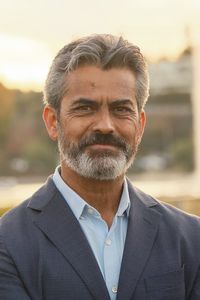
Francisco Carrillo Jr. was born in Los Angeles, California. He earned a bachelor's degree from Loyola Marymount University. His career experience includes working as a policy advisor. He helped establish the Franky Carrillo Teen Court.[1]
Carrillo has been affiliated with the following organizations:[1]
Los Angeles Innocence Project, chief advisor
California Innocence Project, special advisor
Restorative Project, founder
LA County Probation Oversight Commission, former commissioner
Democratic National Committee (elected member of the Los Angeles County Democratic Party’s Central Committee, a President Biden appointee to the Democratic National Committee’s Platform Committee, former chair of the 52nd Assembly District Central Committee, and co-chair of the Judicial Interview Committee.)
- Bachelor's:
- Loyola Marymount University
In their own words
California State Assembly
Who are you? Tell us about yourself.
I'm a justice advocate, community leader, and father, but at 16, I was wrongfully convicted of a crime I didn’t commit—convicted as an adult and sentenced to live out the remainder of my life in prison. I come from an immigrant, blue-collar family, and my father instilled in me the hope and dreams he had for his children. I was determined to prove my innocence. I devoted decades to proving that the system had made a terrible mistake. I never lost hope in myself or my ability to achieve justice. And I never lost my faith in humanity. In 2011, I was exonerated after serving 20 years. The Netflix special The Innocence Files, episodes 4 & 5 documents my story.
After my release, I graduated from Loyola Marymount University and found my voice. I activated my civic engagement by joining state and national campaigns for extensive reform within the criminal justice system, including efforts to end the death penalty nationally. I’ve since returned as a guest speaker and have been featured multiple times in school publications for my story to inspire the next generation of social justice leaders. Conditions of my existence were used against me, I don’t want that for others. I hope my story will change the narrative and inspire others; they too, can change the circumstances they have been dealt and make positive change for their community.
Please list below 3 key messages of your campaign. What are the main points you want voters to remember about your goals for your time in office?
I know what it’s like to be on the wrong end of a broken system. I’m running for State Assembly to give everyone an equal opportunity to succeed – in our schools and in securing quality jobs and homes – while working to fix the justice system. I will fight to ensure everyone has a fair chance in life.I got a second chance and want to give us all a second chance when it comes to social, economic, racial, and environmental justice.I will become the first-ever formerly incarcerated exoneree elected to the State Legislature in California, where I will put the people first.
What areas of public policy are you personally passionate about?
Criminal justice reform, reproductive justice, health care access, job development and workforce training, a livable wage, education, clean water and air.
What characteristics or principles are most important for an elected official?
Elected leaders must be honest, ethical, good listeners, lifelong learners who seek out all perspectives on an issue, skilled at connecting with constituents, hard workers, and dedicated to positive change.
What qualities do you possess that you believe would make you a successful officeholder?
My family and I fell through the cracks in the housing, education, criminal legal, and health care systems. My perseverance and commitment to justice are key qualities that will help me serve my constituents. From the moment I regained my freedom, I’ve dedicated my life to mentoring young people and helping formerly incarcerated individuals adapt to life outside prison—while raising my own family here in the district.
What do you believe are the core responsibilities for someone elected to this office?
It’s an Assemblymember’s responsibility to partner with the community with the goal of improving lives. This includes creating solutions to address the urgent housing crisis we face. Homelessness is personal to me. I’ve been homeless at different times in my life, both as a child and after my exoneration. The bottom line is we need to create far more affordable housing everywhere in the State. That is why when I am elected to the State Assembly, I will work to fund new housing development at all income levels, streamline building approval processes, establish low-barrier navigation centers, protect renters, aid first-time homeownership, and mandate more local accountability in meeting housing goals.
What was your very first job? How long did you have it?
I had a very different experience from other young people because, at 16 years old, I was framed for a fatal shooting I was not involved in. I finished high school and received my GED in juvenile hall and LA County men’s jail. While in prison for a crime I did not commit, I worked several jobs, which included: teacher’s aide, counselor’s clerk, Braille transcriber, self-help facilitator, youth diversion counselor, auto mechanic, dietitian, physical therapy assistant, and many other professions. I understand the commitment families have to provide for themselves and the community through their jobs and sacrifice.
What is your favorite book? Why?
The Count of Monte Cristo. It is a book about human resilience, hope and mercy.
What do you perceive to be your state's greatest challenges over the next decade?
Climate change will continue to harm our most vulnerable communities throughout the state. We need to do everything in our power to end our reliance on fossil fuels and make living in our neighborhoods sustainable. There is no social justice without environmental justice.
Is there a particular legislator, past or present, whom you want to model yourself after?
California State Senator María Elena Durazo and her family went through the hardships that come with migrant work but she beat the odds and received her law degree later becoming an organizer for UNITE, the Union of Needletrades, Industrial and Textile Employees. There she led a drive for workers to participate in negotiating their union contracts, and because of her leadership, meetings and publications became bilingual. Senator María Elena Durazo went on to become Vice President of UNITE-HERE International, served as Vice Chair of the Democratic National Committee, National Co-Chair of the Barack Obama Presidential Campaign, first woman Secretary-Treasurer of the Los Angeles County Federation of Labor, and served on the National AFL-CIO Executive Council. She also served on civic commissions and boards for the City and State, including the Los Angeles Airport Commission, Los Angeles Parks and Recreation Committee, and the California State Coastal Commission.
She is the current State Senator of District 52, and I am proud to have her endorsement. I admire her meaningful work standing up for working families. I, too, come from a Latino family that overcame hardships and economic barriers. We know the hardships our community faces. And from the moment I regained my freedom, I’ve dedicated my life to mentoring young people and helping formerly incarcerated individuals adapt to life outside prison—while raising my own family here in the district. I’m excited about the work we will do together to improve lives.
What is the first bill you would introduce if elected?
I’m committed to removing qualified immunity that protects law enforcement officers who violate the law they swore to uphold.
What organizations or individuals have endorsed your campaign?
I am supported by unions, community leaders, grassroots Democratic Party clubs, justice reform advocates and organizations, the California Latino Legislative Caucus, and Democratic State Senator Maria Elena Durazo, LA City Council President Marqueece Harris-Dawson, Congressman Tony Cardenas, and many current and former Democrat representatives of overlapping and neighboring districts.
What committees interest you?
Given my background, passion, and commitment to fighting for social justice, housing justice, the environment, and reform at all levels and intersections, I want to address as many issues as I can as quickly as I can. I recognize if elected it is the duty of the Assemblymember to work with anyone who will join me, roll up their sleeves, and get the work done for the betterment of our communities and working families.
I would hope to serve on the following committees
-- Public Safety
-- Natural Resources
-- Education
-- Health Care
-- Budget Subcommittee (overseeing corrections and CA Youth Authority)
I would also join the California Latino Caucus.
Campaign website
Carrillo's campaign website stated the following:
Legal Reform and Safety
There is no candidate with more lived experience navigating the justice system. Franky recognizes he can utilize that experience to mend broken systems through effective and transformative policies. Despite spending 20 years wrongfully convicted in prison, Franky never lost hope in himself, the judicial system, or his unwavering faith in humanity. In 2011, his conviction was overturned due to his unwavering claims of innocence and belief that justice would prevail.
Since his release, Franky’s experience includes co-chairing Los Angeles’ successful Measure A campaign for sheriff’s department accountability, founding the Restorative Project (a holistic reentry initiative), working as a Senior Policy Advisor for the Los Angeles Innocence Project, sitting on the Los Angeles County District Attorney’s advisory board and serves as an appointee to the Los Angeles County Probation Commission, overseeing the same probation department that once confined him as a youth.
His commitment to righting the indignities and injustice in the system, providing opportunities for second chances, and youth prevention measures increase public safety and opportunities for “justice for all.”
In the Assembly, Franky will work to:
Preventatively shift mental health, traffic, and substance abuse intervention responsibilities from armed police officers towards alternative responders to save lives and provide services to those in need. The current punitive approach often leads to increased criminalization of people of color and underserved communities.
Take punitive and prevention measures to address serious misconduct by those sworn to serve and protect with policies that address officer misconduct.
Eliminate ineffective sentencing enhancements and mandatory minimums. Franky believes the current extreme sentencing measures do not increase public safety and have led to overcrowded prisons/industrial prison complex.
Champion reforms that focus on women and children impacted by the criminal justice system.
Expand programs that have utilized a credible messenger approach, ensuring more rehabilitative opportunities are available.
Balance comprehensive opportunities for second-look sentencing with public safety.
Support survivors who are due to restitution while creating economic opportunities that allow formerly incarcerated individuals to meet the restitution responsibilities.
Reform youth incarceration systems with a focus on rehabilitation and mental health.
Increase safety nets for youth to prevent a systemic pipeline into the mass incarceration system by ensuring they are receiving the age and culturally-appropriate programs and services they need.
Invest in legislation reform that removes barriers to employment training and placement services, healthcare, transitional housing, and wraparound social services for people with criminal histories so they may transition out of incarceration and grow into contributing members of the community.
Housing Justice
For Franky, homelessness – and the conditions that lead up to it– are deeply personal. As an exoneree in 2011, Franky was left to rebuild his life without stable housing, a situation faced by many men and women upon reentry. Due to his firsthand experience, Franky understands that tackling homelessness involves more than just offering temporary housing; it requires establishing an inclusive economy and providing housing opportunities for everyone.
He believes the existing bureaucracy – splintered between cities, counties and the State – has become a life-threatening hurdle to progress and will work to cut red tape to get our unhoused a roof over their heads, faster. Franky believes at the heart of the current housing affordability problem is the lack of low-income housing at the scale necessary to make significant progress in addressing our housing needs.
In the Assembly, Franky would work to:
Fund new housing development, streamline approval processes for affordable housing, establish low-barrier navigation centers, create supportive housing and create more local accountability to build new housing and increase homeownership
Bolster resources to deal with homelessness and mental health as a supporter of California’s upcoming Prop 1
Work with federal partners to increase the value of Section 8 vouchers and funding for wraparound services
Direct state funding to more efficiently provide mental health and substance abuse recovery services to our unhoused
Rather than simply hiring more armed officers in dealing with mental health calls, Franky will work with law enforcement entities to assign mental health professionals to law enforcement divisions
Healthcare Justice
Franky, having experienced firsthand the dire consequences of limited access to proper healthcare, recognizes it as a potential death sentence, as seen with his father. During Franky’s wrongful imprisonment, his father suffered from inadequate care by unlicensed providers, ultimately succumbing without the benefit of proper healthcare.
Franky knows how detrimental lack of healthcare can be. Give the millions of uninsured Californians, Franky is committed to:
Universal quality care, to be achieved through cutting detrimental factors that inflate costs for a creation of a single-payer health care system.
Investment in community clinics and healthcare centers to serve the underserved facing harsh realities of health disparity.
Work with healthcare partners to address safe staffing levels and an increase in retention of healthcare workers, build our equipment reserves, and improve patient safety regardless of immigration status or housing status.
Easing in prescription costs. No one should choose between medicine and other basic human needs.
Reframe the conversation of healthcare in communities of color, including: mandated public reporting data to identify and solve systematic disparities in care and prevention; and investing in the expansion of linguistically and culturally appropriate care in underserved communities.
Improve reimbursement rates and streamline administrative procedures to increase the number of therapists willing to take patients whose care is paid for by HMOs and insurers.
Economic Justice
Job security is an increasing concern for all professions, from mechanical advancements to Artificial Intelligence and is key to anti-recidivism efforts. It is increasingly essential we prepare, adapt, and protect our workforce.
Franky recognizes secure employment is an essential need and right, and he will fight to:
Ensuring resources are available for job retraining in the community to protect the under-represented who have faced and continue to face challenges in a changing job market, so they are not left behind.
Secure workers’ rights and work with unions to not fear retaliation and unsafe conditions.
Push for local communities, schools, hospitals, and small businesses to see the benefit of investment in job training. The opportunity for workers to earn a living wage, regardless of background, is an investment in the community.
Gun Reform
Guns hurt people every day; we must continue to get guns off our streets and increase awareness of the harm they cause to our communities with their accessibility.
In the Assembly, Franky would work to:
Extend the efforts to remove guns off our streets, including the amplification of red flag measures and rigorous background checks for those under domestic violence and stalking restraining orders and mental health considerations.
Legislatively advocate for the removal of military-style weapons and ammunition from our streets, as we have seen an increase in their deadly use in mass shootings.
Education
Education is a determining factor in whether a person can access quality healthcare, find employment that pays a living wage, and live in a safe environment — all factors that affect the well-being of our youth.
Franky has witnessed how the educational system plays a major determinant in both the future of children and the region in which they live. In a district made up largely of children from low income families of color, he believes they have a right to equitable educational opportunity, regardless of race or economic status. That is why Franky will fight to improve our schools and work to address the inequality gap in our schools by:
Fighting for increased per-pupil spending, to access additional school resources. After adjusting for differences in labor costs across states, California is underfunded in its public school per pupil spending, hurting our most vulnerable students disproportionately.
Advocating for competitive salaries for our children’s teachers
Reinvesting in our youth via high quality after-school programming to address the needs of our diverse community.
Reducing the class size while partnering to increase teacher and education staff retention with additional training opportunities for a committed workforce.
Reproductive Justice
Franky is an advocate for reproductive justice and will continue to support and protect a woman’s right to safe, accessible, and legal abortions. The right-wing Republicans want to remove any means of safe abortions from grasp, including abortion pills. Franky believes the decision is between a woman and her healthcare providers. He is committed to fighting to ensure it remains a right in California.
Environmental Justice
The environmental repercussions of past policy decisions are evident in what we see, drink, and eat. Urgent legislative action is necessary to address climate change promptly while safeguarding our water and air.
In the Assembly, Franky will work to:
Bring resources from the Inflation Reduction Act, a Green New Deal and state legislation into the community for increased clean air and water quality. Our communities of color are disproportionately impacted by environmental racism and lack of remediation to fix the ecological mistakes of the past. Franky is that champion of environmental change.
Fight to create, expand and protect open space and parks for our underserved area.
Strengthen regulations and enforcement of toxic and hazardous waste pollution – holding polluters accountable for the damage and health risks they cause in our communities.
Ensure a truly JUST transition to green jobs including significant resources for retraining.[2]
—Francisco Carrillo’s campaign website (2024)[3]
U.S. House
Francisco Carrillo Jr. did not complete [the profile publisher]'s 2024 Candidate Connection survey.
On the 2026 ballot
Links
Compiled from the candidate’s published profile as of September 30, 2026.
Source(opens in new tab)