
Background
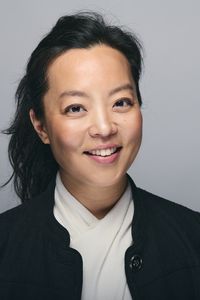
Francesca Hong earned a high school diploma from Madison West High School. Her career experience includes working as a sous chef, an executive chef with 43 North Restaurant, and co-founding Morris Ramen.[1]
- High school:
- Madison West High School
In their own words
Who are you? Tell us about yourself.
My name is Francesca Hong. I’m a chef, a state representative, a single mom, a renter, and a proud child of Korean immigrants. I’m fighting for the working class because I *am* working class — I’ve been working-class my entire life. When Covid lockdowns decimated the Madison restaurant industry, we organized home meal delivery and mutual aid programs to keep our workers afloat and our most vulnerable neighbors fed . My community elected me to the Legislature in 2020 where I’ve seen, up close, a state government captured by the interests of billionaires and huge corporations. There’s no reason most of us need to endure an affordability crisis while our government gives tax breaks to data centers and the donor class, or that we need to sit by while our natural resources are put up for sale to whomever has the right political connections. We can have a state where we can afford to live, work, care for one another, and raise families. It’s going to take all of us, but we can demand better: because together, we make better possible.
Please list below 3 key messages of your campaign. What are the main points you want voters to remember about your goals for your time in office?
For most of us, it’s tough to get by. Working hard doesn’t guarantee a comfortable life anymore. Meanwhile, our state hands out billions of dollars to the richest people and largest corporations — our government sees itself as a junior partner of industry instead of an advocate for regular working-class people. That’s why I’m running on issues like universal childcare, universal paid leave, full public school funding, affordable housing construction, and fairer, cheaper healthcare: to build the structures that make affordability permanent in Wisconsin.Wisconsinites have been told that we need to fear or hate each other if we want to survive. That’s bullshit. That’s a condition imposed upon us by the scarcity imposed upon us when our government diverts our public resources to the profits of a few instead of the well-being of the many. Wisconsinites deserve democratic accountability, basic fairness, and community care — and that starts with the decisions we make about how our government runs.I am running on a robust set of policies that affect everyone — from cracking down on big corporations and private equity to making the super-rich pay their fair share and lowering property taxes for the rest of us to the first data center moratorium and plan in this race. We’re coming out of a hole dug for us over fifteen years, and people are facing big problems. Big problems demand big solutions, not piecemeal reform efforts: incrementalism is irresponsible.
What areas of public policy are you personally passionate about?
As a proud graduate of Wisconsin public schools and the mother of a public school student, I’m invested in how our schools operate. But fifteen years of funding cuts and the siphoning off of public money into an unaccountable voucher system means our schools are asphyxiating. When the government cuts social services, and housing and food are unaffordable, public schools alone fill the gaps—they do more with less. Districts across the state have passed property tax referendums in order to stay open. That’s why any discussion of education in Wisconsin begins with ensuring our schools have the money they need. My Tax the Rich package makes millionaires pay their fair share while reducing property taxes by an average of 41% for the rest of us.
What do you believe are the core responsibilities for someone elected to this office?
If you begin your negotiation by asking for half a loaf of bread, you’re going to get a quarter—at best. After decades of being browbeaten by Republicans, we have the opportunity to come out swinging —and that message is set at the top. I’m here to fight for Wisconsinites by setting ambitious but responsible goals and use my platform to help communities organize themselves to fight for our shared vision.
What legacy would you like to leave?
We are part of a struggle that began long before us, and I’m here to use this campaign and this office to build upon it. I intend to leave things better than I found them: to contribute to a statewide organizing project that helps all of us fight for justice in our communities and connect with others who are doing the same.
What was your very first job? How long did you have it?
When I was 15, I took a job as a hostess at a local restaurant in Madison. I worked there for a year until the restaurant closed.
What is something that has been a struggle in your life?
I’m a proud child of Korean immigrants, but I’ve had a complicated relationship with my Korean identity. At times as a child I felt shame about it; sometimes it left me with a sense of melancholy, as if I didn’t belong. As I got older, I came to see it as a part of my identity — I added Korean food to my menus, which made me feel more connected to my roots. When I gave birth to my son, I realized I wanted him to learn Korean so he, too, could find it to be a source of strength. And, when in 2020 I became Wisconsin’s first Asian-American legislator, I realized the joy and responsibility of representing, supporting, and uplifting people like me.
Governors have many responsibilities, which vary from state to state. Which of those do you personally consider the most important in your state?
In 2026, the governor’s job is to wield the power of his or her office to the fullest extent possible to protect the people of Wisconsin from fascism and set the moral compass by which our ambitions are aligned. The governor’s state budget is the preeminent document that charters the course for two years of state policy. A great governor wields the power of the executive to the fullest extent by establishing a clear, accessible budget that improves the material conditions of people’s lives, preserves our natural resources, and builds a more democratic economy.
In most states, governors have the power to make line-item vetoes. If that is true in your state, what would be your philosophy for how and when to use this power?
That’s true in Wisconsin. I would consider vetoing any part of any law that infringes on any person's individual rights and freedoms under the state constitution and the Economic Justice Bill of Rights I champion. This includes the rights of children, nature, and future generations.
Under what circumstances should the governor of your state be able to use emergency powers?
Emergency powers should be reserved for emergencies, like the impending threat of mass violence, natural disasters, or economic crises.
What organizations or individuals have endorsed your campaign?
Nationally, I am endorsed by Representative Ilhan Omar, Representative Ro Khanna, and State Senator Nina Turner.
Campaign websiteHong's campaign website stated the following:Fran Has a VisionA better Wisconsin is possible, and we all have a role in building it. Any argument that we need to accept less is bullshit.Children & SchoolsFree school mealsNo child should go hungry. We have the means to help. As a state rep, Fran wrote a bill to provide free healthy school meals to all children, helping Wisconsin farmers and lowering costs for families.Universal childcareFran has a model to guarantee universal childcare. Through a program based on childcare plans in New Mexico and Vermont, families will be able to access affordable, high-quality childcare with either no out-of-pocket costs, subsidies, or strictly capped prices.Support childcare providersWe can’t have a universal childcare program if workers aren’t getting the wages they deserve. Fran’s model includes increased reimbursement rates and worker loan forgiveness programs to ensure there are enough caregivers to meet demand.Fully fund public schoolsNot too long ago, Wisconsin’s public schools were considered some of the best in the country. Fifteen years of Republican funding cuts have decimated them and abandoned parents, teachers, and students. We owe it to our future to resurrect our best-in-class primary education system — a project that starts by fully funding our public schools, public universities, and tech colleges.Right now, school funding shortfalls are paid for through property taxes. Representative Hong’s Tax the Rich package changes the funding source to income taxes on the super-rich — cutting your property taxes by up to 44%.Roll back unfair voucher lawsPublic dollars belong in public schools. Every child deserves a strong and comprehensive education. Voucher programs lack transparency and oversight and use discriminatory admission policies. As governor, Fran will start a responsible transition away from the unfair voucher program, which gives financial advantages to private schools over public ones.Special educationWisconsin only funds around 40% of special education costs for school districts, putting local taxpayers on the hook for over a billion dollars in public education costs. We can care for all of our students while investing in our communities by increasing this essential funding.Higher educationOur public universities have been underfunded for decades and reeling since the passage of Act 10. Fully funding public universities and tech colleges, as well as restoring collective bargaining power for their workers, is the bare minimum. Fran will work to increase essential funding for programs that support students of all backgrounds and give educators a seat at the table.Teaching is a professionTeachers shouldn’t have to accept inadequate work conditions for the “privilege” of doing meaningful work — a double-standard society wields in order to compensate essential jobs less. Fran wrote a bill anchoring public school teacher salaries to state legislator salaries and coauthored another that lets public school teachers enroll in the state employee health insurance plan. Fran also supports adding teacher representatives to school boards, establishing paid preparation time for classroom teachers, and a grant program encouraging students to pursue teaching as a career.WorkersGuaranteed paid leaveNobody should have to decide between paying the bills and taking care of themselves or a sick family member. Fran’s universal paid leave bill would provide fully insured paid leave for all workers — including the self-employed.Fair wages and working conditionsOne job should be enough. Fran supports a living wage — a $20 minimum wage indexed to the cost of living in Wisconsin.Gig workers are employeesFran pledges to protect gig workers’ rights by promising to veto any future legislation that helps big companies dodge their responsibilities by narrowing the definition of employment to exclude the workers who make our cities run.HealthcareExpanded, improved BadgerCare for allThe only health finance model that can address the core issues of our healthcare system is federal Medicare for All. Until the federal government does its job, we have to use every tool at our disposal to make healthcare as affordable as possible for every Wisconsinite. This is a multi-prong effort. We will:Expand Medicaid.Develop new kinds of BadgerCare programs that include more kinds of people — like a Basic Health Plan.Establish a robust public option that competes with private insurance plans — proven in other states to lower insurance premiums.Pull down high healthcare costsHealthcare costs are high because healthcare prices are high. Right now, the biggest hospital systems in Wisconsin charge private insurance companies up to four times what Medicare pays. These costs trickle down as higher premiums for everyone. Fran has a plan to bring exorbitant prices in line with fair market value and invest the savings into small hospitals and healthcare programs that help all of us.Insurance coverage and claim denialInsurance companies will do anything they can to avoid paying your healthcare claims. As governor, Fran will crack down on claim denial processes, mandate coverage for medically necessary care, and develop new ways for you to fight back when you get pushed around.Make large hospitals pay their fair shareWisconsin has several multi-billion-dollar hospital systems that pay nothing in taxes. It’s time they pay their fair share. Fran will advance a bill that forces large hospitals to use the tax breaks we give them to invest in community benefits and subsidized care.Lower prescription drug costsWhen drug prices have no anchor, ambiguous coverage and inflated costs surprise you at the checkout line. By pooling the state’s resources to negotiate better prices and creating a streamlined infrastructure, we can lower costs and extend coverage for everyone.LGBTQ healthcare accessEveryone deserves to live safely in their own body. Fran recognizes gender-affirming care as medically necessary and would veto bills like AB 104 that intrude on personal healthcare issues and prevent families from seeking the healthcare they need.Hospital and nursing home staffingToo many nursing home residents face abuse, neglect, or inappropriate care, and hospital understaffing leads to burnout and decreased care quality. One of the strongest predictors of care quality in a nursing home or hospital is whether there are enough nurses and nurse aides on duty. Fran has sponsored legislation to mandate safe staffing in hospitals and will continue the fight to ensure both kinds of facilities employ enough workers so patients and workers alike get the treatment they deserve.Medicaid paymentsFran will help sustain mental healthcare programs, social workers, and rural hospitals by increasing Medicaid reimbursement rates.Maternal health, beyond pregnancyFran’s platform contains deep support for mothers during pregnancy, delivery, and early parenthood: universal paid medical leave and universal childcare make it easier to guarantee children and parents are healthy and raising a family is affordable. Making it easier for hospitals and mothers alike to work with doulas, building upon successful pilots we’ve seen across the state, is another step toward improving maternal health and reducing disparities in pregnancy. But it’s too simple to reduce maternal health solely to questions of pregnancy and delivery — if you care about maternal health, interventions only at the time of pregnancy are already much too late. Wisconsin’s better-than-average maternal morbidity and mortality rates disguise extreme differentiation by race and income. Universal policies like minimum wage increases and income inequality reduction, efforts like local hospital financing to counteract the loss of rural hospitals and clinics in low-income areas, and investment in OUD treatment, mental health and peer support, and rehabilitation address the structural issues upon which maternal health is constructed.Build a preventive care workforceIf we want to bring down healthcare costs, we need to bring down healthcare prices — but we also can invest in infrastructure that reduces our reliance on expensive and chronic care. Preventive care means paying people fairly to do essential work in places where they already live. Fran will help fund the Department of Health Services to build pilot groups of coordinated healthcare workers, like social workers, nurses, dieticians, community health workers, and peer counselors, into more neighborhoods across the state.Stop hospital and clinic closuresWisconsin is hemorrhaging small hospitals and medical clinics. Fran will push to enable the creation of hospital districts — like school districts or sanitation districts — that let communities issue bonds, backed by the state’s public bank, to purchase and sustain their own healthcare facilities.HousingFinance affordable reconstructionHomeowners need stability in their mortgages — so do the people who construct housing. Housing is unaffordable because building housing is expensive, and a major reason construction is expensive is the difficulty of securing cohesive construction financing. Through her public bank plan, Fran can develop a backstop to streamline the financing of affordable housing construction — and bring in new sources of construction financing — bringing costs to build and own down.Zoning reformDevelopers should be able to construct affordable housing almost anywhere. Fran’s affordable housing zoning overlay will streamline the process of building housing meant for regular people, not multimillionaires, and her developer tax incentive structure will make sure the housing that gets constructed stays affordable.Home ownershipWisconsin’s community land trusts (CLTs) and limited-equity co-ops (LECs) are innovative housing models that have been proven to make it possible for low- and moderate-income people to own a home, build generational wealth, and stay in their communities — while insulating neighborhoods against rampant speculation. As governor, Rep. Hong will invest in stabilizing, financing, and promoting CLTs and LECs.Protect rentersWe’re going to make sure nobody goes to sleep cold, and that renter protections are consistently enforced. As governor, Rep. Hong will use her executive authority to bolster rental unit regulations, pursue aggressive regulation of slumlords and serial housing-law violators, and make it easier for tenants to flag issues and find support.Right to counselFran will put front and center a statewide Right to Counsel program, which makes it much easier for people facing eviction to access the legal resources typically only afforded to wealthy people — a program Milwaukee’s pilot has shown saves everyone a lot of money.TaxesProperty taxesFrancesca Hong will cut your property taxes by about 44% while boosting state aid to schools and municipalities. Right now, Wisconsin’s school funding model asks regular Wisconsinites to cover education shortfalls through property taxes, raised through hundreds of local referendums over the past few years. We can fund K-12 education for all students with a progressive tax on large corporate and household income over $1 million a year. Fran believes it’s time we stop asking Wisconsinites to cover for the super-rich.Local options for local fundingWisconsin state law prohibits towns, cities, and counties from making their own decisions about how to fund necessities like road repair, libraries, public transit, and parks. A local option income tax, part of Fran’s “Tax the Rich” package, will let communities decide how they want to take care of themselves without constantly resorting to property tax increases.Close the estate tax loopholeAs part of Fran’s Tax the Rich package, she’ll close a loophole that lets non-farm estates between $5 million and $15 million avoid taxes.ImmigrationICEAt the federal level, we need to abolish ICE and prosecute lawbreaking agents. But here in Wisconsin, Fran will use the full force of the executive branch to protect Wisconsinites of all documentation status from secret police. As a cosponsor of the Keep Families Together bill package, she refuses to let Wisconsin’s resources be used to target Wisconsinites — and demands transparency, the right to due process, and the protection of community safe spaces.State IDsIt’s nearly impossible to function in America without some form of government ID. Fran believes all people, including all immigrants, should have access to those documents. Fran cosponsored legislation to make it possible for noncitizens to get state IDs, even if they don’t have a Social Security Number — and includes safeguards to keep that data protected.In-state tuition for DACA recipientsImmigrants deserve the same access to our public university system as everyone else. Fran cosponsored legislation to extend in-state tuition rates to DACA recipients who live in Wisconsin.Data Centers & AIOne-year moratorium on data centersFran is the only candidate running for governor who’s called for a one-year moratorium on data center construction. AI data centers are a gold rush, and Wisconsin is spending over $2 billion in public money on them this year. But we also know AI data centers come with significant environmental, energy, economic, and social risks. There’s a lot of pressure to build as fast as possible — but data centers are constructed and owned by giant tech companies who don’t care about what happens in Wisconsin. Other states have found data centers to be a sinkhole for public money with no long-term benefit. We’re not even sure if the demand for AI will meet the overwhelming supply that’s being constructed: we can’t afford another Foxconn, and Fran won’t let corporations build huge, expensive, wasteful facilities that end up empty in five years. A one-year moratorium to figure out what’s going on, the real costs of data center construction, and how to protect ourselves is just plain responsible.CONTROL-ALT-DELETE: Data centersAI data centers are a bad deal for Wisconsin. With little local investment, few good permanent jobs, and spiking energy costs, data center subsidies are irresponsible.Fran is calling for a moratorium on data center construction until we know how to protect ourselves from their environmental and energy costs.If a community decides it wants to build a data center, any new construction must use union labor and follow three rules:One, it generates long-term community benefit: no tax breaks for private profit.Two, it funds new renewable or clean energy infrastructure and adheres to strict environmental protections.Three, that infrastructure is publicly owned — so whatever the long-term outcome of data centers, we build something useful for all Wisconsinites.Learn more about CONTROL-ALT-DELETE here.Labor SHIFT: Workers in the AI ageSilicon Valley marketers and data center landlords hype AI as the most significant economic transformation since the Industrial Revolution. Whether that’s true or not, CEOs and corporations are acting like it is — and we’re seeing the consequences in how they treat their workers. Fran’s Labor SHIFT package is a set of new tools for workers for the 21st century. Labor SHIFT contains:No Robo Bosses: Humans must make employment decisions, workers’ privacy rights, and a ban on surveillance wages.No Layoffs on the Public Dime: No tax breaks or state funding for AI layoffs and state contractors get scored on AI worker protectionsControl the Future for Workers: A workers’ transition act, worker-led training and retraining, and a state trust fund for long-term local projects.Workers at the Table: Workplace AI tools are subject to collective bargaining, and Wisconsin will step in to protect workers if the federal government won’t.Learn more about Labor SHIFT here.FIREWALL: Your rights in an AI worldAI data centers are in the headlines, but corporations, police, and health insurance companies are already using algorithms and AI technology to shape your life. We can’t turn back the clock on computer science, but we can pass the laws all of us need to protect our civil and consumer rights in the face of advanced technology. Introducing FIREWALL, Francesca Hong’s package to protect your rights in a world of AI and machine learning. Remove From Cart: Getting AI Out Of Your Wallet — End personalized “desperation” pricing, algorithmic collusion on rents, and algorithmic health insurance claim denials.Incognito Mode: AI & Privacy — Expand privacy protections to all healthcare data, even if it’s uploaded to a chatbot.Battle Bots: AI, Social Media, & Scams — Identify and watermark AI-generated content and distinguish chatbots from real people.Prime Directive: Law Enforcement & AI — Stop police surveillance abuse and demand a higher standard for AI in law enforcement.To learn more about FIREWALL, click here.Business and GovernmentAffordable loans and a public bankMegacorporations and the ultra-wealthy have access to more low-interest loan options than small businesses. We deserve a bank owned by, and meant for, regular Wisconsinites. The Wisconsin Public Bank, inspired by North Dakota’s century-old model, can be used to give small businesses better rates on the loans they need to grow.Cut contractor wasteWisconsin pays thousands of private consultants and contractors. Many of them do essential work at a reasonable price — but some take advantage of lax oversight to provide an inferior product or service at Wisconsinites’ expense. As governor, Fran will commission a thorough study of government outsourcing, figure out where we’re wasting state funds on private profit, and make sure Wisconsin is a responsible steward of public money.MonopolyMonopolies devastate local businesses, gouge customers, and tilt the balance of economic power toward megacorporations. As governor, and in collaboration with the office of the Attorney General, Fran will establish comprehensive antimonopoly regulations to keep markets fair and competitive.Get tough on private equityPrivate equity is a form of corporate acquisition that debilitates small and large businesses alike, all to enrich investors who don’t care about the businesses they acquire, their products, their workers, or their customers. Private equity means rural hospitals and small clinics close, manufacturers close up shop, and housing prices get jacked up — and as governor, Fran will team up with the attorney general to crack down on this flagrant corporate abuse, following the lead of states like Oregon and Pennsylvania.AgricultureBreak up Big AgA deregulated agriculture industry has driven small and family businesses out of the market. Fran will lead the charge to strengthen agricultural antitrust enforcement against excessive market concentration and will direct state development agencies to support small and mid-sized farmers.Agriculture cooperativesAgricultural cooperatives keep power and profits in the hands of producers—not distant corporations—by fostering member-owned, democratically governed enterprises that share resources, reduce costs, and expand market access. Under Fran, cooperative business models will get first priority for state business development funds.Wisconsin farmers feeding WisconsinThe pandemic-era Badger Box program was a huge success, proving that Wisconsin farmers can feed Wisconsin families. As governor, Fran will support initiatives like Badger Box and expand state funding for programs that connect Wisconsin producers with schools, food pantries, and community institutions.Protections for all farm workersFran knows that we need to defend and strengthen the rights of all farm workers. That means fighting for fair wages, health and safety standards, overtime pay, and a full defense of the rights of all farm workers, including immigrant farm workers who make our state function.Preserve farmland for the next generationFran will push for the creation of a Wisconsin Farmland Trust to purchase and protect agricultural land from speculation, ensuring long-term access for beginning farmers, young farmers, and farmers of color through affordable leases, conservation easements, and cooperative ownership models.Clean water, clean soil, and regenerative agricultureClimate change and pollution affect the way we farm in Wisconsin. Fran will direct the state to provide technical assistance and other supports for farmers adopting regenerative practices like cover cropping and agroforestry, expand the Producer-led Watershed Grant Program, make state support for county conservationist programs permanent, and aggressive regulation and consequences for agricultural or non-point polluters.CAFOsConcentrated Animal Feeding Operations have significant implications for water quality, rural communities, and the viability of family farms. Fran supports local control over CAFO siting and required bonding for proposed CAFO operations so local governments are empowered to develop ordinances related to CAFO operation and communities are protected from financial liability from bankruptcies or disaster cleanup.Cities, Towns, and TransitRevenue sharingFran will right-size a grossly unfair revenue sharing model that leaves cities and towns across the state scrambling to access the tax revenue they generate. State and local governments are partners, not rivals. Fran can uphold the state’s end of the deal by:Lifting restrictions on how much a local government can levy to fund essential services, indexed to local costsGiving counties and municipalities access to means of financing beyond property taxesRegional Transit AuthoritiesRegional Transit Authorities give local government options to raise revenue, collaborate regionally and more efficiently, and develop transit systems that meet the needs of their people. As governor, Fran will fight to enable legislation for RTAs with dedicated revenue options and local governance authority.Safe, complete streetsOver a decade of Republican rule has made our streets less safe for people inside and outside of cars. Fran believes that muncipal development should prioritize safe design for all users—with sidewalks, protected crossings, bike facilities, and transit-supportive street design.Transit-oriented developmentWisconsin’s housing and transportation systems are siloed—which drives up household costs and makes it har
On the 2026 ballot
Links
- Campaign X(opens in new tab)
- Official X(opens in new tab)
- Campaign tiktok(opens in new tab)
- Campaign website(opens in new tab)
- Official website(opens in new tab)
- Campaign facebook(opens in new tab)
- Official facebook(opens in new tab)
- Personal linkedin(opens in new tab)
- Campaign instagram(opens in new tab)
- Official instagram(opens in new tab)
Compiled from the candidate’s published profile as of September 30, 2026.
Source(opens in new tab)