
Background
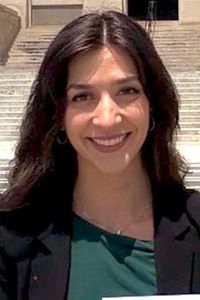
Fayth Park graduated from Nevada Union High School. Park earned a bachelor's degree from Emmanuel University in 2019 and a graduate degree from Life University in 2021. Park's career experience includes working as a life coach.[1]
- Graduate:
- Life University, 2021
- Bachelor's:
- Emmanuel University, 2019
- High school:
- Nevada Union High School
Campaign money
- Raised
- $15K
- From individuals
- $7K
- From PACs & party
- $0
- Own money
- —
FEC filings through July 8, 2026.
View on FEC.gov(opens in new tab)Campaign themes
Fayth Park has not yet completed [the profile publisher]'s 2028 Candidate Connection survey.
If you are Fayth Park, click here to fill out [the profile publisher]'s 2028 Candidate Connection survey.
Who fills out the candidate survey?
Any candidate running for elected office, at any level, can complete [the profile publisher]'s Candidate Survey. Completing the survey will update the candidate's [the profile publisher] profile, letting voters know who they are and what they stand for. More than 34,000 candidates have taken [the profile publisher]'s candidate survey since we launched it in 2015. Learn more about the survey here.
Help improve [the profile publisher] - send us candidate contact info.
Who are you? Tell us about yourself.
Rooted in faith, family, and the everyday rhythms of Georgia's 13th District. A neighbor running to represent the place she calls home. Leadership has always been part of how I move through the world. From leading peers in school through student government and athletics, to studying abroad and seeing how other governments serve (and fail) their people, to organizing locally for social justice in my own community.
I've worked voting polls, sat with neighbors at kitchen tables, worshipped with believers, and listened to families talk about what's working and what isn't. The through line is the same everywhere: people want to be heard, and they want representation that actually does something.
That's the desire that brought me here — to take what I've learned and use it for something bigger than myself. I'm running because my generation is being asked to inherit problems we didn't create — and we're being told to be patient while they get worse.
The cost of housing, the cost of childcare, the cost of healthcare, the cost of just trying to live a normal life — these aren't abstract issues to us. They're the conditions we're raising our families in, right now.
Representation that reflects this moment isn't a nice-to-have. It's overdue. And it's how we get policy that actually meets the moment we're in.
Please list below 3 key messages of your campaign. What are the main points you want voters to remember about your goals for your time in office?
The problem
Trillion-dollar tech companies are expanding data centers across Georgia while seeking taxpayer incentives and placing growing demands on local infrastructure.
Why it matters in GA-13
Georgia should welcome innovation and investment, but working families shouldn't be forced to subsidize trillion-dollar corporations.
Fayth's approach
Support American innovation and energy dominance while protecting taxpayers and local communities. Require transparency, strengthen accountability, and ensure corporations, not families, pay for the infrastructure they require.The problem
Rent is up. Groceries are up. Utilities are up. Families are working full-time and still falling behind.
Why it matters in GA-13
Across GA-13, the cost of housing, food, and basic essentials has outpaced wages for years — pricing young families out of the neighborhoods they grew up in.
Fayth's approach
Cut everyday costs by tackling housing supply, supporting first-time homeowners, easing regulatory burdens that drive up prices, and standing against runaway federal spending that fuels inflation.The problem
Families want to walk their neighborhoods, drop their kids at school, and run errands without fear.
Why it matters in GA-13
From Clayton to Newton, residents are asking for visible, well-resourced law enforcement and stronger community partnerships — not slogans.
Fayth's approach
Back the men and women who serve, invest in community-policing partnerships, fund mental-health response, and treat public safety as the foundation everything else is built on.
What areas of public policy are you personally passionate about?
Protecting communities and farmland from data center development
Affordable housing and living
Preventing trafficking, child abuse and exploitation
Supporting law enforcement
Environmental protections
Affordable healthcare
Who do you look up to? Whose example would you like to follow, and why?
The three people I look up to most are my mom, my dad, and Christ. My faith shapes the way I try to live and serve others, and Christ is the ultimate example of servant leadership, humility, and sacrifice.
My parents showed me what integrity looks like long before I ever thought about running for office. My dad spent his career as a mechanic and now teaches the next generation of mechanics. He taught me that honest work matters and that if you’re going to do something, you do it right. My mom was a stay-at-home mom who poured everything into raising our family, and today she serves my home community through local government. She taught me that service doesn’t always make headlines, but it changes lives.
Together, they showed me that leadership is about character. If I can bring that same integrity, work ethic, and heart for serving others to Congress, then I’ll be honoring the example they set for me.
What characteristics or principles are most important for an elected official?
Integrity, courage, and accountability. People deserve a representative who keeps their word, tells the truth, and isn’t afraid to stand up to powerful interests. My job isn’t to represent Washington to Georgia, it’s to represent Georgia in Washington.
What do you believe are the core responsibilities for someone elected to this office?
For me, that means fighting to lower costs for families, protecting our neighborhoods from unwanted data center development, supporting law enforcement, securing our border, defending our constitutional freedoms, and ensuring our tax dollars are spent wisely. Congress works for the people.
What legacy would you like to leave?
I hope my legacy isn’t about having my name on a building or holding a title. I hope it’s that I kept my word. That when I said I would fight for families, protect our communities, and put people before politics, I actually did it.
I want people to say I made Georgia’s 13th District stronger because I listened, I showed up, and I never forgot who I worked for. If a little girl watches my campaign and believes she can serve her country with courage and conviction, that’s a legacy I’m proud of. And if families have safer neighborhoods, more opportunity, and confidence that someone in Washington is truly fighting for them, then I’ll know I made a difference.
What was your very first job? How long did you have it?
My first jobs were coaching gymnastics in high school for about three years, and then working in the restaurant industry for about five years in serving and management roles.
What is something that has been a struggle in your life?
Moving across the country and starting over in a new environment was a big challenge. It taught me resilience, adaptability, and how important it is to understand people’s different experiences.
What qualities does the U.S. House of Representatives possess that makes it unique as an institution?
The House is unique because it’s the most directly accountable chamber, members serve two-year terms and represent smaller, more local districts. That makes it the most responsive to public sentiment and everyday concerns from communities.
What do you perceive to be the United States' greatest challenges as a nation over the next decade?
The biggest threats are cost of living, housing affordability, and mental health, especially among young people. And more broadly, making sure growth and development, including things like large infrastructure projects, don’t come at the expense of local communities.
Do you believe that compromise is necessary or desirable for policymaking?
Yes, I think compromise is both necessary and, when done right, a strength in policymaking. No one gets everything they want in a diverse country like ours, and trying to govern without compromise usually leads to gridlock rather than progress. The best outcomes usually come when leaders are willing to listen, negotiate in good faith, and focus less on winning every argument and more on actually delivering results for the people they represent.
What was the first historical event that happened in your lifetime that you remember?
COVID-19 was the most defining event of my lifetime. I was working in the restaurant industry when everything shut down, and later continued my graduate studies during the height of the pandemic. It reshaped how my generation works, learns, and plans for the future. It also showed how quickly government decisions and public policy affect everyday people, especially working families and small businesses.
On the 2026 ballot
Links
Compiled from the candidate’s published profile as of October 9, 2026 and FEC filings.
Source(opens in new tab)