
Background
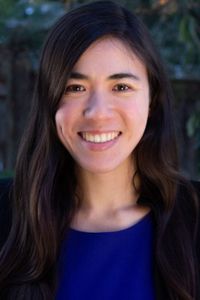
Erika Uyterhoeven was born in Boston, Massachusetts. She earned a bachelor's degree from Wellesley College in 2010, a master's degree from the University of Toulouse in 2014, and a master's degree from Harvard University Business School in 2019.[1]
Uyterhoeven's career experience includes co-founding Act on Mass and working as a trainer and workshop facilitator for the Massachusetts Teachers Association, a trainer for Mass Alliance, the head of digital and data for Momentum, a national field organizer for the 2016 Bernie Sanders campaign, and an anti-trust economist. She has been associated with Emerge Massachusetts, Sunrise Movement Boston, Democratic Socialists of America (DSA) Boston, Our Revolution Somerville, Progressive Massachusetts, Collectif contre l'islamophobie en France (Collective Against Islamophobia in France), and Club Alpin Français.[1]
- Graduate:
- University of Toulouse, 2014
- Bachelor's:
- Wellesley College, 2010
Campaign themes
Erika Uyterhoeven has not yet completed [the profile publisher]'s 2026 Candidate Connection survey.
If you are Erika Uyterhoeven, click here to fill out [the profile publisher]'s 2026 Candidate Connection survey.
Who fills out the candidate survey?
Any candidate running for elected office, at any level, can complete [the profile publisher]'s Candidate Survey. Completing the survey will update the candidate's [the profile publisher] profile, letting voters know who they are and what they stand for. More than 33,000 candidates have taken [the profile publisher]'s candidate survey since we launched it in 2015. Learn more about the survey here.
Help improve [the profile publisher] - send us candidate contact info.
Erika Uyterhoeven did not complete [the profile publisher]'s 2024 Candidate Connection survey.
Erika Uyterhoeven did not complete [the profile publisher]'s 2022 Candidate Connection survey.
Who are you? Tell us about yourself.
I am a Somerville resident, activist, and organizer. I am running because I believe that everyone has the right to a dignified life. This means that everyone's human rights are met - including housing, healthcare, education, a safe climate and a liveable future - and that every one of us has the agency to shape our government.
Early in my career, I was an antitrust economist, analyzing the damage corporations cause when they break the rules of the market. Through this, I came to realize that the system is steeply rigged in favor of corporate interests.
Understanding that the government caters to the wealthy and powerful, while voters have little ability to hold our representatives accountable led me to co-found a nonprofit organization, Act on Mass. Our mission is to remedy the lack of transparency in the Massachusetts legislature - working closely with state representatives while simultaneously mobilizing grassroots groups, unions, and voters to call on their elected officials to pass progressive policies.
I am driven by fighting for everyone's voice, especially the voices of the most marginalized. I have the experience and conviction to change our state, and as a legislator I will elevate the voices of Somerville in the State House.
Please list below 3 key messages of your campaign. What are the main points you want voters to remember about your goals for your time in office?
I believe in a democratic government that works for everyone, and prioritizes the interests of people over profits. I believe in grassroots organizing as an effective means of creating progressive change, by the people and for the people.I am committed to fighting for access to our basic human rights - high quality education, affordable housing and healthcare, racial justice, a Green New Deal, rights for immigrants, and a progressive State House that is accountable to the public.
What areas of public policy are you personally passionate about?
I have devoted much of my life to activism for economic and social justice, and I believe strongly in the power of grassroots movements as a mechanism for change. Our political and economic systems are structured to benefit the wealthy, white, and privileged, while excluding everyone else. This is clear in every area of policy, and in our political systems, in which communities of color, immigrants, low-income populations, and those with marginalized identities are underrepresented. Those in power seek to stay in power - suppressing peoples' voices and restricting their opportunities. I am passionate about rectifying these injustices, by bringing a progressive perspective to the State House, and defending the interests of Somerville and people across the state.
I believe that pursuing justice and equal opportunity, requires restructuring our oppressive systems from the ground up - including fighting for a transparent and accessible democracy that serves all of us. I am passionate about protecting and expanding the right to vote, and changing the culture of state politics to be more responsive to the public. I also believe that our government should invest in public infrastructure and services, and reform the tax code, so that the wealthiest individuals and corporations pay their fair share. Justice and equity necessitate a labor-centric economy, stable housing, and high-quality education and healthcare, which must be publicly funded and maintained.
What characteristics or principles are most important for an elected official?
I believe that it is critical for legislators to constantly ask themselves if they are elevating voices of the historically marginalized and excluded. I must recognize both the privilege and responsibility that comes with holding a position of power, and actively work to ensure that I am deconstructing oppressive and exclusionary practices and policies.
At the same time, I always strive to listen and learn. The primary role of policy-makers is to represent constituents and help develop solutions to the problems they are facing. However, solutions are never simple, and there are usually conflicting opinions and needs. It is far too easy to become set in one's ways, and unwilling to change beliefs. While it is of course important to stay true to yourself and your values - it is impossible to represent the concerns of those who elected you if you are unable to listen to and consider their opinions. Through my experience as an organizer, as well as my time with Act on Mass, I have had to mobilize groups of people to write and advocate for legislation. As a leader in these positions, I have learned to listen and learn - ensuring that solutions truly reflect the voices of the people they are most affecting.
What qualities do you possess that you believe would make you a successful officeholder?
Serving as a state representative is not an easy task; however, I believe that my experiences and unwavering commitment to working for Somerville would make me an effective officeholder. My personal and professional experiences have provided me with a deep understanding of the Massachusetts State House and I have the conviction, passion, and work ethic to serve. I began my political career as a national field organizer, and have been an activist for organized labor, affordable housing and healthcare, public education, and the climate. This entails working with, and on behalf of local organizations to make sure that their interests are recognized and their voices are heard. I know how to organize and mobilize - skills that translate directly to the work of representatives, and I have the stamina to bring other state representatives together on a shared strategy. Most importantly, I am empathetic - and many of the challenges that people in Somerville and across the Commonwealth face, are concerns that I, myself have.
I am fully committed to our communities, and working everyday to make people's lives safer, healthier, and more just - ensuring that we all have the opportunity to live with dignity and respect.
What was your very first job? How long did you have it?
After high school, my first job was working as an EMT while I attended Wellesley College. It was by far the hardest job I ever worked; however, it was also incredibly formative and eye opening. I received my certificate following one month of training and was paid $13 an hour to care for and transport patients, many of whom were critically ill, to a hospital.
I'll never forget how exhausting overnight shifts were, how quickly my partner and I would scarf down lunch within minutes between calls, and how emotionally taxing it was to care for patients who were not receiving the care they needed due to our profit-driven healthcare system. My time as an EMT was very revealing of the failures of American healthcare - in particular, how our overworked and underpaid caregivers place themselves on the frontlines, while many patients remain unable to pay for or receive care due to its immense costs. I knew that the patient would be charged at least $1,000 for the ride, and I could not fathom how that price was justified. Corporate providers and employers prioritize keeping staffing, resources, and pay as low as possible, while still charging enormous and unattainable prices for their services. I believe that people shouldn't have to worry whether they will be able to receive care based on their income - healthcare is a human right, and therefore, patient well being should be more important than profit margins.
What is your favorite book? Why?
Currently, my favorite book is "How to be Less Stupid About Race", by Crystal Fleming. It's an incredibly powerful, well written, and important analysis of racial injustices, and the politics of race in America. Everyone needs to read this book!
Do you believe that it’s beneficial for state legislators to have previous experience in government or politics?
While I believe that it is necessary for state legislators to have some level of experience in government, I do not believe that change has to come from the inside. What I mean is that experience with grassroots activism, organizing, and participating in progressive movements can be just as informative, if not more so, than a career in politics.
I got my start in politics as a national field organizer for the Bernie Sanders campaign in 2016, and the powerful experience of being a part of a progressive movement was life changing for me. I subsequently co-founded Act on Mass, to combat the lack of transparency and accountability in the Massachusetts State House, and through this, I developed a deep understanding of how to navigate the dynamics and culture in the State House in order to achieve massive progressive victories. Last fall, I worked with legislators to block a disastrous corporate tax break in the budget and I helped win $1.5 billion in funding for our public schools, particularly for low-income students. And earlier this year I spearheaded a coalition that ensured recorded votes will continue to be possible, so we know whether our legislators are truly representing us. I understand both how decisions are made in the legislature and how to center our community's voice in the outcome. I have testified in the State House, helped to facilitate the passage of legislation, and worked with unions, grassroots organizations, community leaders, and constituents to ensure that our community's interests are heard.
I have a bold agenda and the strategy and skills necessary to realize these goals. I will bring the same passion and strength to my work as a state representative that I have brought to my work up to this point. Although I don't have a career in politics, my experience as an activist and with Act on Mass have given me a deep practical knowledge of state politics, and how to achieve progress for our state.
What do you perceive to be your state’s greatest challenges over the next decade?
In my opinion, the most immense challenge that Massachusetts, and our world is facing over the next ten years, will be coping with the effects of the climate crisis. Already, we are seeing communities being displaced, frontline populations experiencing environmental harm, and the public health being threatened. Additionally, the IPCC, a UN intergovernmental body that assesses climate science, has estimated that we have 10-12 years to fundamentally change our behaviors and economies to mitigate the most destructive impacts of climate change. I will fight as a legislator to pass a Massachusetts Green New Deal, secure 100% renewable energy state-wide, divest from the fossil fuel industry, construct a sustainable economy, and invest in green infrastructure; however, the timeline to act is narrow.
Effectively reducing climate change will require addressing intersecting challenges in our society, spanning almost every policy area. We must address our underfunded transportation sector, ensuring that the MBTA is clean, affordable, and reliable for everyone. We must reduce our carbon footprint and transition to a fully renewable economy, investing in alternative energy infrastructure, including wind and solar. We must support the creation of new, union jobs in sustainable industries. And central to all of this work, we must emphasize the needs of frontline and environmental justice communities who will be disproportionately affected by the climate crisis - guaranteeing that they are protected from environmental harm and have equal access to environmental benefits.
It's a lot to accomplish, but it's also essential to securing a resilient, just, and sustainable society.
Do you believe it’s beneficial to build relationships with other legislators? Please explain your answer.
Yes, it is absolutely beneficial, and necessary to build relationships with other legislators. Collaborating with other members of the legislature is critical to the work of elected officials, because quite simply, legislation cannot pass without people working together.
One of the biggest problems in our legislature today is the inability to pass legislation and take substantial, progressive action. This is a challenge made worse when representatives are ego-centric, uncompromising, and don't have working relationships with their peers. While none of this is to say that representatives should compromise or "water-down" their values for the sake of etiquette - building relationships with other representatives is essential to a healthy democracy.
Through my work with Act on Mass and as a community organizer, I have already had the privilege of working closely with current state legislators. One particularly productive experience was writing the Act on Mass State House Transparency Pledge, which commits legislators to standing for roll, and making committee votes public - which required me to organize and collaborate with representatives to participate. I plan on continuing to build partnerships with elected officials and taking action on behalf of the people, if elected to the legislature.
If you are not a current legislator, are there certain committees that you would want to be a part of?
New state representatives are typically assigned to four committees, and I will request: Housing, Health Care Financing, Education, and Public Safety. These correspond to my issue focus on passing single payer healthcare, education and protections for immigrants. Housing, and in particular the lack of affordable, stable, and public housing is an important issue in my district and so it makes sense for me to ask for a seat on that committee.
I do not expect to get all the committee assignments I ask for, but I am eager to dive into the work of whatever committees I am assigned to. There will be opportunities for me to craft strong progressive policies in any committee. And the issues I am running on, including raising progressive revenue, are inter-related to the subjects of every committee in the legislature.
On the 2026 ballot
Links
- Official X(opens in new tab)
- Personal X(opens in new tab)
- Campaign tiktok(opens in new tab)
- Campaign website(opens in new tab)
- Campaign youtube(opens in new tab)
- Official website(opens in new tab)
- Official youtube(opens in new tab)
- Campaign facebook(opens in new tab)
- Official facebook(opens in new tab)
- Personal facebook(opens in new tab)
- Personal linkedin(opens in new tab)
- Campaign instagram(opens in new tab)
Compiled from the candidate’s published profile as of October 6, 2026.
Source(opens in new tab)