
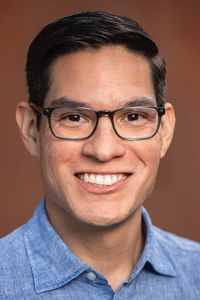
Background
Eric Norman earned a bachelor's degree from the University of North Texas in 2008, a graduate degree from the Tropical Agricultural Research and Higher Education Center in 2012, and a graduate degree from the University of North Texas in 2012.[1]
- Graduate:
- University of North Texas, 2012
- Bachelor's:
- University of North Texas, 2008
Campaign themes
Eric Norman has not yet completed [the profile publisher]'s 2026 Candidate Connection survey.
Send a message to Eric Norman asking him to fill out the survey.
If you are Eric Norman, click here to fill out [the profile publisher]'s 2026 Candidate Connection survey.
Who fills out the candidate survey?
Any candidate running for elected office, at any level, can complete [the profile publisher]'s Candidate Survey. Completing the survey will update the candidate's [the profile publisher] profile, letting voters know who they are and what they stand for. More than 32,000 candidates have taken [the profile publisher]'s candidate survey since we launched it in 2015. Learn more about the survey here.
You can ask Eric Norman to fill out this survey by using the button below or emailing EricforTexas44@gmail.com.
Who are you? Tell us about yourself.
I’m a native Texan with loved ones all over the state. Growing up in McAllen, I kept busy playing basketball and spent my summers camping with the Boy Scouts. At 18 years old, I earned the rank of Eagle Scout and moved to Denton to attend the University of North Texas. After graduation, I worked in the hospitality industry before returning to school to earn a master’s degree in International Sustainable Tourism. In 2012, I married my longtime girlfriend, and together we relocated to various states and countries to pursue job opportunities.
We moved to Seguin in 2019 because we were drawn to the friendly community, beautiful neighborhoods, and historic downtown. We quickly fell in love with the community and show our gratitude by serving on the boards of various organizations - from promoting the arts via the Seguin Commission on the Arts and advocating for the Hispanic community with LULAC to supporting local business owners through the Seguin Downtown Business Alliance and even co-founding a nonprofit community bike shop, Community Cycles Seguin. While this work is rewarding, it exposes us to the challenges facing hard-working Texans in the community.
I’m driven to serve as Representative to confront these issues. We can do a much better job at creating an inclusive community that provides dignity, support, and opportunity for all.
Please list below 3 key messages of your campaign. What are the main points you want voters to remember about your goals for your time in office?
I’m ready to defend public education from voucher programs that will never deliver the benefits they promise. Our schools need more support, not to be undermined by another program that would benefit only a select few. Don’t believe me? When a similar bill passed in Arkansas, 95% of vouchers went to students already enrolled in private schools. Despite multiple bipartisan rejections by the Texas Legislature, candidates who support vouchers are being funded by special interest groups with something to gain. Gambling with the future of our children is, and will always be, a no-go for me.No one chooses to get chronically ill, and I don’t believe a diagnosis should derail someone’s personal, financial, or career goals. Healthcare costs are out of control, whether you have health insurance or not. Although we pay into the system via federal taxes, Texas lawmakers have chosen not to expand Medicaid, leaving benefits we already pay for on the table. As a consequence, our state has the highest uninsured rate in the U.S. and pays $5.5B every year to cover the medical treatment of uninsured people. This makes healthcare more expensive for us all and causes people to delay or defer needed treatment while something can still be done.From rising maternal mortality rates, to stripping away autonomy over reproductive care, Texan lawmakers made it abundantly clear that women are not a priority in this state. That’s unacceptable – regardless of the roles women play in our families or the careers they pursue, everyone’s entitled to their natural rights. By intentionally refusing to clarify what qualifies for a legal exception, lawmakers have essentially banned abortion for people without the resources to leave the state. Not only is this dangerous and cruel, but it’s also ineffective. Since Texas implemented its ban in 2021, abortions increased nationwide. Lawmakers have no place in this private and personal medical decision.
What areas of public policy are you personally passionate about?
I see the world through the lens of sustainability, which is often misrepresented as only focusing on the environment. In reality it’s a decision-making process considering the long-term effects on society, the economy, and the environment.
For example, Texas’ decision not to be part of the national grid means power plants aren’t required to follow federal regulations, like weatherizing supply lines. Operators saw this as an unnecessary cost, but when lines froze during the winter storm in 2021, millions of Texans lost power, and 246 people died. In a state that built its reputation on energy, these deaths didn’t need to happen. It highlights the role diverse perspectives play in governance, and it’s one more thing I bring to the table.
Who do you look up to? Whose example would you like to follow, and why?
Jonas Salk, the scientist who developed the vaccine that eradicated polio. Although extremely impressive, it wasn’t his professional achievements that make him a role model, it was his unselfish contribution to human progress. Dr. Salk passed up the personal wealth he could have made by patenting the vaccine so it could be produced cheaply and distributed around the globe. His breakthrough saved millions from paralysis and death, and his generosity should be a lesson to all of us.
Do you believe it’s beneficial to build relationships with other legislators? Please explain your answer.
Absolutely. In a state as large as Texas, our districts represent diverse landscapes, cultures, and challenges. My job is bringing the concerns of my constituents to Austin and collaborating with other lawmakers to resolve our shared challenges. I’m willing to sit down with anyone who comes to the table to solve problems and negotiate in good faith. In fact, I look forward to getting to know other legislators personally. I wouldn’t be doing my job if I didn’t make friendships and join coalitions to get make progress.
That said, standing firm in defense of your values is sometimes necessary, even among friends, and I’m not afraid to do that. Life has shown me that personal relationships can be useful in humanizing stereotypes and I’d do everything possible to advocate for my district. Texas would benefit from more bipartisan collaboration, and I’m willing to do my part.
Note: Norman submitted the above survey responses to [the profile publisher] on March 19, 2024.
Show past responsesHide past responses
February 6 submission
Who are you? Tell us about yourself.
I’m a native Texan with loved ones all over the state. Growing up in McAllen, I kept busy playing basketball and spent my summers camping with the Boy Scouts. At 18 years old, I earned the rank of Eagle Scout and moved to Denton to attend the University of North Texas. After graduation, I worked in the hospitality industry before returning to school to earn a master’s degree in International Sustainable Tourism. In 2012, I married my longtime girlfriend, and together we relocated to various states and countries to pursue job opportunities.
We moved to Seguin in 2019 because we were drawn to the friendly community, beautiful neighborhoods, and historic downtown. We quickly fell in love with the community and show our gratitude by serving on the boards of various organizations - from promoting the arts via the Seguin Commission on the Arts and advocating for the Hispanic community with LULAC to supporting local business owners through the Seguin Downtown Business Alliance and even co-founding a nonprofit community bike shop, Community Cycles Seguin. While this work is rewarding, it exposes us to the challenges facing hard-working Texans in the community.
I’m driven to serve as Representative to confront these issues. We can do a much better job at creating an inclusive community that provides dignity, support, and opportunity for all.
Please list below 3 key messages of your campaign. What are the main points you want voters to remember about your goals for your time in office?
I’m ready to defend public education from voucher programs that will never deliver the benefits they promise. Our schools need more support, not to be undermined by another program that would benefit only a select few. Don’t believe me? When a similar bill passed in Arkansas, 95% of vouchers went to students already enrolled in private schools. Despite multiple bipartisan rejections by the Texas Legislature, candidates who support vouchers are being funded by special interest groups with something to gain. Gambling with the future of our children is, and will always be, a no-go for me.No one chooses to get chronically ill, and I don’t believe a diagnosis should derail someone’s personal, financial, or career goals. Healthcare costs are out of control, whether you have health insurance or not. Although we pay into the system via federal taxes, Texas lawmakers have chosen not to expand Medicaid, leaving benefits we already pay for on the table. As a consequence, our state has the highest uninsured rate in the U.S. and pays $5.5B every year to cover the medical treatment of uninsured people. This makes healthcare more expensive for us all and causes people to delay or defer needed treatment while something can still be done. From rising maternal mortality rates, to stripping away autonomy over reproductive care, Texan lawmakers made it abundantly clear that women are not a priority in this state. That’s unacceptable – regardless of the roles women play in our families or the careers they pursue, everyone’s entitled to their natural rights. By intentionally refusing to clarify what qualifies for a legal exception, lawmakers have essentially banned abortion for people without the resources to leave the state. Not only is this dangerous and cruel, but it’s also ineffective. Since Texas implemented its ban in 2021, abortions increased nationwide. Lawmakers have no place in this private and personal medical decision.
What areas of public policy are you personally passionate about?
I see the world through the lens of sustainability, which is often misrepresented as only focusing on the environment. In reality it’s a decision-making process considering the long-term effects on society, the economy, and the environment.
For example, Texas’ decision not to be part of the national grid means power plants aren’t required to follow federal regulations, like weatherizing supply lines. Operators saw this as an unnecessary cost, but when lines froze during the winter storm in 2021, millions of Texans lost power, and 246 people died. In a state that built its reputation on energy, these deaths didn’t need to happen. It highlights the role diverse perspectives play in governance, and it’s one more thing I bring to the table.
Who do you look up to? Whose example would you like to follow, and why?
Jonas Salk, the scientist who developed the vaccine that eradicated polio. Although extremely impressive, it wasn’t his professional achievements that make him a role model, it was his unselfish contribution to human progress. Dr. Salk passed up the personal wealth he could have made by patenting the vaccine so it could be produced cheaply and distributed around the globe. His breakthrough saved millions from paralysis and death, and his generosity should be a lesson to all of us.
Do you believe it’s beneficial to build relationships with other legislators? Please explain your answer.
Absolutely. In a state as large as Texas, our districts represent diverse landscapes, cultures, and challenges. My job is bringing the concerns of my constituents to Austin and collaborating with other lawmakers to resolve our shared challenges. I’m willing to sit down with anyone who comes to the table to solve problems and negotiate in good faith. In fact, I look forward to getting to know other legislators personally. I wouldn’t be doing my job if I didn’t make friendships and join coalitions to get make progress.
That said, standing firm in defense of your values is sometimes necessary, even among friends, and I’m not afraid to do that. Life has shown me that personal relationships can be useful in humanizing stereotypes and I’d do everything possible to advocate for my district. Texas would benefit from more bipartisan collaboration, and I’m willing to do my part.
On the 2026 ballot
Links
Compiled from the candidate’s published profile as of September 30, 2026.
Source(opens in new tab)