
Background
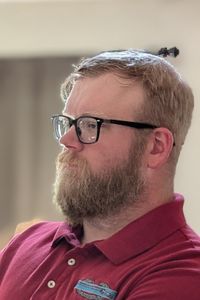
Eric Beebe (independent) ran for election to the U.S. House to represent Indiana's 2nd Congressional District. He will not appear on the ballot for the general election on November 3, 2026.
- Bachelor's:
- Purdue Northwest University, 2018
Campaign money
- Raised
- —
- From individuals
- $0
- From PACs & party
- $0
- Own money
- —
FEC filings.
View on FEC.gov(opens in new tab)In their own words
Who are you? Tell us about yourself.
I’m Eric Beebe — a U.S. Army veteran, Purdue-educated engineer, father of three, and lifelong resident of LaPorte County. I’ve spent my life working, serving, and raising my family right here in northern Indiana. I’m running because too many of our citizens feel unheard and unrepresented, and too many ballots are left blank because no one was willing to stand up. My mission is to help rebuild faith in public service by proving that integrity, humility, and accountability still belong in American politics.
Please list below 3 key messages of your campaign. What are the main points you want voters to remember about your goals for your time in office?
Reclaim the Voice of the People: Every voter deserves a choice. I’m running to end unopposed elections and restore competitive democracy in Indiana. No more gatekeeping, no more silent ballots.Equity is the Foundation of Liberty: True freedom requires access to healthcare, education, and fair opportunity. A nation that leaves its people behind cannot call itself free.Civic Virtue over Party Loyalty: I believe in principle before politics. My campaign is about integrity, accountability, and the courage to serve citizens — not party machines or special interests.
What areas of public policy are you personally passionate about?
I’m most passionate about policies that strengthen the foundations of the Republic — civic education, equitable healthcare, and democratic reform.
Civic Education: We must restore civic literacy so every citizen understands not just their rights, but their responsibilities.
Healthcare and Education Equity: A healthy, educated population is the lifeblood of a free society. These are not partisan issues; they are the moral infrastructure of liberty.
Democratic Accountability: From open primaries to term limits and transparent local governance, we need reforms that return power to citizens and make public service about service again.
Who do you look up to? Whose example would you like to follow, and why?
It's hard to have a contemporary to look up to without reservation. It's even harder to find someone in history that isn't problematic. I look up to all of the people who feel unheard and continue fighting to find their voice.
What characteristics or principles are most important for an elected official?
Integrity, accountability, and humility. Elected officials should remember they work for the people — not the other way around. It’s not enough to talk about transparency; they have to practice it through open communication, responsiveness, and honesty about both successes and failures. The best leaders are those who listen first, admit when they’re wrong, and never forget who sent them to Washington.
What do you believe are the core responsibilities for someone elected to this office?
A member of Congress has three core responsibilities: representation, oversight, and stewardship.
Representation means carrying the voices and needs of one’s district into every vote and debate.
Oversight means holding the executive branch accountable, regardless of party.
Stewardship means safeguarding the long-term health of our Republic — not just winning the next election.
An effective representative must balance immediate local needs with the enduring principles of liberty, justice, and the common good.
What legacy would you like to leave?
As a parent, I try to think back on my childhood and how my parents would treat a given situation. I remember asking them why we were attacked on 9/11/01. "Because they hate our freedoms." Now, when my children ask why we attack other countries or when they see the aftermath of state sanctioned genocide, I have no answer. We say we don't fight over words, but we have a bullet point of "But they said 'death to America'" in the list of reasons to bomb, maim, and kill.
I don't want to leave a legacy. I want to leave a future.
What is the first historical event that happened in your lifetime that you remember? How old were you at the time?
When I was 3 I was very confused why there was a war on TV about golf (Desert Shield/Storm)
What was your very first job? How long did you have it?
Corn detasseling, most likely. But I worked at the a chain sandwich shop, that did not stick around for long, in high school. Left the fast pace life of au jus sauce for the economical powerhouse that was the $5 hot and ready my junior year. I will always appreciate fast food workers, especially on a Friday night. Brutality scratches the surface of the minimum wage, maximum expectation work environment.
What is your favorite book? Why?
Recently, I've been on a Mike Duncan kick. His book, Hero of Two Worlds: The Marquis de Lafayette in the Age of Revolution, is an outstanding look on republicanism and the statesman at the time.
If you could be any fictional character, who would you want to be?
My wife says I'm like Homer. Surely she means the author of antiquity.
What is something that has been a struggle in your life?
Remembering the hex size of the oil drain plug on my truck. Its always the one size larger or smaller.
What qualities does the U.S. House of Representatives possess that makes it unique as an institution?
The House is the people’s chamber. It is the most direct expression of the citizen’s voice in federal government. Its two-year terms keep members accountable, its size ensures representation across diverse regions, and its constitutional powers, particularly over spending and investigation, make it the front line of democratic oversight.
Do you believe that it's beneficial for representatives to have previous experience in government or politics?
Experience can help, but it should never become a barrier to entry. Government needs expertise, but it also needs citizens who understand life outside of politics — teachers, veterans, engineers, nurses, and small business owners. A healthy republic balances professional knowledge with fresh civic energy.
What do you perceive to be the United States' greatest challenges as a nation over the next decade?
Our greatest challenge is rebuilding trust — trust in our institutions, our elections, and one another. The erosion of civic faith threatens the Republic more than any foreign adversary. If citizens lose confidence that their voice matters, democracy begins to hollow out from within. To meet this challenge, we must restore civic education, protect fair elections, and make government work visibly and honestly for the people again.
Do you believe that two years is the right term length for representatives?
Yes. Two-year terms keep representatives accountable to the people. The short cycle forces responsiveness and humility. However, it also demands that we reform how campaigns are financed so representatives can focus more on governing and less on fundraising.
What are your thoughts on term limits?
I support reasonable term limits for members of Congress. Public service should be a duty, not a career. Term limits would encourage new voices, reduce the influence of entrenched interests, and restore the idea that leadership belongs to citizens willing to serve for a time and then return to their communities.
Do you believe that compromise is necessary or desirable for policymaking?
Yes. Compromise, when rooted in principle, is essential to a functioning republic. The Founders built the House to represent diverse interests and find consensus through debate. Compromise should never mean abandoning core values — it should mean finding practical ways to advance the public good together.
The Constitution says that all bills for raising revenue must originate in the House. What role would this power play in your priorities if elected?
That responsibility should be treated as a moral and constitutional trust. Revenue decisions reflect national priorities and values. I would use that power to advance fiscal policy that invests in education, healthcare, infrastructure, and the long-term strength of the Republic, while ensuring accountability for every dollar spent.
How should the U.S. House use its investigative powers?
The House’s investigative power is a safeguard of the Republic. It should be used to uncover truth, protect the public interest, and ensure no one — whether of the government or of private power — is above the law. Oversight should be fact-driven and nonpartisan, aimed at justice, not headlines.
What is an accomplishment that you are proud of?
Winning an indoor soccer tournament as a coach for my oldest son's team. It was on my second son's birthday, no less. One of the proudest dad moments was seeing my champ giving his trophy to his brother.
What legislation would you enact related to election administration in the United States?
I would support legislation to:
Expand ballot access and end gerrymandering through independent redistricting commissions.
Strengthen election security and transparency with auditable paper trails.
Ensure fair ballot access for independent and non-incumbent candidates.
Invest in civic education so every voter understands not only how to vote, but why it matters.
The right to vote and to have real choices on the ballot is the cornerstone of every other freedom we have.
On the 2026 ballot
Links
Compiled from the candidate’s published profile as of September 30, 2026 and FEC filings.
Source(opens in new tab)