
Background
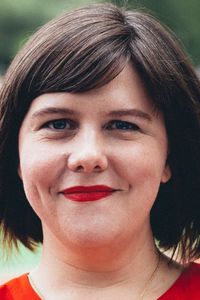
Emily Gallagher was born in Fairfax, Virginia. Gallagher earned an undergraduate degree from Ithaca College in 2006. Her career experience includes working as the national community affairs assistant director for HI USA; in nonprofit education with the Tenement Museum, EF Smithsonian, and Hostelling International; and as a researcher and oral historian. Gallagher has been associated with Neighbors Allied for Good Growth, the Greenpoint Star, and the Greenpoint Task Force.[1]
- Bachelor's:
- Ithaca College, 2006
Campaign themes
Emily Gallagher has not yet completed [the profile publisher]'s 2026 Candidate Connection survey.
Send a message to Emily Gallagher asking her to fill out the survey.
If you are Emily Gallagher, click here to fill out [the profile publisher]'s 2026 Candidate Connection survey.
Who fills out the candidate survey?
Any candidate running for elected office, at any level, can complete [the profile publisher]'s Candidate Survey. Completing the survey will update the candidate's [the profile publisher] profile, letting voters know who they are and what they stand for. More than 32,000 candidates have taken [the profile publisher]'s candidate survey since we launched it in 2015. Learn more about the survey here.
You can ask Emily Gallagher to fill out this survey by using the buttons below or emailing field@emilyforassembly.com.
Emily Gallagher did not complete [the profile publisher]'s 2024 Candidate Connection survey.
Emily Gallagher did not complete [the profile publisher]'s 2022 Candidate Connection survey.
Video for [the profile publisher]
Video submitted to BallotpediaReleased September 30, 2019
Who are you? Tell us about yourself.
Emily Gallagher is a longtime community activist in North Brooklyn who has been organizing with her Greenpoint neighbors for more than a decade. A member of Community Board 1 and a former co-chair of Neighbors Allied for Good Growth (now North Brooklyn Neighbors), Emily has worked for tenant protections, safe and reliable transportation, and environmental justice. A survivor of sexual violence, she cofounded Greenpoint Sexual Assault Task Force which organized for a trauma-centered approach to reforming the NYPD's handling of rape and assault. She's also a former representative to the Mobilization Against Displacement. Emily has worked in museum education and as a Community Affairs Director for a major nonprofit.
Please list below 3 key messages of your campaign. What are the main points you want voters to remember about your goals for your time in office?
North Brooklyn deserves a healthy, stable, truly affordable housing. We need to pass universal rent control, bring massive new state investments in NYCHA, and stop incentivizing luxury development.The science is clear: we have a decade to transform our energy system or face catastrophe. We must expand and enforce the Climate Leadership and Community Protection Act, fully fund the Department of Environmental Conversation, stop building new pipelines and dumping sewage in Newtown Creek, and bring a real Green New Deal to New York.Transportation is a basic right. But years of neglect, financial mismanagement, poor oversight, and distorted priorities have created a slow-building disaster. We need green, safe and reliable transit options for every neighborhood and we must end the dominance of cars on our streets.
What areas of public policy are you personally passionate about?
North Brooklyn deserves a healthy, stable, truly affordable housing. Last year we made enormous strides in protecting and expanding tenants rights in Albany. But it's not being enforced. And nearly half of New Yorkers are rent burned, many severely so. We need a leader who'll fight for housing justice for all.
North Brooklyn deserves a healthy environment. From contaminated development sites to the fumes off the BQE, we still struggle with the toxic legacy of industry. Polluters aren't being made to pay for what they've done--and when they do, the money is insufficient and gobbled up by the general fund. I was an early leader in the fight for more greenspace and parks in our community after the 2005 rezoning. I know there's so much more to do. Meanwhile, the threat of catastrophic climate change draws ever closer. We may have just passed an ambitious climate change law but we need representatives who will chase it, clarify it, and make sure the goals are being met.
And North Brooklyn deserves work that works for us. Millions are out of work. The jobs we do hold don't look like the jobs in the past. Many of us work multiple jobs and are enlisted as contractors or part-time workers without benefits. We are harassed, exploited and sometimes even killed on the job with little power to seek justice. We need a representative who will stand up for a real living wage and the right to organize.
Who do you look up to? Whose example would you like to follow, and why?
I look up to Angelina Emily Grimke (1805- 1874). She and her sister Sarah were among the very few white southern women to become open abolitionists. They fought for women's rights to participate in political discourse and used their privilege to fight for social change. They were bold and outspoken advocates for both abolition and women's rights. They are a great example of the belief that none of us are free until all of us are free.
Is there a book, essay, film, or something else you would recommend to someone who wants to understand your political philosophy?
Common Sense and a Little Fire by Annaliese Orleck
What characteristics or principles are most important for an elected official?
Standing up for the vulnerable and marginalized, organizing to challenge undemocratic concentrations of wealth and influence, believing in the power of ordinary people to improve their lives and their communities through collective action-this is what it means to be a progressive. And I've been one my whole life. From blowing the whistle on an abusive teacher in high school to protesting the War in Iraq and holding space with Occupy Wall Street to organizing tenants and small businesses owners to protect their homes and livelihoods to helping progressives get elected across the city, it's not just about what you believe-it's about what you do.
What qualities do you possess that you believe would make you a successful officeholder?
Communications and relationship-building expertise with experience strategically representing programs to diverse constituencies. Team-oriented, collaborative, and comfortable working across cultures. Passion for social justice and human rights. Resourceful, with good problem-solving skills: work well under pressure and with tight deadlines. Also, I have experienced the struggles of my constituents throughout my adult life-- I've lost friends to traffic violence, opioid addiction, and suicide. I'm a survivor of sexual assault and harassment. I've had insecure housing and insecure income. I can relate, and I can see the systemic causes of so much despair that could be fixed.
What do you believe are the core responsibilities for someone elected to this office?
I want to make my Assembly office a hub for local organizing and civic participation. We'll plan frequent, dynamic and relevant public town halls on key issues facing our community. Create a rotating youth advisory council of high school and college-age residents and a community advisory council open to all to discuss, craft and lobby for important legislation.
What legacy would you like to leave?
Empowering communities that have historically been ignored or underrepresented, moving our country towards a Green New Deal and repairing the harms done to environmental justice communities, making civic engagement clearer, easier and more functional. Creating a government based on equity and multiple perspectives, rather than power brokering for elites.
What is the first historical event that happened in your lifetime that you remember? How old were you at the time?
I remember the Oklahoma City Bombing being broadcast on a breaking news special report on TV when I was home sick from school at the age of 11. It was terrifying.
What was your very first job? How long did you have it?
My first full time "position" was volunteering the summer I was 15 in Rochester, New York at the Southeast Ecumenical Food Pantry. When I was 16, I got a paid job at the Gap in Eastview Mall and I worked there for a year and a half. I have a lot of stories about it!
What is something that has been a struggle in your life?
The "double bind" of being a professional, politically active woman.
What do you perceive to be your state’s greatest challenges over the next decade?
Economic inequality, mass incarceration and the climate crisis are the three biggest issues of our time, across the country and right here in New York State. All been created or exacerbated by decades of state policies we're only just starting to unravel. Gov. Cuomo's austerity budget, his refusal to increase taxes billionaires and corporations, and the rollbacks of bail reform threaten to reverse what progress we've started to make. Meanwhile, Albany has not been nearly aggressive enough in enforcing its climate change legislation, which needs to be radically expanded to include economic justice measures. We outline proposals for each of these areas at emilyforassembly.com.
What do you believe is the ideal relationship between the governor and the state legislature?
Despite its progressive reputation, New York State has been mired in corruption, scandal, backroom deals, machine politics and dismal voter participation for decades. An entrenched party establishment, especially at the state level, has sent an unmistakable signal to voters: leave politics to the professionals, we'll make the decisions. Governor Cuomo has been the main culprit in this attitude.
We're starting to wake up. Longtime incumbents are finally being challenged. Turnout in the 2018 elections nearly doubled from the 2014 midterms (though it was still among the lowest in the country). And we're starting to see new experiments in electoral reform, from early voting to a robust public matching system in New York City races.
But our electoral process is still terribly antiquated. Big money donors still exert too much influence. It's still way too hard for working class New Yorkers to run for office. And sometimes it seems like our Governor thinks he's a King. I intend to change that.
Do you believe it’s beneficial to build relationships with other legislators? Please explain your answer.
Absolutely! It's the only way anything gets done. But it's equally important to build relationships with residents and organizers-outside pressure is as important as inside dealmaking.
On the 2026 ballot
Links
- Campaign X(opens in new tab)
- Personal X(opens in new tab)
- Campaign website(opens in new tab)
- Official website(opens in new tab)
- Official youtube(opens in new tab)
- Campaign facebook(opens in new tab)
- Official facebook(opens in new tab)
- Personal linkedin(opens in new tab)
- Campaign instagram(opens in new tab)
- Personal instagram(opens in new tab)
Compiled from the candidate’s published profile as of September 30, 2026.
Source(opens in new tab)