
Background
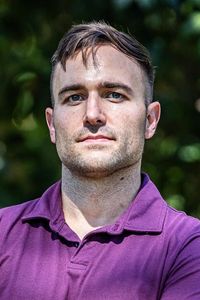
Dylan Blaha was born in Palos Heights, Illinois. As of 2026, Blaha was serving in the U.S. Army National Guard, having begun his service in 2012. He graduated from Lemont High School. He earned a bachelor's degree from the University of Illinois Urbana-Champaign in 2016 and completed his graduate studies there in 2023. His career experience includes working as a cancer research scientist in the Department of Biochemistry at the University of Illinois from 2017 to 2021. Blaha has been affiliated with the ACLU, Planned Parenthood, Working Families Party, and Democratic Socialists of America.[1]
- Graduate:
- University of Illinois, Urbana-Champaign, 2023
- Bachelor's:
- University of Illinois, Urbana-Champaign, 2016
- High school:
- Lemont High School
Campaign money
- Raised
- —
- From individuals
- $0
- From PACs & party
- $0
- Own money
- —
FEC filings.
View on FEC.gov(opens in new tab)In their own words
Video for [the profile publisher]
Video submitted to BallotpediaReleased February 10, 2026
Who are you? Tell us about yourself.
I am a cancer research scientist, Army National Guard officer, and community organizer running for Congress in Illinois’ 13th District. I grew up in a working-class family and learned early how fragile economic security can be. Professionally, I have spent years in public service, conducting biomedical research at the University of Illinois and serving 13 years in the Illinois Army National Guard, including deployments to Afghanistan and Germany. Those experiences taught me how policy decisions affect real people’s health, livelihoods, and safety. I’m running for office to bring evidence-based decision-making, integrity, and a working-class perspective to Congress. I'm running a grassroots campaign, because I'm not owned by special interest groups or the wealthy - I work for The People.
Please list below 3 key messages of your campaign. What are the main points you want voters to remember about your goals for your time in office?
Government should materially improve people’s lives. I am running to use public office as a tool for real economic relief. That means fighting for universal healthcare through Medicare for All, lowering prescription drug costs, building affordable housing, and ensuring every worker earns a living wage indexed to inflation. Too many families in Central and Southern Illinois are working harder each year while falling further behind. My campaign is focused on policies that reduce the cost of living, strengthen disenfranchised communities, and ensure no one is forced to choose between their health, their home, and their paycheck.Public service must be grounded in evidence, accountability, and integrity. As a cancer research scientist and Army officer, I am trained to make decisions based on evidence, risk assessment, and accountability. I believe Congress should approach policy the same way - by listening to experts, evaluating outcomes, and being honest with the public. I will fight to get corporate money out of politics, push to reform our democratic institutions, and restore trust in government by putting people over profits and transparency over political theater.Working people deserve representation that cares about them, not the wealthy and well connected. I am running as a working-class candidate who understands the realities facing families in Illinois’ 13th District. I have served in uniform, worked in research and education, and organized in my community, rather than climbing the political ladder. My campaign is powered by grassroots donors and volunteers, not corporate PACs. I believe Congress works best when it reflects the people it serves, and I am committed to being an accessible, responsive representative who fights for working people, rural communities, and those too often left out of Washington decision-making.
What areas of public policy are you personally passionate about?
I am most passionate about policies that guarantee dignity and security for every person. That includes Medicare for All, so no one is denied care because of cost; large-scale investment in affordable housing; and jobs that pay living wages so working families can actually get ahead. I am also committed to cutting excessive military spending and reinvesting those resources in education, public media, and community infrastructure. Finally, I support policies such as reparations that directly address systemic racism and the lasting harms of discrimination. Building a just society requires confronting inequality honestly and investing in people rather than endless war or corporate profit.
Who do you look up to? Whose example would you like to follow, and why?
My dad. He's always taught me the difference between right and wrong and how to treat others with dignity and respect.
What characteristics or principles are most important for an elected official?
The most important characteristics for an elected official are integrity, accountability, and courage. Integrity means being honest with constituents and not allowing corporate or special interests to dictate decisions. Accountability requires transparency, responsiveness, and a willingness to admit mistakes. Courage is essential to take principled positions, even when they are politically difficult. I also believe effective leaders must be evidence-driven, collaborative, and committed to serving the public good above personal ambition. Public office is a responsibility, not a platform for self-enrichment.
What do you believe are the core responsibilities for someone elected to this office?
The core responsibilities of a member of Congress are to legislate, provide oversight, and represent their constituents. Legislatively, that means drafting and voting on laws that improve people’s lives and strengthen the country’s long-term stability. Oversight requires holding federal agencies and the executive branch accountable to ensure laws are implemented effectively and ethically. Representation means maintaining open communication with constituents, advocating for district needs, and ensuring local communities have a voice in national decisions. Public office is a duty to serve - not to advance personal or partisan interests.
What legacy would you like to leave?
I would like to leave a legacy of integrity, courage, and meaningful impact. I am not seeking public office for personal wealth or recognition, but to improve people’s lives in tangible ways. If I can help deliver universal healthcare, strengthen economic security for working families, and defend democratic institutions, then I will consider my service worthwhile. Ultimately, I hope to be remembered as someone who used the responsibilities of office to leave the country more just, more stable, and more compassionate than I found it.
What is the first historical event that happened in your lifetime that you remember? How old were you at the time?
9/11 - I was eight years old
What was your very first job? How long did you have it?
I worked in a nursing home kitchen in high school, washing dishes and serving residents. I worked there my junior and senior years.
What is your favorite book? Why?
It's hard to pick an all-time favorite, because I enjoy lots of fantasy and science fiction, but I also read lots of non-fiction. The Four Agreements really helped me work through my PTSD.
If you could be any fictional character, who would you want to be?
Captain America. I like the idea of being able to save people in their time of need.
What is something that has been a struggle in your life?
Combat PTSD from military service
What qualities does the U.S. House of Representatives possess that makes it unique as an institution?
The U.S. House of Representatives is unique because it is the chamber closest to the people. With members elected every two years and representing smaller districts, the House is designed to be responsive to shifting public sentiment and local concerns. It holds the constitutional power to initiate revenue legislation and has sole authority to impeach federal officials, making it central to both fiscal policy and oversight. Its size and diversity of districts allow for a wide range of perspectives, reflecting the complexity of the nation it serves.
Do you believe that it's beneficial for representatives to have previous experience in government or politics?
Previous experience in government or politics can be beneficial because it provides familiarity with legislative procedure, institutional rules, and coalition-building. However, it is not a prerequisite for effective representation. Experience in fields such as science, education, business, labor, military service, or community organizing can offer equally valuable perspectives and problem-solving skills. A healthy democracy benefits from leaders with diverse professional and life experiences who bring real-world understanding to public policy, not solely career politicians.
What do you perceive to be the United States' greatest challenges as a nation over the next decade?
Over the next decade, the United States faces serious challenges to both its democracy and its economic stability. The rise of authoritarian political movements and the growing influence of concentrated wealth threaten democratic institutions and public trust. At the same time, climate change, widening wealth inequality, and the rapid advancement of artificial intelligence without adequate safeguards pose structural risks to workers, communities, and national security. Addressing these challenges will require strengthening democratic norms, reducing corporate concentration, investing in climate resilience, and ensuring emerging technologies serve the public good rather than undermine it.
Do you believe that two years is the right term length for representatives?
The two-year term ensures accountability and keeps representatives closely connected to their constituents. However, the near-constant campaign cycle can limit time available for legislating and constituent service. I believe we should either consider modestly lengthening the term or, more importantly, reform campaign structures so members can spend more time governing and less time fundraising. Strengthening campaign finance laws and reducing the pressure of perpetual campaigning would allow representatives to focus on policy, oversight, and the needs of their districts.
What are your thoughts on term limits?
I support term limits for the Supreme Court, the Senate, and the House of Representatives. While experience in public office can be valuable, extended tenure can also entrench power and distance elected officials from the people they serve. In an ideal system with strong accountability and limited influence from special interests, term limits might be less necessary. However, given the current political environment, I believe reasonable term limits would help promote fresh perspectives, reduce the concentration of power, and strengthen public trust in our democratic institutions.
Is there a particular representative, past or present, whom you want to model yourself after?
I admire leaders such as Bernie Sanders, Alexandria Ocasio-Cortez, and Ilhan Omar for their willingness to challenge entrenched power structures and advocate unapologetically for working people. While I bring my own background and perspective to public service, I respect their commitment to economic justice, anti-corruption reforms, and expanding access to healthcare, housing, and education. I believe elected officials should be responsive to grassroots movements and unafraid to push for transformative policies when incremental change is insufficient.
Both sitting representatives and candidates for office hear many personal stories from the residents of their district. Is there a story that you’ve heard that you found particularly touching, memorable, or impactful?
I have spoken with several constituents who shared that they were forced to give up their health insurance because they could no longer afford premiums after losing Affordable Care Act subsidies. One conversation that stayed with me was with a working adult who did everything “right” (maintained employment, paid taxes) yet still had to choose between healthcare coverage and paying for rent and groceries. Hearing how quickly economic security can unravel reinforced my belief that healthcare should not depend on income fluctuations or policy changes. Those stories underscore why universal healthcare must be a national priority.
Do you believe that compromise is necessary or desirable for policymaking?
Effective policymaking requires negotiation, but not surrendering core principles. Negotiation means engaging in good-faith dialogue, building coalitions, and finding practical pathways to pass legislation that improves people’s lives. Compromise, however, should not mean diluting policies to the point where they no longer meaningfully address the problem. Too often, political “compromise” results in protecting powerful interests while delivering too little for working people. I believe in negotiating strategically to achieve progress, without abandoning fundamental commitments to economic justice, democratic accountability, and equal protection under the law.
The Constitution says that all bills for raising revenue must originate in the House. What role would this power play in your priorities if elected?
The House’s constitutional authority to originate revenue bills is one of its most significant powers. If elected, I would use that authority to advance a more equitable tax system by increasing taxes on the wealthiest individuals, closing corporate loopholes, and ensuring highly profitable companies pay their fair share. Revenue policy should reduce inequality and fund essential public investments such as healthcare, education, housing, and infrastructure. The power to raise revenue should be used responsibly to strengthen economic stability and ensure the tax code reflects shared responsibility.
How should the U.S. House use its investigative powers?
The House has a constitutional responsibility to use its investigative powers to uphold the rule of law, ensure transparency, and protect the public interest. Oversight should be serious, fact-based, and free from partisan spectacle. That includes fully investigating credible evidence of corruption, abuse of power, or criminal misconduct, regardless of political party or status. Matters involving high-profile criminal cases, including those connected to the Epstein investigation, and any violations of federal law by executive branch officials must be pursued thoroughly and transparently. No individual should be above the law, and accountability is essential to maintaining public trust in democratic institutions.
What organizations or individuals have endorsed your campaign?
Abundant Housing Illinois, Beyond the Ballot, Citizens against AIPAC Corruption, Cook County Latino Dems, Downstate Forward PAC, Muslims United Committee, Peace Action, Progressive Democrats of America, Southern Illinois People for Progress, The Justice Coalition, The Oath of Office, UC Jews for Ceasefire
Candidates hear many personal stories from voters. Is there a story that you’ve heard that you found particularly touching or memorable?
One of the most touching experiences has been meeting people who tell me they follow my campaign updates and policy videos online. I have spoken with everyone from high school students to seniors who say they feel more engaged in civic life because of the conversations we’re having. What moves me most is not recognition, but the reminder that people of all ages are paying attention and want to be part of shaping their future. Those moments reinforce why accessible communication and public engagement matter in a democracy.
What is an accomplishment that you are proud of?
I've received a decent amount of medals in the military, but I'm more proud of the research papers I published at the University of Illinois. I hope I was able to contribute meaningfully to the field of cancer immunology research.
What role should the United States government have in the development or use of artificial intelligence?
The federal government should play a proactive role in regulating and guiding the development of artificial intelligence. AI has enormous potential to improve healthcare, education, and productivity, but it must not come at the expense of workers, students, privacy, or the environment. Congress should establish clear guardrails around labor protections, data security, environmental impact, and algorithmic accountability. Public investment in research and workforce transition programs is also essential to ensure technological advancement benefits society broadly rather than concentrating power and wealth in a few corporations. Innovation should serve humanity - not undermine it.
What legislation would you enact related to election administration in the United States?
I would support passage of the John Lewis Voting Rights Advancement Act to restore and strengthen federal protections against discriminatory voting practices. I also believe Congress should work to repeal or preempt state laws that suppress voter participation through restrictive ID requirements, reduced early voting, or barriers to mail-in ballots. Additional priorities include expanding automatic and same-day voter registration, protecting election workers from intimidation, and increasing federal support for secure, modern election infrastructure. A healthy democracy depends on broad, equal access to the ballot. Last, we need to ensure every citizen receives the opportunity to vote by making Election Day a federal holiday.
Campaign websiteBlaha's campaign website stated the following:Anti AuthoritarianDonald Trump, Oligarchs, and the Republican Party continue to use the Project 2025 playbook to rapidly and illegally break this country and the U.S. Constitution, all at the expense of our most vulnerable. They share a fascist vision and seek to rapidly bend the will of Americans to the billionaire class. We cannot let them win.We need to speak up and fight for our rights now, or we will lose them. If you don't believe me, look at how authoritarian regimes stoke fear, stifle journalism, erode rights around the world. Many democrats believe we can wait until the November 2026 elections to turn things around, but I believe the fight must start now.As your Representative, I will continue to defend the constitution, as I have done for all of my adult life. I will not bend the knee and vote for authoritarian bills. I will not abandon or villainize vulnerable groups and give in to the far-right's rhetoric. I will not back down in the face of retaliation. I will not capitulate to fascists and authoritarians - I will stand up to them.Most importantly, I will ensure the voices of all my constituents are heard in Washington. I will do all I can to make you feel represented in Congress.Anti-OligarchyElon Musk spent over $277 million to elect Donald Trump to his second term. At the inauguration, he received a front row seat, along with Jeff Bezos, Mark Zuckerberg and other tech oligarchs, while the President literally left his supporters to sit out in the cold. It's time to get big money out of politics.Too many politicians, both Republican and Democrat, take money from big donors, lobbyists and corporate super PACs, who they are more loyal to than the constituents they serve. Representative Nikki Budzinski’s top donors include lobbyists and corporate super PACs. Only 5% of her donations come from small donors. She ran on a platform of getting “dark money” out of politics, but it now looks like she’s fallen victim to the same disease. We must fight to overturn Citizens United and get big money out of the pockets of American politicians.I will follow the path of Senator Bernie Sanders and other progressive leaders and only accept grassroots donations. I will also never allow money to influence my legislative decisions. This is a government of the people, by the people, for the people.A kleptocracy is a government whose corrupt leaders use their political power to expropriate the wealth of the people and land they govern. Sound familiar?The President launched crypto "meme" coins days before his inauguration. A meme coin is a cryptocurrency that originated from an internet meme and typically refers to a cryptocurrency with little to no value, authenticity, or utility. While it's difficult to pin down how much money he made from this "pump and dump" scheme, some experts believe he's made well over $100 million thus far.The President also launched a tariff war against the rest of the world, sending Wall Street and the global markets into chaos. One week after instituting these initial tariffs, he instituted a "90-day pause." It's important to note that the 145% tariffs on China, 25% tariffs on Canada and Mexico and 10% tariffs on nearly every other country will cause irreparable harm to the American economy.Before backing down on his tariff plan at 1:18 pm ET on April 9, the stock market had already begun to skyrocket, leading to concerns of insider trading. In fact, purchase orders specifically started to increase at 1:00 pm ET. Notably, U.S. Representative Marjorie Taylor Greene purchased stocks before the President's announcement. This is why we must ban congressional stock trading and eliminate insider trading in politics.Artificial Intelligence RegulationArtificial intelligence is transformative technology with applications in many areas of our workforce, economy, public service, and society. However, the unfettered development of AI and digital technology in the workplace has the ability to displace or de-skill jobs, affect physical health and safety, and impinge on workers' basic rights and freedoms.Advancements in artificial intelligence must not come at the cost of humanity. We must ensure fairness, protect human rights, and maintain societal well-being. The United States government must regulate artificial intelligence to mitigate significant risks to public safety and economic security, including bias, privacy infringement, misuse of misinformation, and potential harm to safety and security, while also fostering public trust and supporting responsible innovation.I support legislation that bans AI systems that undercut US labor and health and safety standards. Additionally, I oppose federal preemption laws blocking states' and cities' authority to safeguard their communities against harmful AI applications. We must establish strong guardrails to protect data privacy of workers and safeguard against the harms of AI, including workplace surveillance and algorithmic management.Furthermore, I support legislation requiring employers to give notice to workers displaced by AI and provide funding for income supports and retraining programs for affected workers. I will also introduce or back legislation that increases federal investments in workforce development programs, centering unions, and guaranteeing workers can access the training, wraparound support, and career pathways needed for success, including partnerships between labor.We must also pass copyright and intellectual property protections to safeguard the livelihoods of union professionals who rely more than ever on effective intellectual property rights to earn compensation and benefits. It's incredibly important to ensure future career opportunities in today's digital era.I will also introduce legislation to explicitly ban dangerous experimentation and harmful AI applications in high-risk fields, such as healthcare and transportation.Building Affordable HousingMany American cities face a housing shortage. The cost of renting and buying in Illinois has increased dramatically, due to a variety of factors, like private equity investments.Housing is a human right. We must protect current occupants, repair public housing, and build new affordable housing. We must also address the root causes of housing market inflation.I will introduce or back legislation to incentivize local governments to promote affordable housing in their communities by offering additional funds to local governments that advance the public interest. Measures like streamlining permits and timelines to accelerate the building of affordable housing and prohibiting landlords from rejecting a rental application on the basis of the applicant’s source of income will help promote affordable housing initiatives. We must do everything we can as legislators to increase public housing options.Rent increases have far outpaced wage increases, leaving families struggling to afford groceries, healthcare, clothes, or school supplies. I will support legislation like Alexandria Ocasio Cortez' The Place to Prosper Act, which proposed curbing rent increases for landlords who own 5 or more properties to just 3% of the preceding year’s rent.Additionally, we must stop unjust evictions, ensure rental access to lower income renters, and increase protections for homeowners. Furthermore, I will back a substantive Low Income Housing Tax Credit and permanent funding of the National Affordable Housing Trust Fund.Democratic ReformThe current system is broken. Too many politicians (Republican and Democrat) fall victim to a system that promotes greed, rewards stagnation and fails to incentivize change. We must get money out of politics, and that starts with overturning the Supreme Court's disastrous Citizens United ruling.Because of Citizens United, virtually unlimited sums of money can flow into American elections. Representative Budzinski raised over $4.3 million during her last campaign - mainly from law firms, lobbyists, and corporate super PACs. She ran on a platform of getting “dark money” out of politics, but it now looks like she’s fallen victim to the same disease.I will follow the path of Bernie Sanders and other progressive leaders and only accept grassroots donations. Also, I pledge to serve no more than five terms in the House of Representatives, if elected.The federal judiciary system also possesses many fractures and holes. The Supreme Court is supposed to be one of the checks on executive power, but lately they spend their time making decisions that hurt millions of Americans. We need to depoliticize the Supreme Court. This will prove difficult, but we can require a two-thirds Senate majority to confirm Justices, expand the Court to 15 seats, and implement term limits.Additionally, I support federal action to mandate nonpartisan redistricting commissions to draw congressional districts fairly and logically. Due to gerrymandering, many Americans believe their vote doesn't count, especially if they live in a deep blue or red district. Elected officials serve their constituents, not the other way around. We must do all we can to make Americans feel like they have a say in our democracy.The current administration put forward legislation to restrict voting rights in future elections. Additionally, the Supreme Court gutted the Voting Rights Act over the past two decades. I will co-sponsor the John R. Lewis Voting Rights Advancement Act and the For the People Act to strengthen voting rights. Additionally, I will oppose efforts to erect obstacles to voting, including those based on an individual's race and/or socioeconomic status.Last, I will support legislation to allow the delegate elected by District of Columbia residents to vote in the U.S. House of Representatives.Economic RightsHousing is a human right.We must protect current occupants, repair public housing, and build new affordable housing. We must also seek justice for small businesses and workers by rebuilding unions, investing in people instead of corporations, and providing a federal jobs guarantee.In his 1944 State of the Union address to Congress, President Franklin Delano Roosevelt spoke of a second bill of rights. He spoke of the right to adequate food and clothing, the right to a decent home, the right to a good education, the right to adequate medical care, and the right to protection from economic fears of old age, sickness, accidents, and unemployment.As FDR went on to say, all these rights spell security. I know many Americans are wishing they had some of that economic security right now.Congress must pass legislation like The Place to Prosper Act to incentivize local governments to promote affordable housing in their communities, streamline permits and timelines to accelerate the building of affordable housing, and prohibiting landlords from rejecting a rental application on the basis of an applicant's income source.Rent increases have outpaced wage increases in many communities, leaving families struggling to afford groceries, healthcare, clothes and school supplies. We must pass smart legislation to protect both renters and homeowners.We must also work to rebuild labor unions across America. The labor movement of the turn of the 20th century fought tirelessly for the workplace protections that helped bring power to the working class through greater economic democracy. Wealth and labor protections were directly responsible for the New Deal, which enabled a Golden Age for the U.S. economy. Unfortunately, far-right and reactionary movements, strengthened by Ronald Reagan and neoliberal establishment Democrats, have undone many labor protections.We must also invest in communities, rather than corporations. This means creating more equitable opportunities for small businesses and workers. This also means investing in community workforce training, apprenticeship programs, and support programs for small businesses.EducationThe federal government must do all it can to strengthen public education systems. We must also improve access to higher education and make it affordable to all, so students are prepared for jobs.Our public school systems should never be on t
On the 2026 ballot
Links
Compiled from the candidate’s published profile as of September 30, 2026 and FEC filings.
Source(opens in new tab)