
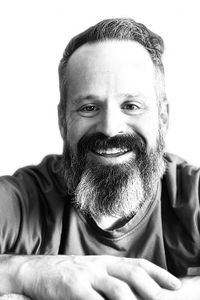
Background
Drew Howells served in the U.S. Army National Guard from 2004 to 2013. He earned a high school diploma from Trabuco Hills High School and a military citation from Defense Information School in 2006.[1]
- High school:
- Trabuco Hills High School
In their own words
Who are you? Tell us about yourself.
My name is Drew Howells, I'm a veteran, writer, policy advocate, and candidate for Utah House District 39. I served for more than a decade in the U.S. Air Force and the Utah Army National Guard as a public affairs specialist, working as a military journalist, media liaison, and strategic communicator. That experience taught me the value of clear communication, accountability, and public trust.
My professional background is in journalism, broadcast, communications, and strategic messaging. I’ve used those skills in advocacy and public policy work, including helping draft Utah's Prop 2, the Utah Medical Cannabis Act. I also helped run the campaign behind Prop 2 and worked on its public messaging. I’ve served in leadership roles with Democratic veterans’ organizations at both the county and state level as well.
I’m running because I believe government should solve real problems, protect human dignity, and plan responsibly for the future. I believe in evidence-based policy, transparent government, and building a Utah that is more affordable, more inclusive, and more prepared for the challenges ahead. I’m running to bring serious, thoughtful leadership to the legislature and help build the bright future Utah families deserve.
Please list below 3 key messages of your campaign. What are the main points you want voters to remember about your goals for your time in office?
Affordability and accessibility –– Utah should be affordable and accessible for the people who live here. Too many families are being squeezed by rising housing costs, healthcare costs, utility bills, and everyday essentials, while government too often feels out of reach or unresponsive.
I’m running to fight for practical policies that lower costs, expand access, and make government work better for ordinary people. A good state is not one that only works for the well-connected— it is one that works for everyone.Building the "great big beautiful tomorrow" –– I believe Utah can still build the great big beautiful tomorrow so many of us were promised— but that future will not arrive by accident. We have to plan for it now.
That means serious leadership on housing, education, infrastructure, water, healthcare, and economic opportunity. My campaign is about looking ahead, thinking long-term, and making decisions today that create a stronger, healthier, more hopeful Utah for the next generation. Planning for a better future begins right now.Infinite diversity in infinite combinations–– Our diversity is not a weakness to be managed— it is one of our greatest strengths. Utah, and America, are at their best when we live up to the spirit of "e pluribus unum" — out of many, one.
I believe in infinite diversity in infinite combinations: the idea that people from different backgrounds, experiences, identities, and beliefs make our communities stronger, wiser, and more resilient.
I’m running to help build an Utah where everyone is treated with dignity, everyone belongs, and everyone has a stake in our shared future.
What areas of public policy are you personally passionate about?
I’m especially passionate about healthcare, medical cannabis policy, veterans’ issues, disability rights, and accessibility. Those are not abstract policy areas to me— they are deeply personal, and they shape how I understand the responsibility of government to serve people with dignity, fairness, and competence.
I’m also passionate about building a future worthy of the generations living here now and those yet to come. I believe government should help create that hopeful, bright future so many of us were promised— "a great big beautiful tomorrow" — and that the work of building it begins with the choices we make today.
Who do you look up to? Whose example would you like to follow, and why?
I look up to Walt Disney and Abraham Lincoln because both understood that leadership requires hope, vision, and the courage to build toward something better. Walt Disney was an innovator, an imagineer, and a coalition builder who believed in the possibility of a great big beautiful tomorrow. What I admire most about him was not just his creativity, but his ability to imagine a better future, inspire others to believe in it, and bring people together to make it real. That is how I think about public service too. Leadership is not only about managing the present— it is about helping shape the future.
I also look up to Abraham Lincoln because he stood at one of the most dangerous moments in our nation’s history and still chose to call America toward its highest values. His belief in the better angels of our nature is one of the most enduring ideas in American public life. Lincoln showed that real leadership means holding fast to principle, preserving democracy, and refusing to give up on the promise of the American experiment, even in its darkest hour.
What characteristics or principles are most important for an elected official?
The most important qualities in an elected official are accessibility, accountability, integrity, and a real commitment to service. A legislator should never lose sight of who they work for. That means being accessible to constituents, listening seriously to their concerns, and being accountable for the decisions they make in office.
I also believe integrity matters above all. Public office is a public trust, and people deserve leaders who are honest, principled, and guided by something greater than ego or ambition. A lot of how I think about leadership comes from my time in military service, and the Air Force core values: integrity first, service before self, and excellence in all we do. I believe those principles belong in public office. Elected officials should serve with humility, do the work seriously, and always strive to leave their community better than they found it.
What do you believe are the core responsibilities for someone elected to this office?
The core responsibilities of someone elected to the Utah House are to represent their constituents honestly, write and evaluate legislation carefully, oversee public spending responsibly, and provide real oversight of government. A legislator’s job is not just to vote yes or no on bills. It is to understand how policy affects real people, ask hard questions, protect the public interest, and make sure government is acting within its proper role.
I also believe a legislator has a responsibility to defend the Constitution, safeguard individual rights, and plan for the long-term future of the state. That means thinking beyond headlines and political theater, and focusing on whether a policy is effective, sustainable, and worthy of the people it will impact. Public office is about stewardship, sound judgment, and leaving the state stronger than you found it.
What legacy would you like to leave?
The legacy I want to leave is a better future for the people who come after us than the one we inherited. To me, that is the real measure of public service. There is an old saying that a society grows great when people plant trees under whose shade they will never sit. That is the kind of leadership I believe in. When I talk about building a great big beautiful tomorrow, I am talking about doing the work now so the next generation is safer, healthier, more secure, and more free than we are today.
My generation was promised that if we worked hard, played by the rules, and did our part, the future would keep getting better. Instead, too many people inherited higher costs, greater instability, weaker institutions, environmental danger, and an economy that asks more and gives less. That did not happen by accident. It was the result of short-term thinking, political cowardice, and a generation of leadership too willing to cash in the future for present comfort. I do not believe we have the right to do that again.
I want my legacy to be that I helped turn us back toward long-term thinking, shared responsibility, and hope. That I helped build a Utah where affordability is real, healthcare is accessible, disability is not treated as an afterthought, veterans are honored with more than words, and government plans for the future instead of merely reacting to crisis. I want to be part of building a state that protects the Great Salt Lake, manages water responsibly, confronts inequality honestly, and creates communities where people can live with dignity.
I also want to leave behind a politics rooted in the belief that infinite diversity in infinite combinations is a strength. Our differences are not the problem. The problem is a politics that keeps ordinary people divided while wealth, power, and opportunity continue to move upward and out of reach. I want to help build a future where we reject that cynicism, invest in one another, and remember that the purpose of government is to improve people’s lives.
If I leave anything behind, I want it to be this: that I helped move us closer to the future we were promised— a hopeful one, a humane one, and one worthy of the generations still to come.
What was your very first job? How long did you have it?
My very first job was back in the 90's working as a lifeguard at Wild Rivers Water Park in Irvine, California. I had the job for one summer, and it was probably one of the best first jobs I could have had. It taught me responsibility, attentiveness, and how quickly you learn to take your work seriously when other people are counting on you. It was also just a genuinely fun place to work, and it is still one of those early jobs I remember fondly.
What is something that has been a struggle in your life?
One struggle in my life has been living with PTSD as a veteran and learning, day by day, how to keep moving forward and keep winning that battle. It is not something you simply “get over.” It is something you learn to live with, manage, and carry with honesty and strength. That experience has given me a deep understanding of what it means to live with mental health challenges, service-connected trauma, disability, and the ways those realities affect every part of a person’s life.
It has also shaped how I see public policy. For me, healthcare, veterans’ issues, disability, accessibility, and mental health are not abstract debates. They are personal. They are human. Our hardest experiences often become the foundation of our advocacy, and that has certainly been true for me. Living through those struggles has made me more empathetic, more determined, and more committed to building a government that treats people with dignity and actually meets them where they are.
What do you believe is the ideal relationship between the governor and state legislature?
I believe the ideal relationship between the governor and the legislature is one of mutual respect, constitutional restraint, and real independence. In Utah, that matters even more because one party holds overwhelming power across state government.
Our system works best when each branch has the courage to exercise its own authority and serve as a check on the others. The governor should not simply defer to the legislature, and the legislature should not try to function as an extension of the executive. Separation of powers is not a technicality— it is a safeguard for the public.
What do you perceive to be your state's greatest challenges over the next decade?
I believe Utah’s greatest long-term challenges over the next decade are the survival of the Great Salt Lake and the broader question of water sustainability. Affordability and accessibility are immediate pressures on families right now, but if we fail to take the Great Salt Lake seriously, Utah risks a cascading ecological, public health, and economic crisis.
At the same time, we are a growing state, and that means we have to plan honestly for how we will conserve, manage, and sustain our water resources in the years ahead. Utah’s future depends on whether we are willing to treat water as the defining issue it is and act with the urgency that reality demands.
Do you believe that compromise is necessary or desirable for policymaking?
Yes, I believe compromise is both necessary and desirable in policymaking. Governing is not supposed to be performance art. It requires maturity, communication, and a willingness to work with people you may not fully agree with in order to move the public good forward. A legislator should be able to reach across the aisle in good faith, have serious conversations, and find common ground where it exists. That is part of the responsibility of public service, and it is part of what I consider basic statesmanship.
That said, I do believe there are limits. I am willing to compromise on policy details, on process, and on how we get to a solution. I am not willing to compromise on the humanity, dignity, or fundamental rights of other people. I do not accept the idea that any group’s worth is up for negotiation. For me, that is the line.
Good policymaking requires compromise, but it also requires moral clarity about what should never be bargained away.
What organizations or individuals have endorsed your campaign?
Center for Freethought Equality
What was the first historical event that happened in your lifetime that you remember?
The first historical event I remember was the 1984 Summer Olympics. I was four years old, growing up in the Mission Viejo area of South Orange County, and some of the cycling events took place right in my neighborhood. I vividly remember watching the cyclists come down the hills of Mission Viejo, and one of them threw an empty water bottle that hit me. My family still has that souvenir somewhere at my parents’ house. It was the first time I remember history feeling real, local, and personal.
On the 2026 ballot
Links
Compiled from the candidate’s published profile as of September 30, 2026.
Source(opens in new tab)