
Background
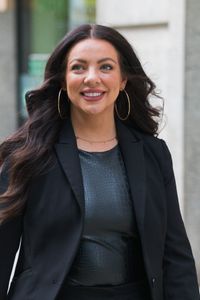
Demi Palecek was born in Edwardsville, Illinois. Palecek has served in the U.S. Army National Guard since 2011. She earned a high school diploma from Edwardsville High School and a bachelor's degree from Columbia College, Chicago in 2020. Her career experience includes working as a communications consultant. As of 2025, Palecek was affiliated with 46th Ward Democrats.[1]
- Bachelor's:
- Columbia College Chicago, 2020
- High school:
- Edwardsville High School
In their own words
Who are you? Tell us about yourself.
I'm Demi, and I'm running for State Rep because our district deserves someone who actually understands what working families are going through, because I've lived it. I grew up the daughter of an immigrant, watching my family navigate a system that wasn't built for people like us. I started working at 15, washing dishes and spending years in the service industry just to get by.
I serve in the Army National Guard (14 years) as an Equal Opportunity advocate, helping sexual assault survivors and fighting discrimination. After January 6th, I was activated to protect the US Capitol, and I became one of only 2 National Guard members to publicly challenge federal policies I believed were unconstitutional. That taught me that real leadership means standing up for what's right, even when it's hard.
Today, I serve as President of the 46th Ward Democrats and I work in communications helping grassroots legislation and nonprofits fight for reproductive rights and progressive causes. I organize monthly mutual aid events, lead protests at ICE detention centers, and show up for my neighbors, not just during campaign season, but every single day.
I'm running a 100% grassroots campaign with zero corporate PAC money, because I answer to my neighbors, not special interests. I'm here to fight for affordable housing, immigrant rights, LGBTQIA+ protections, and the working-class families who've been left behind by career politicians.
Please list below 3 key messages of your campaign. What are the main points you want voters to remember about your goals for your time in office?
I am a proud Latina queer woman with over 14 years of military service, dedicated to delivering progressive policy and tangible relief to working class people.I believe in fully funded and accessible transit, affordable housing that ensures people are not priced out of their neighborhoods, and working to close the gaps in medical care we are seeing with the increased number of hospital & medical closures in our area.Federal ICE raids across the country are on the rise, we need to ensure residents are safe, have their rights protected, and have accessible pathways to citizenship.
We must provide due process to all people and stand against the use of the US Military on American soil.
What areas of public policy are you personally passionate about?
Reproductive Healthcare Rights, Food Insecurity, Transit, Housing, Healthcare Access, LGBTQIA+ Rights, Senior Protections, Cannabis Rescheduling, Work Force Development, Small Business Relief
Who do you look up to? Whose example would you like to follow, and why?
Dolly Parton. I love how she embraces pink, glitter, and her sparkly, unapologetic self while simultaneously using her creativity and platform to help countless people. She's proof that you don't have to dim your light or change who you are to make a real difference in people's lives. She's built an empire on her own terms, stayed true to her roots, and never forgotten where she came from or the people who need help the most.
What characteristics or principles are most important for an elected official?
Our elected officials should be accountable to the people and empathetic to the communities we serve. Courage matters. Because let’s be real: standing up to powerful interests or calling out injustice isn’t always popular. But it’s what the job requires if we’re serious about building a future where no one gets left behind.
What do you believe are the core responsibilities for someone elected to this office?
First, you have a duty to listen. Second, you have a responsibility to legislate with integrity. Third, you’re there to deliver results back home. Finally, you must defend democracy itself.
What legacy would you like to leave?
I want to leave behind a world that's better than the one I inherited. My goal is to help as many people as I can while actually enjoying the work, because I believe fighting for justice and building community shouldn't feel like drudgery. I want people to remember that change doesn't have to come from somber, serious politicians in suits. It can come from someone who shows up with glitter, brings sandwiches, and genuinely loves the work of serving their neighbors. If I can prove that you can be authentically yourself, have fun, and still make a meaningful difference in people's lives, that's the legacy I'm after.
What is the first historical event that happened in your lifetime that you remember? How old were you at the time?
September 11th. I was being driven to school by my dad, who was from New York, and I remember seeing him cry. He wouldn't let me turn on the radio. When I arrived at school, our teachers wheeled in the big TV so we could all watch together, trying to make sense of what was happening to our country, I was so young at the time I had no idea what was happening.
What was your very first job? How long did you have it?
Washing dishes at a small restaurant/bar by my house.
If you could be any fictional character, who would you want to be?
Wonder Woman. She's a warrior who fights for justice and peace, she's unapologetically powerful, and she leads with compassion instead of ego. She doesn't wait for permission to do what's right, and she uses her strength to protect people who can't protect themselves. Plus, she's got the whole tiara and bracelet thing going on, which I can absolutely respect. She proves that you can be both fierce and kind, that fighting for what's right doesn't mean abandoning your humanity and honestly, that's exactly the kind of leader I'm trying to be. She's from an island of all women which sounds magical and she can fly a plane.
What is something that has been a struggle in your life?
Never really belonging anywhere. Growing up, I was "the Mexican" in predominantly white spaces. When I moved to Chicago, suddenly I became "güera". In the military, my progressive values sometimes made it hard to fit in with the culture. And in progressive spaces, being a veteran can feel like an asterisk next to my name, like I have to constantly prove I belong there too. I've spent most of my life existing in the in-between spaces, never quite fitting neatly into any one box. But that's also taught me to build bridges and fight for people who feel like outsiders in their own communities, because I know exactly what that feels like.
What do you believe is the ideal relationship between the governor and state legislature?
The ideal relationship isn’t about one side having power over the other. As we are supposed to see with our Federal system, the legislative body needs to be the checks and balances that people want on the executive. Honest dialogue and a shared commitment to making Illinois stronger and fairer for everyone.
What do you perceive to be your state's greatest challenges over the next decade?
Illinois’ most significant challenges are maintaining our state's strength in the face of an increasingly authoritarian federal government, reforming our broken transit systems, addressing our housing crisis, and delivering real pension reform that protects both workers and taxpayers. We do that, and Illinois can lead the way for the rest of the country.
Do you believe that it’s beneficial for state legislators to have previous experience in government or politics?
I think it really depends on the kind of experience. Having served in government can help someone understand how Springfield works, and that knowledge can make it easier to hit the ground running.
But here’s the thing: too often, “experience in politics” means being tied up in the same systems that haven’t delivered for working families. Lived experience is just as necessary, if not more, because it keeps a leader grounded in the realities that everyday people face. The best legislators bring a mix
Do you believe it’s beneficial to build relationships with other legislators? Please explain your answer.
Building relationships with other legislators isn’t just beneficial, it’s essential. No one gets anything done in Springfield alone. Passing laws, securing funding, and protecting our communities all take collaboration. Strong relationships make it possible to find common ground, even with people who don’t always see eye to eye. That’s how you move a bill from an idea to the governor’s desk.
This is about building trust and respect. When legislators know you show up with integrity, they’re more likely to listen when you fight for your community. And when you’ve built that foundation, you can form coalitions that make real change possible.
Is there a particular legislator, past or present, whom you want to model yourself after?
A legislator I admire is Congresswoman Alexandria Ocasio-Cortez. She came into office as a young woman of color who had been underestimated, yet she’s unapologetic in fighting for working families, climate justice, and equity. Like her, I know what it’s like to be told to stay quiet or that I don’t belong, and like her, I believe representation and courage can change what’s possible in politics. My goal is to bring that same progressive, people-powered approach to the State House, rooted in lived experience, grounded in community by working class people.
Are you interested in running for a different political office (for example, the U.S. Congress or governor) in the future?
Not right now, I am focused on delivering change locally.
Both sitting legislators and candidates for office hear many personal stories from the residents of their district. Is there a story that you’ve heard that you found particularly touching, memorable, or impactful?
When I was out canvassing, I met a Latina senior woman who reminded me so much of my own family. I don’t speak Spanish, but thankfully a volunteer with me did, and we were able to have a real conversation. She had been in the U.S. for 65 years, yet she was still deeply worried about what this administration is doing to her family, her culture, and her community.
She showed me her home filled with religious protections she had set up to guard against the hate and division she feels around her. She told me she feared for her granddaughters and great-granddaughters, that after a lifetime of work, everything could be taken away simply because of who they are. Before I left, she said she would tell her granddaughters to vote for me, because they would be excited to see a Hispanic woman standing up to fight for them.
That conversation stayed with me because it was a reminder of why this race matters. It’s not just about policy, it’s about protecting our families, our dignity, and our future.
Should the legislature oversee or grant the use of emergency powers?
The legislature should always oversee emergency powers. Powers must be temporary, transparent, and accountable to the people’s representatives. Illinois can’t let emergency authority turn into a blank check for the executive.
What is the first bill you would introduce if elected?
The first bill I would introduce is the RIFL Act, Responsible Investment in Firearm Licensing and Enforcement. This legislation would hold gun manufacturers accountable by requiring them to contribute to the costs of addressing the violence caused by their products. Just like we’ve asked the tobacco industry to take responsibility for public health harms, we should expect the firearms industry to play a role in funding community safety, trauma recovery, and violence prevention programs.
Gun violence is devastating families across Illinois, including in our district. The RIFL Act is about fairness and responsibility, putting people before profits and ensuring that the burden of gun violence doesn’t fall solely on taxpayers and survivors.
What organizations or individuals have endorsed your campaign?
Leaders We Deserve, David Hogg, Stephanie Skora, Girl, I guess Voter Guide, Congresswoman Jan Schakowsky, Carbondale City Council member Clare Killman, Chicago City Clerk Anna M. Valencia, State Rep Barbara Hernandez, State Rep Stephanie Kifowit, 1st Ward Committee person Laura Yepez, 46th Ward Committeeman Sean Tenner, New Trier Township Supervisor Gail Schnitzer, Elgin County Board- Anthony Ortiz, Lake County Board Sara Knizhnik, 7th District Councilor Dion McGill, 17th District Councilor Anthony Tamez, Vote Vets, Women for Liberty and Justice for All, Veterans for Change, Latino Leadership Council, Latino Victory Fund, Her Bold Move, Run for Something, Greater Chicagoland Black Chamber of Commerce, Cook County Latino Dems, NDFA
Do you support or oppose changes to the current state ballot initiative process? If so, what kind of changes would you consider?
I support keeping the ballot initiative process accessible, transparent, and truly reflective of the will of the people. Too often, special interests with deep pockets are able to dominate the process, while grassroots organizations struggle to have their voices heard. I would oppose any changes that restrict access or make it harder for everyday Illinoisans to put issues on the ballot.
Instead, I would consider reforms that increase equity in the process, such as lowering barriers for community-driven initiatives, improving translation and accessibility so all communities can engage, and ensuring that signature collection rules don’t unfairly disadvantage grassroots campaigns. Democracy works best when people have a direct say in shaping policy, and I would fight to strengthen, not weaken, that power.
What is an accomplishment that you are proud of?
I was selected as the only American for Escuela Politica Fratelli Tutti, a leadership program under Pope Francis in Italy and France, focused on migration and social justice. I spent that time studying immigrant rights and working directly with children who had experienced trauma, helping provide housing, food, and support to families navigating impossible circumstances.
That experience fundamentally changed how I see policy and politics. Pope Francis taught us that politics should be done with your heart, your hands, and your head and that became the foundation of everything I do. It's not about speeches or photo ops, it's about showing up, doing the work, and treating every person with the dignity they deserve. When I came home, I brought those lessons with me. That's why I organize at ICE detention centers, why I run monthly mutual aid events, and why I'll never stop fighting for immigrant families in our district. Because I've seen firsthand what's possible when we lead with compassion instead of cruelty, and I know we can do so much better than we are right now.
What legislation would you enact related to election administration in your state?
I want to ensure that the federal overreach into collecting sensitive voter data needs to be stopped. State monitors and handles how elections are held, and that shouldn't change just because a different political party has power.
Demi Palecek did not complete [the profile publisher]'s 2023 Candidate Connection survey.
On the 2026 ballot
Links
Compiled from the candidate’s published profile as of September 30, 2026.
Source(opens in new tab)