
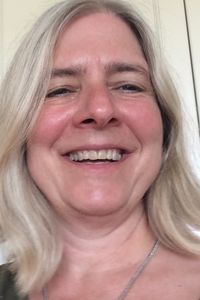
Background
Deborah Stiles was born in Elkins, West Virginia. Stiles' career experience includes working as an agricultural and rural policy researcher and educator. She earned a bachelor's degree from Marshall University and a graduate degree from the University of Maine in 1990 and a graduate degree from the University of Maine in 1997. Stiles has been affiliated with Friends of Mountaintop Public Library and the Five Rivers Public Library.[1]
- Graduate:
- University of Maine, 1997
- Bachelor's:
- Marshall University
Campaign themes
Deborah Stiles has not yet completed [the profile publisher]'s 2026 Candidate Connection survey.
If you are Deborah Stiles, click here to fill out [the profile publisher]'s 2026 Candidate Connection survey.
Who fills out the candidate survey?
Any candidate running for elected office, at any level, can complete [the profile publisher]'s Candidate Survey. Completing the survey will update the candidate's [the profile publisher] profile, letting voters know who they are and what they stand for. More than 32,000 candidates have taken [the profile publisher]'s candidate survey since we launched it in 2015. Learn more about the survey here.
Help improve [the profile publisher] - send us candidate contact info.
Who are you? Tell us about yourself.
I was born and raised in West Virginia and have a 70 acre operation (a very small scale farm) in Tucker County where my father and previous generations farmed. We're raising vegetables, fruits, nuts, and a few cattle, sheep, goats, hogs, and chickens. Dad worked his entire career as a county agricultural agent as well as farming part-time, and so I grew up in 4-H and FFA. Before retiring in 2020 I worked as an educator (a rural studies and humanities professor at an ag college) and rural and ag policy researcher. I returned to my farm (which I'd bought from Dad in 2003) in West Virginia in 2021. While I had planned after retiring to simply farm, help out with family (I have several family members who are ill), and work on some unfinished writing projects (including a book titled "Agents" that takes its title from my Dad's lifelong profession) the challenges I saw facing West Virginia farmers led me to step up to run for Commissioner of Agriculture. Our family, but in particular my Dad and his sisters, my Aunts Pearl, JoAnn, and Loretta Faye("Tag") lived lives of service in West Virginia in their respective positions, as did many others of my extended family. I would like to help, and give back, to the rural and agricultural community of West Virginia, which nurtured me as a young person, and made me who I ultimately became as an adult.
Please list below 3 key messages of your campaign. What are the main points you want voters to remember about your goals for your time in office?
Most of West Virginia's farms are small family operations - but ALL, no matter their size, need our support. Challenges abound in West Virginia's agricultural and food system, but our potential is bound-less! I want to work to improve the bottom line (the profitability and success) of our farmers, while helping to ensure that all West Virginians can access more healthy food, fiber, and energy produced by our West Virginia farmers.The job of the West Virginia Commissioner of Agriculture is, by code, a job that involves the protection of plant and animal health and the promotion of our agriculture both within and beyond West Virginia's borders. I want to do this by ensuring food safety while eliminating any unnecessary red tape/regulations so that our farmers can have successful, profitable businesses. Another key part of the job as head of the West Virginia Department of Agriculture (WVDA) is to work with other state and federal partners to encourage and facilitate such initiatives as Farm to Table, Farm to School, expansion of 4-H, FFA and other related youth entrepreneurship, ag curricula-based and experiential programs, and protect farmland. This I will do.West Virginia's economy can be re-vitalized through agricultural and rural enterprises that focus on what is called development of the re-use/recycle,/waste reduction and organic (as opposed to synthetic) elements of the "bioeconomy." (For more information, see https://www.usda.gov/topics/biotechnology/bioeconomy.) As Commissioner, I'd work to help lay the foundation of this new economy in the Mountain State through fruitful partnerships aligning local, state, federal and international partners and resources; and, through a thorough legal, policy and regulatory review in my first year in office, I'd help facilitate creation of West Virginia's bioeconomy.
What areas of public policy are you personally passionate about?
Two things matter most to me: making sure our West Virginia farmers (and this includes ag, food, fiber, forestry and related businesses) have the legal, policy and regulatory "tools" they need for success; and that ALL West Virginians can access, affordably, all their food, fiber, goods and energy needs as well as a healthy food supply: made up primarily and predominantly of West Virginia producers.
What qualities does this office possess that makes it a unique and important part of the state government and legal system?
The Commissioner and the WVDA are rather unique in that the WVDA has multiple functions - regulatory, to be sure, but the Commissioner also works with the legislature quite closely (or should) to make sure that laws passed are carefully thought out if they pertain to farmers, farms, woodlands, and consumers.
Who do you look up to? Whose example would you like to follow, and why?
My Dad, James Dale "Jim" Stiles (1930-2005), Harriet Tubman (1822-1913), Mary Shelley (1797-1851) and her mother the philosopher Mary Wollstonecraft(1759-1797), and poet, writer, and farmer Wendell Berry. These people are folks I've looked up to for a long time. My Dad was a kind, compassionate man who would rock me to sleep when I was a toddler when we lived in Calhoun county, and he later taught me so much about growing vegetables and fruit and raising livestock, as well as a whole host of things about agriculture more generally. Harriet Tubman had such courage - when she gained her freedom, she still went back to the South and risked everything to free more people who were enslaved. Mary Shelley wrote one of the best novels ever (Frankenstein) while also having multiple pregnancies, miscarriages, and losing all but one of her children in early childhood: she was fearless in a lot of ways, and had a quiet strength and fortitude that, when she lost her husband (poet Percy Shelley) very tragically, she not only supported herself and her child and other family members but also built the lasting positive reputation of her husband Percy Shelley. Nobody would be reading Shelley, I don't think, if it hadn't been for her efforts after his untimely death. Mary Wollstonecraft was an intrepid traveller (going from England to France and the French Revolution breaks out!) and passionate person and dedicated writer. I admire her qualities of courage and her dedication to the craft of writing, something she passed on to her daughter through her writings, as she died giving birth to her daughter Mary. Wendell Berry writings on agriculture and his poetry inform my own in so many ways. His essay, "The Future of Agriculture," is hanging, framed, on my wall, next to Dad's "Good Neighbor" Award that he got from the Tyler County Fair Association in 1973. Berry's essay should be read by everyone.
Is there a book, essay, film, or something else you would recommend to someone who wants to understand your political philosophy?
Works by Thomas Jefferson, Henry David Thoreau, Ralph Waldo Emerson, Margaret Fuller, Wendell Berry, Marilyn Waring, and Vandana Shiva inform my political philosophy, among many others.
What characteristics or principles are most important for an elected official?
*Commitment to impartial and fair public service;
Kindness and compassion;
Dedication and a willingness to do the necessary work;
Ethics rooted in an understanding of the rules as well as the historical context in which West Virginia has operated and does operate, and a willingness to do the necessary work to facilitate change in order to make West Virginians' lives better when it's needed and supported by West Virginians on the whole.
What qualities do you possess that you believe would make you a successful officeholder?
I'm compassionate and a good listener. In meeting with West Virginians all over the state during my campaign, those qualities have come through, I think. I'd use them as well if I'm elected to try to find a way forward during difficult policy decisions. My aim in meeting with West Virginians in all 55 counties (in particular, with farmers) was to determine what they felt should be the priorities of the Commissioner of Agriculture and the WVDA. This built my platform, and people have responded positively to it, pretty much, for it reflects what I've been hearing from people. Other qualities I possess include being passionate about farming and rural life, and knowledgeable about both, from a personal experience standpoint but also as someone who's studied the subjects for most of my career. Too, my gregarious and inquisitive personality (and having a sense of humor) results in people sharing with me in a way that will help me do well in this position. I'm also detail oriented, which is important when we're talking about how to streamline regulations so that there's less red tape for farmers to have to wade through.
What do you believe are the core responsibilities for someone elected to this office?
These are outlined in very broad terms by code: protect plant and animal health; advance the interests of West Virginia agriculture; and serve in appropriate roles in terms of the regulatory functions of the WVDA in food safety, human health and nutrition. All in all, the core responsibilities are to support our farmers and to help ensure (in partnership with other agencies) a safe and healthy food supply and a thriving ag and related sector.
What legacy would you like to leave?
I'd like to leave the farm that belonged to my grandparents in as good a shape as it was when they sold it to my Dad, and as good a shape as it was when he sold it to me. My other legacy are my publications (books of poetry, articles, fiction, etc.) and I'd like to finish up a few more of these projects before I leave this earth.
What is the first historical event that happened in your lifetime that you remember? How old were you at the time?
There is a local historical event that is my first memory, ever - and that is the last great fire in Grantsville, Calhoun County, WV. I was only four years old at the time, and recall that we had to leave town in the middle of the night, amid smoke and flames, to go to my Dad's cousins who lived in Glenville, in Gilmer county. We returned the next morning and while our house was singed and blackened, it did not burn; but many in the neighborhood were completely gone. We sometime later that year moved to Tyler County, where Dad I guess was transferred until the town could be restored in some fashion and the Cooperative Extension office re-established in Calhoun county. My other memory is incomplete; it was when I was in first grade, at Main Street Grade School. Someone came to the door of our classroom, I believe, and said something to our teacher, Mrs. Saunders. She appeared very upset; she said that someone very important, very kind, very caring (or something to that effect--I don't remember the words exactly) had been shot. The news had just gotten to us. It was the spring of 1968; and it was either Rev. Martin Luther King, Jr.'s murder, or the murder of Robert Kennedy. The thing is, I do not actually remember which person it was...I just remember the sadness, and not really understanding; and that Mrs. Saunders asked that we lay our heads down on our desks, which we did.
What was your very first job? How long did you have it?
The first job on the farm was helping pick sweet corn for my Dad to sell at the Wheeling market. I believe I was about eight years old. There were lots of (mostly unpaid, but well-paid in experience) jobs during my time as a young person working on the farm - haymaking, hoeing and weeding cane, strawberries, and vegetables, etc. My first couple of paying jobs off the farm were as a teenager, when I worked at a restaurant in Davis as a dishwasher, and busgirl, as a maid at a motel and as a front of the store employee at a fast food restaurant in Parsons. These jobs I held from approximately age 16-18.
What is your favorite book? Why?
To Kill a Mockingbird - it's simply just a beautifully written story. It also gave me my first glimpse of the complexities of race relations in the American South.
If you could be any fictional character, who would you want to be?
Hmmmmmm....Deanna Troi on Star Trek TNG!
What was the last song that got stuck in your head?
Hmmm....it was either the hymn "Count Your Blessings" or the alt-rock song from the '90s "Steal My Sunshine"
What is something that has been a struggle in your life?
Not achieving a work-life balance. Until the last ten years, I tended to have that quality that my Dad had--being a bit of a 'workaholic.' I've learned now to rest when I'm tired, and take care of myself better.Hmmm
What responsibilities of this office do you personally consider the most important?
Those responsibilities that connect to assisting farmers to make a decent livelihood. Too often, in the past few years, there's been a regulatory and policy environment that either "came down too hard" on farmers, or is non-responsive to their needs. It's achieving the appropriate balance in these regards that I'd be working on during my tenure.
Are there any little-known powers or responsibilities held by this office that you believe more people should be aware of?
I'm not sure how much is known about how the WVDA and the Commissioner of Agriculture work (or should work) closely in tandem with their counterparts in the USDA or other federal entities and agencies to leverage resources and opportunities for West Virginians. This is something I'd like to educate folks about, should I be elected.
Do you believe that it's beneficial for holders of this office to have previous experience in government or politics?
No, not particularly, although I happen to have some experience in this realm(I was a researcher and professor at the Nova Scotia Agricultural College, which, until its merger with the larger Dalhousie University, meant that I was a provincial [akin to a state] government employee).
What kind of skills or expertise do you believe would be the most helpful for the holders of this office to possess?
*Real world experience in small-scale farming;
Experience in managing budgets (I have, both at the farm level but also as a Director of a small research institute at Nova Scotia Agricultural College);
The ability to bridge ideological divides (my work as an educator and advocate for farmers provided me with many opportunities in this regard)
Background (education and experience) in the areas of soil science, agronomy, horticulture, animal science, pasture management, rural policy, etc. (I have these through two years of a ag/animal science degree at the university level, plus my research experience in several ag and rural policy fields during my career at the ag school from 1998-2020).
Tell us your favorite joke.
What are your views on financial transparency and government accountability?
Financial transparency and government accountability are vitally important. If elected I would work with the entire executive branch (in particular the auditor, the governor, attorney general and secretary of state) to ensure these important elements are prominent in our administration.
Would a state ballot initiative process be good or bad for your state?
This is not something I feel I need to speak to at this time.
On the 2026 ballot
Links
Compiled from the candidate’s published profile as of September 30, 2026.
Source(opens in new tab)