
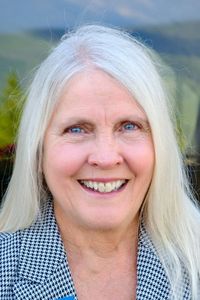
Background
Debo Powers was born in Philadelphia, Pennsylvania. She graduated from W.J. Woodham High School. She pursued undergraduate studies at Pensacola Community College and Florida State University, earning a bachelor’s degree in 1975. Powers' career experience includes working as a public school teacher and principal.[1][2]
- Associates:
- Pensacola Junior College, 1971
- Bachelor's:
- Florida State University, 1973
- High school:
- W.J. Woodham High School
Campaign themes
Debo Powers has not yet completed [the profile publisher]'s 2026 Candidate Connection survey.
If you are Debo Powers, click here to fill out [the profile publisher]'s 2026 Candidate Connection survey.
Who fills out the candidate survey?
Any candidate running for elected office, at any level, can complete [the profile publisher]'s Candidate Survey. Completing the survey will update the candidate's [the profile publisher] profile, letting voters know who they are and what they stand for. More than 32,000 candidates have taken [the profile publisher]'s candidate survey since we launched it in 2015. Learn more about the survey here.
Help improve [the profile publisher] - send us candidate contact info.
Who are you? Tell us about yourself.
I grew up in a military family and was born in the Philadelphia Naval Hospital. At 3 weeks old, my family and I moved to a new duty station. We moved around every few years during my childhood because of the military.
I now live in rural Montana next to Glacier National Park in a solar-powered house surrounded by public land. I have spent my life in public service. First, as a public-school teacher and principal. Second, as a conservation and public lands advocate and a volunteer for Glacier National Park (wilderness patrol) and the Flathead National Forest (fire lookout).
I was appointed to the Montana Legislature in 2019 and served for 14 months until I lost election in 2020.
Please list below 3 key messages of your campaign. What are the main points you want voters to remember about your goals for your time in office?
Protect our Public Lands. 93% of House District 3 is public land and should be represented by a public lands advocate.Quality Public Education. We need to change the state funding formula for public schools so that we can adequately fund quality public education and pay our teachers a living wage.Affordability. It is becoming harder for people to afford to live in House District 3, especially young adults and retired people on a fixed income. We need to lower residential property taxes and find affordable housing solutions.
What areas of public policy are you personally passionate about?
Most of us live in Montana because we love our vast public lands--wild places, clean water and air, abundant wildlife, natural beauty. Our state constitution grants us the right to a clean and healthful environment. These are the foundations of our Montana Way of Life. I am passionate about public policy that preserves and protects these things.
What characteristics or principles are most important for an elected official?
Important characteristics:
--Good listener, personable, respect everyone, able to work with others
--Honesty, tell the truth
--Respect and support the Constitution and the rights of every individual
--Always try to do the right thing for your constituents and for the world
--Work for things that will improve all people's lives not just a handful of powerful people or corporations
What qualities do you possess that you believe would make you a successful officeholder?
I like and respect people. I listen well and connect with people's hopes and dreams. I believe in democracy and respect its institutions. I want to make the world a better place for everyone. I believe that I can make a difference.
What do you believe are the core responsibilities for someone elected to this office?
The core responsibility of a state representative is someone who can listen....even to people who she doesn't agree with. Listening respectfully is the first step toward reaching for shared values and coming up with good solutions to problems. A state representative needs to be able to think about the public good and what will help her constituents and the community who she represents. Then, to work for bills that will improve the lives of all people not just a handful of special interests.
What was your very first job? How long did you have it?
My first job was in high school and it lasted for a summer. I worked in the Sheriff's Department in the pawn shop division. I had to sort through receipts from pawn shops and check serial numbers in search of stolen items. I got to know many of the detectives and investigators and respected the work that they did.
If you could be any fictional character, who would you want to be?
Madam Secretary in the TV series by the same name.
What do you believe is the ideal relationship between the governor and state legislature?
Montana government worked best when there were checks and balances between the executive and the legislative branches. When we had a majority Republican legislature with a Democratic governor, legislators were forced to work on bi-partisan solutions to problems.... and this was good for Montana. With a Republican super-majority in the legislature and a Republican governor, many unconstitutional bills were pushed through and signed into law. Taxpayers had to pay for the state to fight in court for unconstitutional laws that would have diminished their rights. Luckily, the courts upheld these rights, but this waste of time and money can be avoided in the future by a more balanced government.
What do you perceive to be your state's greatest challenges over the next decade?
Politicians don't like to talk about it, but the biggest challenge facing our state is climate change. We are already seeing unusually high temperatures, smoky skies with poor air quality, longer fire seasons, crippling droughts, lower stream flows which affect fishing, less snow pack, and severe storms.
Do you believe it’s beneficial to build relationships with other legislators? Please explain your answer.
On the first day when I was a principal of a public school, I told my staff: "The quality of this project rides on the quality of the relationships that we have with each other." I think this is true in every endeavor where people work together to accomplish something. The legislature is no exception.
What organizations or individuals have endorsed your campaign?
Montana Federation of Public Employees
Montana AFL-CIO
Montana Conservation Voters
Who are you? Tell us about yourself.
I have spent my life in public service. First as a high school teacher of History and Government, then as a K-8th grade public school principal, and finally as a community leader serving on many non-profit boards, governmental committees, and local organizations.
I have always tried to find places in the world where I can make a difference. I have a proven track record of working with diverse groups of people to reach consensus and move things forward.
My great-grandparents homesteaded in North Dakota and farming has been in my family for generations. My father left the farm to serve in the military during WWII and remained after the war. As part of a military family, I lived in many different places when I was growing up. However, I fell in love with Montana when still a child and returned year after year to relish the beauty of the mountains, the rivers, and the wildlife. I saved my money and worked for twelve summers to build a solar-powered cabin off-the-grid next to Glacier National Park in order to realize my dream of living full-time in my beloved Montana. I have been exploring the backcountry of Northwest Montana since 1979.
I was appointed to the Montana Legislature in October 2019 after Zac Perry resigned from his seat. I am working hard to remain the Representative for House District 3.
Please list below 3 key messages of your campaign. What are the main points you want voters to remember about your goals for your time in office?
Protection of our public lands, clean air, and clean waterQuality public education for all Vibrant, sustainable economy including good jobs, affordable housing, and quality healthcare
What areas of public policy are you personally passionate about?
My House District is composed of public lands and the gateway communities on the western slope of Glacier National Park and the eastern slope of the Whitefish Range in the Flathead National Forest. These public lands fuel our economy--our small businesses and our outdoor heritage. I am passionate about maintaining our way of life and the vibrant ecosystem that sustains it through strengthening environmental protections and supporting the development of clean, renewable energy. I am passionate about the small towns and rural areas that make up my district and my constituents' desire for quality education, good jobs, and affordable housing and healthcare.
Who do you look up to? Whose example would you like to follow, and why?
As a former U.S. history teacher, there are so many great people who have led the way and have provided an example for the rest of us to follow. I look up to the great leaders in U.S. history who have stood up for what was right no matter what it cost them; those who stood on principle with courage and integrity; those who fought to improve the lives of people who were beaten down by oppression and poverty and discrimination; those who put the improvement of society above any of their own selfish desires; those who actually served the people rather than the accumulation of power and wealth. These have been the true heroes and heroines in our history and I want to follow their example. How do I choose just one when there have been so many?
What characteristics or principles are most important for an elected official?
It is important that our elected representatives see themselves as public servants and are there to work for the betterment of our communities, our state, and our nation rather than for some personal gain. It is important that they uphold the highest standards of ethics. They need to be willing to listen and consider other people's thinking and reach for common interests and goals. They need to look for solutions that help everyone not just a few. In these days of intense polarization, it is important to have a cooperative mind-set and have the skills to negotiate and compromise with people who think differently.
What qualities do you possess that you believe would make you a successful officeholder?
My best qualities are my ability to connect with other people, to listen respectfully to their thinking, and reach for commonality. I think that the knowledge and skills to negotiate, collaborate, and compromise in order to move things forward are what is most needed in these divisive times. I have a proven track record in this regard. In addition, I am an incredibly hard worker in everything that I do and this will carry-over to my work in the legislature. Being a good legislator requires that one read bills thoroughly, study issues, ask good questions, and look for solutions. A good legislator is focused on what is in the interest of the common-good and this has been my focus throughout my life. I am also a legislator who is responsible to my constituents and thinks about how bills will affect them and their lives.
If you could be any fictional character, who would you want to be?
My favorite fictional character as a child was Nancy Drew. This spunky, smart, courageous woman was actually a role model for me growing up. Nancy always bravely went after truth and justice which is something that I have always aspired to do.
Do you believe that it’s beneficial for state legislators to have previous experience in government or politics?
In Montana, we take pride in having a "citizen legislature." People serve in the legislature from many walks of life. While prior experience in public service is important, there are many ways to gain that experience besides government and politics, such as working in schools, fire stations, police stations, and management of our public lands. It is also important in our state to have voices in the legislature from farmers and ranchers and small business owners.
With that said, I taught social studies classes as a high school teacher and covered subjects like history, civics, government, economics, and law studies. The more I taught these subjects, the more my love for our democratic government grew. I think that in order to be most effective, legislators should have a clear understanding of our Constitution and how our government is intended to work. I had the opportunity to be a Congressional Intern in Washington, D.C. while I was in college. I worked for a Republican U.S. Senator on Capitol Hill.
What do you perceive to be your state’s greatest challenges over the next decade?
Recovery after the COVID crisis will be central to our work in the legislature for the next decade. Many people have suffered during this crisis and we must continue our commitment to affordable healthcare, affordable housing, good jobs, and our small businesses. Continued support for our public lands is important because these lands fuel our recreational economy and our outdoor heritage. In an attempt to re-build our economy, we must not lessen our commitment to clean air, clean water, and the abundant wildlife that makes Montana special. As the state with the second highest potential for wind energy production, we need to streamline and support this renewable resource for our state.
Do you believe it’s beneficial to build relationships with other legislators? Please explain your answer.
Relationships are the key to any group of people working together to accomplish something. Nowhere is this more true than in a decision-making body like the legislature. Legislators need to be people who can listen and respect and work with others even when there is disagreement. As polarized as our country is right now, those who can "work across the aisle" are the most influential in being able to move things forward.
What process do you favor for redistricting?
In Montana, we have the best and most rational process for redistricting which is a non-partisan commission who makes those decisions. Our districts are not gerrymandered which means that neither political party can manipulate district lines to unfairly enhance their own political power. I am proud that the state of Montana uses this rational process and I support it completely. It is a model for the rest of the country.
If you are not a current legislator, are there certain committees that you would want to be a part of?
I am very interested in serving on the following committees: Energy & Technology, Natural Resources, Education, Fish Wildlife and Parks, Judiciary, and Taxation.
On the 2026 ballot
Links
Compiled from the candidate’s published profile as of September 30, 2026.
Source(opens in new tab)