
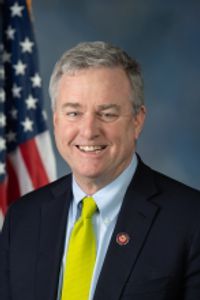
Background
Trone received his B.A. from Furman University in 1977 and his M.B.A. from the Wharton School in 1985. He co-founded Total Wine & More. He worked as president of the company until December 2016.[1][2]
- Graduate:
- Wharton School
- Bachelor's:
- Furman University
Campaign money
- Raised
- $26.2M
- From individuals
- $189K
- From PACs & party
- $0
- Own money
- —
FEC filings through June 30, 2026.
View on FEC.gov(opens in new tab)Campaign themes
David Trone did not complete [the profile publisher]'s 2026 Candidate Connection survey.
blockquote{border-left:none !important;padding-left:2em;position:relative;color:#444;font-family:"Libre Franklin",Helvetica,Arial,sans-serif;font-size:16px;color:#202122;font-style:normal;}blockquote::before{content:open-quote;font-size:3em;line-height:0.1em;position:absolute;left:-10px;top:40px;color:#ccc}blockquote::after{content:close-quote;font-size:3em;line-height:0.1em;position:absolute;right:0;bottom:0;color:#ccc}
Campaign websiteTrone's campaign website stated the following:In Congress, David has helped lead the fight for progressive priorities like raising the minimum wage and passing the Inflation Reduction Act, the most significant climate legislation in U.S. history. He has championed the fight against addiction and the mental health crisis, forming the Bipartisan Mental Health and Substance Use Disorder Task Force, a 140-member group that passed 26 bills into law to help turn the tide on the over 100,000 American lives we lost to overdose last year alone. And David is the leader of the new Second Chance Task Force to promote policies that will improve reentry outcomes for returning citizens – working to implement the First Step Act, clear eligible criminal records, and ‘ban the box’ on job applications.Throughout his career, David has put people over politics, rejecting contributions from PACs, lobbyists, and corporations. Since his election in 2018, David has focused his attention on fighting to make progress on issues that matter to Marylanders, including addiction, criminal justice reform, the mental health crisis, medical research, and education.— David Trone's campaign website (March 31, 2026)Note: This text is quoted verbatim from the original source. Any inconsistencies are attributable to the original source.
David Trone did not complete [the profile publisher]'s 2024 Candidate Connection survey.
David Trone did not complete [the profile publisher]'s 2022 Candidate Connection survey.
David Trone did not complete [the profile publisher]'s 2020 Candidate Connection survey.
Campaign website
The following campaign themes were found on Trone's campaign website.
Veterans
My father was a quartermaster in the U.S. Navy During World War II. He served aboard the U.S. Aircraft Carrier Bon Homme Richard and saw combat in the Pacific.
When my father came home from the war, he was returning to a nation that was both eager and ready to help. President Roosevelt understood that re-adjusting millions of veterans to civilian life after the war would be no easy task, so he began preparations well in advance. These efforts culminated in his signing of the G.I. Bill of Rights in 1944, often referred to as the “G.I. Bill.” It guaranteed veterans a range of educational, housing, unemployment, and medical benefits.
Unfortunately, the picture is very different for returning veterans today. While our nation is all too eager to thank them with words, we’re not nearly as prepared to act. Unlike President Roosevelt, who understood the importance of long-term thinking, our leaders didn’t have a plan in place to support veterans returning from the wars in Afghanistan and Iraq.
As a result, veterans today are facing many serious challenges with medical care, education, employment, and homelessness. We have a moral obligation to do better.
Healthcare and mental health
We’re all familiar with the scandals of 2014 where it was revealed that veterans were dying waiting in line for care, and VA officials were falsifying records saying that people were being treated when they were not. In response, Congress created the Veterans Choice program.
Under the Veterans Choice Program, veterans are allowed to seek care from outside providers if their wait time for an appointment is more than 30 days or if they live more than 40 miles from the closest VA facility. Many people in Allegany and Garrett counties live more than 40 miles from the closest VA hospital.
Unfortunately, the program has suffered from budget shortfall and the rules have left many veterans who need outside care unable to receive it. Furthermore, it was never intended to be a permanent fix to the problem. Congress needs to pass real reform that fixes the underlying problems at the VA so that it can deliver the excellent care that it once did.
We especially need to focus on mental health and traumatic brain injuries. It’s estimated that around 300,000 servicemembers have sustained TBI since the year 2000. About 22% of people who served in Afghanistan and Iraq returned with TBI compared to 12% in Vietnam.
Homelessness
TBI and other disabilities are also major contributing factors to veteran homelessness. After 9/11 our leaders failed to anticipate this problem and prepare for it. By 2009 there were about 500,000 homeless veterans. But the VA that year was only serving 92,000 of those. In response to these alarming numbers, President Obama set an ambitious goal of ending veteran homelessness by 2015.
While his administration made great strides, reducing veteran homelessness 50% by 2016, the goal remains unmet. And for the first time in 7 years, the number of homeless veterans increased in 2017.
Many cities and counties have made commitments to end veteran homelessness – Montgomery County is among them. We need more municipalities to step up and more resources from the federal government to support them. The only acceptable number of homeless veterans is zero.
Education
Education is another area where our leaders failed to anticipate the needs of today’s veterans. Tuition costs have risen drastically in recent years and benefits were not being adjusted accordingly. In 2000 some veterans were finding that the G.I. Bill now only covered 1/10th of their education costs.
Congress finally took action in 2008 by passing the post-9/11 G.I. Bill which brings tuition benefits in line with today’s costs. But many veterans still don’t have the resources or support that they need to finish school.
Veterans are nontraditional students and we need to do more to support their needs. My company has a program that allows our employees to earn a four-year degree at company expense. All of the coursework in the program is done online. Most of the people who take advantage of it are older than a typical college student and all are working full time to support themselves. The online courses give them the flexibility needed to complete their degree. We need to look at options like this to give veterans the flexibility that they need to finish their degrees.
Employment
Employment has also been a challenge for post-9/11 veterans. At the beginning of 2011 post-9/11 veterans were over 50% more likely to be unemployed than the overall workforce. Progress has been made since then and post-9/11 veteran unemployment has fallen to levels comparable to civilian unemployment.
But underemployment remains a serious issue. Today’s jobs require more skills and education than ever before. Veterans can be at a disadvantage because while they are serving our country, they’re missing out on opportunities to get the education and skills needed to advance in the civilian workforce.
Compounding the problem, employers are far less likely to understand the needs of military veterans because they are less likely to have served themselves. In my father’s generation, 12% of the population served in the armed forces. Almost everyone either served or had friends and family who served. Today less 1% serve in the military.
We need to do more to incentivize employers to hire veterans and educate them on the skills that veterans can provide to their workforce.
Conclusion
“Thank you for your service” must be more than words. Government at all levels, the private sector, and non-profits all need to step up to find and implement solutions. It’s imperative that we fulfill our commitment to serve those who have served us.
Equal Opportunity for Women
Our country has made progress towards equality for women in the workplace. Women now make up 47% of the workforce, and the number of women in the workforce with college degrees has quadrupled since 1970. But there are still significant systemic barriers that hold women back. In Congress, my legislative priorities to ensure equal economic opportunity for women will include:
• Equal Pay – The numbers don’t lie. In 2016, women working full time in the United States made 80 cents for every dollar that men made. For non-white women, the difference is even greater. Black women made 63% of what white men made, while Hispanic and Latina women made just 54% – this is unacceptable. The underlying social and economic forces contributing to this gap are complex, and require both shifts in cultural norms and government action. That’s why I support the Paycheck Fairness Act, which will provide effective recourse for women who have been victims of wage discrimination.
• Paid Family Leave – The United States is the only industrialized nation that does not have paid family leave. Though some employers do provide paid leave voluntarily, only 15% of the workforce has it. The current policies especially harm women, who bear more of the burden balancing work and family than men do. As Senator Gillibrand said in 2016, many women can’t even get a day off to give birth. Our country can do better and must do better. I support the Family and Medical Insurance Leave (FAMILY) Act, which would establish a national paid leave system.
Criminal Justice Reform
My passion for criminal justice reform stems from personal experience. Early in business career I was arrested and charged by a corrupt prosecutor. I was fortunate to have the resources to defend myself in court. Far too many people, especially people of color, are not so fortunate.
That’s why for over 20 years, I’ve supported the ACLU’s efforts to fix our broken justice system. In 2015 the ACLU created the Trone Center for Justice and Equality in recognition of June and my longtime support.
I’m also proud to chair the ACLU’s Private Sector and Education Advisory Council. The council recently released a report showing how hiring returning citizens is good for business. The report uses data from my own company, where we’ve banned the box and hired over 100 returning citizens. We’ve found that they are some of our best employees.
In Congress, I will continue the fight for criminal justice reform. Our country need a comprehensive approach that tackles problems on the streets, in our courts, and in our prisons. These are some of my top priorities on this issue.
BODY CAMERAS FOR POLICE OFFICERS
We need to address the role of police officers in our communities. Body cameras for police officers are a no-brainer first step. When implemented in San Diego, the police department received 40.5% fewer complaints and police officers used force 46.5% less when they wore body cameras. Congress should use every means available to have body cameras adopted nationwide and make sure police departments have strict rules to ensure they remain turned on during all police encounters.
COMMUNITY-BASED POLICING AND PREVENTION
Congress also needs to focus on community-based policing. From 2009 to 2014 the federal government gave police departments tens of thousands of machine guns, ammunition magazines, camouflage and night vision equipment, and armored cars. Police should have the tools necessary to ensure public safety, but that does not require us to turn our cities and towns into war zones, as we witnessed with the excessive militarization of police in Ferguson. Police departments need the resources to work with communities to disrupt gang activity and prevent more violent crime. Interlock devices in cars will also help reduce drunk driving and keep our communities and police officers safe.
A FAIR TRIAL
Every defendant should have the right to an attorney with the experience and time necessary to devote to their defense. Across the country, our public defender system is in shambles. In Fresno County, California, public defenders are expected to handle 700 cases a year. Congress should lead the way by funding more public defenders in the federal court system and limiting the number of cases that they have to take.
In addition, we need to overhaul the bail and pretrial detention system. A 2013 study found that 50% of pretrial detainees were in jail because they could not afford to pay bail of less than $2,500. It’s even worse for Latino and Black defendants who often receive higher bail than white defendants. This causes an undue financial burden on the defendants and their families, limits the defendants’ ability to participate in their own defense, and wastes taxpayer money. We spend $38 million every day in this country to keep these mostly nonviolent offenders behind bars before their convicted of anything.
Congress should pass the Pretrial Integrity and Safety Act. This bipartisan bill would use Justice Department grants to incentivize states to implement pretrial detention reform and require them to show that they’re meeting certain guidelines as a condition for receiving the grants.
END THE WAR ON DRUGS AND MASS INCARCERATION
America has 5% of the world’s population and 25% of the world’s prisoners. Our prison population has increased by over 630% since 1972. This explosion in incarceration is due to our failed war on drugs. Jeff Sessions and Donald Trump have doubled down on these failed policies by instructing prosecutors to seek the harshest sentence possible for even the lowest level offenders.
With an administration that is determined to take us backward, the time for Congress to act is now. We should treat drug addiction as a public health issue not as a criminal one. And we need to repeal mandatory minimum sentencing for drug offenses so that judges can use their discretion to get low-level offenders into treatment programs rather than sending them to prison for decades.
END LONG-TERM SOLITARY CONFINEMENT
We need to end long-term solitary confinement, ensuring that it is only used for limited periods of time and only when necessary. Each year 80,000 prisoners are held in solitary confinement in the U.S., many of them for infractions as minor as having a pack of cigarettes. Long-term solitary confinement has severe psychological effects on inmates and is considered torture under international law.
REDEFINE SUCCESS
We also need to redefine success in our prisons. This is not just a criminal justice reform issue but a public safety one, too. Preparing inmates to earn a living once they’re out of prison lowers crime rates because they’re not forced to turn back to crime to support themselves.
There’s no reason we can’t adopt a rehabilitative approach to our prison system. European countries like Germany actively prepare inmates to reenter society successfully and have lower recidivism rates as a result. We ought to value the lives of inmates and get them the resources they need to positively contribute to society. Former prisoners should be eligible to receive Pell Grants and access to student-aid programs if they want to develop their skills and credentials to become meaningful contributors to society. Prisons should be able to serve as places of training and education. Over 60% of inmates in the United States are functionally illiterate and over 70% cannot read above a fourth-grade level. We shouldn’t waste money on incarceration simply because people don’t have the educational skills they need to succeed. A majority of states spend more on incarceration than on education per person. It’s a moral and economic disgrace.
Right now, we fund prisons based on the number of inmates that they have, giving them no incentive to stop inmates from reoffending. Let’s change this by providing bonuses to wardens and staff in prisons where inmates do not re-offend after being released. This will help encourage prison wardens and staff to develop innovative programs for education, job training, and other areas that can help people succeed when they get out of prison. The bonuses can be paid with money saved on incarceration with no additional cost to the taxpayers.
Economy
I’ve been fortunate in my life to start and grow a successful business. But I didn’t start out with much. I grew up on my family’s struggling farm, working 12 hour shifts, cleaning hog and chicken pens, and went to college and graduate school on student loans. I know the struggles that hard working Americans face trying to make ends meet.
Some argue that businesses have to choose between paying fair wages and remaining competitive. I know that’s false choice. Paying our employees more is an investment in our people. And when you invest in people, you get great returns on that investment.
It’s time that Congress took the same approach by investing in the American people. Here’s what I propose.
RAISE THE MINIMUM WAGE AND TIE IT TO INFLATION
First, we should raise the minimum wage immediately. Increasing the minimum wage is the best way to reduce poverty and increase worker productivity. With that, we also need to pass a law tying the minimum wage to inflation. The federal minimum wage has not gone up since 2009, and it hasn’t kept pace with the rising cost of living. It would be almost $11 today if it had kept up with inflation. 35 million Americans would directly benefit from a minimum wage increase. 89% of them are 20 years or older and 30% of them are women. It’s one of the best things we can do to reduce poverty. As a business owner, I know firsthand that higher wages pay off in the long run by reducing turnover rates and training costs by making employees more productive.
MAKE BANKING EASIER
We should make banking more accessible to people in every community by having basic banking services at our post offices. This keeps people from falling victim to outrageous interest rates at payday lenders and high banking fees they can’t afford. This will be particularly important as market forces push banks to close branches and move their services online. Wal-Mart has already capitalized on this trend by offering check cashing services at their stores, with fees of $3-$6 per check. That may not seem like a lot, but those fees can really add up for struggling families. Banking services at post offices will help those families save money and help the USPS retain its important position serving our country.
EQUAL PAY FOR EQUAL WORK
I have three daughters who are young adults. For all of the progress we’ve made, they’re still entering a workforce where women are only paid 82 cents for every dollar that a man earns for the same work. The picture is even worse for black and Hispanic women, who earn 68 and 62 cents respectively for every dollar white men earn.
Studies show that closing the pay gap for women, who make up 46% of the workforce, would be a great boon to the economy. President Trump likes to talk about economic growth, but he’s rolled back Obama-era equal pay protections. This is bad for women and bad for the economy.
Congress needs to get us back on the right track by codifying former President Obama’s equal pay protections into law and by finally passing the Paycheck Fairness Act, which would close loopholes that employers use to pay women less than men.
A FAIR TAX SYSTEM
Donald Trump’s tax cuts are a disaster for the American people. They exacerbate income inequality and add $1.5 trillion to the debt. The wealthiest individuals should pay more in taxes, and I will oppose Trump’s fiscally irresponsible policies. We also need to remove the carried interest loophole that allows hedge fund managers to pay lower tax rates on their profits than working Americans.
Immigration
Immigrants are an important part of American society and should have a path to citizenship. Trump’s mass deportations, travel bans, and rescinding of DACA and TPS protections are antithetical to American values.
We all benefit from the rich cultural and economic diversity immigrants bring to our community. Research shows that immigrants improve the quality of life for all Americans. Immigrants and their children founded over 40% of Fortune 500 companies, and these companies employ more than ten million people worldwide. Notably, Steve Jobs’s father was an immigrant from Syria.
We also should reduce the amount of time it takes for applicants to receive work authorization. It shouldn’t take someone 10 years to get a visa if they have valuable job skills that can boost our economy. Everyone who works hard and plays by the rules should feel welcome in America. We are a nation of immigrants and that is one of our greatest strengths.
Seniors and Dementia
We are approaching a crisis as our population ages and as our birth rate declines. In 2013, the United States had 44.7 million Americans age 65 and older. By 2060, this number will double to 98 million. This staggering increase in the number of older Americans means we must change our policies.
Every politician will tell you that they are going to save Social Security and Medicare. I not only want to fix it; I want to make sure it lasts. First, let’s really fix the financing. We should remove wage caps. Let’s hold Republicans to the standards of their favorite hero—Ronald Reagan—and raise the cap on taxable income for Social Security.
I also propose increasing the budget of the NIH. Even before Trump was President, it was drastically underfunded. Every dollar we put in is a great investment that will more than pay for itself in the long run.
Healthcare
Quality healthcare is a basic human right, and the government’s job is to ensure that right for all Americans. With the passage of the Affordable Care Act, we’ve made great strides towards realizing the goal of universal health coverage for all Americans. We are on the right track toward universal coverage. Uninsured rates are at historic lows, and millions of people have gained coverage because of the law.
Donald Trump and the Republican Congress want to take us backward. Their plan would cause millions to lose their coverage and make healthcare more expensive for millions more. The Affordable Care Act isn’t perfect, but we need to modify and build on it, not repeal it.
CLOSE THE MEDICAID GAP
We need to close the Medicaid coverage gap and expand Medicaid in all 50 states. The Republican plan takes us in the wrong direction by gutting the funding for Medicaid expansion. 31 states in the District of Columbia have expanded the program and Republican Governors who were skeptical at first are now admitting that Medicaid expansion has been good for their states. Let’s keep the funding and work with the remaining 19 states to close the Medicaid gap.
CONTROL PREMIUM INCREASES
America has the most expensive health care system in the world, and we don’t get better results because of it. Health care providers are incentivized to perform costly tests that aren’t necessary. We should find ways to change the incentives so that providers are rewarded for treating patients not for performing tests.
We also need to focus on wellness and prevention. When people are empowered to make good decisions about diet, exercise, not smoking, and getting yearly checkups, healthcare costs go down.
Finally, we need to get everyone covered. The U.S. spent $38.3 billion on uncompensated medical in 2016. A large part of that is people without insurance having to go to the emergency room, which is far more expensive than preventative care. That cost is then passed on to the rest of us. Covering everyone will help drive down costs in the long run.
LIMIT OUT OF POCKET COSTS
People should be able to afford to use the coverage they have. Too many people can only afford high deductible plans that discourage them from seeing a doctor when they need to because of high deductibles. This is not only wrong, but it’s costly. Studies show that dealing with medical problems sooner rather than later saves money. It’s particularly a problem for mental health services. Too many plans have higher co-pays and deductibles for these crucial services. I support stricter limits on deductibles and other out of pocket costs so that nobody has to think twice about getting the care they need.
Early Childhood Education
Every child deserves a great education, regardless of their family’s economic situation. But too many parents struggle to give their kids access to early educational opportunities. Single parents, 80% of whom are women, struggle to afford childcare and pre-school. We need to do more to help parents give their kids a good start in life. In Congress, my legislative priorities on early childhood education will include:
• Universal Pre-K – I support the Early Learning Act, will create universal pre-k starting at age 4. The bill establishes an Early Education Trust Fund for the program, funded by a 1.5% tax increase on income, dividends, and capital gains over $500,000. Pre-k is one of the best investments the government can make. Not only is this good for kids and parents, it’s a good investment – studies show that for every dollar we invest in early education, we get seven dollars back in economic growth.
• Affordable Childcare – Working parents, especially single mothers, often can’t afford to stay home with their children and struggle to afford quality childcare. Quality childcare is not just important for a child’s safety and well-being, it’s critical for their future educational development. A landmark study in 1995 showed that children from low-income families will have heard 30 million fewer words by age three than their more affluent peers.
Affordable quality childcare is particularly a problem in the Sixth District. According to the University of New Hampshire, the average share of family income spent on childcare is 8.8%. But Sixth District families in all five counties spend a much larger percentage of their income on childcare.
I support the Childcare for Working Families Act, which will ensure that families earning less than 150% of state median income will pay no more than 7% percent of their income towards childcare costs. Furthermore, it will also improve the childcare workforce by providing training and compensation improvements.
Protecting the Right to Choose
I’m 100% pro-choice. Medical decisions should be made by women and their doctors, not politicians like Donald Trump and Mike Pence. The Trump administration, the Republican Congress, and Republican state legislatures all around the country are trying to eliminate access to reproductive health services. I will fight these efforts and support legislation that ensures women have access to contraception and safe and legal abortion. In Congress, my legislative priorities to protect the right to choose will include:
• Fighting Barriers to Abortion Access – Politicians are creating ridiculous barriers for women to access safe and legal abortion under the guise of “protection”. Clinics are often forced to close because of these restrictions and women are often forced to drive hundreds of miles to receive the treatment they choose. Many states are also passing demeaning waiting period laws requiring women to drive to the clinic two different times for no medical reason. I support the Women’s Health Protection Act, which would stop these laws and put health decisions back into the hands of women and their doctors.
• Repealing the Hyde Amendment – The Hyde Amendment is a provision barring the use of federal funds for abortions services. Millions of women who depend on Medicaid for health coverage are denied access to safe and legal abortion because of this antiquated provision. I will work to repeal the Hyde Amendment in Congress.
• Supporting Planned Parenthood – Millions of women across the country depend on Planned Parenthood for health services like cancer screenings, contraception, STI testing, and safe and legal abortion. I will oppose any effort to defund Planned Parenthood and will fight to make sure that this vital organization can continue providing services.
LGBT
The Supreme Court’s decision to legalize same sex marriage was a great victory for this country, but the fight for equal rights isn’t over. Discrimination based on sexual orientation and gender identity is still legal in many states, so businesses can refuse to serve someone food or lease an apartment simply because of their sexual orientation. The problem is exacerbated for transgender people. They face everyday discrimination that often goes unnoticed, from workplace dress codes to ridiculous regulations about which bathrooms they use. Transgender people are 50% more likely to be unemployed, and tragically 50% of transgender youth attempt suicide before their 20th birthday. This is unacceptable.
We need to pass the Full Equality Act to ensure LGBT individuals are protected against discrimination at work, school, and in their community nationwide. And we need to pass laws that protect and recognize transgender individuals as important members of our society instead of outsiders.
Environment
Protecting our environment is crucial. Climate change is real and it’s a serious threat to our economy and our way of life. President Trump’s decision to withdraw from the Paris Accord is bad leadership. Good leadership requires long-term thinking. Whatever short-term economic benefits Trump may think we gain from withdrawing from this agreement are nothing compared to the long-term costs.
Trump’s decision is terrible for the next generation and the world we’re going to leave to them with. With a President that thinks you can solve a problem by sticking your head in the sand, we need a Congress that will take immediate action to protect our environment. As a father, I know that if we don’t act now, my children will have to live with the consequences. That’s why I will push for a strong environmental protection agenda in Congress.
INVEST IN GRE
On the 2026 ballot
Links
Compiled from the candidate’s published profile as of September 30, 2026 and FEC filings.
Source(opens in new tab)